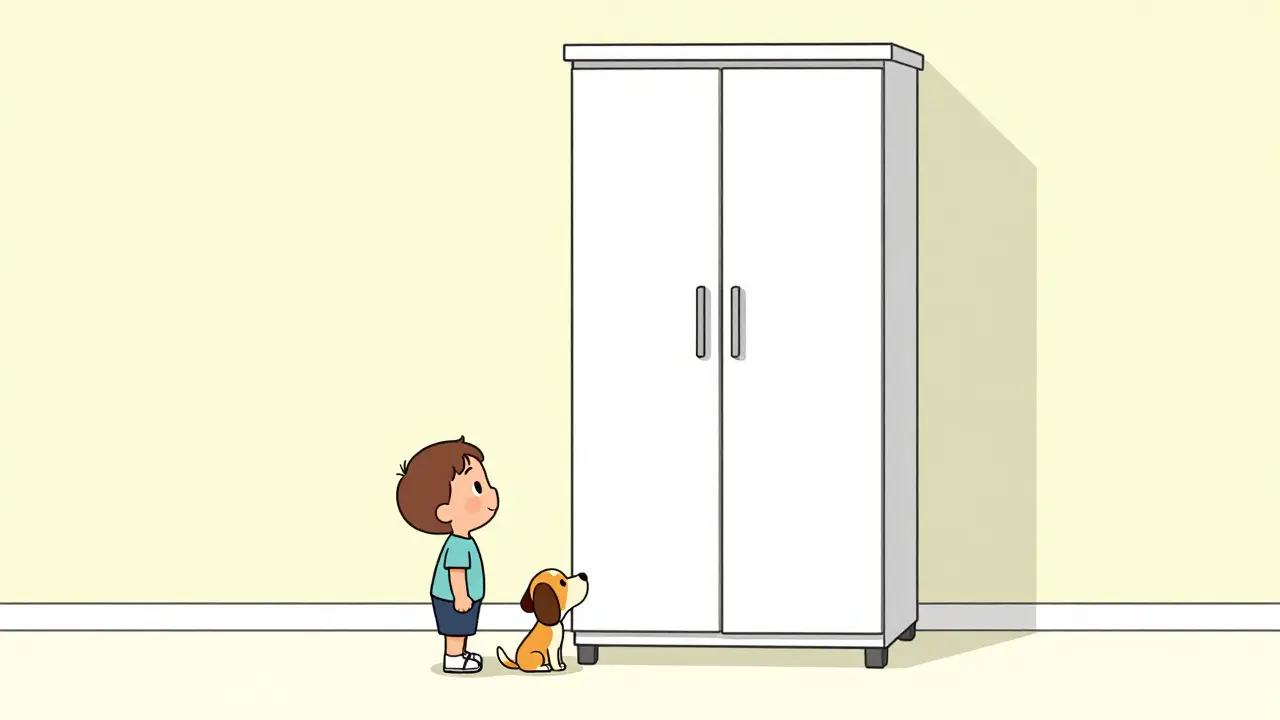
The "Up and Away" Strategy for Kids
Putting a bottle on a high shelf is a start, but it isn't a complete solution. Research shows that children can often reach objects up to 4 feet high, and many can climb onto counters or use chairs to get even higher. For true peace of mind, you want your meds at least 5 feet off the ground and behind a locked door.A common mistake is the bathroom cabinet. While it seems convenient, these areas are often humid, which can actually break down the chemicals in your medicine, making them less effective. Instead, look for a cool, dry place like a high kitchen pantry or a bedroom closet. If you use a lockbox or a combination lock bag, you add a second layer of defense that keeps a determined child out even if they manage to climb up.
Be extra careful with gummy vitamins and supplements. Because they look and taste like treats, they are responsible for a huge portion of childhood supplement accidents. Never refer to them as "candy" when talking to your kids, as this encourages them to seek out the bottle when you aren't looking.
Protecting Your Pets from Toxic Treats
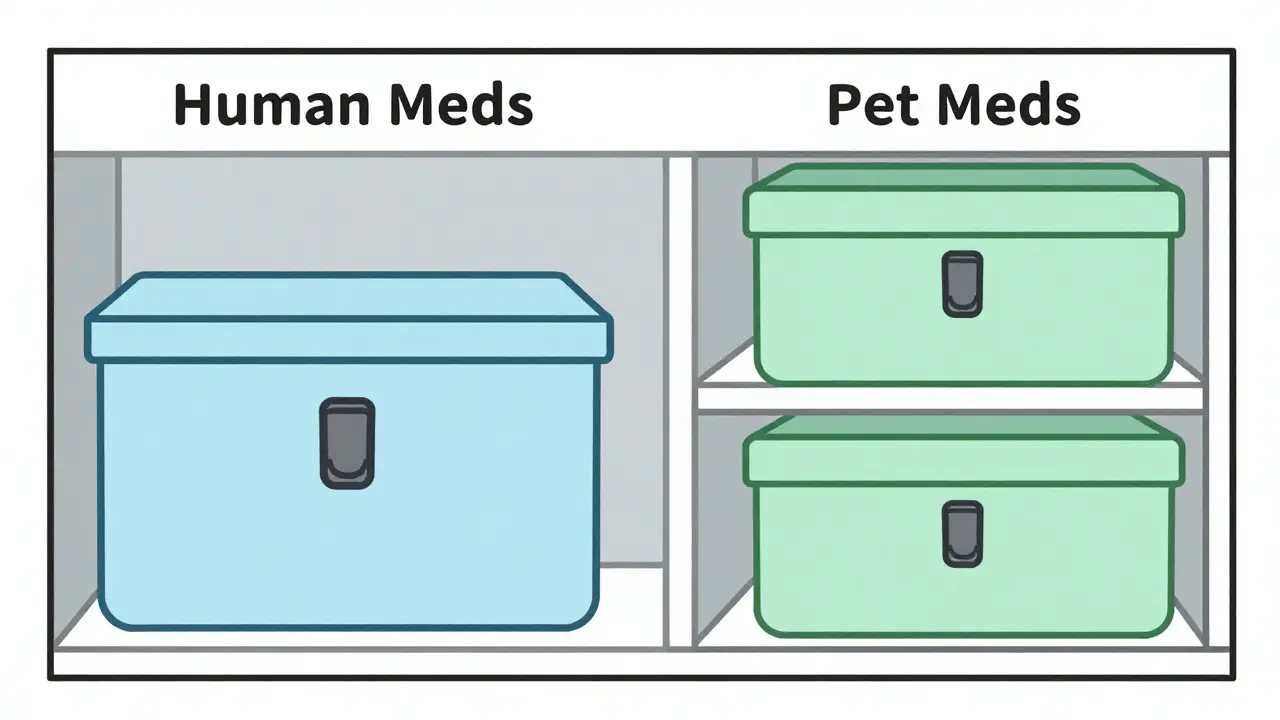
Pets, especially dogs and cats, are driven by scent. A dog might not see a pill, but they can smell the flavoring used to make the medicine palatable. This is particularly dangerous with medications for farm animals or horses, which often have scents that are irresistible to house pets.The biggest risk with pet medications is twofold: your pet eating human medicine, or you accidentally taking your pet's medicine. Some human heart medications are lethal to dogs, while certain canine arthritis drugs can cause severe reactions in humans. The only way to prevent this mix-up is total physical separation. Never store your dog's pills in the same bin or drawer as your own.
Avoid opening pill vials on the edge of a counter. If a pill drops, it often rolls under the baseboards or into couch cushions, where a pet will find it long after you've forgotten it. Always open medications on a flat, clear surface where you can see exactly where every pill goes.
Creating a Three-Zone Safety System
If you have both kids and pets, a single "medicine cabinet" isn't enough. Try organizing your home into three distinct zones to manage risk based on how often you use the medication.| Zone | Purpose | Storage Requirement | Example |
|---|---|---|---|
| Zone 1: Immediate | Current dose being taken | Flat surface, supervised access only | A single pill on a kitchen table during dosing |
| Zone 2: Short-Term | Daily/Weekly meds | Locked container, > 5 feet high | Lockable weekly pill organizer |
| Zone 3: Long-Term | Backups and rare meds | Separate, labeled, locked locations | Human meds in bedroom; Pet meds in pantry |
The Danger of "Just for a Minute"
Most accidents don't happen because a parent forgot where the medicine was; they happen during the "temporary" phase. This is when you leave a bottle on the counter while you go grab a glass of water, or you put a purse with a pill bottle inside on the floor for a second.Implement a "two-minute rule": the moment you are done with a dose, the medication goes back into its locked storage. No exceptions. Over-the-counter (OTC) drugs like ibuprofen or acetaminophen are often treated as less dangerous than prescriptions, but they are actually involved in a huge number of pediatric accidents because they are left in easily accessible spots like backpacks or handbags.
Safe Disposal: Don't Just Toss It
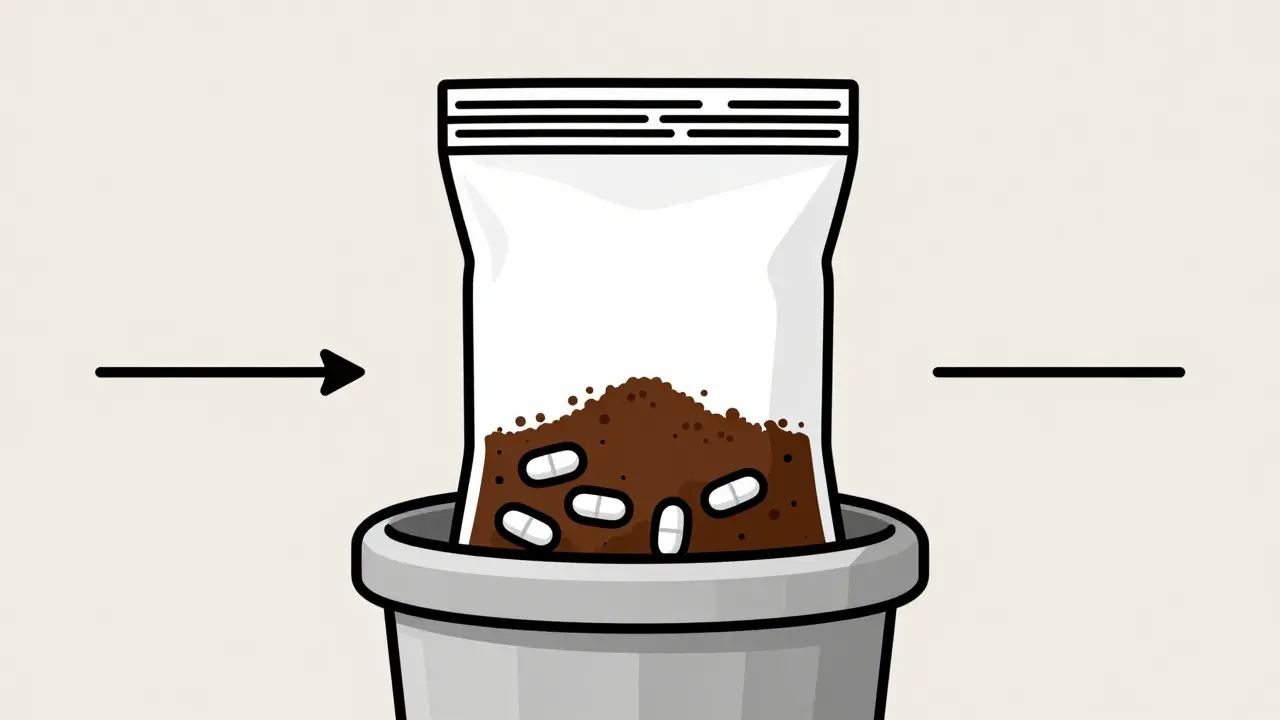
Old medications in the trash are a goldmine for curious pets and children. Simply throwing a bottle in the bin isn't enough, as animals can tear through plastic bags in seconds.- Mix it up: If you can't get to a pharmacy take-back program, mix your pills with something unpalatable, like used coffee grounds or cat litter. Use at least a 1:1 ratio by volume.
- Seal it tight: Put the mixture in a sealable plastic bag or a sturdy container.
- Hide the scent: Ensure the container is airtight so pets aren't attracted to the smell of the medication.
This process makes the medicine taste terrible and look like trash, which stops most children and animals from trying to eat it if they happen to find the bag.
Are child-resistant caps enough to keep kids safe?
No. Child-resistant packaging is designed to slow down a child, not stop them entirely. Many children can eventually figure out how to open these caps, especially if they watch adults do it. They should be seen as a backup, not your primary safety measure. Locked storage is the only reliable way to prevent access.
Where is the worst place to store medication in a house?
The bathroom cabinet is often the worst spot. First, it's usually at a height that kids can reach. Second, the high humidity from showers can degrade the medicine's effectiveness. Kitchen counters are also high-risk because they are "convenient" but leave meds exposed to pets and toddlers.
Can I store human and pet medications together if they are locked?
It is strongly recommended that you keep them completely separate. Even in a locked box, a mix-up during administration can happen. A person could accidentally take a pet's medication, or a pet could be given a human drug, both of which can lead to severe toxicity or organ failure.
What should I do if I suspect my child or pet swallowed medicine?
Act immediately. Do not wait for symptoms to appear. Contact your local poison control center or an emergency vet right away. Have the medication bottle ready so you can tell the professional exactly what was ingested and the dosage.
How do I store medications that need to be refrigerated?
Refrigerated medications should be kept in a lockable plastic container inside the fridge. This prevents children from grabbing them during a snack and keeps them separate from food to avoid any risk of cross-contamination.
15 Comments
This is such a helpful guide for parents. I've always worried about my kids getting into the vitamins, so the lockbox idea is a great suggestion!
Wake up people! You think these "safety" locks actually work? Big Pharma just wants us buying more plastic containers while they put chemicals in the water to make our kids easier to control anyway. Total madness!
The notion that a mere five-foot elevation constitutes a "security system" is quaint at best. One must acknowledge that the inherent curiosity of a child is a philosophical force that transcends simple physical barriers, rendering such rudimentary advice almost trivial for those with truly precocious offspring.
Fair point on the bathroom humidity. I never thought about the meds actually breaking down because of the shower steam. Good shout.
It is a beautiful thing to protect our little ones. Every small step we take leads to a safer world for all of us. Peace and love to every family! 😊✨
The sheer incompetence of the average homeowner in managing basic pharmaceutical risk is staggering. It is an absolute tragedy that we must explain the concept of "not leaving poison on the counter" in the twenty-first century. The systemic failure of parental intuition is truly a dramatic spectacle of negligence.
I really appreciate the tip about the coffee grounds for disposal... it is such an important detail that people often overlook!!! Please stay safe everyone!!!
My goodness, the thought of a pet eating human meds is truly horribul!! I shall be moveing all my medications to the highest shelf immeditely to ensure safety!!
American homes need better standards. Period.
Wait, so we're just ignoring the fact that some of these "lockboxes" are basically toys? I bought one last year and my nephew opened it in ten seconds. It's actually hilarious how much we trust these products when they're basically useless. Just put your stuff in a safe and be done with it, honestly.
Let's optimize this workflow! High-altitude storage is a great baseline, but we need to implement a strict UX for the medicine access points to reduce friction during emergencies while maintaining a high security threshold for the toddlers. Keep the energy high and the meds high!
This is basic risk mitigation. Most people lack the cognitive bandwidth to actually maintain a three-zone system because they're stuck in a low-vibration state of chaos. If you can't manage your pill bottle, you're probably failing at your spiritual alignment too. It's a total lack of intentionality in the domestic space.
What a magnificent and comprehensive guide for the safety of our households! It is truly heart-wrenching to think of the accidents that occur, but with such thoughtful advice, we can foster a sanctuary of health and safety for every living being under our roof. I shall share this with all my community circles to ensure widespread awareness!
Oh my gosh this is so vital!! I accidentalyl left my vitamins on the nightstand once and my cat tried to chew the bottle!! It was absolutely terrifying and I cannot emphasize enough how important the two-minute rule is for everyone!! Please please read this carefully!!
Stop whining and just buy a safe! If you're not using a heavy-duty biometric lock for high-risk pharmaceuticals, you're just playing house. Scale your security to match the threat level of a toddler who can climb a bookshelf. Get aggressive with your storage or get ready for the ER. Simple as that!