QT Prolongation Risk Calculator
Ondansetron Safety Assessment
Enter patient factors to determine risk of QT prolongation with ondansetron use
When you're dealing with severe nausea from chemotherapy, surgery, or a bad stomach bug, ondansetron can feel like a lifesaver. It works fast, it’s widely available, and for years, it was the go-to drug for stopping vomiting. But here’s something most people don’t know: ondansetron can mess with your heart’s rhythm - and in rare but dangerous cases, it can trigger a life-threatening arrhythmia called torsades de pointes. This isn’t theoretical. It’s been documented. It’s been warned about. And yet, many clinicians still use it the old way.
What QT Prolongation Really Means
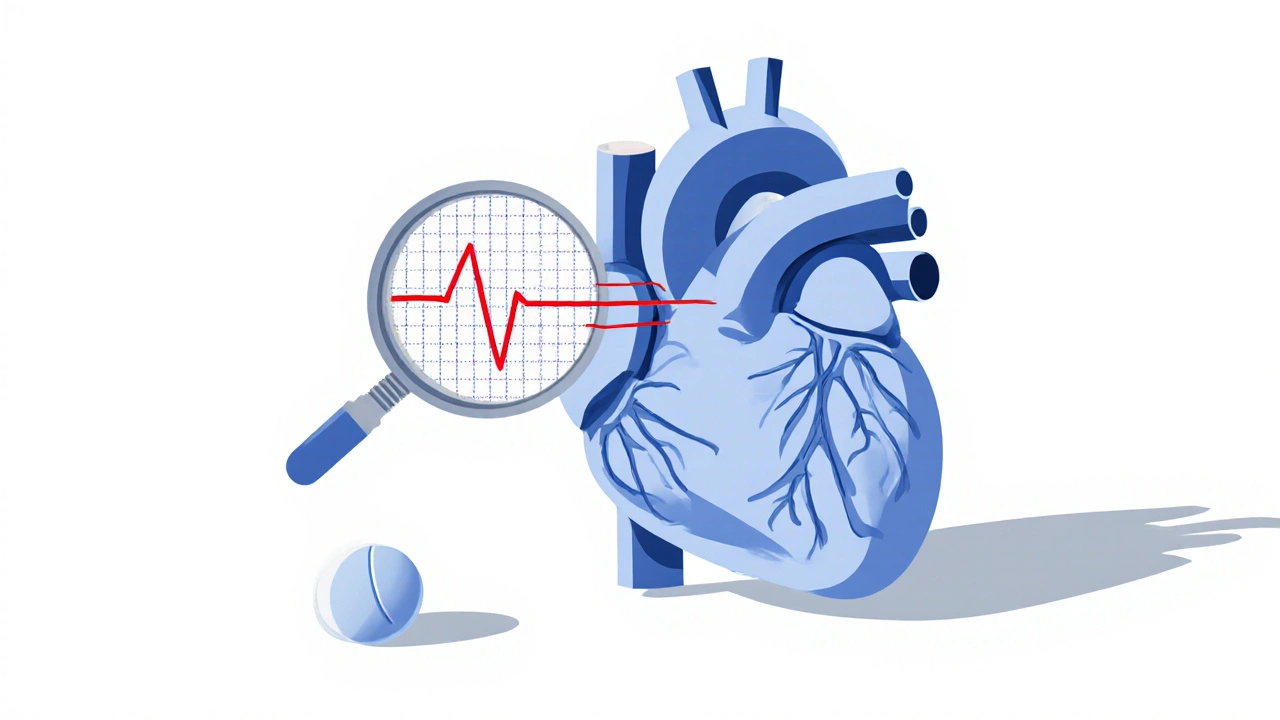
Your heart doesn’t just beat randomly. It follows a precise electrical pattern. The QT interval on an ECG shows how long it takes for the heart’s lower chambers to recharge after each beat. If that interval gets too long, the heart can’t reset properly. That’s when dangerous rhythms like torsades de pointes can start - a chaotic, fast heartbeat that can turn into sudden cardiac arrest. This isn’t something that happens to healthy people after one dose. But in patients with existing heart problems, low potassium, low magnesium, or those taking other QT-prolonging drugs, the risk jumps. And ondansetron? It’s one of the most common offenders in hospitals.How Ondansetron Affects the Heart
Ondansetron blocks a specific potassium channel in heart cells called hERG. That’s the same channel that’s targeted by drugs like citalopram and domperidone. When it’s blocked, the heart takes longer to repolarize. That’s what stretches out the QT interval. Studies show clear numbers: a single 32 mg IV dose of ondansetron can lengthen the QTc interval by up to 20 milliseconds. That’s not a small bump. For context, a 10 ms increase in QTc is linked to a 5-7% higher risk of arrhythmias. And in patients with baseline QTc already above 450 ms in men or 470 ms in women, that extra 20 ms can push them into dangerous territory. The FDA stepped in back in 2012 after GlaxoSmithKline’s own study confirmed the danger. They said: stop using 32 mg IV doses. Never give more than 16 mg in a single IV shot. Even that 16 mg dose isn’t risk-free - especially if the patient is elderly, has heart failure, or is on other meds that affect the heart.Not All Antiemetics Are Equal
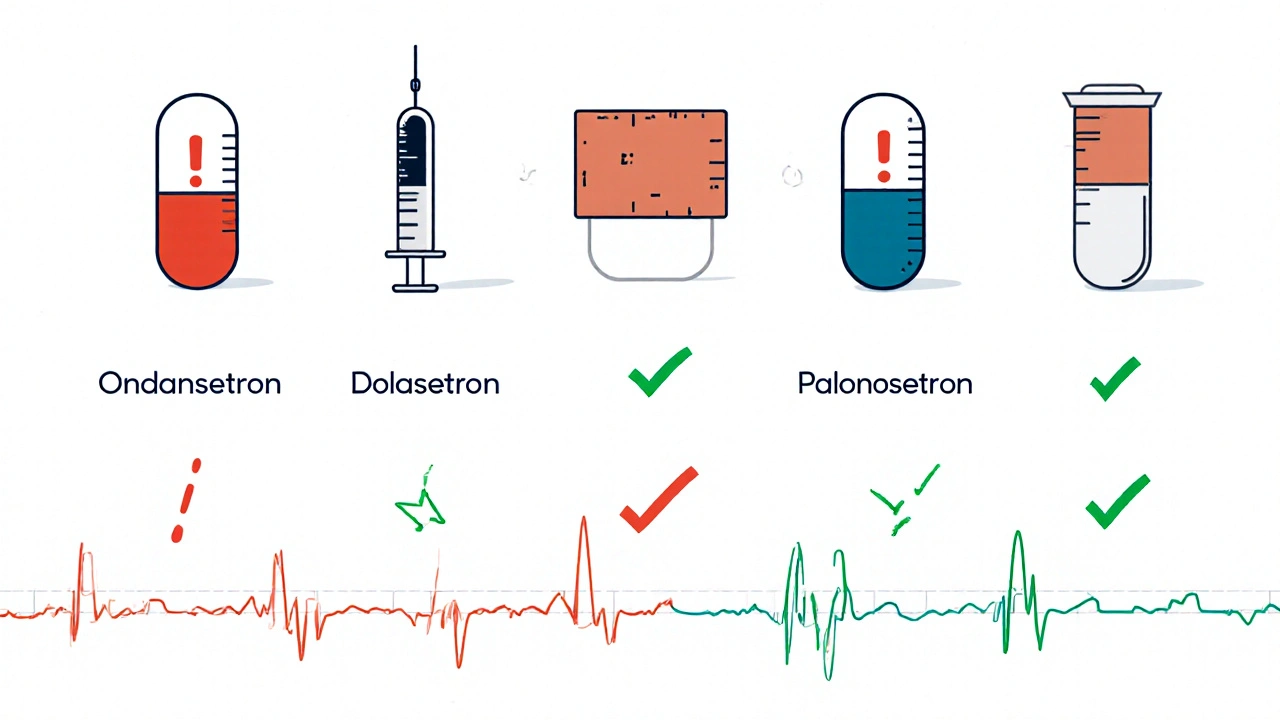
Ondansetron isn’t the only antiemetic with this problem, but it’s one of the most commonly used. Here’s how the others stack up:- Dolasetron: Highest risk in the 5-HT3 class. The FDA restricted its use in 2010 because of severe QT prolongation. Avoid it entirely if possible.
- Granisetron: Much safer. Transdermal patches have almost no cardiac effect. A 2013 study showed it causes less QT prolongation than ondansetron.
- Palonosetron: Now preferred over ondansetron in cancer patients with heart risks. At equivalent doses, it only prolongs QTc by about 9.2 ms - less than half of ondansetron’s 20 ms.
- Droperidol: Also carries a black box warning for QT prolongation, but studies show its risk is similar to ondansetron - around 20-23% of patients show prolongation.
- Prochlorperazine: A phenothiazine, it can prolong QT, but generally less than high-dose IV ondansetron. Still, caution is needed.
What’s clear? If you’re treating someone with heart issues, palonosetron or granisetron are better choices. Ondansetron should be reserved for low-risk patients - and even then, use the lowest effective dose.
Who’s Most at Risk?
It’s not just about the drug. It’s about the person. The biggest red flags:- Baseline QTc > 450 ms (men) or > 470 ms (women)
- History of congenital long QT syndrome
- Heart failure or bradycardia
- Low potassium (< 3.5 mEq/L) or low magnesium (< 1.8 mg/dL)
- Older adults (especially over 75)
- Patients on other QT-prolonging drugs - antibiotics like azithromycin, antifungals, antidepressants, or antipsychotics
A 2019 Johns Hopkins case series found 3 out of 15 elderly patients with preexisting heart conditions developed QTc over 500 ms after just an 8 mg IV dose of ondansetron. That’s not rare. That’s predictable.
What Clinicians Are Doing Differently Now
Since the FDA warning, things have changed - slowly, but they’ve changed. A 2020 survey of 256 anesthesiologists showed 78% reduced their ondansetron doses. Most now use 4-8 mg IV instead of the old 16 mg standard. Hospitals are catching on too. By 2022, 92% of U.S. hospitals had formal protocols for ondansetron use - up from just 37% in 2011. Here’s what’s becoming standard practice:- Check a baseline ECG before giving IV ondansetron if the patient has any cardiac risk factors.
- Correct electrolytes first - potassium and magnesium must be in normal range.
- Limit IV dose to 8 mg for high-risk patients. Even 16 mg is too much if they’re elderly or have heart disease.
- Consider alternatives like dexamethasone or aprepitant, especially in cancer patients.
- Monitor ECG for 4 hours after IV administration in high-risk cases - some hospitals now require it.
One ER doctor in Boston reported seeing QTc spikes of 25-30 ms in heart failure patients on 8 mg IV ondansetron. She now uses dexamethasone alone for low-risk nausea. “It works almost as well,” she said, “and we don’t have to worry about the heart.”
The Bigger Picture: Why This Matters
Ondansetron is still the most prescribed antiemetic in the U.S. - 18.7 million prescriptions in 2022. But IV use has dropped 22% since 2012. Why? Because people are learning. The American Society of Clinical Oncology now recommends palonosetron over ondansetron for patients with cardiac risk factors. The European Medicines Agency now requires all 5-HT3 antagonists to carry QT prolongation warnings. The NIH is even running a trial called QT-EMETIC, testing whether genetic testing (CYP2D6 poor metabolizers) can predict who’s most at risk. And here’s the kicker: for every 10 ms increase in QTc, the risk of sudden death goes up. That’s not a minor side effect. That’s a death risk.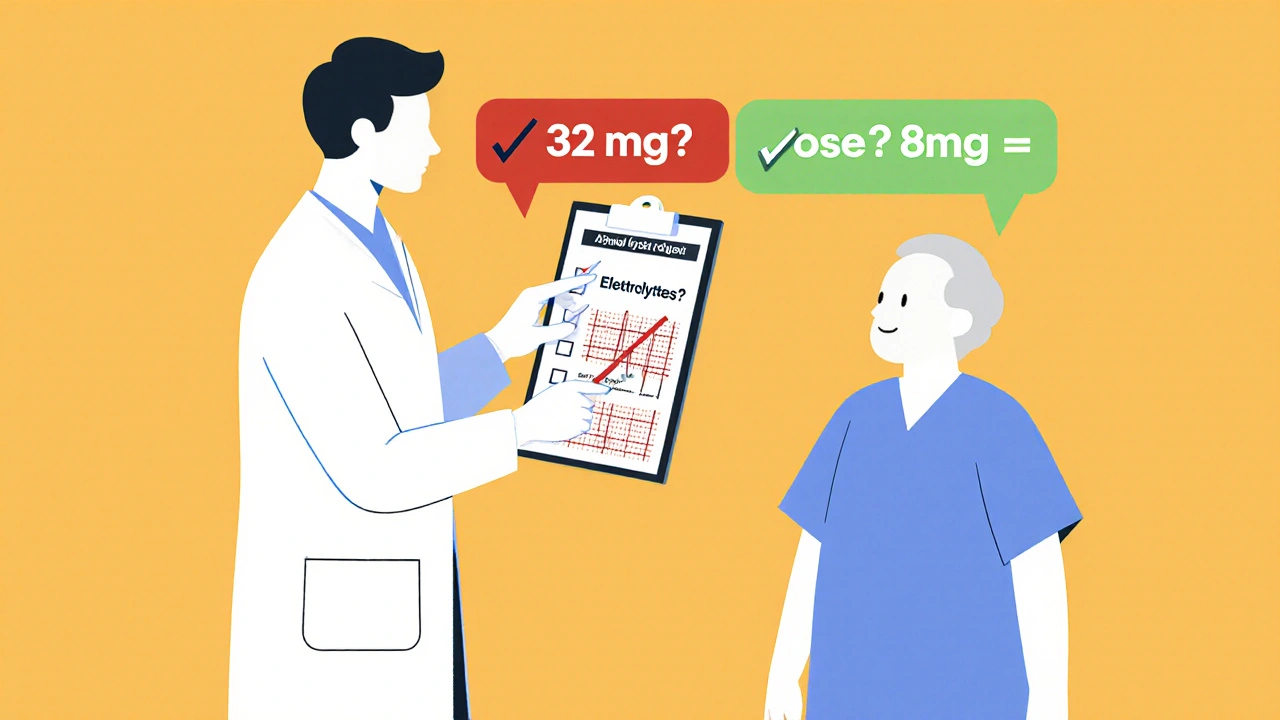
What Should You Do?
If you’re a patient: Ask your doctor if you’re at risk. If you’ve had heart problems, low potassium, or take other meds that affect your heart, don’t assume ondansetron is safe. Ask about alternatives. If you’re a clinician:- Never give 32 mg IV. Ever.
- Don’t use 16 mg IV unless absolutely necessary - and only if the patient has no risk factors.
- Check electrolytes. Check ECG. Check for drug interactions.
- Use granisetron or palonosetron when cardiac risk is present.
- Consider non-5-HT3 options like dexamethasone or aprepitant for chemotherapy patients.
The goal isn’t to avoid ondansetron entirely. It’s to use it wisely. It’s still effective. But safety isn’t optional. The data is clear. The warnings are loud. The deaths are real.
When to Avoid Ondansetron Altogether
There are times when you shouldn’t use it at all:- Known congenital long QT syndrome
- Recent cardiac arrest or sustained ventricular arrhythmia
- Severe heart failure with reduced ejection fraction
- Electrolyte imbalance not corrected
- Concurrent use of multiple QT-prolonging drugs
- Patients over 75 with multiple comorbidities
In these cases, switch to dexamethasone, metoclopramide (with caution), or aprepitant. They’re not perfect - but they’re safer.
Can oral ondansetron cause QT prolongation?
Oral ondansetron carries much lower risk than IV. The FDA states that single oral doses up to 24 mg for chemotherapy-induced nausea do not require dosage adjustments. This is because oral absorption is slower, leading to lower peak blood levels. Still, caution is advised in high-risk patients - especially those with preexisting QT prolongation or electrolyte imbalances.
Is ondansetron safe in elderly patients?
Elderly patients are at higher risk. Their kidneys clear drugs slower, and they’re more likely to have heart disease, low electrolytes, or be on other QT-prolonging medications. Studies show older adults (over 75) are more likely to develop QTc over 500 ms after standard doses. Use 4-8 mg IV max, check ECG and electrolytes first, and consider alternatives like dexamethasone.
What’s the safest antiemetic for patients with heart conditions?
Palonosetron is the preferred 5-HT3 antagonist for patients with cardiac risk - it causes far less QT prolongation than ondansetron. For non-5-HT3 options, dexamethasone is often used alone or combined with lower-dose ondansetron. Aprepitant/fosaprepitant is another excellent choice for chemotherapy-induced nausea with no known QT effects. Always avoid dolasetron.
Do I need an ECG before giving ondansetron?
Yes, if the patient has any risk factors: age over 65, heart disease, electrolyte imbalance, or is on other QT-prolonging drugs. Many hospitals now require a baseline ECG before IV ondansetron in these cases. Even if not mandatory, it’s a simple, low-cost step that can prevent a life-threatening event.
Can I give ondansetron with azithromycin?
Avoid it. Azithromycin is a known QT-prolonging antibiotic. Combining it with ondansetron significantly increases the risk of torsades de pointes. If both are needed, use alternative antibiotics (like amoxicillin) or switch to a safer antiemetic like dexamethasone. Never combine two QT-prolonging drugs without ECG monitoring and specialist input.
Final Thoughts
Ondansetron isn’t evil. It’s a powerful drug that helps millions. But power without caution is dangerous. The warnings have been out for over a decade. The data is solid. The alternatives exist. The question isn’t whether ondansetron works - it’s whether the risk is worth it in your patient.When in doubt, check the ECG. Correct the electrolytes. Lower the dose. Choose a safer option. That’s not being overly cautious. That’s being a good doctor.



12 Comments
This is why I always ask my oncologist for the patch instead of the IV shot 😌❤️ No more heart palpitations after chemo!
The clinical data presented here is unequivocal. Ondansetron's hERG channel blockade confers a dose-dependent QTc prolongation that is both statistically significant and clinically actionable. The 2012 FDA directive was not precautionary-it was a necessary intervention to prevent iatrogenic torsades de pointes. Institutions that have not implemented mandatory pre-administration ECGs and electrolyte panels for patients over 65 or with cardiac comorbidities are operating below the standard of care.
Given the pharmacokinetic profile of ondansetron, is there any peer-reviewed evidence suggesting that genetic polymorphisms in CYP2D6 significantly modulate the degree of QT prolongation? If so, could pharmacogenomic screening become a cost-effective preventive strategy in high-risk oncology populations?
Let me guess-Big Pharma knew this was dangerous for decades. They pushed IV ondansetron because it’s more profitable than dexamethasone. Now they’re ‘educating’ docs with fancy studies while quietly replacing it with palonosetron-same company, same profit margin. Wake up. This isn’t science. It’s corporate calculus. They’ll bury another drug next year. You think they care about your heart? They care about your insurance card.
Oh wow. A 20ms QT prolongation is ‘dangerous’? So what? You mean like how every single antibiotic, antidepressant, and antifungal you take does the same thing? You’re acting like this is the first time a drug has ever had a side effect. The real danger is the medical industry turning every mild risk into a panic so they can sell you more tests, more monitors, more expensive ‘safer’ drugs. Meanwhile, your nausea is still there. And you’re broke.
Man, I had chemo last year and they hit me with the 16mg IV drip like it was nothing. Felt like my heart was doing the cha-cha for 20 minutes. I didn’t know any of this. My nurse just said, ‘Here, this’ll stop the puking.’ Now I’m like… why didn’t anyone tell me? I’m not mad, just… wow. I’m gonna ask for the patch next time. Or just chug ginger tea. Either way, I’m not getting poked again without asking first.
It’s appalling that American hospitals still treat antiemetics like over-the-counter candy. This isn’t a ‘risk’-it’s a predictable, preventable death sentence for vulnerable patients. The fact that 92% of U.S. hospitals now have protocols means 8% still don’t. That’s 8% too many. Shame on them. This isn’t a debate. It’s malpractice.
I’ve been an ER nurse for 18 years and I’ve seen more people throw up from anxiety than from chemo. Ondansetron’s great when you need it, but we used to give it like water-32mg, 16mg, even 8mg for kids with stomach bugs. Then one day a 78-year-old with CHF coded after we gave her 8mg for nausea from a viral thing. We didn’t check her K+ or ECG. She lived, but barely. Since then? We check everything. Even if it’s ‘just’ nausea. Because sometimes, it’s not just nausea. Sometimes, it’s a ticking clock.
If you’re still using ondansetron IV in anyone over 60 without an ECG, you’re not a doctor. You’re a liability.
I read all this and just sighed. Like… I get it. But honestly? I just want to stop puking. Can’t we just give the pill and call it a day? Why does everything have to be this complicated?
Ondansetron’s not the villain-it’s the scapegoat. The real problem? We treat nausea like a minor inconvenience instead of a symptom of systemic chaos. We throw drugs at it without checking the patient’s electrolytes, their meds, their cardiac history. It’s not the drug’s fault-it’s the system’s. And until we stop treating medicine like a fast-food menu, people are gonna keep dropping.
The hERG blockade mechanism is well-documented, but the clinical relevance is overstated. Torsades de pointes incidence remains <0.1% even in high-risk cohorts. The emphasis on ECG monitoring and dose reduction reflects regulatory overreach, not evidence-based medicine. Alternative agents like aprepitant lack robust comparative effectiveness data in non-chemo populations. The current paradigm prioritizes risk mitigation over therapeutic efficacy-potentially depriving patients of optimal antiemetic control.