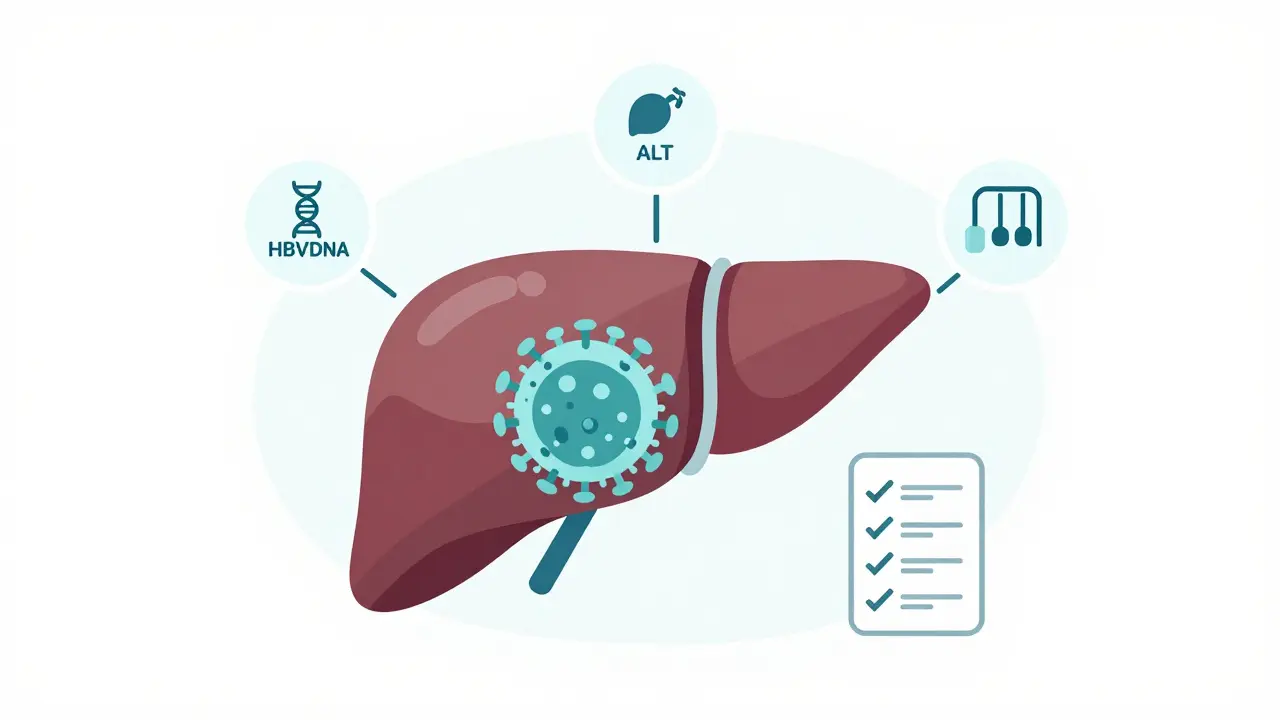
Chronic hepatitis B isn’t just a lab result-it’s a lifelong condition that affects nearly 300 million people worldwide. If you’ve been told you’re HBsAg-positive for more than six months, you’re part of that group. The good news? We now have better tools than ever to manage it. The better news? Most people with chronic hepatitis B can live long, healthy lives-if they know what to do and when to do it.
What Makes Hepatitis B Chronic?
Most adults who catch hepatitis B clear the virus on their own. But about 5-10% of adults, and up to 90% of infants infected at birth, develop chronic infection. That means the hepatitis B virus (HBV) sticks around in the liver, quietly damaging it over years or decades. The virus doesn’t cause symptoms right away. Many people feel fine for years. That’s why it’s called a silent infection. By the time fatigue, jaundice, or abdominal pain show up, the liver may already be scarred.
The key marker? Hepatitis B surface antigen (HBsAg). If it’s still detectable after six months, it’s chronic. But HBsAg alone doesn’t tell the whole story. You need to know your HBV DNA level, your ALT (liver enzyme), and whether your liver is scarred. These three things guide your treatment path.
Who Needs Treatment? It’s Not Just About Viral Load
Years ago, doctors only treated people with high viral loads and elevated liver enzymes. Now, the rules have changed. The WHO 2024 guidelines are the most progressive yet: they recommend antiviral treatment for all adults with HBV DNA above 2,000 IU/mL, no matter what their ALT or liver scan shows.
Why? Because even people with "normal" liver enzymes can still develop cirrhosis or liver cancer. A 2023 study tracking 12,000 patients found that 40% of those who later developed liver cancer had ALT levels within the normal range for years. That’s why guidelines now say: if the virus is replicating, treat it.
There are exceptions. If you have compensated cirrhosis-meaning your liver is scarred but still working-you should be on treatment regardless of your viral load. If you have decompensated cirrhosis-your liver is failing-treatment is urgent, and you need to be evaluated for a transplant.
Which Antivirals Work Best?
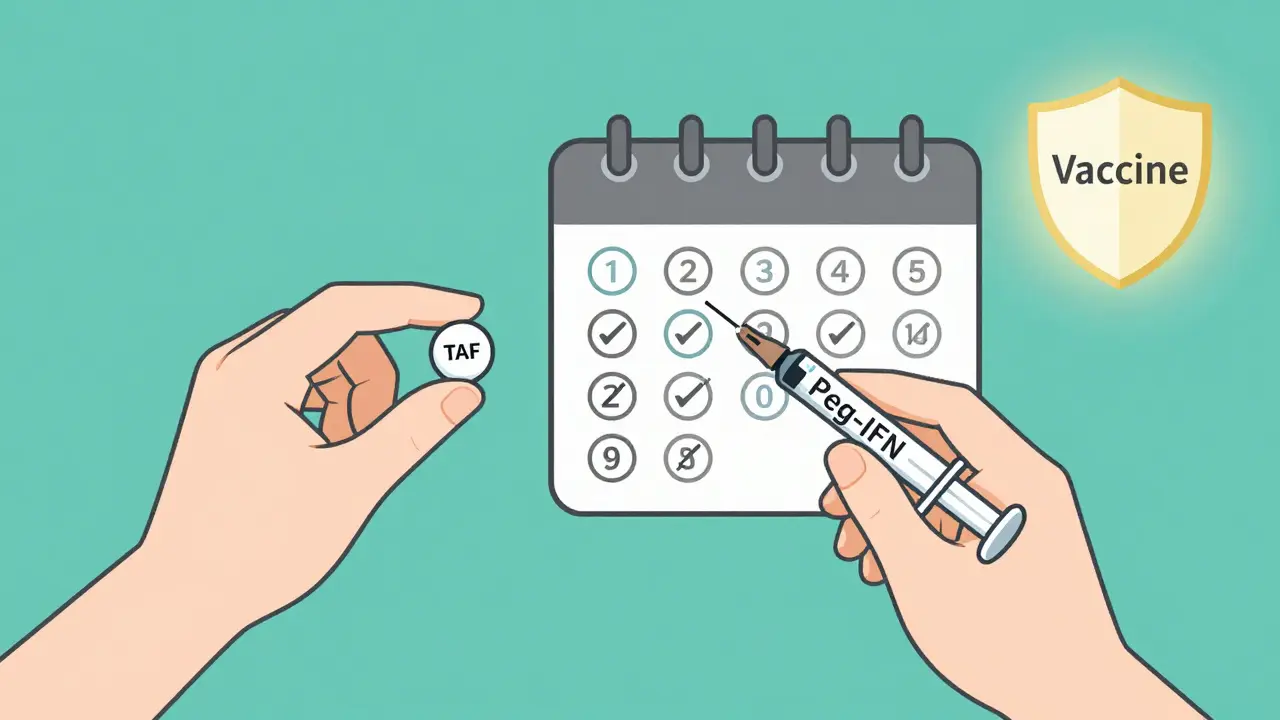
There are three main oral antivirals used today: tenofovir disoproxil fumarate (TDF), tenofovir alafenamide (TAF), and entecavir (ETV). All are highly effective at suppressing HBV DNA. But they’re not the same.
TDF has been around longer. It works great, but it can affect kidneys and bones. Studies show it can cause protein in the urine, lower bone density, and even lead to a rare condition called Fanconi syndrome. That’s why many doctors now switch patients to TAF.
TAF (brand name VEMLIDY) is a newer version of tenofovir. It works at lower doses, so less of it reaches the kidneys and bones. Clinical trials show that switching from TDF to TAF improves kidney function within months and helps rebuild bone density. It’s now the preferred first-line drug in the AASLD 2018, EASL 2017, and USTA 2021 guidelines.
Entecavir is also very effective and has a high barrier to resistance. It’s often used when TAF or TDF aren’t available or affordable. But it’s not recommended for people who’ve had prior lamivudine treatment, because resistance can develop.
Pegylated interferon (PEG-IFN) is still used sometimes-especially in younger patients who want a finite course of treatment. But it’s tough: injections, flu-like side effects, mood changes. It’s not for everyone.
Special Cases: Pregnancy, HIV, and Hepatitis D
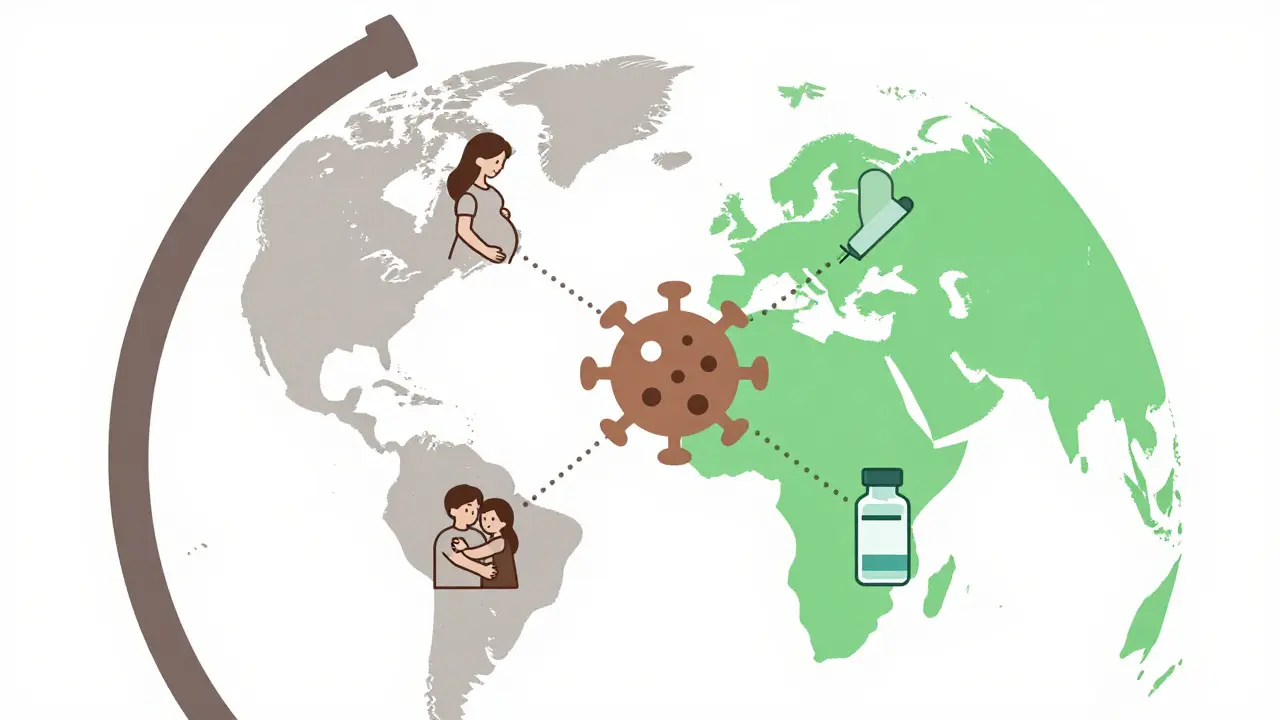
If you’re pregnant and have chronic HBV, you’re not alone. The WHO 2024 guidelines now recommend starting tenofovir at week 28 for women with HBV DNA above 5.3 log10 IU/mL. This cuts mother-to-child transmission risk from 10-20% to under 1%. The baby still gets the vaccine at birth-but now, the mom gets treatment too.
If you have both HIV and HBV, you need to be careful. Some HIV drugs don’t touch HBV. That’s dangerous. The 2025 guidelines update says: if you’re HIV-positive and HBV-positive, start an HIV regimen that includes TDF or TAF right away. Don’t wait. You’ll protect both your immune system and your liver.
And don’t forget hepatitis D. If you’re HBsAg-positive, you could also have HDV. It’s rare in the U.S. but common in parts of Africa, Eastern Europe, and Central Asia. HDV makes HBV worse-faster liver damage, higher cancer risk. The 2025 guidelines now strongly recommend testing everyone with HBV for HDV. It’s simple: a blood test. If you have it, your treatment plan changes.
How Often Should You Be Monitored?
Every six months. That’s the standard. Not every year. Not only when you feel sick. You need:
- HBV DNA test
- ALT and liver function tests
- FibroScan or other non-invasive liver stiffness test
- AFP (alpha-fetoprotein) for liver cancer screening
- Ultrasound of the liver
Some clinics now use quantitative HBsAg levels to track disease activity. It’s not yet standard everywhere, but experts like Dr. Robert G. Gish say it’s the future. Falling HBsAg levels mean your immune system is gaining ground. Rising levels? Time to reassess.
Vaccination: The Best Defense
The hepatitis B vaccine is one of the most effective vaccines ever made. It’s 95% effective at preventing infection. And it’s safe. The CDC recommends it for all newborns, all unvaccinated children and teens, and adults at risk-healthcare workers, people with multiple sexual partners, those with chronic liver disease, and anyone who uses injectable drugs.
But here’s the gap: in the U.S., only about 25% of adults at risk have been vaccinated. Why? Many don’t know they’re at risk. Or they think, "I’m not a drug user, so I’m safe." But HBV spreads through blood and body fluids. A shared razor, a tattoo with unsterile equipment, even a kiss with an open sore-those can transmit it.
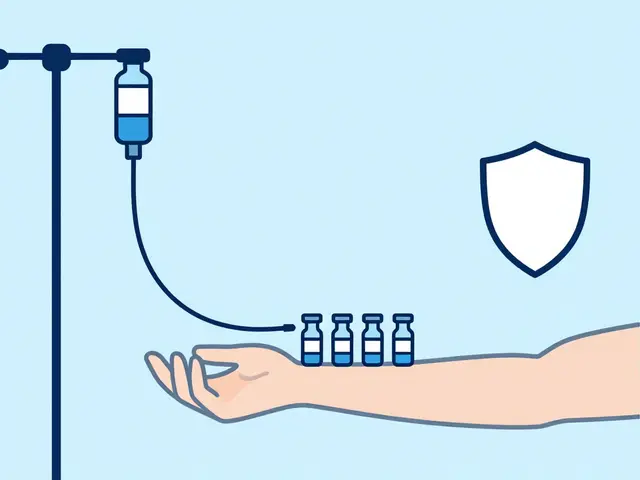
Post-exposure prophylaxis works too. If you get pricked by a needle from someone with HBV, or have unprotected sex with an infected person, you need HBIG (hepatitis B immune globulin) and the first dose of the vaccine within 24 hours. Done right, it prevents infection in over 90% of cases.
What’s Next? The Future of HBV Treatment
We’re not done yet. Right now, 15+ new drugs are in clinical trials targeting the virus’s hidden reservoir: cccDNA. That’s the DNA the virus hides inside liver cells. If we can eliminate it, we can cure HBV.
Researchers are testing drugs that silence cccDNA, boost the immune system to kill infected cells, or block viral entry. Dr. Steven-Huy Han predicts that by 2030, 30-40% of chronic HBV patients could achieve a functional cure-no more virus, no more treatment needed. It’s not here yet, but it’s coming.
Meanwhile, the biggest challenge isn’t science-it’s access. In low-income countries, only 10-20% of people with HBV get treatment. In rich countries, it’s 20-30%. We have the tools. We need to use them.
What You Should Do Now
- If you’re HBsAg-positive: see a liver specialist. Don’t wait.
- Get your HBV DNA, ALT, and liver stiffness tested. Ask about HDV testing.
- If you’re on TDF and have kidney or bone issues: ask if TAF is right for you.
- If you’re pregnant: ask about tenofovir at week 28.
- If you’re not vaccinated: get the three-shot series now. It’s free or low-cost in most places.
- Don’t share razors, toothbrushes, or needles. Use condoms. Get tested.
Chronic hepatitis B isn’t a death sentence. It’s a manageable condition. But you have to stay on top of it. The virus doesn’t care if you feel fine. Your liver does.
Can hepatitis B be cured?
Currently, there’s no cure for chronic hepatitis B. But antivirals like TAF and ETV can suppress the virus to undetectable levels, preventing liver damage. A small percentage of people (less than 10%) may lose HBsAg after years of treatment-this is called functional cure. New drugs targeting cccDNA are in trials and may offer true cures in the next decade.
Is hepatitis B contagious through casual contact?
No. You can’t catch hepatitis B from hugging, kissing, sharing food, or using the same toilet. It spreads through blood and body fluids-needle sharing, unprotected sex, childbirth, or unsterile tattoos. That’s why vaccination and safe practices are key.
How long do I need to take antivirals?
For most people with chronic HBV, treatment is lifelong. Stopping too early can cause the virus to rebound and damage the liver. Some patients with HBeAg loss and low HBV DNA after years of treatment may be considered for stopping, but only under strict specialist supervision. Never stop without medical advice.
Can I drink alcohol if I have hepatitis B?
No. Alcohol speeds up liver damage in people with HBV. Even small amounts increase your risk of cirrhosis and liver cancer. The safest choice is complete abstinence. Your liver is already under stress-don’t add alcohol to the burden.
Are generic antivirals as good as brand names?
Yes, for TDF and ETV. Generic versions are bioequivalent and widely used globally. TAF generics are emerging but less common. Always get your medication from a reputable pharmacy. Avoid unregulated online sources-counterfeit drugs are a real risk.
Should my family be tested?
Yes. All household members and sexual partners should be tested for HBV. If they’re negative, they should be vaccinated immediately. This stops transmission at the source. Children born to HBV-positive mothers should be tested at age 1-2 years to confirm immunity.




10 Comments
Just wanted to say thank you for laying this out so clearly. I’ve been HBsAg-positive for 12 years and felt totally lost until I read this. The part about TAF vs. TDF? Game-changer. My kidneys have been acting up, and I didn’t even know switching could help. Going to my hepatologist next week with this printed out. 🙏
Let’s be real - the medical industry’s been milking this for decades. 'Lifelong treatment' my ass. They don’t want you cured because you’re a cash cow. TAF costs $1,200 a month in the US. In India? $5. Meanwhile, the WHO says 'treat everyone' but doesn’t fix the supply chain. Wake up. This isn’t science - it’s capitalism with a stethoscope.
I’m so glad this exists!! My brother just got diagnosed and I’ve been scrambling to understand what to do. This is like a roadmap. Thank you!! 💪❤️
Okay, I’ve read this three times now and I’m still in awe. The way you broke down HBV DNA, ALT, and fibrosis - it’s like someone finally translated the medical jargon into human. I work in public health in Sydney and we’ve got a massive gap in HBV awareness among Southeast Asian communities. This post? It’s going straight into our outreach toolkit. The part about HDV testing in Eastern Europe? That’s gold. We’re missing so many cases because no one’s asking. And the vaccine stats? 25%? That’s a national disgrace. We need mobile clinics, not brochures.
Lifesaver. My ALT’s been normal for years but my DNA’s been 8,000 IU/mL. Docs kept saying 'wait and watch.' Now I know that’s a trap. Got my TAF switch scheduled. Also - alcohol is dead to me. No more wine nights. Liver first. 🫡
wait so if u have hiv and hbv u gotta be on tdf or taf right away?? like even if u dont feel sick?? and what if ur on some other hiv med?? like i got prescribed something else last year and now im scared i messed up??
You're all just being manipulated. The pharmaceutical companies own the guidelines. TAF isn't 'better' - it's just more expensive. TDF works fine. Why do you think they pushed TAF? Profit. And don't get me started on the 'functional cure' nonsense. It's a placebo dressed in lab coats. Real cure? That's decades away. Meanwhile, people are being scared into lifelong pills. Don't trust the system.
Think about this: what if HBV isn’t a virus at all, but a symptom of systemic toxicity? The liver doesn’t 'fail' - it’s detoxing. The 'viral load' metrics? Arbitrary. The real problem is glyphosate in our water, heavy metals in vaccines, and the suppression of natural immunity by chronic stress. We’re being fed a narrative to sell antivirals. The real cure? Detox, fasting, and sunlight. The WHO? Controlled by the same entities that profit from the 'treatment' model. Ask yourself: who benefits from you believing you need a daily pill for life?
Just a heads-up for folks: if you're on TDF and your eGFR drops below 60, get tested for tubular damage ASAP. I had proteinuria for 6 months before anyone noticed. Switched to TAF - my kidney numbers bounced back in 3 months. Also - get your HBsAg quant done. Mine’s been dropping slowly. Feels like my immune system’s finally catching up. Small wins.
This is the most helpful thing I’ve read on HBV. I’ve been avoiding my doctor for years because I was scared. Now I know what to ask for. Thanks.