When a brand-name drug loses its patent protection, generic versions can enter the market. But figuring out exactly when that happens isn’t as simple as checking a calendar. For pharmacists, drug manufacturers, and even patients tracking when cheaper alternatives might become available, the FDA Orange Book is the go-to source. It’s not a flashy website or a public database you stumble upon - it’s the official, legally mandated registry that tracks every patent and exclusivity period for approved drugs in the U.S. If you’re trying to plan a generic launch, understand why a drug is still expensive, or just want to know when your prescription might drop in price, this is where you start.
What the FDA Orange Book Actually Is
The FDA Orange Book, officially called Approved Drug Products with Therapeutic Equivalence Evaluations, has been around since 1985. It was created under the Hatch-Waxman Act to balance two goals: letting brand-name companies protect their innovations with patents, while also giving generic manufacturers a clear path to enter the market once those protections expire. It’s not just a list of drugs - it’s a legal map of who owns what, and when.Every drug listed here has been approved by the FDA. That means it’s been reviewed for safety, effectiveness, and quality. But what makes the Orange Book different from other drug databases is its patent data. For each drug, it shows:
- The patent numbers tied to the drug
- The exact expiration date for each patent
- Any regulatory exclusivity periods (like data exclusivity or pediatric exclusivity)
- Whether the patent holder has requested to remove it from the list
These aren’t guesses or estimates. These are dates submitted by the drug companies themselves and verified by the FDA. If a patent expires early because the company didn’t pay maintenance fees, the Orange Book might not reflect that - which is one of its biggest flaws.
How to Find Patent Expiration Dates in the Electronic Orange Book
The old printed version is long gone. Today, everything lives online at the Electronic Orange Book. Here’s how to find what you need:- Go to the Electronic Orange Book homepage.
- Use the search bar to look up the drug by its brand name, generic name, or application number (like "ANDA214567").
- Click on the drug’s application number in the results.
- On the drug’s detail page, scroll down and click the "View" button under the "Patents" section.
- You’ll see a list of all patents linked to that drug, each with its expiration date in the format MMM DD, YYYY - for example, July 9, 2021.
Let’s say you’re looking up Brilinta (ticagrelor). You’ll see multiple patents listed. One might cover the active ingredient, another a specific tablet formulation, and a third a method of use. Each has its own expiration date. The one with the latest date is the one that matters most - it’s the last barrier before generics can legally launch.
What About Exclusivity? It’s Not Just Patents
Patents aren’t the only thing blocking generics. The FDA also grants exclusivity periods that can delay generic entry - even if no patent exists. These are separate from patents and come in different flavors:- 180-day exclusivity: Given to the first generic company to challenge a patent successfully (a "Paragraph IV" certification). This can be more valuable than the patent itself.
- 3-year exclusivity: For new uses, formulations, or dosages approved after the original drug.
- 7-year exclusivity: For orphan drugs (treatments for rare diseases).
- 6-month pediatric exclusivity: Added when a company studies the drug in children. This doesn’t create a new patent - it just extends existing ones.
Here’s the tricky part: if a drug has pediatric exclusivity, the Orange Book will show the same patent listed twice - once with the original expiration date, and once with the extra six months. If you’re not looking for both, you might think the patent expires earlier than it really does.
Why the Dates Might Be Wrong (And How to Check)
The Orange Book is authoritative, but it’s not perfect. A 2023 study from the National Bureau of Economic Research found that 46% of patents listed in the Orange Book had already expired early because the patent holder stopped paying maintenance fees. The FDA doesn’t update those records retroactively. So if you’re planning a generic launch, you can’t rely on the Orange Book alone.You need to cross-check with the U.S. Patent and Trademark Office (USPTO) database. Go to Patent Center, enter the patent number, and check:
- Is the patent still active?
- Has it been abandoned?
- Has the maintenance fee been paid?
Also, if a patent holder requests to delist a patent from the Orange Book (marked with a "Y" in the "Patent Delist Request Flag"), that’s a red flag. It usually means the patent is being challenged, invalidated, or no longer enforced. Don’t ignore that.
How to Download the Data for Bulk Analysis
If you’re a researcher, a generic manufacturer, or someone who needs to track dozens of drugs, the web interface won’t cut it. The FDA offers daily-updated Orange Book Data Files in CSV and XML formats. These files include every field you need:- Product No - the unique FDA product code
- Patent No - the actual patent number
- Patent Expiration - the date in MM/DD/YYYY format
- Drug Substance Flag - "Y" if the patent covers the active ingredient
- Delist Requested Flag - "Y" if the patent is being removed
- Patent Use Code - a code like "U-123" that tells you what the patent protects (e.g., method of use, formulation)
You can sort, filter, and automate alerts using these files. Many generic drug companies use them to build internal systems that flag upcoming patent expirations weeks or months in advance.
What You Should Do Next
If you’re trying to figure out when a drug will go generic:- Search the Electronic Orange Book for the drug.
- Find the latest patent expiration date.
- Check for pediatric exclusivity - look for duplicate entries.
- Look for any "Delist Requested" flags.
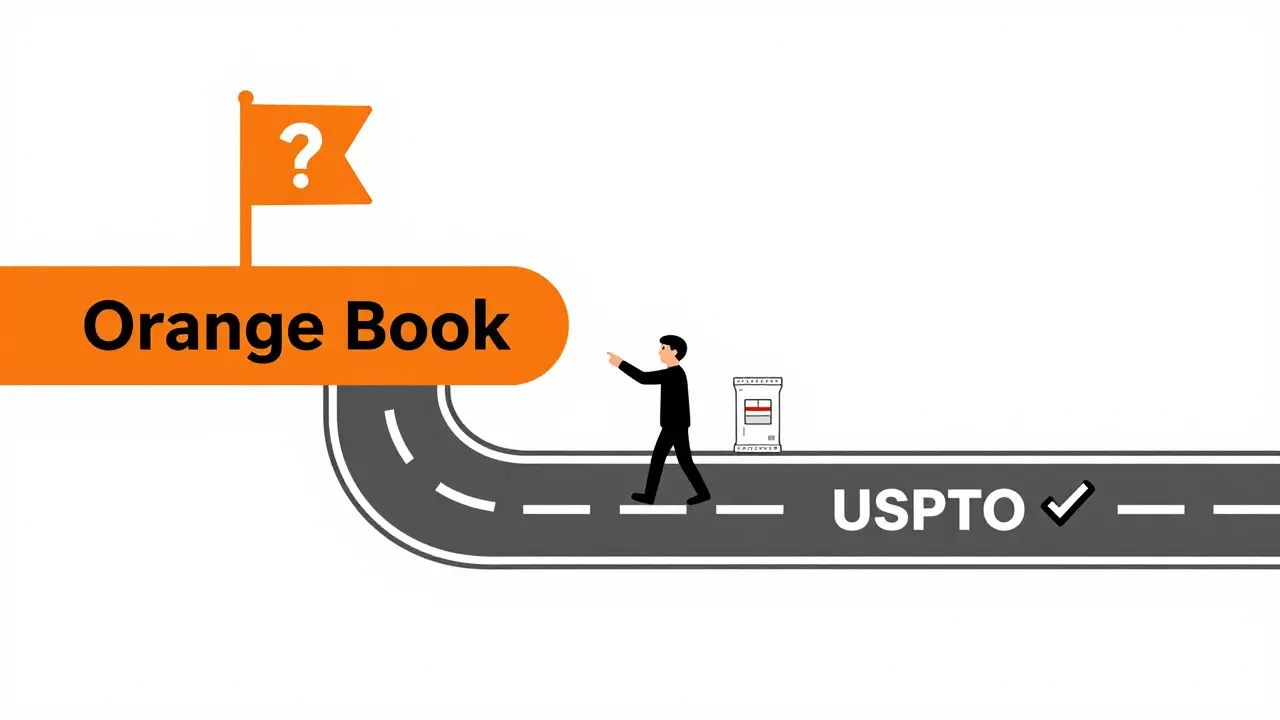
- Go to the USPTO Patent Center and verify the patent status.
- Check if any exclusivity periods are still active.
Don’t assume the Orange Book is always right. The most successful generic manufacturers don’t just look at one source - they layer data. They combine the Orange Book with USPTO records, court filings, and regulatory updates. It’s not glamorous, but it’s how you avoid costly mistakes.
Why This Matters
By 2025, an estimated 78% of brand-name drug revenue will face generic competition. That’s billions of dollars shifting from big pharma to generics. For patients, that means lower prices. For manufacturers, it means timing is everything. Missing a patent expiration by a month can cost millions. Getting it right can mean being first to market - and capturing the biggest share of sales.The FDA Orange Book is the starting point. But it’s not the finish line. Treat it like a map - useful, but not perfect. Always verify.
Is the FDA Orange Book free to use?
Yes. The Electronic Orange Book and all downloadable data files are completely free and publicly accessible. You don’t need to register, pay, or sign up. The FDA provides them as part of its transparency mandate under the Hatch-Waxman Act.
Do all drugs have patents listed in the Orange Book?
No. Only drugs approved under a New Drug Application (NDA) or Abbreviated New Drug Application (ANDA) can have patents listed. Some older drugs, especially those approved before 1984, may have no patents. Also, if a company doesn’t submit patent information within 30 days of issuance, the FDA won’t list it - though this is rare.
Can a drug have exclusivity without any patents?
Yes. A drug can have exclusivity even if it has no patents. For example, a new formulation or pediatric study can trigger exclusivity. This means generics can’t launch even if no patent blocks them. Always check both patent and exclusivity dates.
How often is the Orange Book updated?
The web interface updates daily, and downloadable data files are refreshed every 24 hours. New patents, delistings, and exclusivity changes are added as soon as the FDA receives and verifies them. However, changes from patent expiration due to non-payment of fees are not retroactively removed.
What’s the difference between a patent expiration date and an exclusivity expiration date?
A patent expiration date is when a patent granted by the USPTO runs out. Exclusivity is a regulatory period granted by the FDA - it’s not a patent. Exclusivity can block generics even if no patent exists. The two can overlap, run separately, or expire at different times. The Orange Book shows both, but they’re not the same thing.
Can I trust the patent expiration date in the Orange Book?
Mostly, but not always. The FDA says 93% of patent expiration dates are accurate, especially those with extensions. But 46% of patents expire early due to missed maintenance fees - and those aren’t removed from the Orange Book. Always verify with the USPTO Patent Center for critical decisions.
What if a patent is delisted from the Orange Book?
A delisting doesn’t mean the patent is gone - it means the patent holder asked the FDA to remove it from the list. This often happens if the patent is being challenged in court, invalidated, or is no longer considered enforceable. It’s a strong signal that generic entry may be imminent. But check the USPTO to confirm the patent’s legal status.

10 Comments
Okay but like… why does the FDA even bother listing patents that are DEAD? I checked one last week-patent expired in 2022, still sitting there like a ghost. Had to go to USPTO and find out the company stopped paying fees like 3 years ago. So much wasted time. 🤦♀️
The Orange Book is a beautiful artifact of bureaucratic precision, though I must say, its failure to reflect patent abandonment is a glaring lacuna in regulatory transparency. One would assume the FDA, as a scientific body, would maintain fidelity to data integrity rather than static records.
Just wanna say-this is the kind of info that saves generic companies millions. Not flashy, not viral, but this right here? This is how real medicine gets cheaper. Thank you for laying it out so clean.
So I’ve been using this for my job and honestly? The daily CSV updates are a lifesaver. I set up a little script to ping me when anything’s about to expire. Saves so much stress. 🙌
Is the USPTO search free too? Just asking because I’m from India and we don’t have easy access to these tools here. Would love to try this out.
Too much reading. TL;DR: Check the Orange Book. Then check USPTO. Done.
As someone who’s watched this space for over a decade, I can say the Orange Book is the only thing keeping generics honest. Even if it’s outdated, it’s the baseline. The real magic? When someone actually uses it right.
It is lamentable that the regulatory framework, while ostensibly comprehensive, fails to dynamically reconcile patent status with real-time legal outcomes. A more rigorous integration with the USPTO’s automated systems would significantly enhance evidentiary reliability.
OMG I just found out my med’s patent expires next month 😭 I’ve been paying $400/month and now it’ll be $20?? I’m crying. Thank you for this. 🥹💖
so like… i was reading this and i thought oh cool i can just use the orange book right? but then i saw the part about the 46% of patents being dead but still listed?? and i was like… wait so the fda just leaves all that junk in there?? like why?? i went to uspto and found out my drug’s patent was abandoned in 2021 and no one told me?? i mean… this is wild. i’m mad. but also… thanks? i guess? 🤷♀️