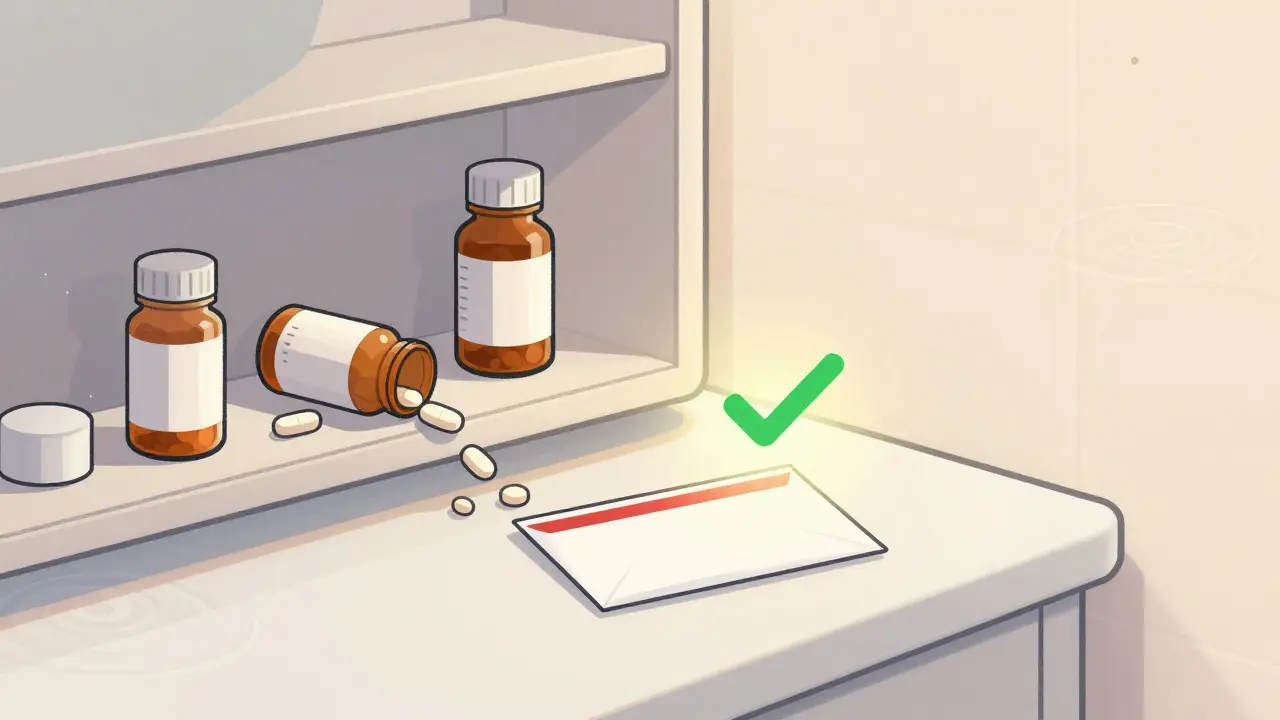
Why Throwing Away Old Pills Is a Bad Idea
You’ve got a medicine cabinet full of old prescriptions. Antibiotics from last year’s cold. Painkillers you never finished. Sleep aids you stopped using after a week. What do you do with them? Tossing them in the trash seems easy-but it’s risky. Flushing them down the toilet? Even worse.
Unused medications don’t just disappear. They leach into soil and water. Fish in rivers have been found with traces of antidepressants. Drinking water in some areas shows low levels of painkillers. And let’s not forget: kids, pets, or even strangers can dig through your trash and find pills they shouldn’t have access to. That’s how accidental overdoses and drug abuse start.
The FDA says the safest way to get rid of unused medicines is through a take-back program. But not everyone lives near a pharmacy or police station that collects them. That’s where prepaid drug mail-back envelopes come in.
What Are Prepaid Drug Mail-Back Envelopes?
These are simple, sealed envelopes you can order online or pick up at some pharmacies. They come with prepaid postage already paid. You put your old, expired, or unwanted medications inside, seal it, and drop it in any U.S. Postal Service mailbox. No extra cost. No trip needed.
The envelope is tamper-proof. Once sealed, it can’t be opened without leaving evidence. That’s by design-so no one can steal your pills before they’re destroyed. The contents are shipped to a DEA-registered facility and burned in a high-temperature incinerator. No landfill. No water contamination. Just clean, safe destruction.
The FDA calls this one of the best ways to dispose of medications. The Drug Enforcement Administration (DEA) supports it too. And since the Secure and Responsible Drug Disposal Act of 2010, these envelopes have become a legal, nationwide option.
What Can You Put in These Envelopes?
Most envelopes accept a wide range of medications:
- Prescription pills and liquids
- Over-the-counter drugs like ibuprofen or allergy pills
- Pet medications
- Medication samples from doctors
- Lotions and creams (up to 4 ounces total)
- Controlled substances like opioids, benzodiazepines, and stimulants (Schedule II-V)
But here’s what you can’t put in:
- Needles, syringes, or sharps
- Aerosol cans or inhalers (they need special handling)
- Illicit drugs or Schedule I substances
- Chemotherapy drugs
- Thermometers or medical devices
- Any non-medical items like batteries or cosmetics
If you have inhalers or needles, check with your pharmacy. Some offer separate mail-back kits for those. For example, California’s Med Take Back program has special envelopes just for inhalers.
How Much Can You Send in One Envelope?
Most prepaid envelopes have a limit: 8 ounces of medication total. That’s about the size of a small shoebox full of pills. If you have more than that, you’ll need a second envelope.
Don’t try to cram too much in. Overfilling can cause the envelope to burst during shipping. That’s a safety hazard and could delay destruction. If you’re unsure, weigh your meds on a kitchen scale. Or just fill it halfway if you’ve got a lot.
Also, remove pills from their original bottles if you can. It saves space. But if you leave them in the bottle, make sure you’ve scratched out your name, address, and prescription number. Your privacy matters-even if the envelope is sealed.
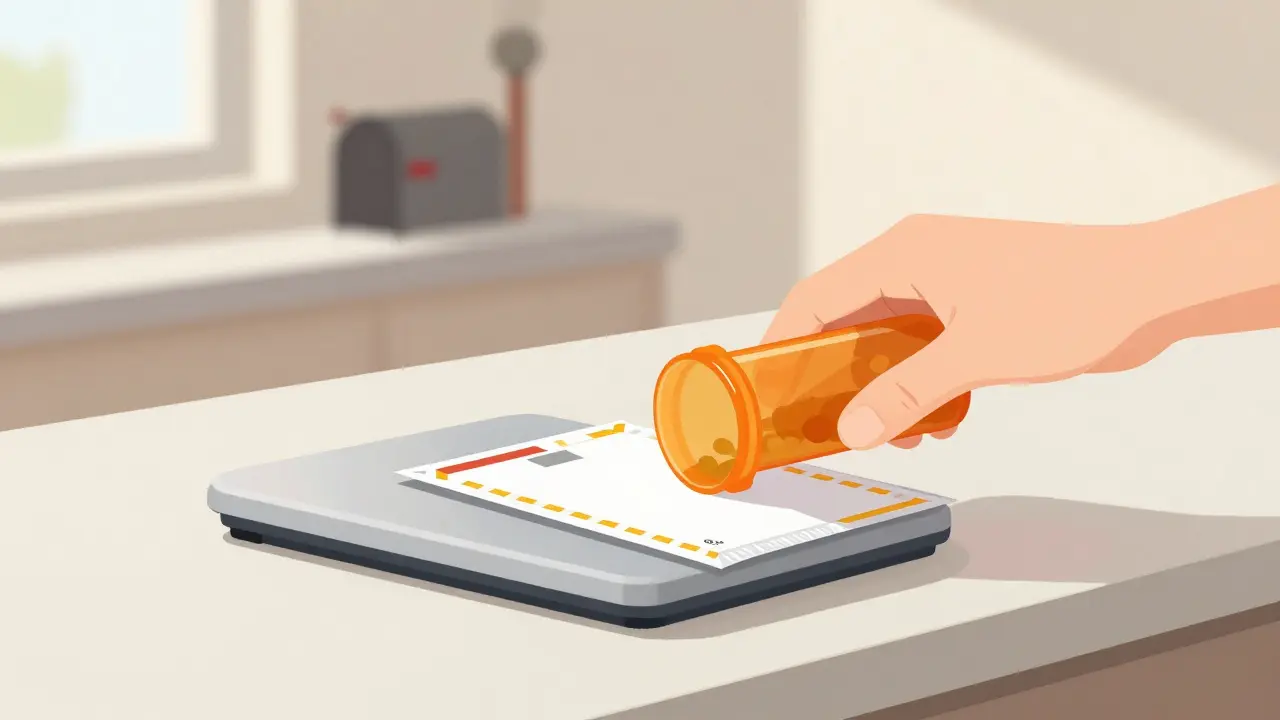
How to Use a Mail-Back Envelope: A Simple 4-Step Guide
- Order or pick up the envelope - You can buy them online from providers like Mail Back Meds, Stericycle, or American Rx Group. Some pharmacies hand them out for free. Ask at your local counter.
- Fill it with your old meds - Only use accepted items. Remove personal info from bottles. Don’t mix in anything not on the approved list.
- Seal it tightly - Most envelopes have a special adhesive strip. Press it down firmly. Some even include orange “Keep Safe” tape to confirm it’s sealed properly.
- Mail it - Drop it in any U.S. Postal Service mailbox. Do NOT take it to your pharmacy, police station, or hospital. They can’t accept filled envelopes. Only USPS handles them.
That’s it. No waiting. No appointments. No cost to you.
Can You Track Your Envelope?
Yes-some providers offer tracking. Mail Back Meds, for example, gives you a unique code to check online. You can see when your envelope was mailed, when it arrived at the facility, and when it was destroyed. That’s reassuring if you’re worried about whether it actually got processed.
Other companies, like Stericycle, track envelopes by carton for organizations. If you’re a clinic, pharmacy, or community group handing out envelopes, they can give you reports showing how many were returned and how much waste was removed.
Not all services offer tracking. But even if yours doesn’t, you can be confident. Every envelope goes to a DEA-registered incinerator. The system is designed to be secure from start to finish.
Who Offers These Envelopes?
There are several major providers, each with small differences:
- Mail Back Meds - Sells 3-packs, 50-packs, and bulk orders. Offers online tracking. Focuses on eco-friendly disposal.
- Stericycle Seal&Send - Popular with clinics and pharmacies. Provides detailed reporting. Used by large organizations to show environmental responsibility.
- American Rx Group - Partners with waste-to-energy plants. Claims their process turns medication into electricity. Legal in all 50 states.
- Opioid Analgesic REMS Program - Launching March 31, 2025. This is a government-backed program. Pharmacies that prescribe opioids will be required to offer free mail-back envelopes for those specific drugs.
You don’t need to choose the “best” one. Any of them work. The key is just to use one.
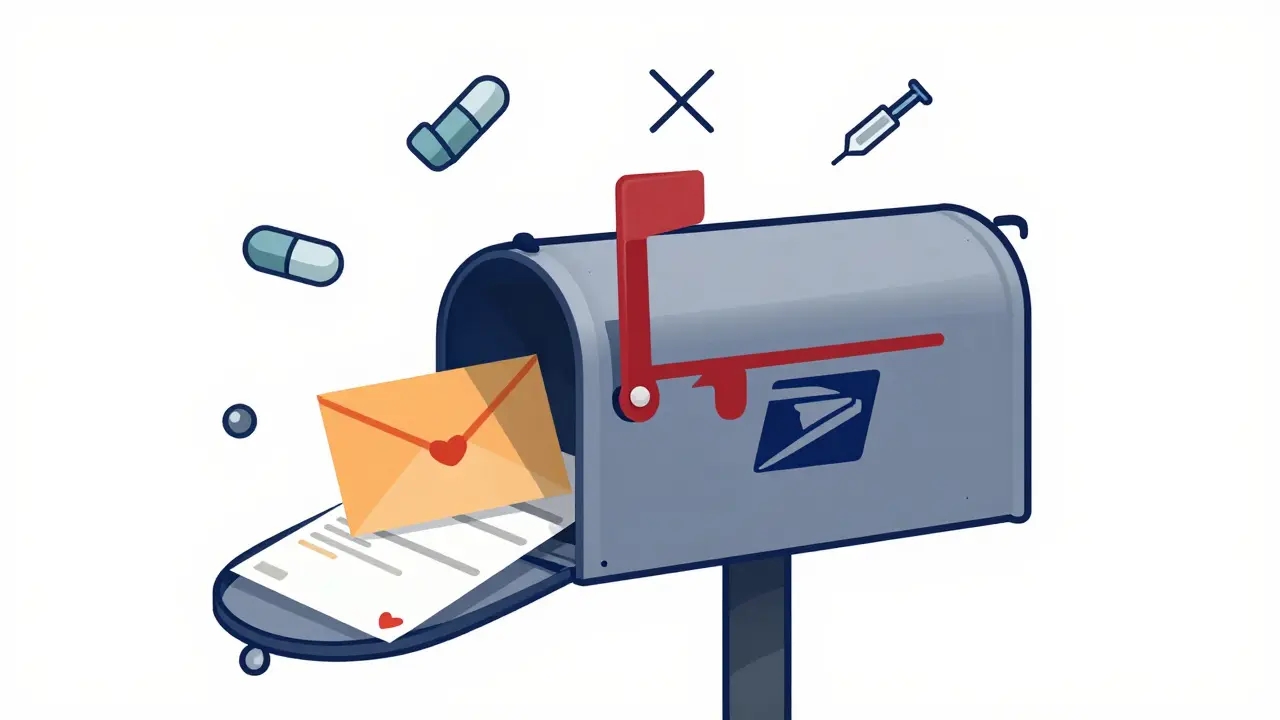
Why This Matters More Than You Think
In 2022, the DEA collected over 1 million pounds of unused medication during one single National Take Back Day. That’s a lot of pills kept out of the wrong hands and out of the environment.
Mail-back envelopes make this easier for regular people. No need to wait for a community event. No need to drive across town. You can do it while you’re at home, in your pajamas, after dinner.
It’s not just about safety. It’s about responsibility. Medications don’t belong in landfills. They don’t belong in rivers. They don’t belong in a teenager’s backpack. Mail-back envelopes give you a clean, quiet way to do the right thing.
What If You Can’t Find an Envelope?
If you can’t get a prepaid envelope, here’s what to do:
- Use the DEA’s Drug Take Back Day map to find a nearby collection site. They host events twice a year.
- Check with your pharmacy. Even if they don’t hand out envelopes, they might have a drop box.
- Use the MED-Project’s searchable map to find free mail-back locations near you.
If none of those work, and you absolutely must throw pills away:
- Mix them with something unappetizing-used coffee grounds, cat litter, or dirt.
- Put them in a sealed plastic bag.
- Throw the bag in the trash.
- Still scratch out your personal info on the bottle.
This isn’t ideal. But it’s better than flushing or leaving them in the open.
What’s Changing in 2025?
Starting March 31, 2025, every pharmacy that prescribes opioid painkillers will be required to offer free mail-back envelopes for those drugs. This is part of a new federal program called the Opioid Analgesic REMS Mail-Back Envelope Program.
It means if you’re prescribed an opioid, your pharmacist will likely hand you an envelope right then and there. No extra cost. No ordering. Just take it home, fill it when you’re done, and mail it.
This is a big step. It turns disposal from an afterthought into a normal part of getting a prescription. And it could prevent thousands of unused opioids from sitting around homes-where they’re most likely to be misused.
Final Thought: Do It Today
You don’t need to wait for a big event. You don’t need to be perfect. You just need to act.
Look in your medicine cabinet right now. Find one bottle you don’t need. Order a prepaid envelope. Fill it. Mail it. That’s one less pill that could hurt someone. One less chemical that could pollute a river. One less chance for a child to find something dangerous.
It’s simple. It’s safe. It’s the right thing to do. And it only takes a few minutes.


10 Comments
this is actually genius. i’ve been tossing my old painkillers in the trash like a dumbass. no more. ordered one of those envelopes today. my cat will thank me.
The environmental pharmacokinetics of pharmaceutical waste are profoundly understudied. These mail-back systems represent a closed-loop pharmaceutical lifecycle management protocol that mitigates ecotoxicological bioaccumulation in aquatic matrices. DEA-registered incineration ensures complete mineralization of organic compounds, preventing endocrine disruption in non-target species. This isn’t just disposal-it’s environmental stewardship.
I love that this is so simple. No drama, no trip to the police station, no waiting for an event. Just fill, seal, drop. I’ve been doing this for years since my mom almost gave my nephew a whole bottle of Xanax by accident. Scary stuff. Glad it’s becoming normal.
You people are overcomplicating this. Just flush 'em. Water treatment plants filter everything. You think your little envelope is saving the planet? Newsflash: the ocean’s got more pills than fish. Stop being paranoid.
Wait. So the government is giving us envelopes... and then they burn them? Who’s watching the incinerators? What if they’re just stockpiling opioids and selling them on the dark web? I read a guy on 4chan who said the DEA uses the ash to make synthetic fentanyl. That’s why they want you to use these. It’s a cover. They’re harvesting your meds.
In India, we just throw everything in the river. It’s been done for centuries. Why are you Americans so obsessed with ‘safety’? Your medicine cabinets are full of pills because you’re weak. We don’t need envelopes. We need grit. Your ‘environment’ is just your guilt dressed up as virtue.
This is a well-structured, evidence-based public health initiative. However, the absence of standardized labeling across providers creates logistical ambiguity. I recommend federal oversight to ensure uniform compliance with 21 CFR Part 1317.45. Also, please cease using the term ‘junk meds.’ It is stigmatizing.
I just mailed my first envelope. And I cried. Not because I’m emotional-I’m not. But because I realized I’d been sitting on a time bomb in my bathroom for five years. That one bottle of oxycodone? My ex left it after we broke up. I kept it ‘just in case.’ Turns out, I was just keeping the pain alive. This envelope? It’s closure.
In my village in Bihar, we used to bury old medicines with cow dung and turmeric-natural neutralizers. The earth absorbed them without harm. Modern society has lost touch with simple wisdom. These envelopes are useful, yes, but they’re also a symptom of our disconnect from natural cycles. We outsource our responsibility to corporations and postal systems. We’ve forgotten how to care for the land ourselves.
I used to think this was a gimmick. Then I found three bottles of my dad’s morphine after he passed. I didn’t know what to do. I didn’t want to throw them away. I didn’t want to keep them. So I mailed them. It felt like the only respectful thing left to do.