OTC Medication Safety Checker
Check Your Medications for Hidden Dangers
Enter up to 5 medications or supplements you're taking. This tool identifies dangerous hidden ingredients and interactions mentioned in our safety guide.
Every year, millions of people in the UK and the US reach for over-the-counter (OTC) medications without a second thought. A headache? Grab some ibuprofen. Trouble sleeping? A pill with diphenhydramine. Want to lose a few pounds? There’s a ‘natural’ fat burner on the shelf. But what you don’t see on the label could be putting your life at risk.
What’s Really in Your Supplement?
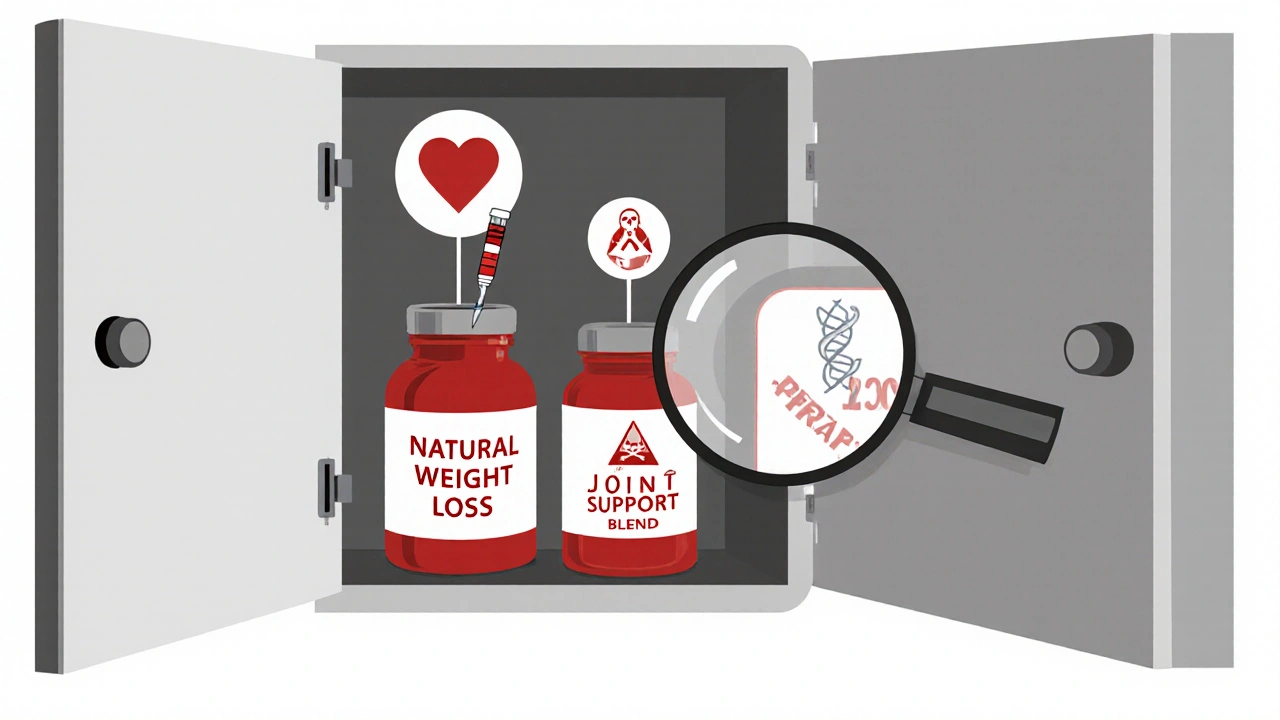
Many OTC supplements-especially those marketed for weight loss, sexual performance, or joint pain-contain hidden pharmaceutical ingredients. These aren’t accidental mistakes. They’re deliberate additions by manufacturers trying to make their products work faster and stronger, while avoiding the cost and scrutiny of FDA approval.
Take weight loss pills. Between 2007 and 2021, the FDA found 397 products containing sibutramine, a banned appetite suppressant linked to a 16% higher risk of heart attack and stroke. Even worse, 124 products had phenolphthalein, a laxative that causes DNA damage and is considered carcinogenic. These aren’t herbal extracts. They’re prescription drugs, hidden under names like ‘Artri’ or ‘Ortiga’.
Sexual enhancement supplements are even more dangerous. A 2018 study found 87% of ‘natural’ male enhancement products contained sildenafil (the active ingredient in Viagra) or tadalafil (Cialis). These aren’t listed on the label. You’re not just taking a ‘herbal blend’-you’re taking a powerful prescription drug, often in unknown doses. And if you’re already on blood pressure meds, nitrates, or heart medication? That combo can trigger a heart attack.
And it’s not just supplements. Even common OTC painkillers like ibuprofen or naproxen carry serious risks. They can cause stomach ulcers, kidney failure, and increase your chance of stroke or heart attack. When hidden ingredients are added on top? The danger multiplies.
Why You Can’t Trust the Label
The Dietary Supplement Health and Education Act of 1994 (DSHEA) lets supplement makers self-certify safety before selling. The FDA doesn’t test products before they hit shelves. By the time a dangerous product is pulled, thousands may have already bought it.
Manufacturers exploit this loophole. They use vague names like ‘proprietary blend’ to hide exactly what’s inside. One product might list ‘green tea extract’ while secretly containing sibutramine. Another might say ‘herbal joint support’ but have hidden NSAIDs or steroids.
Independent testing by ConsumerLab and NSF International found that 20% of supplements didn’t contain what they claimed. Worse, 15% contained unlisted drugs. And 20.2% of contaminated products had multiple hidden ingredients-sometimes three or more. One joint pain supplement was found to contain six different pharmaceuticals. None were listed.
Even ‘trusted’ brands aren’t safe. The FDA has repeatedly warned about products sold on Amazon, eBay, and Instagram. These aren’t shady underground labs-they’re packaged like legitimate brands, with professional-looking labels and fake customer reviews.
Real People, Real Consequences
People don’t just get sick-they end up in the hospital.
A 68-year-old man in Bristol took a ‘natural’ joint pain supplement for weeks. He didn’t tell his doctor. One morning, he collapsed with internal bleeding. Tests showed he had been taking a hidden NSAID-plus a steroid-every day. His stomach lining was destroyed.
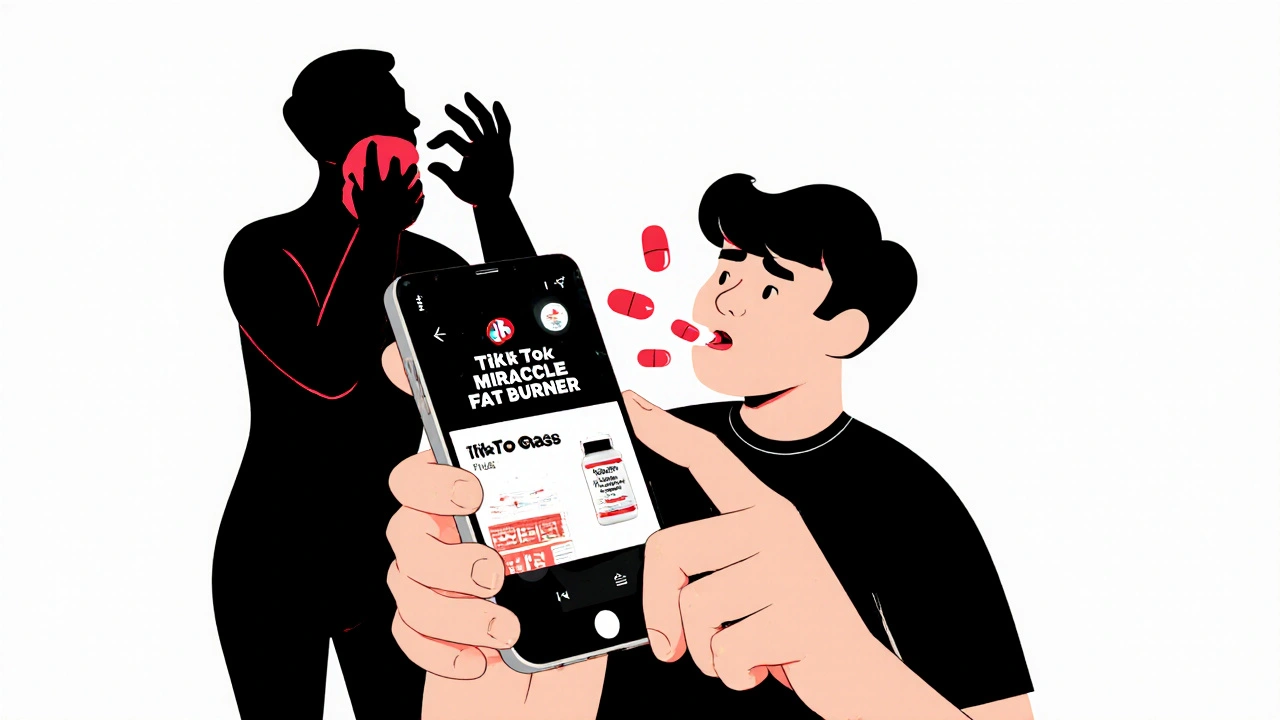
A 22-year-old woman bought a weight loss pill online after seeing a TikTok ad. Within days, her blood pressure spiked to 180/110. She ended up in A&E with chest pain. The pill contained sibutramine. She didn’t know she had high blood pressure. The supplement made it deadly.
And then there’s the ‘Benadryl challenge.’ Teens on social media are taking massive doses of diphenhydramine (found in sleep aids and allergy pills) to hallucinate. Three teenagers died in the UK and US between 2020 and 2022. Others suffered seizures, heart arrhythmias, and permanent brain damage.
Reddit threads are full of similar stories. One user wrote: ‘I took a ‘natural’ fat burner and felt like my heart was going to explode. I thought I was having a panic attack. Turns out, it had sibutramine. My doctor said I was lucky I didn’t have a stroke.’
How to Protect Yourself
You don’t need to avoid all OTC products. But you do need to be smarter about them.
- Check the FDA’s Health Fraud Product Database. Search the exact product name. If it’s listed, don’t buy it. If it’s not listed, that doesn’t mean it’s safe-but it’s a start.
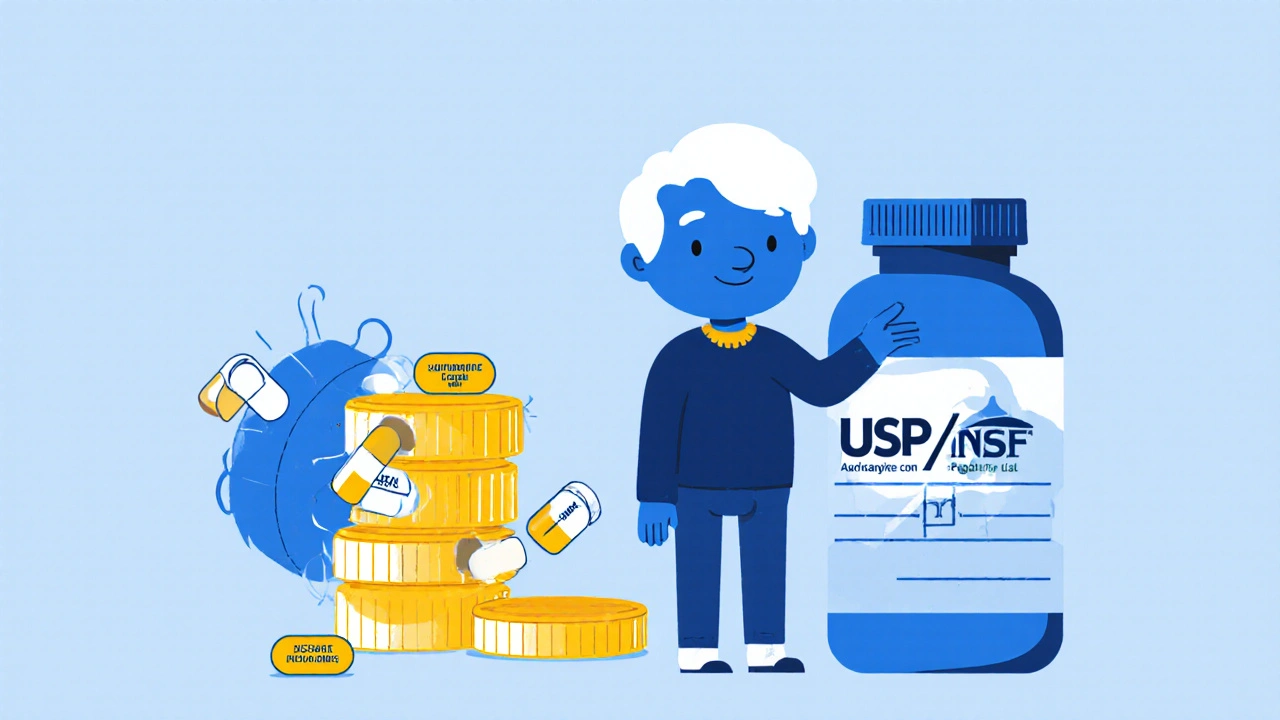
- Look for third-party seals. USP, NSF International, or ConsumerLab.com logos mean the product was independently tested for contaminants and label accuracy. Not all brands have them, but the ones that do are far safer.
- Use the 5-5-5 Rule. Before buying any OTC product: spend 5 minutes Googling it, 5 minutes checking the FDA database, and 5 minutes talking to a pharmacist. Pharmacists see the worst outcomes every day. They’ll tell you what’s risky.
- Never mix supplements with prescription drugs. Even ‘natural’ products can interfere with blood thinners, antidepressants, diabetes meds, and heart medications. Always tell your doctor and pharmacist everything you’re taking-including vitamins and herbal teas.
- Avoid anything that promises ‘miracle’ results. If it claims to ‘burn fat fast,’ ‘boost performance instantly,’ or ‘cure arthritis in days,’ it’s almost certainly adulterated.
Who’s Most at Risk?
Older adults are especially vulnerable. The average person over 65 takes 4.9 prescription medications. Add a few supplements, and you’ve got a chemical cocktail with unpredictable effects. One hidden ingredient can turn a safe drug into a lethal one.
Adolescents are another high-risk group. Social media makes dangerous trends go viral. What starts as a ‘fun challenge’ can end in the ER-or worse.
And if you have chronic conditions-high blood pressure, diabetes, liver disease, or heart problems-you’re already on the edge. Hidden ingredients can push you over it without warning.
The Bigger Problem
The system is broken. The FDA has only 17 full-time staff dedicated to overseeing the entire $55 billion supplement industry. Meanwhile, new contaminated products appear every week. Only 0.3% of adverse events are ever reported to the FDA. That means for every one case you hear about, hundreds go unrecorded.
Regulators are trying to fix this. The 2023 OTC Medication Safety Act proposes mandatory reporting and stronger penalties. But until then, the burden is on you.
OTC doesn’t mean ‘safe.’ It just means ‘available without a prescription.’ And just because you can buy it doesn’t mean you should.
When in Doubt, Pause
If you’re unsure about a product, don’t take it. Wait. Ask. Research. Talk to a pharmacist. It’s not about being paranoid-it’s about being informed.
There’s no shortcut to safety. No ‘natural’ magic pill. No quick fix that doesn’t come with hidden costs.
Your body doesn’t care how clean the label looks. It only reacts to what’s actually in the capsule. And if you don’t know what’s in there, you’re playing Russian roulette with your health.
Can I trust OTC medications with ‘natural’ or ‘herbal’ labels?
No, not automatically. Many products with ‘natural’ or ‘herbal’ labels contain hidden pharmaceuticals like sibutramine, sildenafil, or steroids. These ingredients are added to make the product seem more effective, but they’re not listed on the label. Always check for third-party testing seals (USP, NSF, ConsumerLab) and search the FDA’s Health Fraud Product Database before buying.
What should I do if I think a supplement made me sick?
Stop taking the product immediately. Contact your doctor or go to A&E if you’re experiencing chest pain, rapid heartbeat, severe stomach pain, confusion, or difficulty breathing. Report the reaction to the Yellow Card Scheme in the UK or the FDA’s MedWatch system in the US. Keep the product packaging-it may be needed for testing. Many serious reactions go unreported, so your report could help prevent others from being harmed.
Are all dietary supplements dangerous?
No, not all are dangerous. Many multivitamins, calcium, and vitamin D supplements are safe and beneficial when taken as directed. The risk comes from products marketed for weight loss, sexual performance, muscle building, or pain relief-these are the most likely to be contaminated. Stick to trusted brands with third-party verification and avoid anything promising ‘miracle’ results.
Why don’t pharmacies stop these products from being sold?
Pharmacies often don’t know a product is contaminated. Manufacturers disguise dangerous ingredients under vague names, and regulators can’t test every product before it hits shelves. Pharmacists rely on FDA warnings and third-party testing results. That’s why it’s critical to check the FDA database yourself and ask your pharmacist to review anything you’re unsure about.
Can I safely use OTC painkillers with other medications?
Not without checking. NSAIDs like ibuprofen and naproxen can interact with blood thinners, antidepressants, and blood pressure medications. They can also cause stomach bleeding, kidney damage, and increase heart attack risk-especially when combined with hidden ingredients in supplements. Always tell your doctor and pharmacist exactly what you’re taking, including vitamins and herbal teas. When in doubt, skip it.
Next Steps: What to Do Today
- Look through your medicine cabinet. Find any OTC supplements-especially weight loss, sexual enhancement, or joint pain products.
- Search each product name in the FDA’s Health Fraud Product Database.
- If you find any that are flagged, stop using them and dispose of them safely.
- Make a list of everything you take-including vitamins, teas, and herbal remedies-and bring it to your next doctor or pharmacist appointment.
- Next time you’re tempted by a ‘miracle’ supplement, pause. Ask yourself: Would I take this if I knew exactly what was inside? If the answer is no, don’t buy it.
Your health isn’t a gamble. Don’t let a label fool you. What’s hidden matters more than what’s shown.

14 Comments
Bro, I took one of those 'natural' fat burners last year. Felt like my heart was gonna burst through my ribs. Turned out it had sibutramine. My doctor said I got lucky. Now I just drink coffee and walk. 🤷♂️
Always check NSF or USP seal. If no seal, skip it. Simple.
Let’s be real - the FDA’s a joke. 17 people overseeing $55B? That’s not oversight, that’s negligence dressed up as bureaucracy. The system is designed to fail. You think your ‘natural’ joint pill is safe? It’s a Russian roulette with a loaded chamber and a smiley face on the label.
Hey everyone - I work in community health and I see this all the time. Grandmas popping ‘herbal’ pain pills that have NSAIDs and steroids inside? Teens doing the Benadryl challenge because TikTok said it’s ‘lit’? It’s heartbreaking. But here’s the good news: you can protect yourself and your loved ones. Just take 5 minutes. Google the product. Check the FDA database. Talk to your pharmacist. They’ve seen more horror stories than any ER doctor. And they’ll tell you the truth - no judgment. I’ve had patients cry because they didn’t know. Don’t be one of them. Your body isn’t a lab rat. It’s yours. Treat it like it matters. 💙
OMG I JUST FOUND A BOTTLE OF ‘TURMERIC POWER’ IN MY CLOSET AND IT’S FROM AMAZON 😭 I THOUGHT IT WAS JUST HERBS BUT NOW I’M SCARED TO DEATH. DID I JUST POISON MYSELF??? 😵💫
Carolyn, I just checked my joint supplement - it’s got the NSF seal. I feel so much better knowing that. You should check yours too. It’s not hard, I promise. Just a few minutes could save your life.
Thanks, Nate. I just did. Found one flagged. Tossed it. Felt like I just removed a landmine from my medicine cabinet. 😅
It’s wild how we’ll trust a logo on a cereal box but not the tiny print on a pill bottle. The irony is thicker than the ‘proprietary blend’ in those weight loss capsules.
As a pharmacist in Delhi, I’ve seen this firsthand. People come in with rashes, palpitations, liver enzymes through the roof - all from ‘Ayurvedic’ supplements bought online. The labels say ‘100% natural’ but the lab reports show sildenafil, dexamethasone, even phenolphthalein. The problem isn’t just the US - it’s global. Always ask for batch numbers. Demand lab reports. If they can’t provide it, walk away.
Why do people think nature is safe? Trees poison you. Snakes kill you. Mushrooms turn your brain to mush. The real danger is believing in purity. Modern medicine is the only thing keeping us alive. If you want to be pure, go live in a cave and eat berries. But don’t pretend you’re being wise when you’re just being dumb.
It is an egregious failure of regulatory governance that the FDA permits such flagrant endangerment of public health under the guise of ‘dietary supplement autonomy.’ The absence of pre-market testing constitutes a gross dereliction of statutory duty. One is left to conclude that profit-driven lobbying has superseded the fundamental mandate of public safety. This is not merely negligence - it is systemic malfeasance.
I appreciate the thoroughness of this post. I’ve been cautious with supplements since my mother had a bad reaction to a ‘natural’ sleep aid. I now only buy products with USP verification. It’s a small step, but it gives me peace of mind.
Just checked my ‘energy booster’ - yep, flagged by FDA. 😳 I’m so glad I read this. I’m taking my whole cabinet to the pharmacy tomorrow to get it all reviewed. Thanks for the wake-up call! 🙏❤️
i just realized i’ve been takin that ‘muscle builder’ for 6 months… oh god i think i might have a heart problem now… i’ll go to the doc tomorrow… please don’t let me be dead