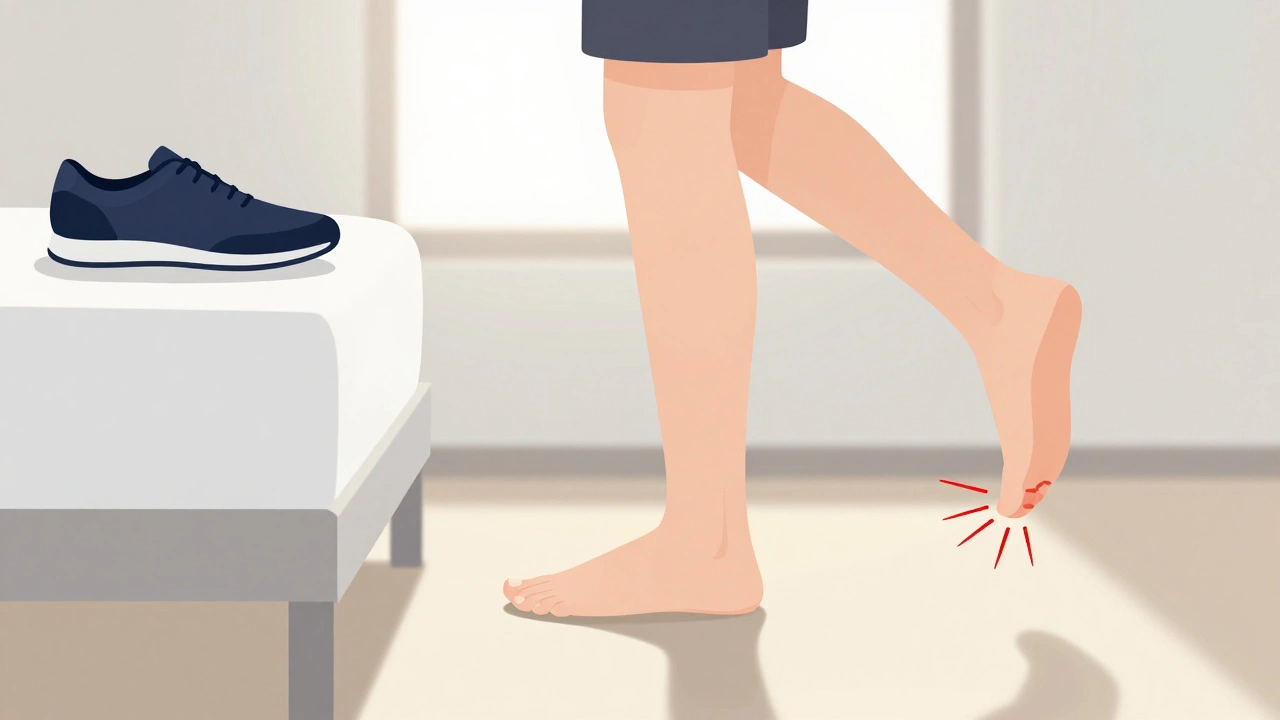
Heel pain that hits hardest when you first step out of bed isn’t just a nuisance-it’s a signal. For millions of people, especially those over 40, this sharp, stabbing pain in the bottom of the heel is plantar fasciitis. But here’s the twist: it’s not really an inflammation. The medical community now calls it plantar fasciopathy because the issue isn’t swelling-it’s degeneration. The thick band of tissue running from your heel to your toes, called the plantar fascia, is breaking down from overuse, not irritation.
Why Your Heel Hurts in the Morning
You wake up. You swing your legs over the side of the bed. And then-pain. Like a knife jabbing into your heel. It’s so bad you almost can’t walk. But after a few steps, it eases up. You think you’re fine. Then, after standing all day or going for a long walk, it comes back. This pattern is classic for plantar fasciopathy. The plantar fascia acts like a shock absorber for your arch. When you’re resting, especially overnight, the tissue tightens. The first steps in the morning force it to stretch suddenly, tearing at the microscopic level. That’s why the pain peaks then. It’s not your bones. It’s not your nerves. It’s the tissue itself, worn thin over time. Studies show 76% of people with this condition report their worst pain during those first five steps. Pain levels often hit 6 to 8 out of 10. And it’s not just runners who get it. In fact, 63% of cases happen in people who are mostly sedentary but carry extra weight. The other 37% are active-runners, dancers, or people on their feet all day. The common thread? Too much load, too little support.Who’s Most at Risk?
It’s not random. Certain factors make plantar fasciopathy far more likely:- BMI over 27: Every one-point drop in BMI reduces pain by about 5.3% within six months. Excess weight puts extra pressure on the fascia.
- Limited ankle mobility: If you can’t lift your toes up toward your shin past 10 degrees, your fascia takes the strain.
- Flat feet: Low arches mean less natural shock absorption, forcing the fascia to work harder.
- Standing more than 4 hours a day: Teachers, nurses, factory workers-these groups have nearly double the risk.
What It’s Not: Ruling Out Other Causes
Not every heel pain is plantar fasciopathy. Many people get misdiagnosed because doctors jump to X-rays looking for heel spurs. But here’s the truth: 80% of people with plantar fasciopathy have no spurs at all. And 15% of people with no pain at all show spurs on X-rays. The spur isn’t the problem-it’s just a side effect. Other conditions can mimic the pain:- Baxter’s neuritis: A pinched nerve that causes burning pain on the inside of the heel.
- Tarsal tunnel syndrome: Numbness or tingling in the sole, not sharp pain.
- Stress fracture: Pain that gets worse with activity and doesn’t improve after walking.
What Actually Works: Evidence-Based Treatments
The good news? Most cases get better without surgery. About 85% of people improve with conservative care within a year. But not all treatments are equal. Some are overused. Others are underused.1. Stretching-The #1 Treatment
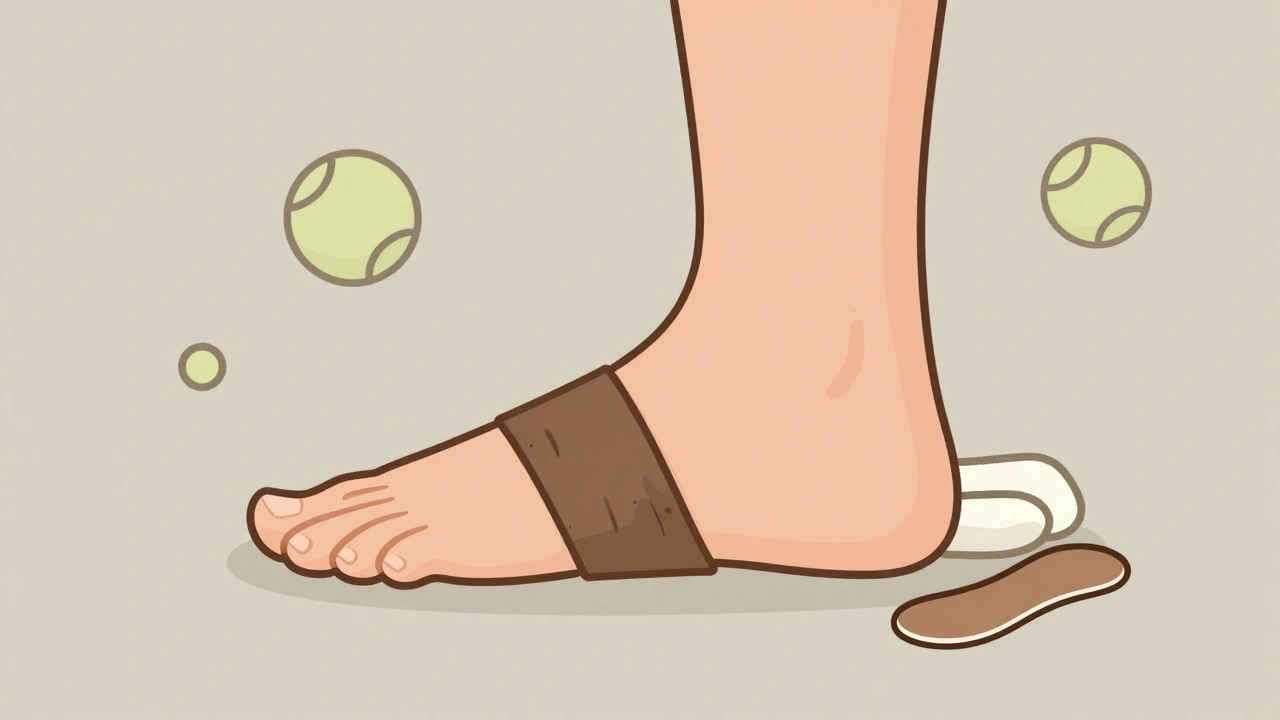
The American Academy of Orthopaedic Surgeons says plantar fascia-specific stretching is the strongest recommendation (Grade 1B evidence). Not calf stretches. Not general yoga poses. Specific stretches targeting the fascia itself. The most effective method: Seated towel stretch. Sit down, loop a towel around the ball of your foot, and gently pull your toes toward you until you feel tension under your arch. Hold for 10 seconds. Do 10 reps. Three times a day. That’s it. This method reduces pain 37% more than regular calf stretches after just four weeks. And it costs nothing. People who stick with it for 8-12 weeks report 68-83% improvement. One Reddit user, u/RunningHealer, cut his morning pain from 8/10 to 2/10 in six weeks with this routine plus rolling a tennis ball under his foot.2. Night Splints
These devices hold your foot at a 90-degree angle while you sleep. Why? To keep the fascia stretched overnight so it doesn’t tighten up. Studies show 72% of users see improvement at six weeks, compared to 45% with no treatment. But here’s the catch: 44% quit because they’re uncomfortable. You can’t sleep on your back? You might struggle. Still, if you can tolerate it-even just a few nights a week-it helps. Don’t give up after the first week. It takes time to adjust.3. Orthotics
Custom orthotics aren’t magic. But they do help. A 2019 study found custom inserts reduced pain by 68% at 12 weeks, compared to 52% with over-the-counter ones. The key? Arch support and a heel cup. Shoes with a 10-15mm heel-to-toe drop work best. Brands like Brooks Adrenaline GTS and Hoka Clifton get high marks from users for comfort and support. Don’t buy cheap insoles. They collapse under pressure. Look for ones with firm arch support-not soft foam.4. Avoid Steroid Injections (At First)
Cortisone shots sound appealing. Quick relief. But they come with risks. After multiple injections, there’s an 18% chance of tearing the fascia. And 22% of people get fat pad atrophy-meaning the cushion under your heel shrinks, making pain worse long-term. The American Academy of Family Physicians advises against injections within the first three months. Use them only if everything else fails-and even then, limit to one or two.5. Shockwave Therapy
If stretching and orthotics haven’t worked after three months, radial shockwave therapy is now strongly recommended. It uses sound waves to stimulate healing. Success rates? 78% at 12 weeks. But it’s expensive-$2,500 to $3,500 out of pocket, and insurance rarely covers it.6. Emerging Options: PRP and Cryoplasty
Platelet-rich plasma (PRP) injections, where your own blood is processed and injected into the fascia, show promise. One 2022 study found 65% pain reduction at six months. But it costs $800-$1,200 per shot and isn’t covered by insurance. Ultrasound-guided cryoplasty-freezing the damaged tissue-is showing 82% success in early trials. But it’s still experimental and not widely available.What Doesn’t Work (And Why)
Many people waste time and money on treatments that don’t hold up:- Heel cups and pads: They might feel nice, but they don’t change the mechanics. They’re not a solution.
- Massaging the heel: Rubbing the heel bone won’t help the fascia. You need to stretch the tissue under the arch.
- Running through the pain: 72% of recurring cases happen because people return to high-impact activity too soon.
- Waiting for it to “go away”: Without intervention, it can linger for over a year-and increase your risk of other injuries.
How to Stick With It
The biggest reason treatments fail? Inconsistency. People do stretches for a few days, then skip a week. Then they wonder why nothing changed. The University of Rochester found that 92% adherence is needed for optimal results. That means doing your stretches every single day, even when the pain is gone. Think of it like brushing your teeth-not just when your gums hurt. Here’s a simple plan:- Do the towel stretch: 3 times a day, 10 reps each time.
- Roll your foot over a frozen water bottle or tennis ball for 5 minutes after standing.
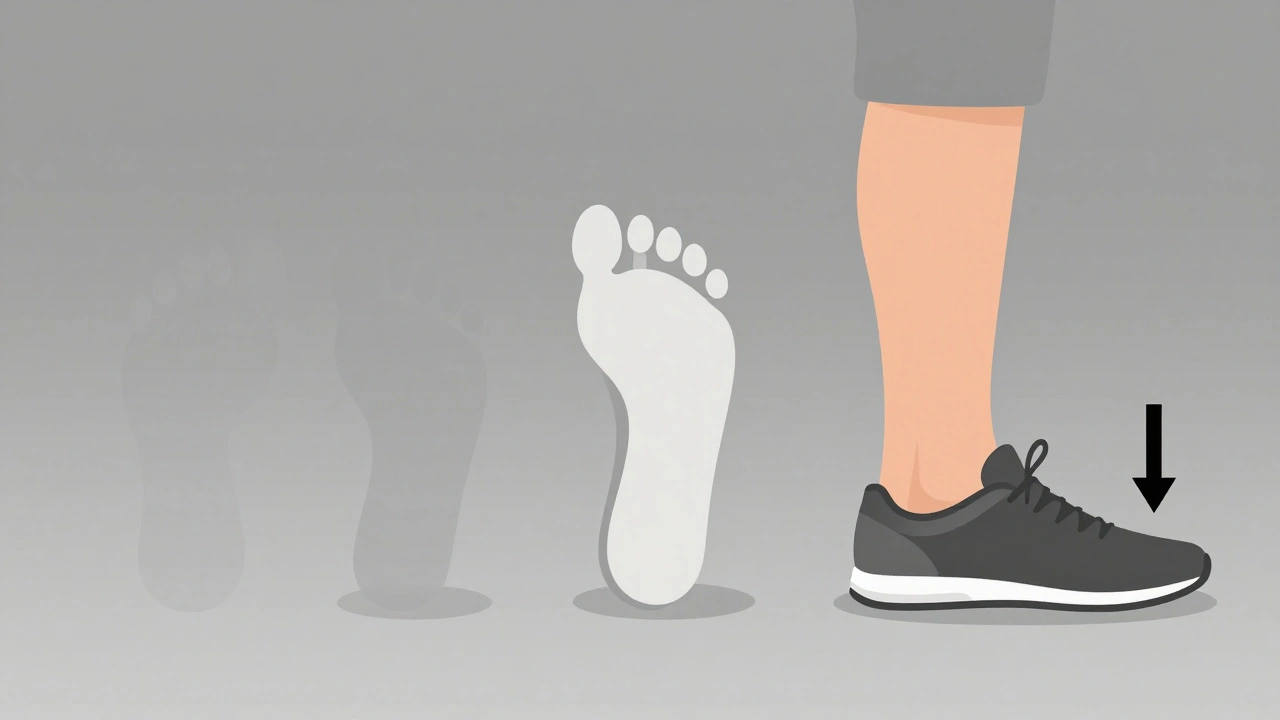
- Wear supportive shoes with arch support all day-no flip-flops, no worn-out sneakers.
- Consider a night splint if morning pain is severe.
- Track your pain on a scale of 1-10 every morning. You’ll see progress even if it’s slow.
Long-Term Outlook
The prognosis is good. 90% of people recover fully within 10 months using the right conservative approach. But 25-30% get it back within a year. Why? They stop stretching. Or they gain weight. Or they go back to standing all day without proper shoes. This isn’t a one-time fix. It’s a lifestyle adjustment. You don’t have to give up walking, running, or your job. But you do need to respect your body’s limits. Support your feet. Stretch daily. Manage your weight. Choose shoes like they’re part of your health routine-not an afterthought.When to See a Specialist
If after 8-12 weeks of consistent stretching, orthotics, and footwear changes you’re not at least 50% better, it’s time to see a podiatrist or sports medicine doctor. They can order an ultrasound, check for nerve issues, and discuss advanced options like shockwave therapy or PRP. Don’t wait for the pain to become unbearable. Early, consistent action makes all the difference.Is plantar fasciitis the same as heel spurs?
No. Heel spurs are bony growths on the heel bone, often seen on X-rays. But 80% of people with plantar fasciitis don’t have spurs, and 15% of people with spurs feel no pain at all. The pain comes from the degenerated plantar fascia tissue, not the spur. X-rays aren’t needed for diagnosis unless other conditions are suspected.
Can I still run with plantar fasciitis?
You can, but only if you reduce your mileage, wear supportive shoes, stretch daily, and avoid running on hard surfaces. Most people need to take a break for 4-6 weeks to let the tissue heal. Returning too soon increases the chance of recurrence by 72%. Cross-train with swimming or cycling until the pain improves.
How long does it take to recover from plantar fasciitis?
Most people see improvement in 6-8 weeks with consistent stretching and proper footwear. Full recovery usually takes 6-12 months. A 2022 Cochrane Review found 90% of cases resolve with conservative care within 10 months. The key is sticking with the routine-even after the pain fades.
Do I need custom orthotics or will over-the-counter ones work?
Over-the-counter orthotics help many people, especially if they have firm arch support and a heel cup. But custom orthotics reduce pain 68% compared to 52% with prefabricated ones, according to a 2019 study. If your pain persists after 3 months with OTC inserts, consider custom ones-especially if you have flat feet or stand all day.
Can weight loss help with plantar fasciitis?
Yes. Every 1-point drop in BMI reduces heel pain by 5.3% within six months. Losing even 5-10 pounds can make a noticeable difference. Weight loss reduces the load on your fascia, making stretching and footwear more effective. It’s one of the most powerful, evidence-backed treatments available.
Are steroid injections safe for plantar fasciitis?
They can provide short-term relief, but they carry serious risks. Multiple injections increase the chance of plantar fascia rupture by 18% and can cause fat pad atrophy, leading to permanent loss of heel cushioning. Guidelines recommend avoiding them in the first three months. Use them only if conservative treatments fail and only once or twice.
What shoes are best for plantar fasciitis?
Look for shoes with a heel-to-toe drop of 10-15mm, firm arch support, and a cushioned heel. Brands like Brooks Adrenaline GTS and Hoka Clifton are consistently rated highly by users for comfort and support. Avoid flat shoes, flip-flops, or worn-out sneakers. Replace shoes every 300-500 miles or every 6-8 months if you’re active.



9 Comments
I used to think heel pain was just part of getting older. Turns out it's just my shoes and laziness. Did the towel stretch for two weeks and now I can actually walk without wincing. No magic, just consistency.
Ugh. Another American wellness cult post. Stretching? Really? In India, we just walk barefoot on cool stone floors and our bodies heal naturally. You people overcomplicate everything with your $200 orthotics and frozen water bottles 😒
This whole thing is a scam. The government and shoe companies made up plantar fasciitis to sell you expensive sneakers. I've been running for 30 years in flip flops. My feet are tougher than your yoga mat. Stop listening to doctors and start being a man.
I was skeptical but tried the towel stretch and rolling a tennis ball under my foot after work and wow. It’s not gone but it’s better and I’m not crying when I get up anymore. You don’t need fancy stuff just a little patience and a towel 🙏
I appreciate the breakdown but I think the real issue here is systemic. Most people don’t have access to supportive footwear or the time to do three sets of stretches daily. The real problem is we live in a society that prioritizes productivity over bodily maintenance. I work two jobs, my shoes are from Target, and I’m 52. The system isn’t designed for people like me to heal. The fact that we’re expected to fix this with personal discipline while the medical industrial complex profits off our pain? That’s the real diagnosis.
this is sooo wrong. i had plantar fasciitis and i just took painkillers and kept walking. no stretching no splints nothin. now i fine. you americans are too soft. in india we dont need all this tech. just walk more and stop complaining.
I’ve been dealing with this for 18 months. I tried everything. The towel stretch worked but only after I stopped trying to rush it. It’s not about being perfect. It’s about showing up even when you’re tired or frustrated. I missed days. I got discouraged. But I kept coming back. That’s what made the difference.
You say 90% recover. But what about the 10% who don’t? You act like this is just a minor inconvenience. I’ve been on disability for two years. No one talks about that part.
I’m the author. Just wanted to say thanks to everyone for the feedback. I didn’t expect this to blow up. I’ve been living with this for five years. The towel stretch saved me. I still do it every morning. Even on vacation. Even when I’m traveling. Even when I’m sore. It’s not sexy. But it works. Don’t give up.