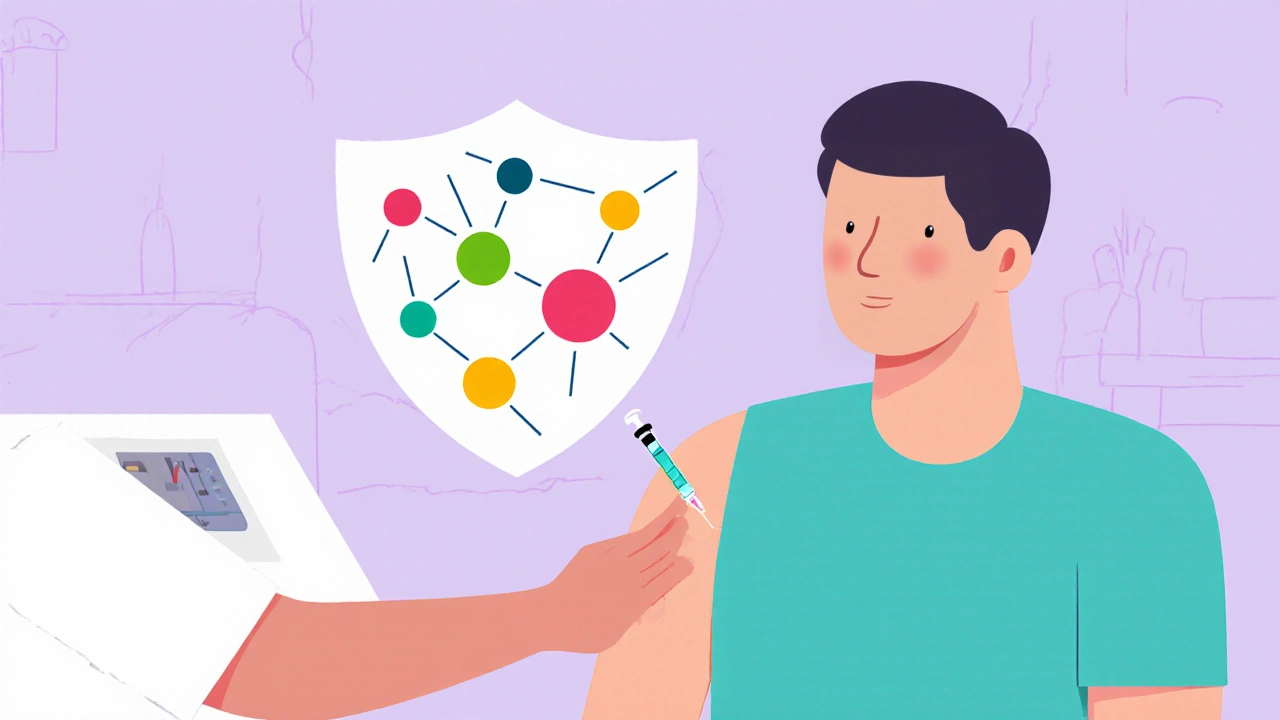
Human papillomavirus, or HPV, is one of the most common infections in the world. Almost everyone who’s sexually active will get at least one type of HPV in their lifetime. Most of the time, your body clears it on its own. But some types stick around - and those are the ones that can lead to cancer.
Why HPV Matters More Than You Think
There are over 200 types of HPV. About 40 of them affect the genital area. Most cause harmless warts. But 14 types are called high-risk because they can turn normal cells into cancer over time. HPV 16 and 18 alone cause about 70% of all cervical cancers. They’re also linked to cancers of the vulva, vagina, penis, anus, and throat.
The scary part? These cancers don’t show up overnight. It takes 10 to 20 years for an HPV infection to become cancer. That’s a long window to catch it early - if you know what to look for.
Vaccination: The Best Shield Against HPV
The HPV vaccine is one of the most effective cancer prevention tools we have. It works best when given before anyone becomes sexually active. That’s why health experts recommend it for kids aged 11 to 12 - but it’s still useful up to age 45.
Today’s vaccines protect against nine types of HPV, including the two most dangerous ones: 16 and 18. The vaccine doesn’t just prevent warts. It prevents the cell changes that lead to cancer. In countries with high vaccination rates, like Australia, cervical precancers in young women have dropped by over 80% in just a decade.
It’s not just for girls. Boys get it too. HPV causes cancers in men, and vaccinating them helps protect future partners. The CDC says that since the vaccine became available in 2006, HPV infections in teen girls have dropped by 88%.
Screening: The Second Line of Defense
Even if you’ve been vaccinated, you still need screening. The vaccine doesn’t protect against every high-risk HPV type. And not everyone gets vaccinated. Screening finds problems before they turn into cancer.
For decades, the Pap test was the gold standard. It looked at cervical cells under a microscope to spot abnormal changes. But now, we have something better: HPV testing.
Primary HPV testing looks for the virus itself - not just the damage it causes. It’s more sensitive. A 2018 study in JAMA found it catches 94.6% of serious precancers, compared to just 55.4% for the Pap test alone.
Who Gets Screened and How Often?
Screening guidelines changed in 2020 and 2021. Here’s what you need to know as of 2025:
- Ages 21-29: Pap test every 3 years. HPV testing isn’t recommended here because infections are common and usually go away on their own.
- Ages 25-65: Primary HPV test every 5 years is now the preferred option. This is what the American Cancer Society recommends.
- Ages 30-65: You have three choices: HPV test every 5 years, Pap test every 3 years, or both tests together (cotesting) every 5 years.
Why every 5 years? Because if your HPV test is negative, your risk of developing cancer in the next five years is extremely low - lower than with a negative Pap test.
Studies from Wayne State University show that after two negative HPV tests, your risk of cervical cancer drops so low that waiting six years between tests may be safe. That’s why many experts believe future guidelines will stretch the interval even further.
Self-Collected Testing: Breaking Down Barriers
One of the biggest reasons people skip screening is discomfort. A pelvic exam can feel invasive, embarrassing, or intimidating. That’s why 30% of cervical cancers happen in women who’ve never been screened.
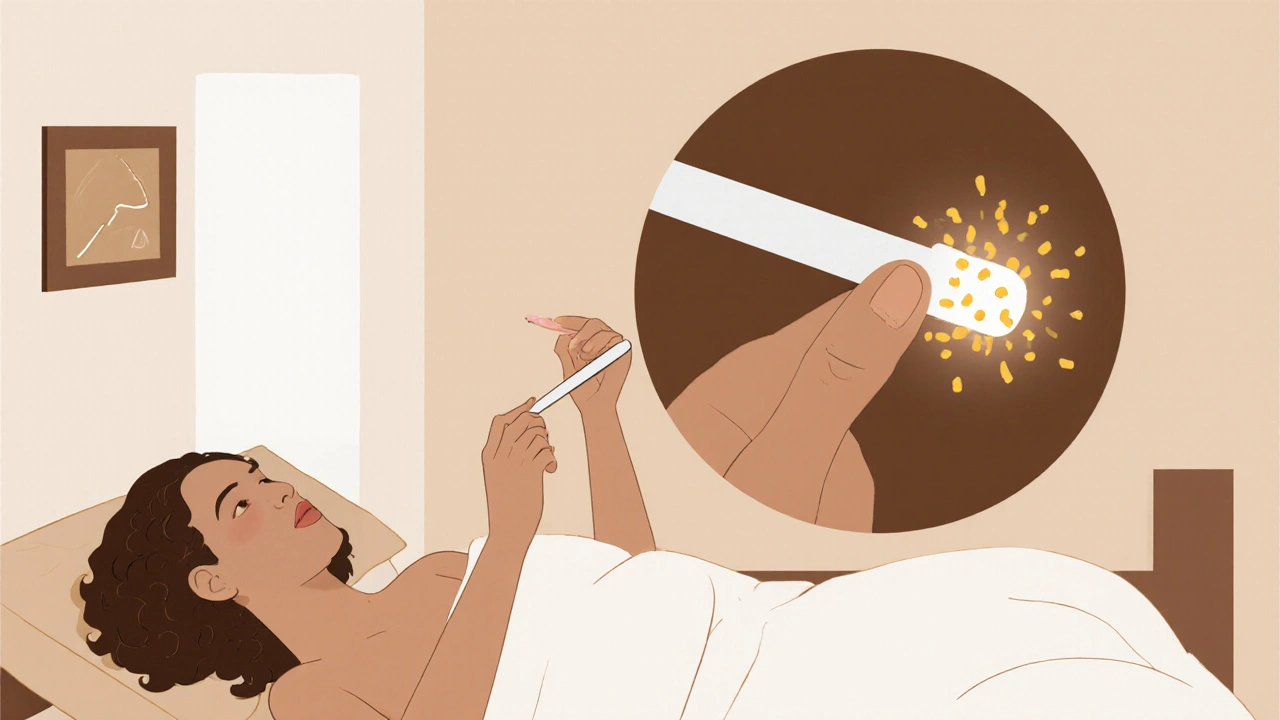
Now, you can collect your own sample at home. A small swab, like the ones used for COVID tests, is inserted into the vagina. It’s just as accurate as a sample taken by a doctor.
Kaiser Permanente confirmed in January 2024 that self-collected HPV tests have the same sensitivity (84.4%) and specificity (90.7%) as clinician-collected ones. In Australia and the Netherlands, offering self-sampling boosted screening rates by 30-40% in underserved communities.
The USPSTF now says self-collection should be an option for anyone who’s hesitant or unable to get to a clinic. It’s a game-changer for rural areas, people with disabilities, and those who’ve experienced trauma.
What Happens If Your Test Is Positive?
A positive HPV test doesn’t mean you have cancer. It just means the virus is there. Most people clear it without treatment.
But if you test positive, the next step is usually genotyping - checking if you have HPV 16 or 18. These two types carry the highest cancer risk. If you have one of them, you’ll likely be referred for a colposcopy - a quick exam where the doctor looks at your cervix with a magnifying tool.
If you have another high-risk type but not 16 or 18, you’ll usually get a Pap test as a follow-up. If both are abnormal, you’ll be referred for further evaluation. If they’re normal, you’ll be asked to come back in a year.
This triage system keeps unnecessary procedures low while catching real threats.
Why Vaccinated People Still Need Screening
Some people think: “I got the vaccine, so I don’t need screening.” That’s a dangerous myth.
The vaccine protects against the most common cancer-causing types - but not all of them. There are 14 high-risk types total. The vaccine covers 9. That leaves 5 others that can still cause cancer.
The CDC is clear: vaccinated people should follow the same screening schedule as everyone else. Skipping screening because you were vaccinated puts you at risk.
Global Progress and Persistent Gaps
The World Health Organization has a bold goal: eliminate cervical cancer by 2050. To get there, they set three targets by 2030:
- 90% of girls vaccinated by age 15
- 70% of women screened with a high-quality test by 35 and again by 45
- 90% of women with precancer or cancer get treated
Right now, high-income countries like the UK and US are close to hitting these targets. But in low- and middle-income countries, only 19% of women have ever been screened. That’s why 90% of cervical cancer deaths happen in places with little access to vaccines or screening.
In the US, disparities still exist. Black women are 70% more likely to die from cervical cancer than White women. That’s not because of biology - it’s because of access. Missed appointments, lack of transportation, distrust in the system - these are the real barriers.
What’s Next? AI and Longer Intervals
The future of cervical cancer prevention is here. In January 2023, the FDA approved Paige.AI, an artificial intelligence system that analyzes Pap smears faster and more accurately than human eyes. It’s already being used in some hospitals.
Longer screening intervals are also being studied. Research suggests that after two negative HPV tests, waiting six years might be safe. That could reduce the burden on clinics and make screening easier to stick with.
And self-collection? It’s going global. Countries like Sweden and Canada are rolling out home HPV testing kits. In the UK, pilot programs are testing whether mailed kits can reach women who’ve never been screened.
What You Can Do Today
If you’re under 26: Get the HPV vaccine. It’s still effective, even if you’ve been sexually active.
If you’re 25-65: Ask your doctor about primary HPV testing. Don’t wait for a Pap test unless you’re in the 21-29 age group.
If you’ve avoided screening because of discomfort: Ask about self-collection. It’s available in many clinics now - and it’s just as reliable.
If you’re over 65: Talk to your doctor. If you’ve had consistent negative tests and no history of precancer, you may not need to screen anymore.
HPV isn’t a death sentence. It’s a preventable risk. With vaccination, smart screening, and access to care, cervical cancer can become a relic of the past - not a fear for future generations.
Can you get HPV even if you’ve been vaccinated?
Yes. The HPV vaccine protects against the 9 most common cancer-causing types, but there are 14 high-risk types total. You can still get infected with the other 5. That’s why screening is still necessary even if you’ve been vaccinated.
Do you need HPV screening if you’ve had a hysterectomy?
It depends. If your cervix was removed and you have no history of precancer or cancer, you likely don’t need screening. But if your cervix was kept or you had high-grade precancer before surgery, your doctor may still recommend testing. Always check with your provider.
Is HPV testing painful?
Clinician-collected HPV testing feels similar to a Pap test - brief pressure and a swab. Self-collected testing is done at home with a simple swab inserted into the vagina. Most people report it’s less uncomfortable than a pelvic exam. Neither test is painful.
How accurate is self-collected HPV testing?
Studies show self-collected samples are nearly as accurate as those taken by a doctor. Sensitivity is about 84.4% and specificity is 90.7% - close to clinician-collected results. This makes it a powerful tool for reaching people who avoid traditional screening.
Can men be tested for HPV?
No routine HPV test exists for men. There’s no approved screening method for the penis, anus, or throat. That’s why vaccination is so important for boys and men - it’s the best way to prevent infection and transmission. Men with symptoms like genital warts or abnormal growths should see a doctor.
What if I’m over 65 and never got screened?
It’s never too late to start. If you’ve never been screened and are over 65, talk to your doctor. If you’ve never had abnormal results and have no history of precancer, you may not need screening. But if you’ve had unprotected sex with multiple partners or have a weakened immune system, testing may still be recommended.


9 Comments
Bro just got the shot last year and now I’m supposed to get tested too? Like come on, I’m not a lab rat.
Let’s be real the whole HPV narrative is corporate propaganda wrapped in public health fluff
They push vaccines like candy then charge you $300 for a test that’s 84% accurate
Meanwhile real cancer risks like smoking or alcohol get ignored because they’re not profitable to screen for
And don’t even get me started on self collection kits being marketed as empowerment when it’s just a cost cutting measure
They don’t care if you’re comfortable they care if you show up
AI analyzing pap smears? Cool so now we’re outsourcing diagnosis to algorithms trained on biased datasets
And yeah I know I sound like a conspiracy guy but someone’s gotta say it
When did medicine become a subscription service with mandatory add-ons
Also why are we still calling it HPV and not human papillomavirus like proper adults
It’s linguistic laziness disguised as science
And don’t even get me started on the gendered framing
Men get zero testing but somehow we’re all responsible for women’s cancer
What a mess
Canada’s been doing self-collection since 2021 and guess what? Our screening rates shot up and our cancer numbers dropped
Meanwhile the US is still arguing about whether a swab counts as a real test
Stop pretending your healthcare system is better just because it costs more
It’s not innovation it’s inertia
And don’t even start with the vaccine myth
Yes it helps but we don’t need to act like it’s a magic shield
Real prevention is access not marketing
Also why is every article about cervical cancer about women
Men get HPV too but nobody cares until it’s someone else’s problem
I’ve been thinking a lot about how we frame health as a personal responsibility, when really it’s a systemic one
Like, yes, getting the vaccine is great, and yes, screening matters-but what about the woman in rural Mississippi who can’t take a day off work, doesn’t have a car, and can’t afford childcare to get to a clinic?
And what about the trauma survivors who associate pelvic exams with violation, not care?
The fact that self-collection is even a thing tells us how broken our system is
It shouldn’t take a home swab to make healthcare accessible-it should be built in from the start
And I love that we’re talking about AI in diagnostics, but let’s not pretend algorithms are neutral
They’re trained on data that reflects our biases-so if Black women are under-diagnosed in training sets, the AI will be too
Meanwhile, countries like Australia are showing us what’s possible when you combine equity with innovation
Not just tech, but trust
Not just vaccines, but outreach
Not just screening, but dignity
And honestly, I think the real breakthrough isn’t the swab or the AI
It’s the fact that we’re finally asking: Who’s being left out?
And that’s the question that could change everything
For anyone confused about screening intervals just remember this
HPV negative means low risk
5 year gap is solid
Pap alone is outdated
Self collection works
Vaccine doesn’t replace screening
And if you’re over 65 with normal history you’re probably fine
Ask your doc
The triage protocol following a positive HPV test is one of the most elegant risk-stratification models in preventive medicine
By prioritizing genotyping for HPV 16/18 and using reflex cytology for other high-risk types, we minimize overtreatment while maximizing sensitivity
This is precision public health in action
And the integration of self-collected specimens into clinical pathways represents a paradigm shift in patient-centered care delivery
It removes structural barriers rooted in historical inequities
Not just geographic or economic
But also psychological and cultural
The fact that sensitivity and specificity metrics are comparable to clinician-collected samples is not just statistically significant
It’s ethically imperative
Health equity isn’t a buzzword
It’s a clinical obligation
My goodness, this is one of the most balanced, thoughtful, and genuinely hopeful pieces on public health I’ve read in years
It’s rare to see a topic this complex handled with both scientific rigor and human warmth
And I must say, the inclusion of self-collection as a legitimate, evidence-based option? That’s not just innovation
That’s compassion
I’m from the UK, and we’re just starting to roll out home kits in pilot areas
It’s heartening to see how far we’ve come
From the days when women were shamed for skipping Pap smears
To now, where we say: Here, do it yourself, in your own time, in your own way
That’s progress
And yes, the vaccine is a miracle
But it’s not a magic bullet
And the fact that we’re still seeing disparities in mortality among Black women in the US
That’s not a medical failure
That’s a moral one
Thank you for writing this
It’s exactly the kind of information we need to spread
As someone who grew up in a community where talking about reproductive health was taboo, I want to say thank you for this
My sister waited 12 years to get screened because she was scared and didn’t know where to go
She’s fine now, but she shouldn’t have had to suffer that fear
Self-collection changed everything for us
My mom got her first test at 58 because she could do it at home
And my younger cousins are getting vaccinated without hesitation
Knowledge is power, but access is justice
And this article gives both
Just got my first HPV test using the home kit last week 😊
It felt so much easier than the Pap I had in college
Woke up, did it while drinking coffee, mailed it back
Result came in 10 days
Negative!!
And yes I’m vaccinated but I still did it
Because prevention isn’t about being perfect
It’s about showing up for yourself
And if you’re scared, just start small
Ask your doctor about self-collection
You got this 💪