
Treatment Decision Matrix Calculator
Personal Treatment Preferences
Answer these questions to find your most suitable alternative to methotrexate.
Methotrexate is a folate antagonist that has been the cornerstone of disease‑modifying therapy for rheumatoid arthritis (RA) and several other autoimmune conditions since the 1980s. It works by inhibiting dihydrofolate reductase, which slows down DNA synthesis in rapidly dividing immune cells. Because of its proven efficacy, low cost, and oral dosing flexibility, many clinicians start patients on Methotrexate alternatives only when the drug fails to control symptoms or causes intolerable side effects.
Key Takeaways
- Methotrexate remains the first‑line DMARD for most patients with RA.
- Common alternatives include leflunomide, sulfasalazine, azathioprine, and biologic agents like adalimumab.
- Choosing an alternative depends on disease severity, comorbidities, and patient preferences.
- Monitoring requirements differ: methotrexate needs liver function and blood counts, biologics need infection screening.
- Cost and route of administration (oral vs injection vs infusion) play a big role in real‑world decisions.
Why Methotrexate Is Usually First‑Line
Clinical guidelines across Europe and the US rank methotrexate as the anchor drug for moderate‑to‑severe RA because it reduces joint damage by about 40 % compared with placebo, according to a 2023 meta‑analysis of 27 trials. Its weekly dosing (often 7.5‑25 mg) fits easily into patients’ routines, and the oral formulation avoids the need for injections in most cases.
However, the drug isn’t without drawbacks. Up to 30 % of patients stop methotrexate within the first year due to gastrointestinal upset, hepatic toxicity, or perceived lack of efficacy. That’s where the comparison with alternatives becomes crucial.
When to Consider Switching
Switching is usually prompted by one of three signals:
- Insufficient disease control: DAS28 score remains above 3.2 after three months of stable dosing.
- Adverse effects: persistent nausea, elevated liver enzymes >2 × ULN, or oral ulcers.
- Patient factors: desire for injectable therapy, pregnancy planning, or comorbidities like chronic kidney disease.
In each scenario, the clinician weighs efficacy, safety, convenience, and cost before selecting an alternative.
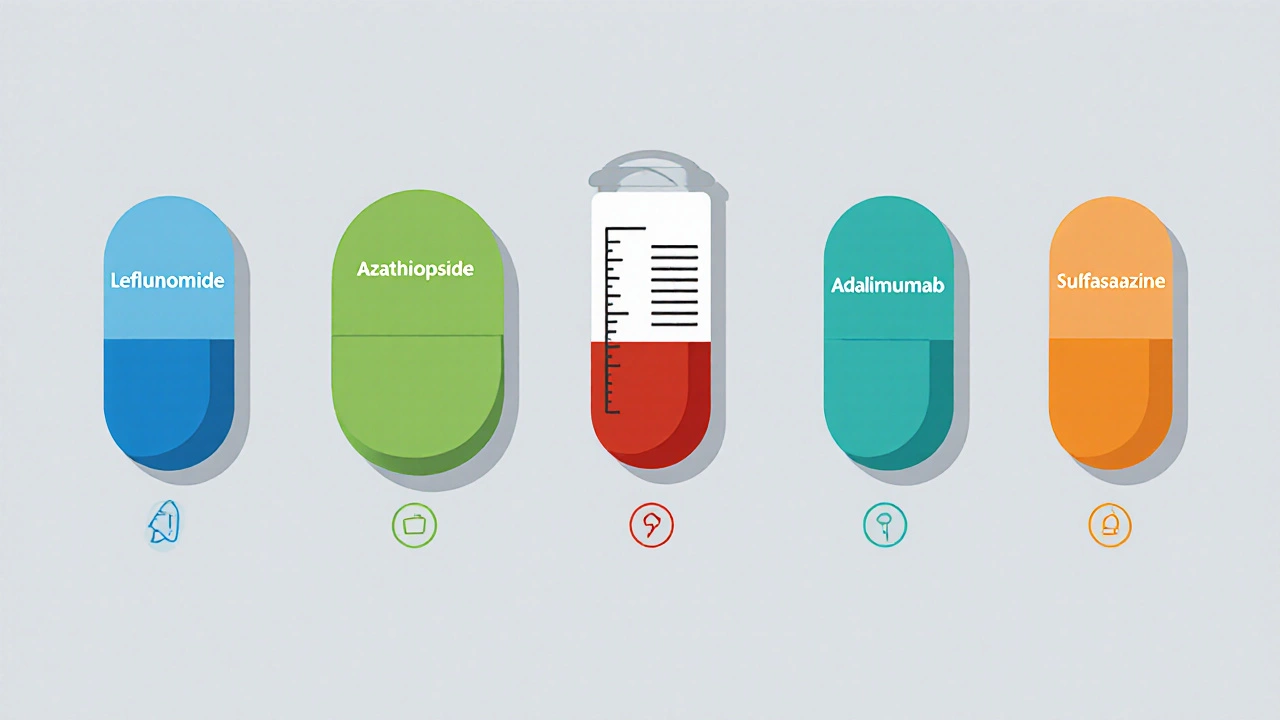
Major Alternatives - Quick Overview
| Drug | Mechanism | Typical Indications | Dosing Frequency | Key Side Effects | Monitoring |
|---|---|---|---|---|---|
| Methotrexate | Folate antagonist (DHFR inhibition) | RA, psoriasis, psoriatic arthritis | Weekly oral or subcutaneous | Nausea, liver toxicity, cytopenias | LFTs, CBC every 4-8 weeks |
| Leflunomide | Pyrimidine synthesis inhibition | RA, psoriatic arthritis | Daily oral | Hypertension, liver toxicity, alopecia | LFTs, blood pressure, CBC monthly |
| Azathioprine | Purine synthesis inhibition | RA (second‑line), inflammatory bowel disease | Daily oral | Myelosuppression, hepatotoxicity | CBC, LFTs every 2 weeks initially |
| Adalimumab | TNF‑α blocker (monoclonal antibody) | RA, ankylosing spondylitis, Crohn’s | Bi‑weekly subcutaneous injection | Injection site reactions, infection risk | TB screening, CBC, LFTs semi‑annually |
| Hydroxychloroquine | Antimalarial; interferes with antigen presentation | Mild RA, lupus | Daily oral | Retinal toxicity (rare), GI upset | Baseline and annual ophthalmology exam |
Deep Dive Into Each Alternative
1. Leflunomide
Leflunomide’s active metabolite, teriflunomide, blocks dihydroorotate dehydrogenase, curbing lymphocyte proliferation. It shines for patients who cannot tolerate weekly injections, offering a simple daily pill. The drug reaches steady state after about 3 weeks, but its long half‑life (≈15 days) means washout can take months-a factor to consider for women planning pregnancy.
2. Azathioprine
Often used when methotrexate fails to suppress disease activity, azathioprine is metabolized to 6‑mercaptopurine. TPMT enzyme testing helps predict toxicity; low TPMT activity raises the risk of severe myelosuppression. Because it works slower than methotrexate, clinicians usually combine it with a short course of steroids.
3. Biologic DMARDs (TNF‑α inhibitors)
Biologics such as adalimumab, etanercept, and infliximab target the tumor necrosis factor pathway, delivering rapid symptom relief. They are particularly valuable for patients with erosive disease or extra‑articular manifestations. The trade‑off is higher cost (often >£10 000 per year in the UK) and the need for infection screening before initiation.
4. Hydroxychloroquine
While less potent than methotrexate, hydroxychloroquine can be a useful adjunct, especially in early or mild RA. Its safety profile is favorable, but regular eye exams are mandatory after five years of use to catch rare retinopathy.
5. Sulfasalazine
Sulfasalazine combines sulfapyridine with 5‑aminosalicylic acid. It works well in combination therapy (the “triple therapy” of methotrexate, sulfasalazine, and hydroxychloroquine). Side effects include rash and hypersensitivity, and it can interfere with folate metabolism, so supplementation is often advised.
Decision‑Making Framework
To pick the right alternative, weigh these criteria:
- Efficacy: Biologics generally achieve the highest ACR70 response rates (≈45 %).
- Safety: Oral agents have lower infection risk, but liver and bone‑marrow toxicity remain concerns.
- Convenience: Daily pills vs weekly injections vs bi‑weekly infusions.
- Cost: Generic DMARDs are under £30/month; biologics can exceed £800/month.
- Patient comorbidities: Kidney disease limits methotrexate; pregnancy restricts teratogenic drugs.
Using a simple matrix-assigning a score of 1‑5 to each factor-helps visualise the best fit. Many rheumatology clinics use this approach during shared decision‑making visits.

Monitoring & Safety Tips Across All Options
Regardless of the chosen therapy, regular monitoring is non‑negotiable. Here’s a quick cheat‑sheet:
- Liver function tests (ALT, AST): Every 4‑8 weeks for methotrexate and leflunomide; every 3‑6 months for azathioprine.
- Complete blood count: Baseline, then 4‑week intervals for methotrexate, monthly for azathioprine.
- Infection screening: TB test and hepatitis B/C before starting any biologic.
- Renal function: Check creatinine clearance for methotrexate dose adjustments.
- Pregnancy planning: Discuss contraception; methotrexate and leflunomide are contraindicated.
Promptly addressing abnormal labs can prevent serious complications and keep patients on therapy longer.
Practical Tips for Patients Transitioning Off Methotrexate
- Never stop methotrexate abruptly; taper over 2‑4 weeks if possible.
- Coordinate the start of a new DMARD with the next scheduled methotrexate dose to avoid overlapping toxicity.
- Maintain folic acid supplementation (1 mg daily) during the transition, unless the new drug specifically requires stopping it.
- Keep a symptom diary for at least 6 weeks to gauge the new drug’s effectiveness.
- Arrange a follow‑up appointment within 4 weeks of the switch.
Frequently Asked Questions
Can I take methotrexate and a biologic at the same time?
Yes, combination therapy is common for patients with aggressive disease. The biologic covers cytokine blockade while methotrexate reduces the formation of anti‑drug antibodies, improving biologic efficacy.
What is the safest alternative for a patient with chronic liver disease?
Hydroxychloroquine or sulfasalazine are generally safer because they exert minimal hepatic metabolism. Biologics avoid liver toxicity altogether but require infection screening.
How long does it take for leflunomide to wash out if I become pregnant?
A cholestyramine wash‑out regimen for 11 days can reduce teriflunomide levels to <0.2 µg/mL within two weeks, making conception safer.
Are there any oral biologics that could replace methotrexate?
JAK inhibitors like tofacitinib are oral small molecules that act downstream of cytokine receptors. They are not true biologics but provide comparable efficacy for patients who cannot tolerate injections.
What cost differences should I expect between methotrexate and its alternatives?
Methotrexate costs under £20 per month in the UK. Generic leflunomide and azathioprine are similar. Biologic agents, however, can exceed £800 per month, though many patients qualify for NHS or private insurance coverage.
Bottom line: methotrexate remains the go‑to DMARD for most rheumatoid arthritis patients, but a solid understanding of alternatives lets you personalize therapy when the drug falls short. Use the comparison table and decision framework to discuss options with your rheumatologist, and keep up with regular monitoring to stay safe.





10 Comments
Methotrexate reigns supreme in the realm of rheumatology a true alchemist turning disease into remission its weekly ritual a disciplined mantra yet the masses fail to grasp its poetry
When considering a transition from methotrexate, it is essential to involve the patient in a shared‑decision process. A formal assessment of disease activity, comorbid conditions, and personal preferences should guide the selection of an alternative. For instance, leflunomide may be appropriate for those preferring oral therapy, while biologics are suited for rapid control of aggressive disease. Monitoring plans must be clearly communicated, ensuring liver function tests and infection screens are performed at the recommended intervals. This approach promotes adherence and optimizes outcomes.
Hey folks! If you’ve hit the wall with methotrexate, don’t despair – there’s a whole toolbox out there. Switching to leflunomide can feel like swapping a heavy coat for a light jacket, especially if daily pills are your jam. And remember, you don’t have to go solo; a short steroid bridge can smooth the transition. Keep that symptom diary handy – it’s the best way to see if the new drug is actually doing its job. Together we’ll find something that lets you get back to the things you love.
Regular LFTs and CBCs every 4‑8 weeks are mandatory when using methotrexate or leflunomide; adjust dosing promptly if abnormalities arise.
One must contemplate the ontological ramifications of immunosuppression; the aggressive pursuit of disease control via biologics reflects a dialectic between freedom from pain and surrender of immunological autonomy. Yet we confront the paradox: a drug that curtails inflammation may simultaneously erode the very defenses that define our biological integrity.
Ah the elegance of a well‑chosen DMARD cannot be overstated it is akin to a symphony where each instrument plays its part the humble sulfasalazine often whispers while adalimumab roars yet both demand respect and careful monitoring
Assessing liver health before initiating any new therapy is non‑negotiable; patients with chronic hepatic impairment should gravitate toward agents with minimal hepatic metabolism such as hydroxychloroquine or certain biologics, always coupled with vigilant infection surveillance.
Keep your head up! Even if methotrexate isn’t cutting it, there are plenty of alternatives that can restore your quality of life. Let’s stay positive and work with your doctor to find the perfect fit.
From a pharmacokinetic perspective, leflunomide’s active metabolite teriflunomide exhibits a terminal half‑life of approximately 15 days, necessitating a cholestyramine‑mediated wash‑out protocol when pregnancy is contemplated, thereby introducing a temporal lag in therapeutic repositioning. Conversely, azathioprine’s biotransformation to 6‑mercaptopurine engages thiopurine methyltransferase (TPMT) pathways, wherein genotype‑guided dosing can mitigate the incidence of myelosuppression, especially in patients with reduced enzymatic activity. Biologic agents such as adalimumab operate via high‑affinity binding to soluble and transmembrane TNF‑α, effectuating rapid cytokine neutralization, yet their immunogenic potential mandates concomitant methotrexate in many regimens to attenuate anti‑drug antibody formation. Economic analyses demonstrate that while generic DMARDs maintain a cost‑effectiveness ratio below $500 per quality‑adjusted life year (QALY), biologics often exceed $30,000 per QALY, imposing substantial budgetary constraints on healthcare systems. Moreover, the safety profile of hydroxychloroquine, though generally favorable, requires longitudinal ophthalmologic monitoring due to the risk of cumulative retinal toxicity, a consideration that becomes paramount after five years of continuous use. In clinical practice, the “triple therapy” paradigm-combining methotrexate, sulfasalazine, and hydroxychloroquine-has been shown to achieve comparable disease activity scores to certain biologics, offering a pragmatic alternative in resource‑limited settings. Renal clearance considerations dictate dosage adjustments for methotrexate in chronic kidney disease, as reduced glomerular filtration amplifies systemic exposure and potentiates hematologic toxicity. Additionally, the implementation of treat‑to‑target strategies, employing serial DAS28 assessments, facilitates timely escalation to biologic therapy when conventional DMARDs fail to achieve low disease activity within a 12‑week window. Patient‑reported outcome measures (PROMs) further enrich shared decision‑making by quantifying functional impairment and quality‑of‑life impact, thereby aligning therapeutic choices with individual priorities. Finally, it is imperative to recognize that adherence remains a pivotal determinant of therapeutic success; simplifying regimens-such as opting for weekly subcutaneous methotrexate over daily oral agents-can enhance compliance, ultimately translating to improved long‑term joint preservation.
In the end, the data speak louder than rhetoric.