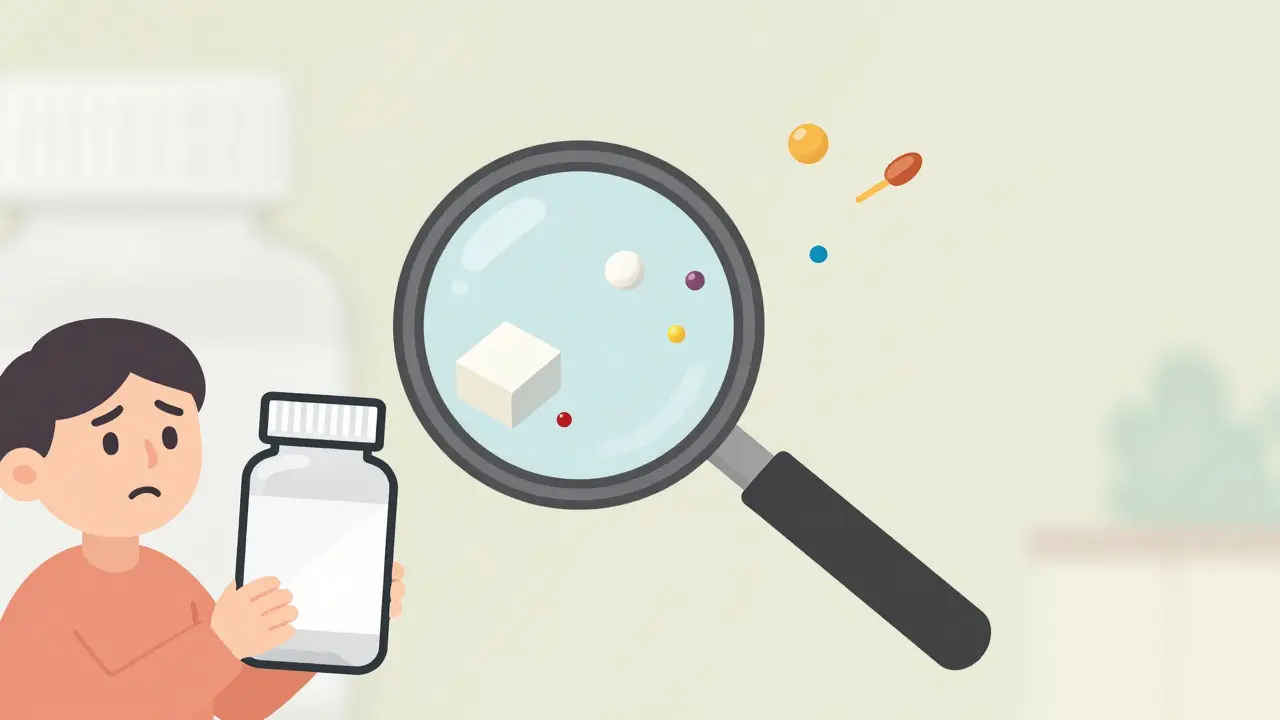
Most people assume that if a generic drug has the same active ingredient as the brand-name version, it’s just as safe. But that’s not always true. The real problem? inactive ingredients. These are the fillers, dyes, and preservatives that make pills hold their shape, taste better, or last longer. They don’t treat your condition. But for some people, they can trigger serious reactions - from rashes and stomach pain to life-threatening anaphylaxis.
Here’s the startling fact: 90% of all oral medications in the U.S. contain at least one inactive ingredient that could cause an adverse reaction in sensitive individuals. That’s not rare. That’s routine. And most patients never know until they react.
What Are Inactive Ingredients - And Why Do They Matter?
Inactive ingredients, or excipients, make up the bulk of most pills. In some cases, over 99% of a tablet isn’t the drug itself. It’s starch, sugar, dyes, or preservatives. These aren’t random. They’re chosen for function: lactose to bind the pill, gelatin for the capsule shell, FD&C Yellow #5 for color, or magnesium stearate to prevent sticking.
But for someone with a milk allergy, lactose can cause vomiting or hives. For someone with celiac disease, even trace gluten can wreck the gut lining. And for asthmatics, sulfites in some medications can trigger wheezing within minutes. The MIT/BWH study that analyzed over 42,000 medications found that 92.8% contained at least one of 38 known problematic excipients. Lactose? Present in 45% of all prescriptions. Food dyes? In 33%. Gluten? Hidden in dozens of common drugs.
And here’s the kicker: different doses of the same drug can have different ingredients. Singulair®’s 10mg tablet has lactose. The 4mg and 5mg versions? None. So switching from one strength to another - even within the same brand - can suddenly expose you to a trigger you didn’t know you had.
Brand vs. Generic: The Hidden Difference
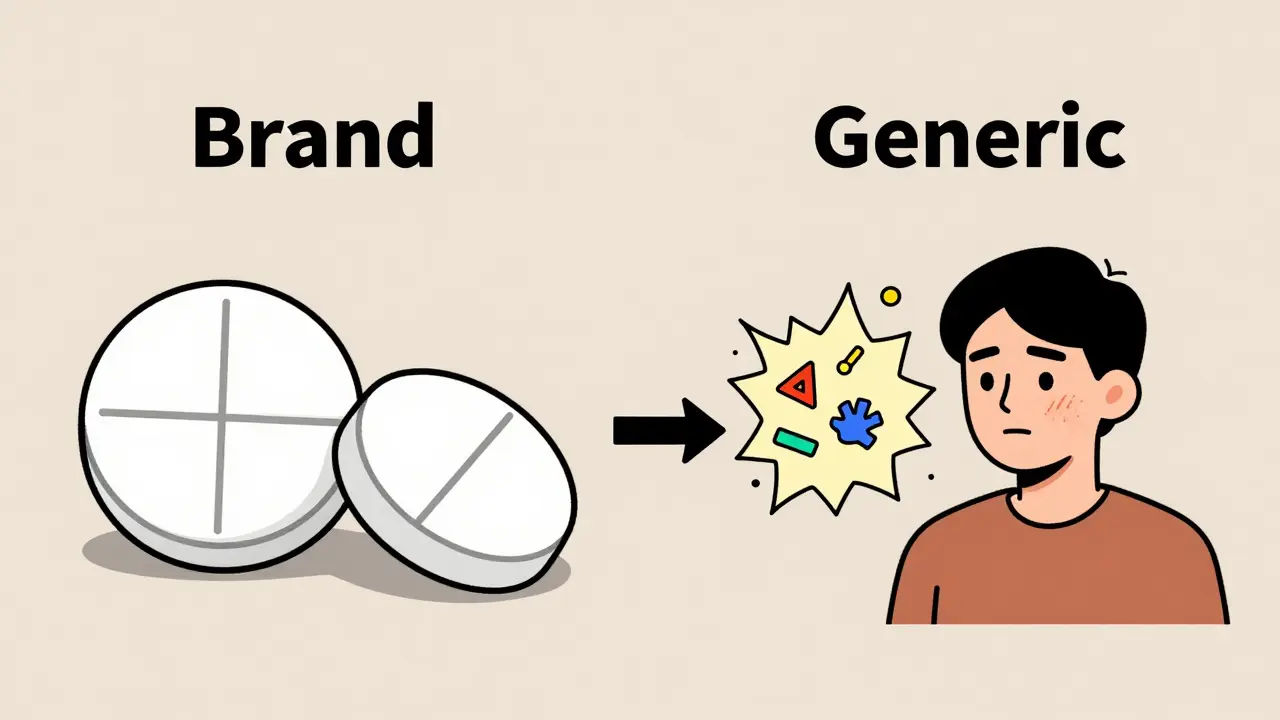
Generics are required by the FDA to match the brand-name drug in active ingredient, dosage, strength, and how fast it’s absorbed. That’s it. No requirement to match the filler. That means a generic version of your blood pressure pill might use a different dye, a different binder, or even a different preservative than the brand you’ve been on for years.
That’s why so many patients report reactions after switching to generics - even when their doctor says, “It’s the same thing.” It’s not. The active ingredient is. But the rest? Totally different. The American Pharmacists Association found that 87% of pharmacists have seen patients who had allergic or intolerant reactions after switching from brand to generic.
And it’s not just generics. Even within the same brand, formulations change. Manufacturers update formulas to cut costs or improve stability. You might take a pill for months, then one day - boom - you break out in hives. Why? The new batch contains a different excipient. And unless you’re checking the label every time, you won’t know.
The Worst Offenders: Common Allergens in Pills
Not all inactive ingredients are equal. Some are far more dangerous than others. Here are the top triggers, based on real patient data and clinical reports:
- Lactose - Found in over 20% of prescription drugs and 6% of OTC meds. Dangerous for those with milk protein allergy. Pediatric patients are especially at risk.
- Gluten - Hidden in starches, binders, and coatings. Even tiny amounts can damage the intestines in celiac disease. Only 15% of commonly prescribed drugs are verified gluten-free.
- FD&C Dyes - Yellow #5 (tartrazine), Red #40, Blue #1. Linked to hives, asthma, and hyperactivity in sensitive kids. Often used in chewables and liquids.
- Sulfites - Sodium metabisulfite, potassium metabisulfite. Can cause severe asthma attacks. These are the only excipients the FDA requires to be labeled - and even then, only if they’re above a certain threshold.
- Gelatin - Made from animal collagen. A problem for vegans, those with beef or pork allergies, or religious dietary restrictions.
- Soymilk or Soy Oil - Used in coatings and lubricants. Can trigger reactions in those with severe soy allergy.
- Shellfish Derivatives - Chitosan, derived from shrimp or crab shells. Used in some wound dressings and oral meds.
And don’t forget FODMAPs. Over half of all medications contain sugars like lactose, fructose, or sorbitol - which can trigger bloating, gas, and diarrhea in people with IBS. If you’re managing digestive issues, your meds might be making them worse.
How to Protect Yourself
Here’s what actually works - not guesswork, not hope, but real steps:
- Know your triggers. If you’re allergic to peanuts, milk, gluten, or certain dyes - get it documented. Work with an allergist. Don’t just assume “I’m fine.” Get tested.
- Ask for the full ingredient list. The FDA doesn’t require full disclosure. But your pharmacist does. Always ask for the “inactive ingredients” section. It’s usually on the prescription label or in the patient info leaflet. If it’s not there, ask for the manufacturer’s product monograph.
- Check every time. Formulations change. Just because your pill didn’t have lactose last month doesn’t mean it doesn’t now. Always double-check the label before taking a new batch.
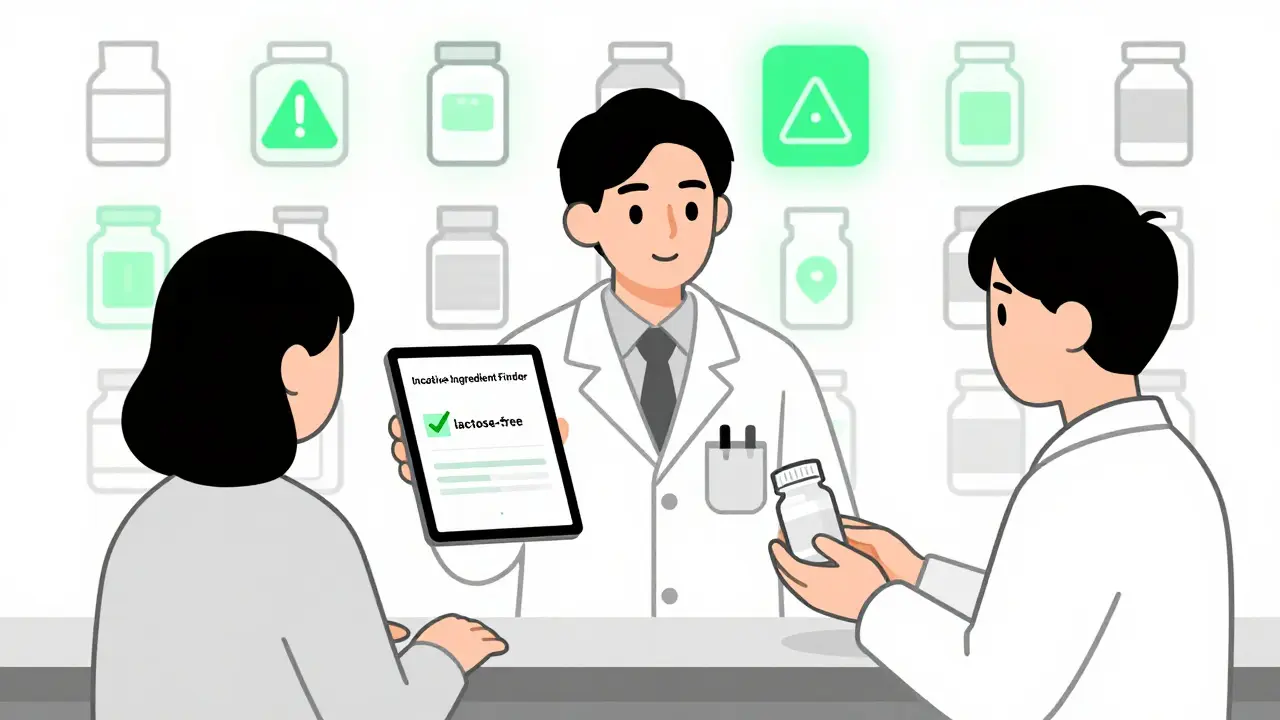
- Use the Inactive Ingredient Finder app. Launched in early 2023 by MIT researchers, this free tool lets you scan or search any U.S. medication and see its full excipient profile. It covers 98% of drugs on the market. No more guessing.
- Request allergen-free versions. Some manufacturers make versions without common allergens. For example, certain generics of levothyroxine are now available without lactose. Ask your pharmacist: “Is there a version of this without gluten/lactose/dye?”
- Work with your pharmacist. Pharmacists are your frontline defense. 94% of them routinely discuss excipient concerns with patients. Tell them your allergies. Ask them to flag your profile in the system. Many pharmacies now use electronic records that auto-flag allergens.
Why This Isn’t Fixed Yet
It’s not for lack of evidence. The 2019 MIT study was clear. The FDA held a public workshop in 2021. Draft guidelines were released in 2022. They proposed requiring labels for eight high-risk excipients - lactose, gluten, sulfites, dyes, gelatin, soy, shellfish, and peanut oil.
But as of October 2023? Still not finalized. In the U.S., labeling remains patchwork. Peanut oil? Must be labeled. Gluten? Not required. Lactose? Not required. In the EU, since 2019, all excipients must be listed. Result? A 37% drop in adverse reactions.
Meanwhile, only 12% of generic medications currently offer allergen-free alternatives. The industry is moving - slowly. PhRMA says 68% of big companies improved labeling since 2019. But that’s voluntary. And the American Medical Association is calling for mandatory labeling by 2026. We’re running out of time.
What to Do If You React
If you’ve had a reaction after starting a new medication - even if it’s generic - document it. Write down:
- The drug name and dosage
- The lot number (on the bottle)
- The inactive ingredients listed on the label
- Your symptoms and when they started
Then contact your doctor and pharmacist. Report it to the FDA’s MedWatch program. One report won’t change policy. But 10,000 will.
And if you’re on multiple medications - especially if you’re over 65 - remember this: 30% of older adults take five or more pills daily. That’s five chances for allergens to pile up. What’s safe in one? Might be dangerous in combination.
Final Thought: You’re Not Overreacting
Doctors may tell you, “Allergies to inactive ingredients are rare.” That’s true - statistically. But rare doesn’t mean nonexistent. And for the person who breaks out in hives every time they take a pill? It’s not rare. It’s their reality.
You have the right to know what’s in your medicine. You have the right to ask for alternatives. And you have the right to be heard - even if the system isn’t built to listen yet.
Don’t wait for the FDA to fix this. Take control. Check the label. Talk to your pharmacist. Demand better. Your body isn’t just a container for active ingredients. It’s a whole system - and it deserves to be treated like one.

8 Comments
this is wild i had no idea lactose was in so many pills
took my bp med for years then one day broke out in hives
thought it was stress till i read this
pharmacist said "oh yeah we switched formulas last month"
why dont they just label this stuff??
im gonna start checking every bottle now
OMG I KNEW IT 😤
USA is the only country that lets Big Pharma get away with this 🇺🇸
EU has had full labeling since 2019 and guess what? Fewer ER visits 🤷♀️
Why are we still in the dark ages??
My daughter had anaphylaxis from FD&C Yellow #5 in a generic Adderall
Pharmacist didn’t even know it was in there 😭
STOP USING GELATIN CAPSULES FOR VEGANS!!!
this is so important thank you for sharing
many people dont realize how much excipients matter
i work with patients with celiac and soy allergies
they often get sick after switching generics
always ask for the full list
pharmacists are your friends here
and yes the MIT app is a game changer
share this with anyone on multiple meds
why do people make such a big deal about this
just take the brand name if you're so sensitive
who cares if it costs 10x more
your health is worth it
lol so now we're treating pills like gourmet food?
next they'll demand organic aspirin with non-GMO starch
and maybe a gluten-free placebo capsule made by a certified yoga instructor
also the FDA doesn't require labeling because 99% of people don't care
the 1% who do? You're not special
you're just a walking allergy spreadsheet
The Inactive Ingredient Finder app is a miracle. I use it every time I get a new prescription. I have a shellfish allergy and chitosan has nearly gotten me hospitalized twice. Pharmacists don’t always know what’s in the capsules. The manufacturer’s monograph is the only reliable source. Always get it. Never assume.
you think this is about allergies?
what if the whole thing is a scam?
lactose is in everything because they want you to need more meds
and the FDA is in bed with Big Pharma
why do you think they won’t label? because they’re hiding something
the MIT study? funded by a pharma lobby
the EU? they’re just trying to control us
think deeper
Check the label. Talk to your pharmacist. Demand better.