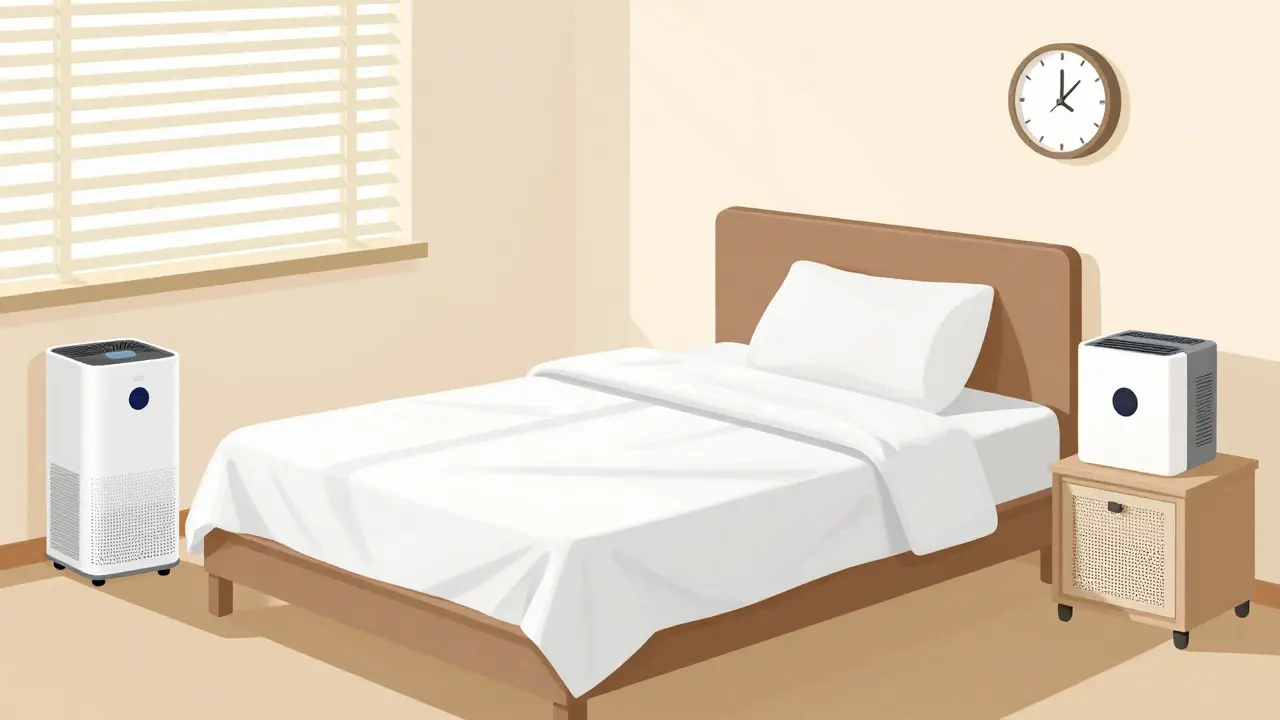
If you’re one of the 1 in 5 adults in the U.S. who suffers from hay fever or asthma triggered by indoor allergens, you know that pills and inhalers don’t always fix the problem. You wake up with a stuffy nose. Your eyes itch. You cough at night. And no matter how many antihistamines you take, the symptoms keep coming back. That’s because the real issue isn’t just your immune system-it’s what’s in your home.
Why Your Home Is the Problem
Your house isn’t just shelter. It’s a breeding ground for allergens you can’t see. Dust mites live in your mattress. Cat dander clings to your couch. Mold grows behind the bathroom tiles. Pollen sneaks in through open windows. And cockroach droppings hide in kitchen corners. These aren’t just annoyances-they’re triggers that keep your allergies active day after day.
The science is clear: reducing exposure to these allergens can cut symptoms by half-or more. But not all strategies work the same. A single change, like buying a new pillow cover, might help a little. But real relief comes from combining multiple, targeted actions. The goal isn’t to make your home sterile. It’s to lower allergen levels below the threshold that sets off your immune system.
Dust Mites: The Silent Saboteurs
Dust mites are the #1 indoor allergen in the U.S. They feed on dead skin cells and thrive in warm, humid places-especially beds. Eighty percent of allergy sufferers are sensitive to them. And if you’re not controlling them, you’re breathing them in every night.
Here’s what actually works:
- Use allergen-proof mattress and pillow covers made of tightly woven fabric (under 10 microns). These block mites and their waste. Look for ones certified by the Asthma and Allergy Foundation of America (AAFA).
- Wash all bedding-including blankets, pillowcases, and sheets-every week in water at least 130°F (54.4°C). Cold or lukewarm water won’t kill mites. Hot water does.
- Keep indoor humidity below 50%. Use a hygrometer to measure it. If it’s above 50%, get a dehumidifier. In humid climates like Bristol, you might need to run it 12-18 hours a day during spring and summer.
- Avoid heavy curtains, wall-to-wall carpeting, and stuffed animals in the bedroom. These collect dust and mites. Hard floors and washable blinds are better.
Studies show that using just these three steps together reduces mite allergen levels by 73-90%. That’s not a small win-it’s life-changing for people with asthma.
Pet Dander: Can You Keep Your Pet?
If you love your cat or dog but hate your allergies, you’re not alone. Six in ten U.S. households have pets, and 60% of allergy sufferers react to them. The problem isn’t fur-it’s protein in saliva, skin flakes, and urine. Cats produce Fel d 1, one of the most potent allergens known.
You don’t have to give up your pet. But you need a smart plan:
- Keep pets out of the bedroom. This is the single most effective step. Studies show it cuts allergen levels by 30-55% in sleeping areas.
- Bathe cats weekly. It reduces airborne Fel d 1 by 41%. Use a gentle, vet-approved shampoo.
- Use a vacuum with a True HEPA filter at least twice a week. Regular vacuums just blow allergens back into the air. HEPA traps them.
- Wipe down surfaces daily with a damp cloth. Dry dusting spreads allergens.
- Consider an air purifier with a HEPA filter in the main living area. It won’t remove all dander, but it reduces airborne particles by up to 66% for dog allergens.
Removing the pet entirely cuts allergen levels by 100 to 1,000 times-but that’s not realistic for most people. The goal is smart management, not total elimination.
Mold: Hidden in Plain Sight
Mold grows where moisture hides. Bathrooms, basements, under sinks, and behind refrigerators are hotspots. Mold spores trigger asthma and nasal allergies-and they’re airborne, so you breathe them in constantly.
Here’s how to stop it before it starts:
- Maintain indoor humidity between 30-50%. Use a dehumidifier in damp areas. In the UK’s rainy climate, this is non-negotiable.
- Fix leaks within 24-48 hours. Mold can grow in less than a day.
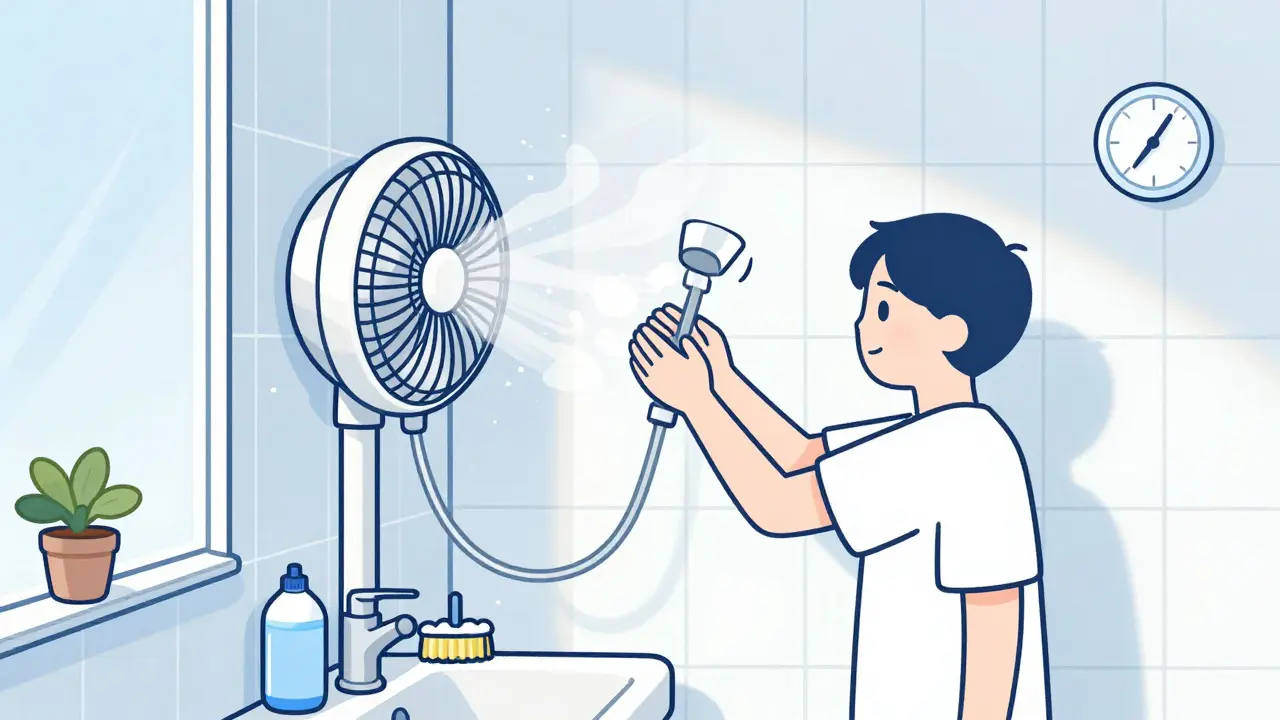
- Clean bathroom tiles, shower curtains, and grout weekly with a bleach solution or EPA-approved mold killer. Don’t just spray-it needs scrubbing.
- Use exhaust fans in bathrooms and kitchens. Run them for 20 minutes after showers or cooking.
- Avoid indoor plants if you’re sensitive. Wet soil is a mold factory.
Proper humidity control alone reduces mold spore counts by 70-85%. That’s more effective than most medications.
Cockroaches and Other Pests: Don’t Ignore the Kitchen
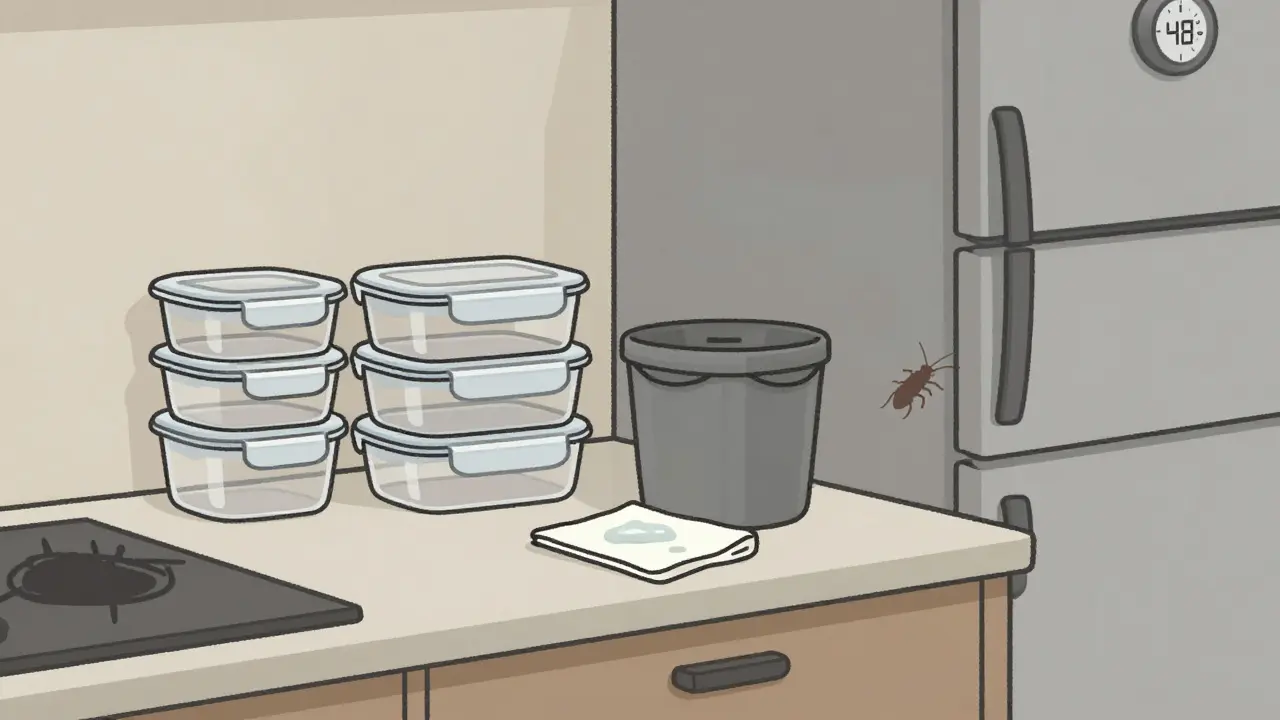
You might think cockroach allergens are only a problem in big cities or old buildings. But they’re found in 25% of U.S. homes-even middle-class ones. Their droppings, saliva, and body parts are powerful allergens, especially for kids with asthma.
Prevention is cheaper-and safer-than extermination:
- Store all food in airtight containers. No open boxes, bags, or leftovers on counters.
- Take out the trash every night. Don’t let it sit overnight.
- Wipe down counters, stovetops, and floors daily with soapy water.
- Use bait stations or boric acid powder in corners and behind appliances. Avoid aerosol sprays-they scatter allergens into the air.
- Seal cracks around pipes, windows, and baseboards. Cockroaches come in through tiny gaps.
A 1999 study in urban dorms showed that combining professional extermination with daily cleaning cut cockroach allergen levels on floors by 86%. That’s the kind of result you can replicate at home.
The Power of Combined Strategies
Here’s the truth most people miss: single changes rarely work. Buying a HEPA filter won’t help if your bedding is full of mites. Washing sheets won’t matter if your humidity is 70%.
Research from 2023 reviewed 15 clinical trials. Single interventions reduced allergen levels by 40-65%-but only 22% of patients saw symptom improvement. When people combined three or more strategies-like HEPA filtration, bedding covers, humidity control, and pet restrictions-they cut allergens by 75-90% and saw symptom relief in 83% of cases.
It’s not about doing everything. It’s about doing the right things together. Start with the highest-impact, lowest-cost steps:
- Get allergen-proof mattress and pillow covers ($30-$100).
- Buy a dehumidifier ($100-$200) and keep humidity under 50%.
- Use a HEPA vacuum twice a week.
- Keep pets out of the bedroom.
- Wash bedding weekly in hot water.
That’s it. You don’t need a $2,500 whole-house air system to start seeing results. Many people feel better within two weeks.
What Doesn’t Work (And Why)
There’s a lot of noise out there. Here’s what to ignore:
- Ionizers and ozone generators: These don’t remove allergens. Ozone can irritate lungs and make asthma worse.
- Ultraviolet (UV) lights in HVAC systems: They kill mold spores-but only if air sits in the light long enough. Most home units don’t provide enough exposure time.
- Extreme cleaning rituals: You don’t need to sterilize your home daily. Focus on key areas: bed, bedroom, bathroom, kitchen.
- Food allergy avoidance at home: The American Academy of Pediatrics says extreme changes for food allergies (like removing all nuts from the house) create anxiety without real benefit. Only avoid foods you’re allergic to when eating.
Stick to evidence-based steps. Don’t waste money or energy on gimmicks.
Getting Started: A Simple 3-Phase Plan
You don’t need to overhaul your home overnight. Here’s a realistic timeline:
Phase 1: Weeks 1-2 (Quick Wins)
- Buy and install allergen-proof covers on mattress and pillows.
- Place a HEPA air purifier in the bedroom (look for 4-6 air changes per hour).
- Keep pets out of the bedroom.
- Start weekly hot water laundry.
Phase 2: Weeks 3-8 (Deep Control)
- Buy a hygrometer to monitor humidity. Get a dehumidifier if needed.
- Deep clean bathroom with mold killer. Fix any leaks.
- Switch to a HEPA vacuum. Vacuum carpets, rugs, and upholstery twice a week.
- Store food in sealed containers. Empty trash nightly.
Phase 3: Ongoing (Maintenance)
- Check humidity daily. Adjust dehumidifier as seasons change.
- Replace HEPA filters every 6-12 months.
- Reassess your triggers. If you’re still struggling, get allergy tested. You might be reacting to something you didn’t know.
Most people need 3-5 sessions of education to do this right. Don’t feel bad if it takes time. This isn’t easy. But it’s worth it.
Cost vs. Benefit: What’s Worth It?
You don’t need to spend thousands. Here’s a quick cost-benefit breakdown:
| Strategy | Cost | Allergen Reduction | Symptom Improvement |
|---|---|---|---|
| Allergen-proof bedding | $30-$100 | 73-90% | High (when combined) |
| Dehumidifier | $100-$200 | 70-85% (mold), 50-70% (mites) | High |
| HEPA vacuum | $200-$500 | 66% (dog allergen) | Moderate |
| HEPA air purifier (bedroom) | $150-$400 | 60-80% | High |
| Whole-house air system | $800-$2,500 | 70-90% | High (for severe cases) |
| Professional pest control | $150-$300 per visit | 80-86% | High (if infestation exists) |
The best return? Bedding covers + dehumidifier + HEPA vacuum. Under $800 total. That’s less than two months of allergy meds for many people.
Why Most People Fail
Studies show that after six months, only 35% of people stick with daily hot water washing. Why? It’s inconvenient. It’s tiring. It feels overwhelming.
But here’s what works: start small. Pick one thing. Do it for two weeks. Then add another. Don’t try to do everything at once. Progress beats perfection.
Also, get help. Certified asthma educators have an 85% success rate with patients. Regular doctors? Only 45%. Ask your doctor for a referral to an allergy educator or pulmonary rehab program. They’ll walk you through it step by step.
What’s Next?
Technology is catching up. New smart home systems now monitor allergen levels and auto-adjust humidity or filtration. In 2023, 22% of new HVAC systems included allergen sensors. That’s not mainstream yet-but it’s coming.
For now, the best tool you have is knowledge. Know your triggers. Know your home. Know what works. And don’t give up. Allergen avoidance isn’t a quick fix. It’s a lifestyle shift. But for millions, it’s the difference between constant symptoms and days without sneezing, coughing, or wheezing.
You don’t need to be perfect. You just need to be consistent. Start today. Breathe easier tomorrow.
Do air purifiers really help with allergies?
Yes-but only if they have a True HEPA filter and are sized correctly for the room. HEPA filters capture 99.97% of particles as small as 0.3 microns, including dust mites, pet dander, and mold spores. For best results, use one in the bedroom with 4-6 air changes per hour. Avoid ionizers or ozone generators-they don’t remove allergens and can irritate lungs.
Can I keep my cat if I’m allergic?
Yes, but you need a strict plan. Keep your cat out of the bedroom, bathe it weekly, use a HEPA vacuum twice a week, and install a HEPA air purifier in living areas. These steps can reduce airborne cat allergens by up to 60%. Removing the cat entirely cuts allergens by 100-1,000 times, but most people find this too difficult. Smart management works better than total removal for most.
How often should I wash bedding to control dust mites?
Wash all bedding-including sheets, pillowcases, and blankets-once a week in water at least 130°F (54.4°C). This kills dust mites and removes their allergenic waste. Cold or warm water won’t kill them. Also, use allergen-proof covers on your mattress and pillows. These act as a barrier even if some mites survive.
Is humidity control really that important?
Absolutely. Dust mites and mold need humidity to survive. Keeping indoor humidity between 30-50% kills mites and prevents mold growth. In humid areas like the UK, this often means running a dehumidifier 12-18 hours a day. A simple hygrometer (under $20) tells you if you’re in the right range. If it’s above 50%, you’re feeding allergens.
Should I get rid of my carpet?
If you have allergies, hard flooring is better. Carpets trap dust mites, pet dander, and mold. If you can’t remove carpet, vacuum it twice a week with a HEPA-filter vacuum. Steam cleaning helps but doesn’t eliminate allergens long-term. For bedrooms and living areas, go for hardwood, tile, or laminate. They’re easier to clean and don’t hold allergens.
Do allergy shots replace environmental control?
No. Allergy shots (immunotherapy) help your body become less sensitive over time-but they take years and don’t work for everyone. Environmental control reduces your exposure right away. The best approach is both: use avoidance to lower daily triggers, and immunotherapy to change your long-term response. They work together.
Are expensive whole-house air systems worth it?
Only if you have severe allergies and have tried simpler steps first. Whole-house systems cost $800-$2,500 and require professional installation. For most people, a bedroom HEPA purifier ($150-$400) and humidity control do 80% of the job. Save the big investment for when basic steps aren’t enough.




9 Comments
I never realized how much my mattress was making me sick. Bought those allergen covers last week and my morning congestion is already way better. No more waking up like I’ve been breathing through a dusty sock.
Stop wasting money on gimmicks. I tried every air purifier under the sun-HEPA is the ONLY thing that actually works. And yeah, washing sheets in HOT water? Non-negotiable. I used to think it was overkill until my asthma stopped flaring up at 3 a.m. Do the basics. No excuses.
dehumidifier changed my life. i live in hyderabad and its so humid here. no more mold smell in bathroom. also stopped keeping plants. small changes big difference.
For anyone feeling overwhelmed-start with one thing. Just one. Maybe it’s the pillow covers. Maybe it’s keeping your cat out of the bedroom. Do that for two weeks. Then add the next. You don’t have to fix everything today. Progress, not perfection. You’ve got this.
Think about it: we live in a world where we sanitize our hands 20 times a day but still let dust mites breed in our beds like it’s some kind of sacred ritual. Our homes are biological time bombs we ignore because convenience trumps health. We’ve outsourced our well-being to pharmaceutical companies and called it progress. But real healing isn’t in a pill-it’s in the fabric of your environment. You can’t medicate away a home that’s working against you. It’s not about control-it’s about harmony. And harmony starts with a mattress cover and a hygrometer. Not a miracle cure. Just… awareness.
USA has the best science but worst habits. In India, we don’t need fancy HEPA filters-our grandmas knew to air out bedding every morning and scrub floors with neem water. Why are we paying $500 for machines when tradition already solved this? Stop overcomplicating. Clean. Ventilate. Simple.
My wife and I did all this last year. The pet thing was hardest-we love our dog. But keeping him out of the bedroom? Game changer. We also started using a dehumidifier in the basement. Didn’t even know there was mold back there until we saw the black spots. Now we sleep like babies. No more midnight coughing fits.
OMG YES YES YES-this is the REAL talk!! I used to think I was just ‘allergic to life’… until I found out my carpet was basically a dust mite resort. I ripped it out, got hardwood, started washing sheets in HOT water (like, 140°F-no excuses!!), and bought a $120 HEPA purifier. My sneezing? Gone. My energy? Up. My sanity? Saved. Don’t let anyone tell you it’s ‘too much work’-you’re worth it. And yes, I cried when I finally slept through the night. 😭
So… you’re telling me the reason I’ve been coughing for 3 years is because I left my cat on the bed and never washed my sheets? And I spent $200 on some ‘allergy tea’? Wow. I feel dumb. But also… kinda motivated. Time to throw out my ionizer and buy a dehumidifier. Thanks for the kick in the pants.