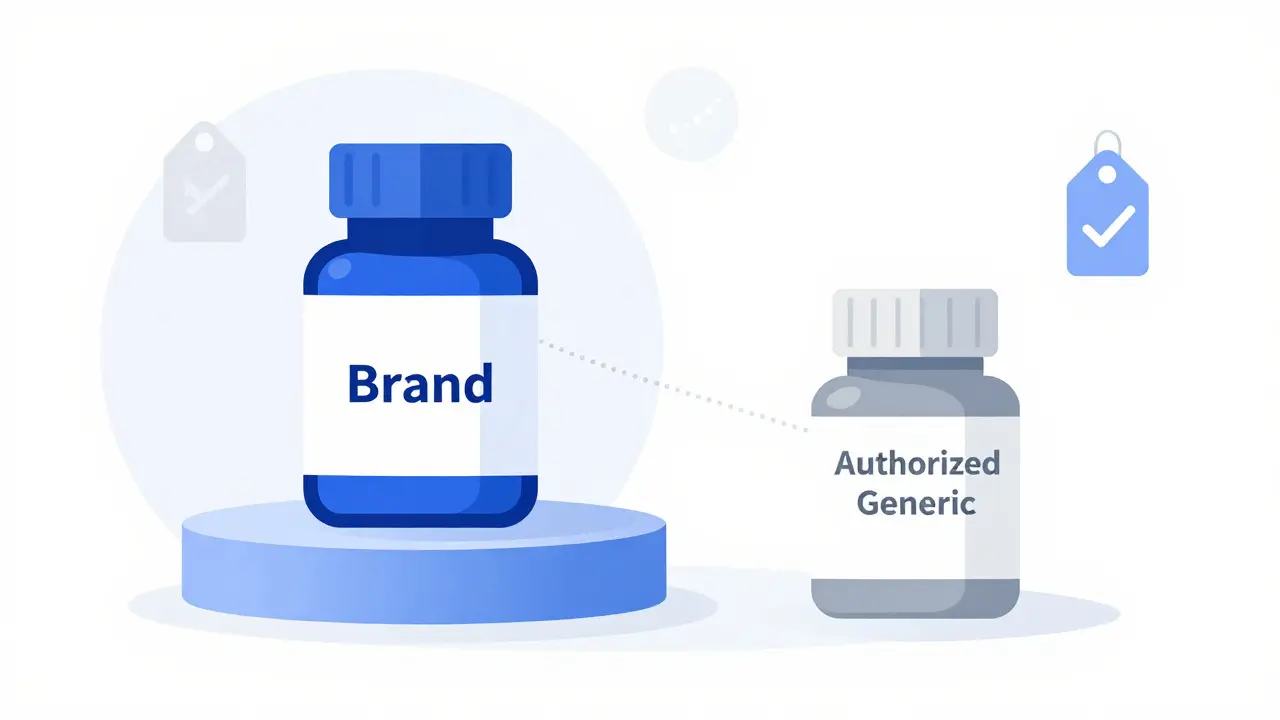
Have you ever looked at your prescription bottle and noticed the drug looks exactly like the brand-name version you’ve taken for years, but the price tag is slightly lower? You might be holding an authorized generic, which is a generic version of a drug produced by the original brand-name manufacturer. It’s a clever business move that often flies under the radar. When a blockbuster drug’s patent expires, the original company doesn’t just sit back and watch competitors slash prices. Instead, they step into the arena themselves, selling their own product as a generic.
This strategy isn’t about cutting corners on quality. In fact, it’s the opposite. These drugs are made in the same factories, using the same ingredients, and following the exact same processes as the brand-name versions. The only difference is the label and the price. For patients, this can mean staying on a familiar medication without paying full brand-name rates. For the pharmaceutical companies, it’s a way to protect their revenue streams when the legal monopoly ends. But how does this actually work behind the scenes?
The Business Logic Behind Authorized Generics
To understand why big pharma companies do this, you have to look at what happens when a patent expires. This event is known in the industry as the "patent cliff." Before the cliff, the brand owner has a monopoly. They set the price, and insurers usually pay it. Once the patent drops, the floodgates open. Competitors rush in with traditional generics, driving prices down by 80% to 85% within the first year, according to data from the Food and Drug Administration (FDA).
That’s a massive hit to revenue. So, why not fight back? By launching their own authorized generic, the brand manufacturer can capture a slice of the generic market-typically between 15% and 35% in the first year. This allows them to keep some money in their pocket while still offering a cheaper option than their own brand-name pill. It’s a hedge against total loss. Take AstraZeneca, for example. In 1997, they launched an authorized generic of Prilosec right as the patent expired. Within six months, they had grabbed about 30% of the entire omeprazole market. That’s a huge buffer against competitors who were trying to steal their customers.
The pricing strategy here is delicate. Authorized generics aren’t priced as low as traditional generics. They usually sit 10% to 15% below the brand-name price but 5% to 10% above competing generics. This creates a middle tier. Patients who want savings but trust the original maker choose the authorized generic. Those who want the absolute lowest price go for the traditional generic. The brand company gets to keep the loyalists.
Production and Regulatory Pathways
You might wonder if these authorized generics are made differently. The short answer is no. The production process is identical to the brand-name drug. The facilities use the same Good Manufacturing Practice (GMP) standards. The active ingredients, the inactive fillers, the size, shape, color, and even the taste are the same. Pfizer’s documentation confirms that authorized generics are identical to the brand-name drug in almost every aspect except for the packaging and labeling.
The regulatory path is also faster for the brand owner. Traditional generic makers have to file an Abbreviated New Drug Application (ANDA) and wait for the FDA to review it, which takes an average of 17 months. They also have to prove bioequivalence through new testing. The brand manufacturer already has all that data. They don’t need to run new clinical trials because they already know the drug is safe and effective. They just need to adjust their paperwork to reflect the new generic status. This transition typically takes 6 to 9 months for regulatory adjustments, allowing them to launch much sooner than competitors.
There is one major hurdle: trademark law. You can’t sell a pill that looks exactly like the brand-name version and call it a generic. Trademark laws prevent visual confusion. So, while the pill inside might be identical, the box and the imprint on the tablet must be different. This is why authorized generics often have a different color or a different code stamped on them, even though the chemical composition is unchanged.
| Feature | Brand-Name Drug | Authorized Generic | Traditional Generic |
|---|---|---|---|
| Manufacturer | Original Company | Original Company | Competing Company |
| Active Ingredients | Proprietary Formula | Identical to Brand | Bioequivalent to Brand |
| Manufacturing Site | Original Facility | Same Original Facility | Different Facility |
| Pricing | Highest | Moderate (10-15% less than brand) | Lowest (80-85% less than brand) |
| Time to Market After Patent Expiry | N/A | Simultaneous or Immediate | Months to Years (depending on ANDA approval) |
Market Impact and Competition
The introduction of authorized generics shakes up the competitive landscape. For traditional generic companies, it’s frustrating. They spend millions developing a generic version, only to see the original maker undercut them with a product that has built-in patient loyalty. Data from the Generic Pharmaceutical Association shows that 68% of top 50 brand-name drugs losing patent protection between 2018 and 2022 had an authorized generic version introduced by the originator. That’s a dominant presence.
However, this strategy hasn’t gone unchallenged. The Federal Trade Commission (FTC) has scrutinized authorized generics for potential anti-competitive behavior. The concern is that brand companies might use authorized generics to block true competition. For instance, if a brand company offers its authorized generic to pharmacies at a price so low that traditional generics can’t compete, it could stifle the market. The FTC filed several complaints between 2015 and 2020. One notable case involved Actavis and its drug Namenda, resulting in a $448 million settlement. This established legal boundaries, ensuring that authorized generics don’t become tools for monopolistic control.
Despite the scrutiny, the trend is growing. With $250 billion in brand-name drug revenues facing patent expiration between 2023 and 2027, more companies are adopting this model. Top players like Pfizer, Johnson & Johnson, and Merck have collectively introduced dozens of authorized generics in recent years. Analysts predict that authorized generics will account for 25% to 30% of the total generic drug market by 2027. This shift is partly driven by the complexity of modern drugs. As medications become more sophisticated, such as long-acting injectables, the barrier to entry for traditional generics rises. The original manufacturer has a distinct advantage in knowing how to produce these complex formulations.
Patient Perspectives and Confusion
For patients, the rise of authorized generics brings both benefits and confusion. On the positive side, many patients prefer sticking with the manufacturer they trust. A survey by the Kaiser Family Foundation found that 71% of patients preferred authorized generics when available because they felt familiar with the product. Reviews on platforms like Drugs.com show higher satisfaction rates for authorized generics compared to traditional ones, with users noting that the pill feels and works the same as before.
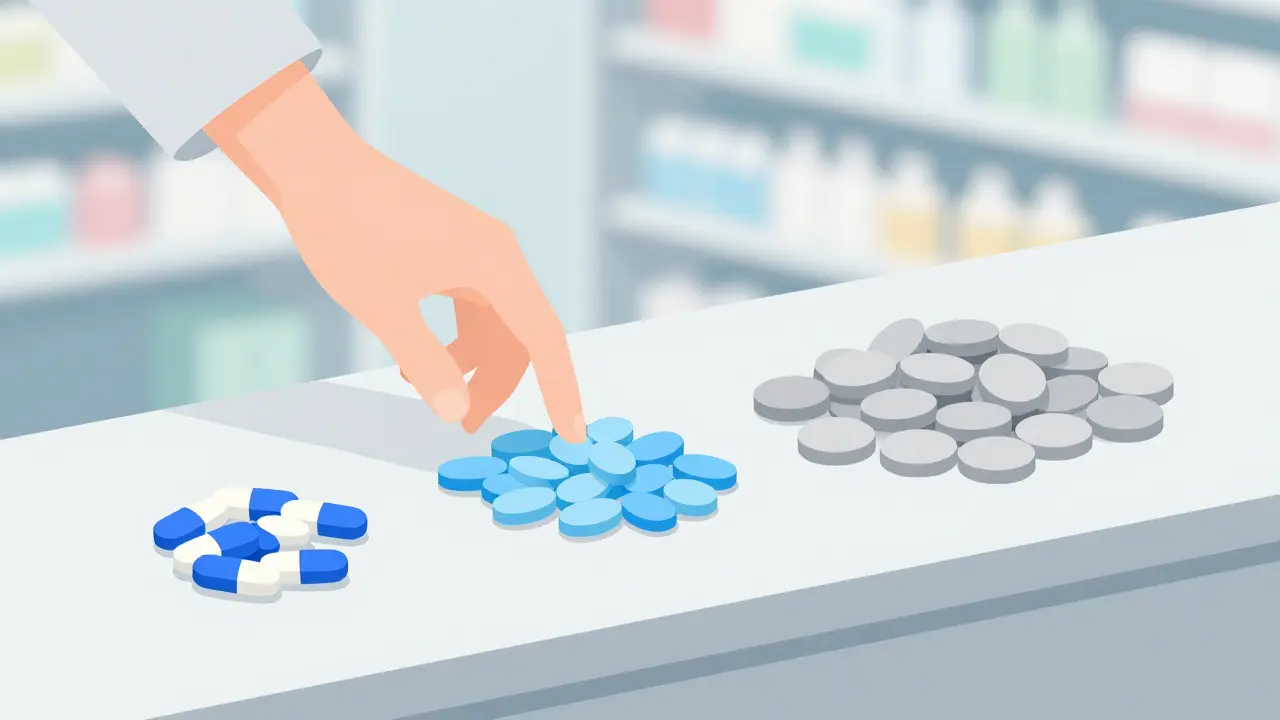
However, there is a significant knowledge gap. That same KFF survey revealed that 64% of patients didn’t realize the authorized generic was made by the same company as the brand-name drug. This lack of transparency can lead to mistrust. Some patients assume any generic is inferior, not realizing that an authorized generic is chemically identical to the brand. Conversely, others are confused when they see two "generic" options on their pharmacy shelf-one cheaper than the other-and don’t understand why the prices differ.
Pharmacists often face questions about this. Independent pharmacy owners report that authorized generics create confusion among patients who can’t distinguish between the brand, the authorized generic, and traditional generics. Clear communication is key. Pharmacists play a vital role in explaining that the authorized generic is essentially the brand-name drug in a different wrapper, helping patients make informed choices based on cost and preference rather than fear.
Future Trends: Biosimilars and Beyond
The authorized generic strategy is evolving beyond small-molecule drugs. We are now seeing it applied to biologics, which are larger, more complex drugs derived from living organisms. The first authorized biosimilar, Amgen’s version of its own Enbrel, was approved in 2023. This signals a major expansion of the strategy into therapeutic areas where manufacturing expertise is critical. Because biologics are harder to replicate, the original manufacturer’s control over production gives them a stronger moat against competitors.
Companies are also getting smarter about timing. Novartis implemented a "dual launch" strategy for its heart failure medication Entresto, positioning the brand-name product for conversion to an authorized generic before the patent even expired. This proactive approach maximizes revenue retention. As the pharmaceutical landscape shifts toward personalized medicine and complex therapies, authorized generics will likely remain a key tool for lifecycle management. They offer a balance between innovation reward and patient access, providing a middle ground in a polarized market.
Is an authorized generic the same as a brand-name drug?
Yes, in terms of active ingredients, dosage, safety, strength, route of administration, performance characteristics, and intended use, an authorized generic is identical to the brand-name drug. It is manufactured by the same company in the same facility using the same processes. The only differences are in the packaging, labeling, and sometimes the color or shape of the pill to comply with trademark laws.
Why would a brand manufacturer sell their own generic?
Brand manufacturers introduce authorized generics to protect their revenue when a drug's patent expires. Without this strategy, they would lose most of their market share to cheaper traditional generics. By offering their own generic version, they can capture a portion of the price-sensitive market while maintaining control over quality and branding. It allows them to stay competitive without abandoning the product entirely.
Are authorized generics cheaper than traditional generics?
No, authorized generics are typically more expensive than traditional generics. They are priced lower than the brand-name version (usually 10-15% less) but higher than competing generics (often 5-10% more). Traditional generics benefit from intense competition among multiple manufacturers, which drives prices down significantly. Authorized generics face less competition because the brand manufacturer controls the supply.
Do authorized generics require FDA approval?
Yes, authorized generics must meet FDA standards. However, because they are produced by the original brand manufacturer, they leverage the existing approval data for the brand-name drug. They do not need to submit new clinical trial data to prove safety and efficacy, unlike traditional generic applicants who must file an Abbreviated New Drug Application (ANDA) and demonstrate bioequivalence.
Can patients request an authorized generic specifically?
Patients can discuss their preferences with their doctor or pharmacist. While insurance formularies often dictate which generic is dispensed to minimize costs, some plans may allow patients to choose between authorized and traditional generics. If a patient prefers the authorized generic due to familiarity or past experience, they should communicate this clearly to their healthcare provider to see if it can be accommodated.