Healthcare Collaboration Impact Estimator
Your Medication Profile
Enter details about your current medication regimen to see potential improvements with collaborative care.
Potential Improvements
Enter your medication profile and click calculate to see potential improvements with collaborative care.
Imagine taking five different medications for chronic conditions. One helps your heart, another manages diabetes, and a third treats anxiety. Now imagine that one of these drugs interacts with another, causing dizziness or bleeding risks. Who catches this? In the past, you might have been left to figure it out yourself. Today, healthcare team collaboration changes that reality completely.
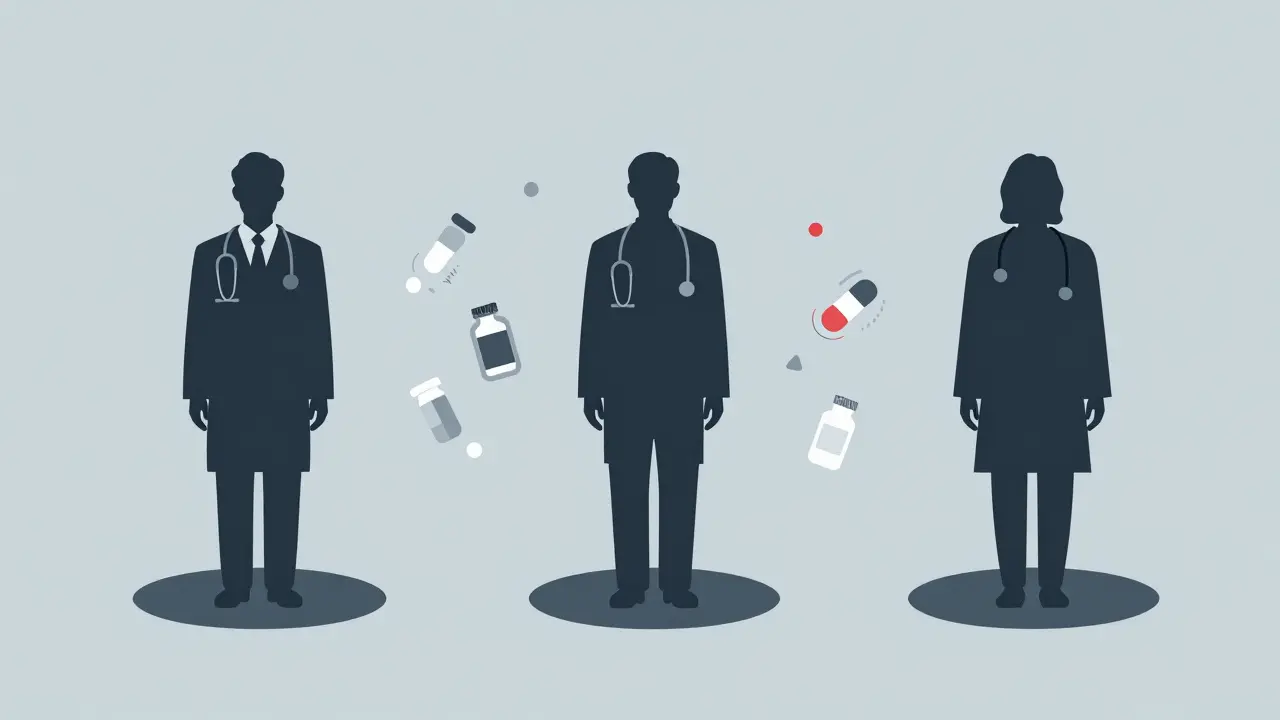
When pharmacists, physicians, and specialists work together through structured communication channels, they don’t just share information-they actively prevent harm. This isn’t theoretical idealism; it’s a proven model that reduces hospital readmissions by 23.1% and cuts emergency department visits by 15.7%, according to a 2021 systematic review in the Journal of Interprofessional Care. But here’s what really matters: how does this teamwork directly impact your experience managing side effects?
The Core Problem: Why Siloed Care Fails Patients
Most patients see multiple providers without those providers talking to each other. A cardiologist prescribes blood pressure medication. A primary care doctor adds statins. A psychiatrist introduces an antidepressant. None may realize their combined prescriptions create dangerous interactions.
This fragmentation creates real consequences. Drug-drug interactions affect 43% of patients taking five or more medications-a group known as experiencing polypharmacy. These interactions often manifest as confusing side effects: nausea, fatigue, confusion, or worse. Without coordinated oversight, patients suffer unnecessarily while providers remain unaware until serious adverse events occur.
The cost is staggering. Preventable adverse drug events alone cost the U.S. healthcare system $528.4 billion annually, according to Dr. John A. Swanson of the American Pharmacists Association. That’s money spent treating problems that shouldn’t exist-and suffering endured by patients who deserved better coordination.
How Interprofessional Teams Actually Work Together
Interprofessional Collaboration (IPC) is a structured approach where healthcare professionals from different backgrounds work together using defined protocols to optimize patient care. The World Health Organization formalized this concept in 2010, but its practical implementation has evolved significantly since then.
In hospital settings, pharmacists now participate in daily patient care rounds alongside physicians and nurses. They contribute to treatment planning for 78% of patients, according to recent data. This isn’t passive observation-it’s active clinical decision-making focused on medication optimization.
Here’s what happens during these collaborative moments:
- Pharmacists identify potential drug interactions before they cause harm
- Physicians adjust dosages based on real-time therapeutic monitoring
- Nurses report observed side effects immediately rather than waiting for follow-up visits
- All team members document findings in shared electronic health records using HL7 FHIR interoperability standards
The result? Medication reconciliation processes that reduce errors by 67%, as reported in a 2022 JAMA Internal Medicine study. For patients, this means fewer unexpected side effects and smoother transitions between care settings.
Specialist Roles in Managing Complex Side Effects
Different specialists bring unique expertise to side effect management. Cardiologists understand cardiovascular implications of medications. Endocrinologists recognize metabolic disruptions. Psychiatrists detect neurological side effects early.
But here’s the key insight: none of these specialists typically manage the full medication profile. That’s where pharmacists become critical.
Consider anticoagulation therapy-a common example where collaboration prevents disaster. Pharmacist Sarah Chen reported reducing anticoagulation-related bleeding events by 31% through joint medication management with cardiology teams. How? By continuously monitoring INR levels, adjusting warfarin doses collaboratively, and educating patients about dietary interactions that affect clotting factors.
Without this specialized partnership, patients face higher risks of either stroke (from under-medication) or hemorrhage (from over-medication). With it, outcomes improve dramatically.
| Aspect | Siloed Traditional Care | Collaborative IPC Model |
|---|---|---|
| Error Rate Reduction | Baseline | 67% reduction |
| Hospital Readmissions | Standard rates | 23.1% lower |
| Medication Adherence | ~50% for long-term treatments | 22% improvement |
| Patient Satisfaction | Average | 89% satisfaction rate |
| Implementation Time | Immediate (but ineffective) | 4-6 months integration |
Real-World Impact: Blood Pressure Control Case Study
One landmark demonstration of collaborative effectiveness came from the Blood Pressure Reduction in Minority Populations study published in the New England Journal of Medicine. Researchers compared two groups of African-American men with hypertension.
The control group received standard physician-only care. Only 29% achieved blood pressure control targets. The intervention group participated in pharmacist-physician collaborative care. An impressive 94% achieved target blood pressure levels.
What made the difference? Pharmacists conducted regular medication reviews, adjusted antihypertensive regimens proactively, and addressed non-adherence barriers like pill burden complexity. Physicians provided medical oversight and authorized protocol-driven adjustments.
This wasn’t about replacing doctors-it was about augmenting their capabilities with specialized medication expertise. The collaborative model showed 3.22 times greater likelihood of achieving blood pressure control compared to traditional approaches.

Chronic Disease Management Through Team Coordination
Chronic conditions require ongoing medication management, making them perfect candidates for collaborative care models. Diabetes represents one clear example.
A 2022 meta-analysis in Diabetes Care found that collaborative care models achieved 1.2% greater reduction in HbA1c levels versus standard care. That percentage sounds small, but clinically it translates to significantly reduced risk of complications like neuropathy, retinopathy, and kidney disease.
How do teams achieve this? Through comprehensive medication management that includes:- Regular therapeutic drug monitoring
- Identification and resolution of adherence barriers
- Coordination between endocrinology, primary care, and pharmacy services
- Patient education tailored to individual lifestyle factors
For Medicare Advantage plans, pharmacists help meet National Committee for Quality Assurance (NCQA) metrics around medication adherence-particularly important given that non-adherence remains at approximately 50% for long-term diabetes treatments.
Technology Enabling Better Communication
Modern healthcare team collaboration relies heavily on technology infrastructure. Integrated electronic health records with HL7 FHIR interoperability standards enable real-time data sharing between providers across different systems.
During the pandemic, telehealth protocols validated new possibilities. Pharmacist interventions reduced therapy delays by 63%, according to documentation in PMC8357703. Virtual consultations allowed continuous monitoring even when physical access was limited.However, technology alone doesn’t solve everything. Documentation requirements still consume significant time-one community pharmacy staff member reported spending 2.5 hours daily on administrative tasks related to collaborative care documentation. Systems need to balance thoroughness with efficiency.Barriers to Implementation and How Teams Overcome ThemDespite proven benefits, widespread adoption faces challenges. Cultural resistance plays a major role. Thirty-seven percent of pharmacists reported physician unfamiliarity with collaborative models as a barrier, according to a 2021 ASHP survey.
Dr. Michael Dulin of the American Academy of Family Physicians noted that successful collaboration requires cultural shifts: “Physicians must relinquish sole decision-making authority, and pharmacists must develop clinical confidence.”Practical solutions include:Integration timelines average 4-6 months, according to AACP’s 2023 guide. During this period, teams establish workflows, test communication protocols, and build trust through shared successes.
Regulatory Landscape Shaping Future Access
Reimbursement structures significantly influence collaborative care availability. As of January 2024, only 28 states established Medicaid reimbursement for pharmacist services. This creates geographic disparities in access to team-based care.
Positive developments include CMS’s 2022 expansion of Medicare Part B coverage for pharmacist services in team-based settings. More importantly, CMS proposed direct reimbursement for comprehensive medication management services starting in 2025-potentially increasing access for 28 million Medicare beneficiaries.State-level variations persist. Collaborative practice agreements are authorized in 48 states but with differing scope limitations. Understanding local regulations becomes crucial for both providers implementing these models and patients seeking team-based care options.Building Effective Collaboration: Essential ComponentsThe Institute for Healthcare Improvement identified three essential components for successful collaboration in their 2021 framework:
Onboarding new team members requires deliberate effort. Clinical pharmacotherapy knowledge demands 6-12 months of therapeutic area specialization. Interprofessional communication training addresses historical silos between professions. EHR documentation proficiency ensures consistent information flow.
Community resources support this learning curve. The National Interprofessional Practice and Education Center’s online toolkit serves 63% of new collaborative teams, providing templates, best practices, and troubleshooting guidance.Looking Ahead: Where Team-Based Care Is HeadingMarket trends suggest accelerating adoption. Interprofessional collaboration drives $28.7 billion in annual healthcare savings through reduced medication errors and hospitalizations, per Avalere Health’s 2023 analysis.
Adoption rates grew from 18% of primary care practices in 2015 to 41% in 2023. Accountable care organizations lead this shift, with 76% incorporating formal pharmacist integration protocols.Long-term projections look strong. The Institute for Healthcare Improvement expects collaborative care models to become standard in 75% of U.S. primary care by 2030. Academic medical centers show particular commitment-92% plan expanded pharmacist roles by 2026, according to AAMC data.For patients, this evolution means increasingly seamless care experiences. Fewer surprises regarding medication side effects. Better coordination between specialists. More proactive problem-solving before issues escalate.What exactly is healthcare team collaboration?
Healthcare team collaboration refers to structured interprofessional practice where pharmacists, physicians, and other specialists work together using defined communication protocols and shared decision-making processes. Rather than operating independently, these professionals coordinate care plans, monitor medication interactions, and jointly address patient needs to optimize outcomes and minimize side effects.
How do pharmacists specifically help manage medication side effects?
Pharmacists identify potential drug-drug interactions affecting 43% of patients on multiple medications. They conduct comprehensive medication reviews, adjust dosages collaboratively with physicians, monitor therapeutic drug levels, and educate patients about expected versus concerning side effects. Their specialized medication expertise bridges gaps that physicians alone cannot address comprehensively.
Are collaborative care models available everywhere?
Availability varies significantly by location and setting. Eighty-seven percent of U.S. hospitals report formal pharmacist-physician collaborative practice agreements as of 2023. Community pharmacies embedded in primary care clinics reach 62% of practices nationally. However, only 28 states have established Medicaid reimbursement for pharmacist services, creating geographic disparities in access.
How long does it take to implement effective team collaboration?
Average integration timelines range from 4-6 months according to AACP guidelines. This period includes workflow establishment, communication protocol testing, role clarification, and relationship building. Initial resistance from some providers is common-taking 6-8 months to establish effective integration-but persistent teams achieve measurable improvements within this timeframe.
What makes collaborative care more effective than traditional approaches?
Collaborative models achieve superior outcomes through continuous medication monitoring, proactive interaction identification, and shared accountability. Studies show 67% error reduction, 23.1% lower hospital readmissions, and significantly improved medication adherence. The Blood Pressure Reduction study demonstrated 3.22 times greater success rates compared to physician-only care, proving that combined expertise produces better results than isolated practice.
Can I request collaborative care for my complex medication regimen?
Yes, though availability depends on your healthcare system. Ask your primary care provider about pharmacist integration programs. If unavailable locally, inquire about referral to accountable care organizations or integrated delivery networks where 76% maintain formal pharmacist protocols. Community pharmacy chains like CVS and Walgreens have embedded pharmacists in over 1,200 primary care clinics as of Q1 2024.
What technologies enable better team communication?
Integrated electronic health records using HL7 FHIR interoperability standards allow real-time data sharing between providers across different systems. Telehealth platforms facilitate virtual consultations and remote monitoring. Structured communication tools like SBAR ensure consistent information exchange. However, technology works best when paired with established workflows and mutual understanding among team members.
Will insurance cover collaborative care services?
Coverage varies widely. Medicare Part B covers pharmacist services in team-based settings following CMS’s 2022 expansion. Twenty-eight states provide Medicaid reimbursement for pharmacist services. Private insurers increasingly recognize value-based care benefits. CMS proposed direct reimbursement for comprehensive medication management starting in 2025, potentially expanding access for millions of beneficiaries.