Alcohol & Medication Interaction Checker
Step 1: Select Your Inputs
Interaction Analysis
Select both a medication and an alcohol type to see the specific risk analysis.
You might think that swapping a shot of whiskey for a glass of red wine makes your evening cocktail "safer" when you're taking prescription drugs. It doesn't. In fact, the belief that some alcoholic beverages are friendlier to your liver or less likely to clash with your meds is one of the most dangerous myths in modern healthcare. The reality is stark: whether it comes from a bottle of vodka, a pint of lager, or a glass of Cabernet, ethanol is ethanol. When mixed with certain medications, it can turn a routine dose into a medical emergency.
Research shows that approximately 40% of adults regularly consume alcohol while taking prescription medications that carry known interaction risks (National Institute on Alcohol Abuse and Alcoholism, 2023). Yet, 67% of those same adults remain unaware that even moderate consumption can lead to severe adverse events (Australian Drug Foundation, 2023). This gap in knowledge isn't just about ignorance; it's about a fundamental misunderstanding of how our bodies process alcohol versus medicine. To stay safe, we need to look past the label on the bottle and understand the chemistry happening inside your body.
The Science of Standard Drinks: Why the Bottle Doesn't Matter
To understand the risk, you first have to understand the unit of measurement. Health agencies like the CDC define a standard drink as containing 14 grams of pure alcohol. This amount is consistent regardless of the beverage type:
- Beer: 12 ounces at roughly 5% alcohol by volume (ABV).
- Wine: 5 ounces at roughly 12% ABV.
- Spirits: 1.5 ounces (a shot) at roughly 40% ABV.
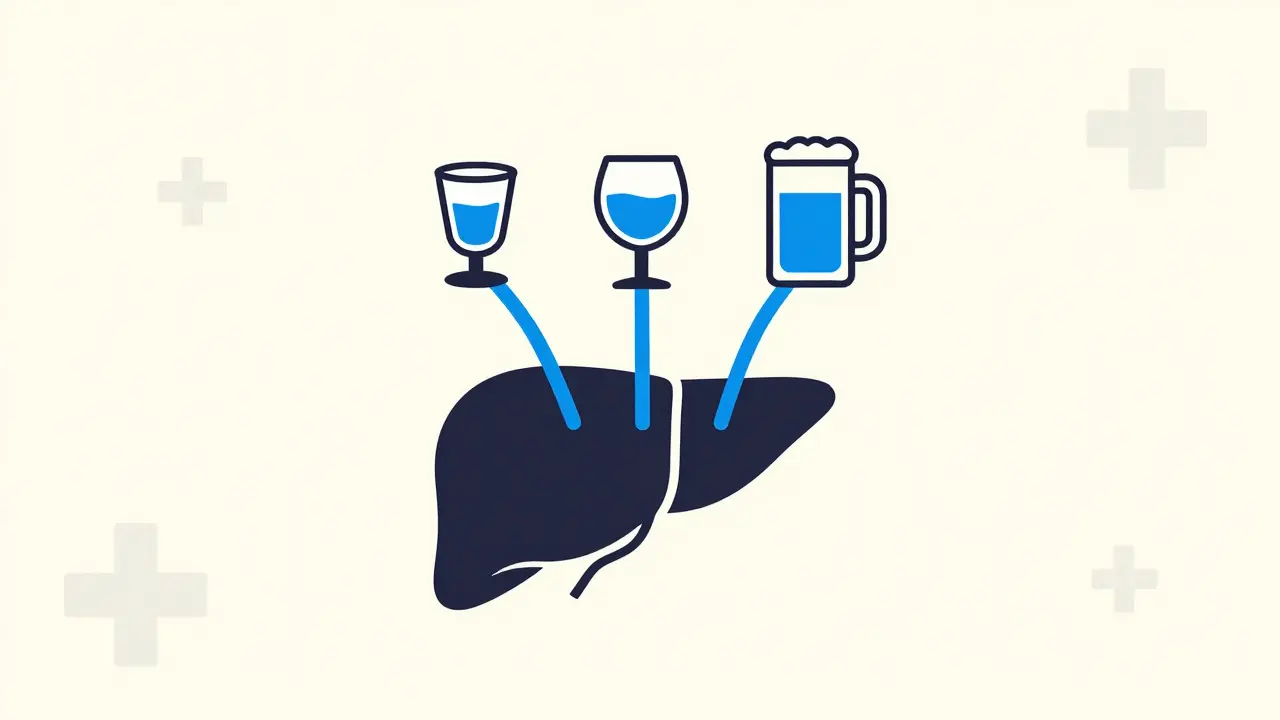
Pharmacokinetically, these three options deliver the exact same load of ethanol to your bloodstream. Your liver processes this ethanol using specific enzymes, primarily alcohol dehydrogenase (ADH) and aldehyde dehydrogenase (ALDH). These enzymes are busy workers. They also handle the metabolism of many common medications through the cytochrome P450 system. When you introduce alcohol, these enzymes get distracted. They prioritize breaking down the toxin (ethanol) over processing your medication. This competition leads to two bad outcomes: either the medication builds up to toxic levels in your blood, or it gets broken down too quickly, rendering it ineffective.
A blood alcohol concentration (BAC) of 0.08%-achievable with just one standard drink of any type-can increase the sedative effects of central nervous system (CNS) depressants by 300-500% (Illinois Poison Center, 2022). The type of liquid you drank to get there is irrelevant to the chemical reaction; only the total ethanol dose matters.
Spirits: The Speed Trap
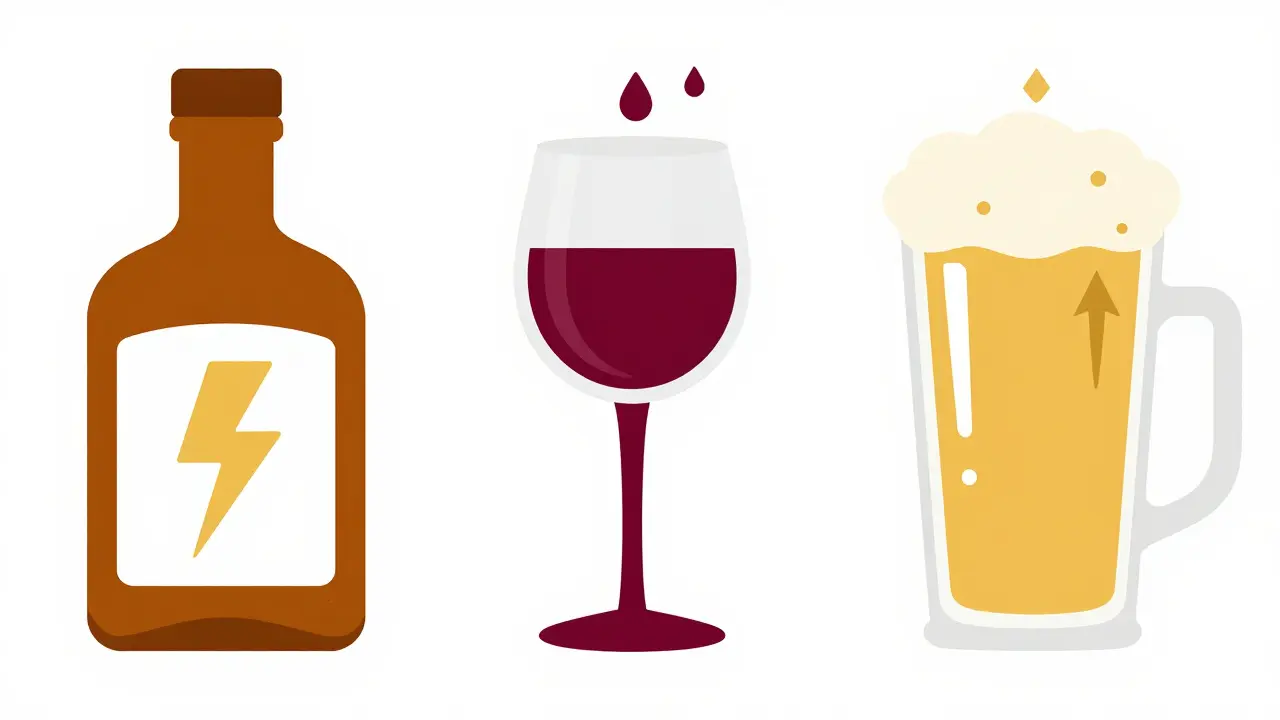
If all alcohols contain the same ethanol per standard drink, why do emergency rooms see different patterns? The answer lies in speed and volume. Distilled spirits, such as vodka, gin, rum, and whiskey, typically range from 35% to 50% ABV. Because they are so concentrated, people tend to consume them much faster than beer or wine. You might finish a 1.5-ounce shot in seconds, whereas sipping a 12-ounce beer takes 20 minutes.
This rapid ingestion causes a spike in peak BAC levels. Clinical trials indicate that rapid administration of ethanol mimics the effect of drinking spirits and produces 40% greater interaction severity with benzodiazepines compared to slower, equivalent oral doses (HealthDirect, 2023). Emergency department data supports this, showing that 68% of alcohol-medication overdose cases involve spirits. The high concentration allows users to bypass their body's natural satiety signals before the alcohol hits their brain, leading to sudden, severe interactions with sleep aids, anxiety medications, and painkillers.
Wine: The Bleeding Risk and Congeners
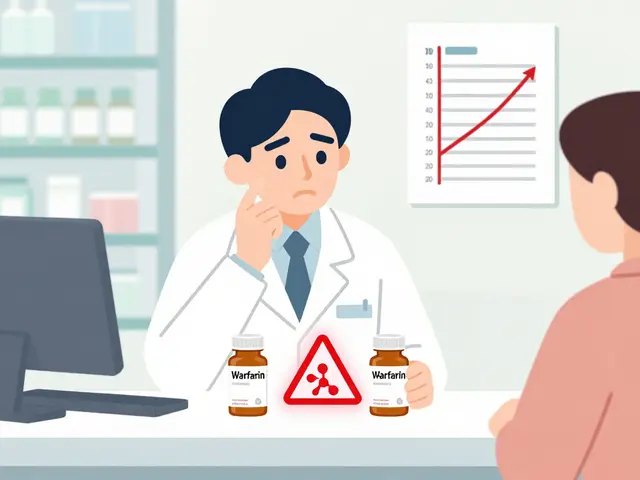
Red wine has long been marketed as "healthy" due to its antioxidant content, specifically polyphenols. However, when combined with certain medications, these compounds can be problematic. A study highlighted by the Mayo Clinic found that red wine increased the bleeding risk associated with warfarin (a common blood thinner) by 15% compared to equivalent ethanol doses from clear spirits. This is because red wine contains antiplatelet compounds that work synergistically with blood thinners, making it harder for your blood to clot.
Furthermore, darker wines and spirits contain congeners-impurities produced during fermentation that give alcohol its color and flavor. While congeners don't change the core ethanol-drug interaction, they can exacerbate side effects like nausea and vomiting. Dr. Sarah Johnson of Johns Hopkins notes in her textbook Pharmacotherapeutics that these symptoms are particularly troublesome when combined with antibiotics, potentially causing patients to stop taking their necessary medication (2023 edition, p. 287). Additionally, wine is frequently cited in reports of disulfiram-like reactions with antibiotics like metronidazole, where even small amounts cause flushing, palpitations, and violent vomiting.
Beer: The Volume Deception
Beer often carries a false sense of security. With an ABV of only 4-7%, it seems mild. But because it is low in alcohol, people tend to drink larger volumes. A "few beers" often exceeds the standard drink limit significantly. CDC data reveals that beer accounts for 52% of total ethanol consumption in the U.S., leading to 47% of unintentional alcohol-medication interactions due to cumulative dose effects (CDC, 2023).
Carbonation plays a tricky role here. Carbonated alcoholic beverages, including champagne and mixed spirit drinks, increase the gastric emptying rate by 25%. This means the alcohol moves from your stomach to your small intestine-and then into your bloodstream-much faster. If you are taking nonsteroidal anti-inflammatory drugs (NSAIDs) like ibuprofen or naproxen, mixing them with carbonated alcohol significantly raises the risk of stomach lining erosion and internal bleeding. User reviews on health platforms show that 63% of beer-related adverse events involved unexpected stomach issues after combining NSAIDs with "just a few beers."
| Beverage Type | Standard Drink Size | Primary Risk Factor | High-Risk Medication Classes |
|---|---|---|---|
| Spirits (Vodka, Whiskey) | 1.5 oz (40% ABV) | Rapid absorption & high peak BAC | Opioids, Benzodiazepines, Sleep Aids |
| Wine (Red/White) | 5 oz (12% ABV) | Polyphenols & Congeners | Blood Thinners (Warfarin), Antibiotics |
| Beer (Lager/Ale) | 12 oz (5% ABV) | Volume accumulation & Carbonation | NSAIDs (Ibuprofen), Antacids |
Critical Drug Interactions to Watch
Not all medications react the same way, but several classes pose life-threatening dangers when mixed with any form of alcohol. Understanding these categories is crucial for daily safety.
Central Nervous System Depressants
This group includes benzodiazepines (Xanax, Valium), opioids (OxyContin, Vicodin), and sedatives (Ambien). Alcohol amplifies their effects exponentially. The result isn't just being "more relaxed"; it's respiratory depression. Your breathing slows down so much that your brain doesn't get enough oxygen. This is the leading cause of fatal accidental overdoses involving alcohol.
Acetaminophen (Tylenol)
Many people don't realize that acetaminophen and alcohol are both processed by the liver. Mixing them creates a toxic byproduct called NAPQI. Just two standard drinks can increase the risk of acute liver damage by 300% (WebMD, 2023). Chronic use of both can lead to cirrhosis or liver failure, even if you are within the recommended dosage limits for the medication.
Antibiotics
While not all antibiotics interact dangerously, some do. Metronidazole (Flagyl) and tinidazole block the breakdown of alcohol, causing acetaldehyde to build up in your system. This leads to the disulfiram-like reaction mentioned earlier: severe nausea, vomiting, rapid heartbeat, and facial flushing. Tetracyclines may also become less effective when alcohol is present, allowing the infection to persist.
Blood Pressure and Heart Medications
Alcohol can interfere with the effectiveness of beta-blockers and ACE inhibitors. It may cause your blood pressure to drop too low (hypotension), leading to dizziness, fainting, and falls. Conversely, it can sometimes raise heart rate, counteracting the benefits of the medication.
Practical Steps for Medication Safety
Knowing the risks is step one. Acting on them is step two. Here is how you can navigate social situations and daily routines safely.
- Read the Label: Look for warnings that say "Do not consume alcohol." This applies to all types. If the label mentions "drowsiness," assume alcohol will make it worse.
- Ask Your Pharmacist: Pharmacists spend an average of 7.2 minutes counseling patients on these exact issues (APhA Practice Survey, 2023). Don't skip this conversation. Ask specifically: "Can I have a glass of wine with this?" or "Is a beer okay?" Get a direct yes or no.
- Use Technology: Mobile apps like GoodRx's "Alcohol Check" provide real-time interaction warnings with 94% accuracy. Input your medication and your planned drink to see the risk level instantly.
- Understand Non-Alcoholic Limits: Even "non-alcoholic" beer (0.5% ABV) poses risks for certain sensitive medications. Only 18% of adults know this (KFF Health Tracking Poll, 2023). If you are on strict avoidance protocols, stick to water, soda, or juice.
- Timing Matters: For lower-risk medications, spacing out alcohol and pills can help. However, for high-risk drugs like benzodiazepines, complete abstinence is the only safe option. There is no "safe window" for these combinations.
The FDA's 2023 draft guidance now requires new drug applications to include alcohol-beverage-specific interaction data, moving beyond generic warnings. This shift acknowledges that while the ethanol is the same, the context of consumption varies. Until then, the safest rule of thumb remains simple: if you take prescription medication, treat all alcohol as a potential hazard. The convenience of a drink is never worth the risk of a hospital visit.
Is red wine safer than beer when taking medication?
No. While red wine contains antioxidants, it also contains polyphenols that can increase bleeding risks with blood thinners like warfarin. Both red wine and beer contain ethanol, which interacts with medications via the liver's metabolic pathways. The risk depends on the total amount of alcohol consumed, not the type of beverage.
How long should I wait after taking medication to drink alcohol?
For high-risk medications like opioids, benzodiazepines, and sedatives, you should avoid alcohol entirely. For other medications, consult your pharmacist. Generally, waiting until the medication has fully cleared your system (often 24 hours or more, depending on the half-life) is recommended, but individual factors vary.
Does non-alcoholic beer interact with medications?
Yes, it can. Non-alcoholic beer typically contains up to 0.5% ABV. For most people, this is negligible. However, for those on strict abstinence protocols due to severe interactions (like with metronidazole) or addiction recovery, even trace amounts can trigger reactions or psychological distress. Always check with your doctor if you are unsure.
What are the signs of an alcohol-medication interaction?
Signs include extreme drowsiness, confusion, difficulty breathing, rapid heartbeat, nausea, vomiting, dizziness, and blurred vision. In severe cases, it can lead to loss of consciousness or seizures. If you experience these symptoms, seek emergency medical attention immediately.
Can I drink alcohol with over-the-counter painkillers?
Mixing alcohol with acetaminophen (Tylenol) is highly dangerous and can cause liver damage. Mixing it with NSAIDs like ibuprofen or aspirin increases the risk of stomach bleeding and ulcers. It is generally advised to avoid alcohol when taking any pain reliever.