Medication Safety Checker
Critical Safety Assessment
Use this tool to determine if you should stop your medication immediately based on the article's guidelines. Answer the following questions carefully.
Results
Not all side effects are created equal. Some are annoying but harmless-like a dry mouth or mild nausea. Others? They can kill you if you ignore them. The line between "wait it out" and "stop now" isn’t always clear, and too many people guess wrong. If you’re taking medication and something feels seriously off, knowing when to stop immediately could save your life. This isn’t about being scared. It’s about knowing the red flags.
Life-Threatening Reactions: Stop Right Now
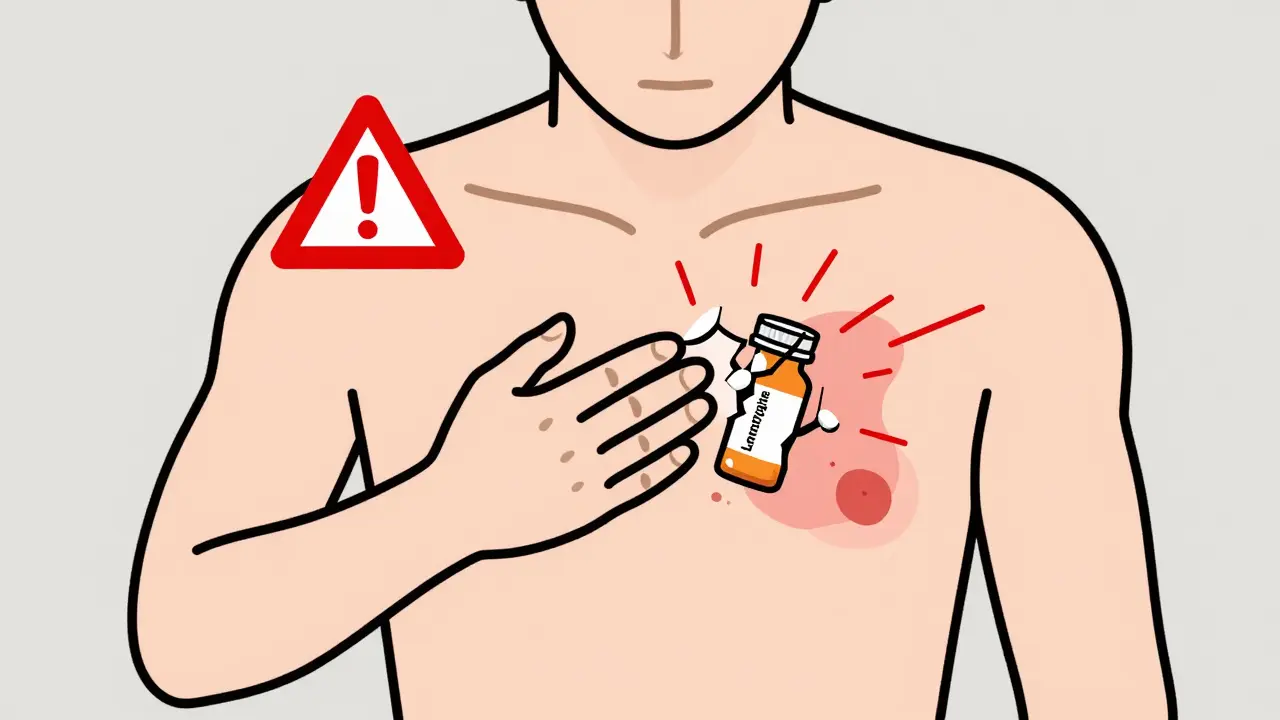
If you develop a rash after starting a new drug, don’t assume it’s just "something you ate." Some rashes aren’t just skin-deep. Stevens-Johnson Syndrome (SJS) and toxic epidermal necrolysis (TEN) are rare but deadly skin reactions that can start as a mild rash and spiral into full-body skin detachment. Mortality rates hit 5-15% for SJS and up to 30-50% for TEN. Medications like carbamazepine, lamotrigine, allopurinol, and sulfonamides are common culprits. If you notice blistering, peeling skin, or sores in your mouth or eyes-stop the medication and go to the ER immediately.
Another immediate stop signal: anaphylaxis. This isn’t just swelling or hives. It’s a full-body allergic shock. Symptoms include trouble breathing, throat tightening, rapid pulse, dizziness, or loss of consciousness. Penicillin causes the most common drug-induced anaphylaxis, occurring in 1-5 cases per 10,000 courses. But it can happen with any drug-even ones you’ve taken before. If you feel like you’re suffocating or your body is shutting down, use an EpiPen if you have one, call 999, and get help. No waiting. No second thoughts.
Then there’s acute liver failure. Some medications, like isoniazid (used for tuberculosis), can quietly damage your liver. You might feel tired, your skin or eyes turn yellow, or your urine darkens. Blood tests showing ALT levels over 3 times the normal limit with symptoms-or over 5 times even without symptoms-mean you must stop the drug right away. Left unchecked, this can lead to coma or death within days.
And don’t overlook agranulocytosis. This is when your white blood cell count crashes, leaving you defenseless against infection. It’s rare-1 to 15 cases per million users-but deadly if missed. Symptoms include sudden fever, sore throat, or mouth ulcers. Medications like clozapine, certain antibiotics, and antithyroid drugs can trigger it. If you have a fever and no other explanation, stop the medication and get a blood test immediately. Delaying by even 24 hours can increase your risk of death by 5-10%.
What About Withdrawal? Don’t Panic, But Don’t Guess
Here’s the catch: stopping some meds suddenly can be just as dangerous as keeping them. The body adapts. When you cut it off cold turkey, it rebels. This isn’t just discomfort-it’s medical emergency territory.
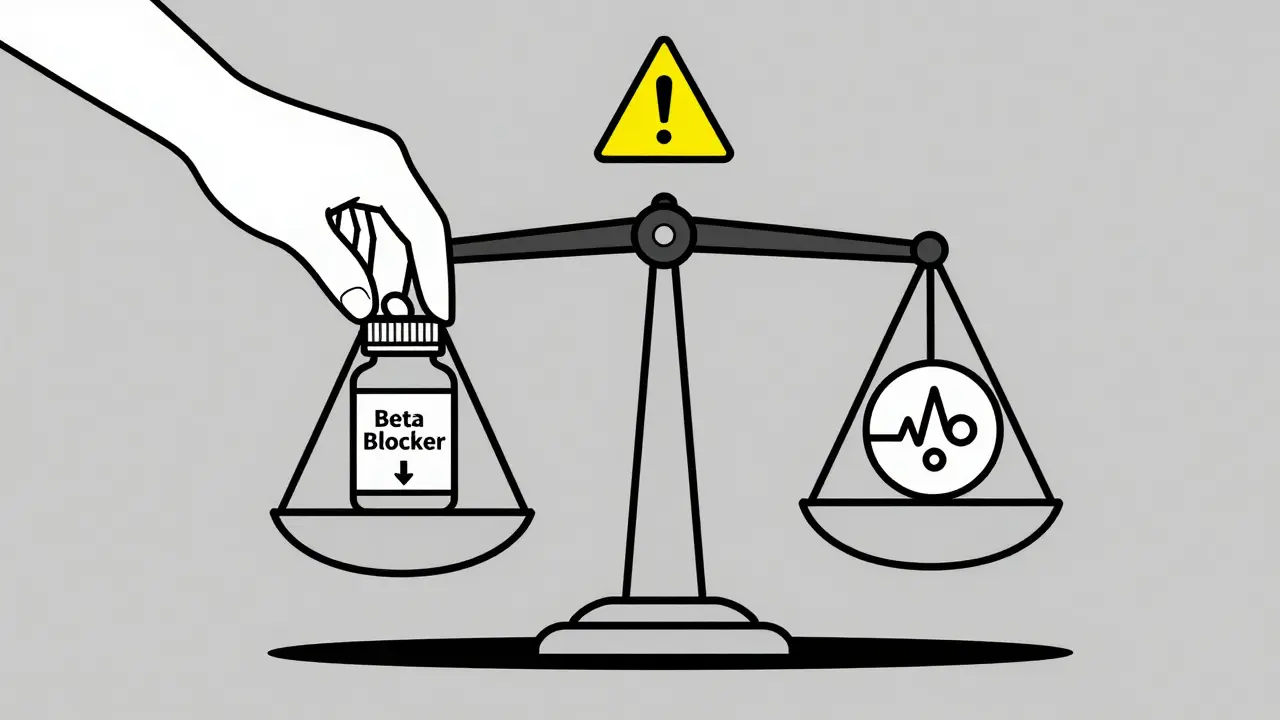
Beta blockers, like propranolol or metoprolol, are used for high blood pressure and heart conditions. If you stop them abruptly, your heart rate and blood pressure can spike. In patients with heart disease, this raises the risk of a heart attack by up to 300% in the first week. Studies show 22% of patients experience physiological withdrawal, and 38% have worsening of their original condition. You don’t stop these unless you’re under medical supervision.
Benzodiazepines-medications like diazepam or alprazolam-are prescribed for anxiety or insomnia. Long-term use changes brain chemistry. Stopping suddenly can cause seizures, hallucinations, or extreme anxiety. About 10-15% of long-term users experience withdrawal seizures if they quit without tapering. Even if you’re feeling side effects, don’t stop these on your own.
Antidepressants are another minefield. Discontinuation syndrome affects 20-50% of people who stop SSRIs or SNRIs abruptly. Symptoms include dizziness, brain zaps, nausea, and mood swings. It’s not life-threatening, but it’s awful. And confusing. Many people think, "I feel worse-this medicine must be bad," and quit. But in most cases, the original condition is returning, not the drug causing harm. A 2023 FDA update now requires SSRIs to include specific tapering schedules on labels, not just "don’t stop suddenly." That’s because structured tapering cuts symptom severity by 73%.
The 5-Question Rule for Deciding What to Do
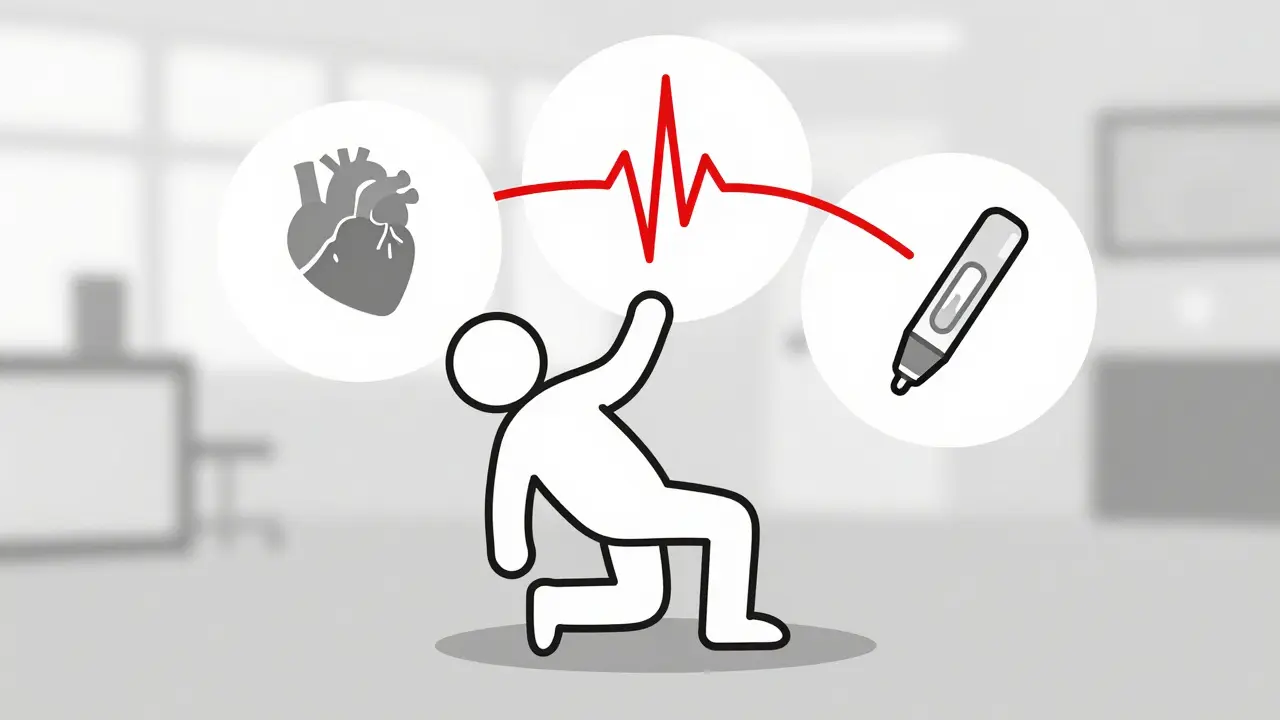
When you’re unsure, use this simple framework developed by researchers at Weill Cornell and validated in over 1,200 patients. It’s not perfect, but it’s better than guessing.
- Is the reaction life-threatening? If yes-stop immediately. Anaphylaxis, SJS/TEN, liver failure, agranulocytosis-all of these are non-negotiable.
- Is this a drug that causes withdrawal if stopped suddenly? Beta blockers, benzodiazepines, antidepressants, steroids, clonidine? Then don’t stop without talking to your doctor.
- Are there safer alternatives? Maybe your muscle pain from statins isn’t true myopathy. A different statin or lower dose might help. Don’t quit the first time you feel discomfort.
- What’s the risk of continuing vs. stopping? If the medication treats a serious condition like epilepsy or heart failure, the risk of stopping may outweigh the side effects.
- What do you understand-and what do you want? Your input matters. If you’re scared, say so. Your doctor can’t help if you don’t speak up.
This framework was shown to improve decision accuracy from 67% to 92% in clinical settings. That’s not just better-it’s life-saving.
Why People Get It Wrong (And How to Avoid It)
Most patients who stop meds without consulting a provider do so because they’re scared, confused, or frustrated. A 2022 study found 31% of people quit statins due to muscle pain-but only 5% actually had true statin-induced myopathy. The rest? They could’ve switched to a different statin or adjusted the dose.
On Reddit, threads like "I stopped my antidepressant cold turkey after side effects-was I wrong?" get hundreds of comments. The unanimous answer from doctors: "You didn’t do anything wrong for feeling bad-but you made it worse by stopping without help."
And here’s the hidden problem: only about 1% of serious drug reactions get reported to regulators. That means if you have a rare reaction, you might be the first. Your experience could be the clue that saves someone else. But only if you tell someone.
Don’t rely on Google. Don’t trust forum advice. Call your pharmacist or doctor. If you’re in the UK, NHS Direct is available 24/7. Say exactly what you’re feeling, what drug you’re on, and how long you’ve been taking it. They’ve seen this before.
What to Do Next
If you’re currently taking a medication and experiencing side effects:
- Write down the symptoms: when they started, how bad they are, and if anything makes them better or worse.
- Check the medication leaflet for "serious side effects"-they’re listed for a reason.
- Don’t stop a medication unless one of the life-threatening conditions above applies.
- If you’re unsure, call your GP or pharmacist. Say: "I think I’m having a side effect-should I stop?"
- If you’re told to taper, ask for a written schedule. Don’t rely on memory.
Medications are powerful tools. They save lives. But they can also harm if used carelessly. The goal isn’t to avoid all side effects-it’s to know which ones mean "stop," and which ones mean "talk to your doctor."
Can I stop my blood pressure medication if I feel dizzy?
No. Dizziness is a common side effect of many blood pressure drugs, but stopping them suddenly can cause your blood pressure to spike dangerously-sometimes leading to stroke or heart attack. Instead, contact your doctor. They may adjust your dose, switch medications, or check for other causes like dehydration. Never stop antihypertensives without medical guidance.
I got a rash after starting a new drug. Should I stop it?
It depends. A mild, itchy rash that appears within a few days might be harmless. But if the rash spreads quickly, blisters, peels, or involves your mouth, eyes, or genitals, stop the drug immediately and go to A&E. These are signs of Stevens-Johnson Syndrome or toxic epidermal necrolysis-both medical emergencies. Don’t wait to see if it gets worse.
Is it safe to stop antidepressants if I feel worse?
Not without help. Feeling worse after starting an antidepressant is common in the first few weeks as your brain adjusts. But if you stop abruptly, you risk severe withdrawal symptoms like brain zaps, nausea, and anxiety spikes. Worse, your depression may return harder than before. Talk to your doctor about tapering slowly. Most antidepressants now come with official tapering schedules-use them.
What if I don’t have a doctor? Can I just stop?
If you’re experiencing a life-threatening reaction-like trouble breathing, skin peeling, or sudden fever with sore throat-go to the nearest emergency department immediately. If you’re unsure, call NHS 111. They can assess your symptoms and direct you to the right care. Never assume stopping a medication is safe just because you don’t have a regular doctor. Some drugs are dangerous to quit cold turkey, even if you’re not under care.
Are generic drugs safer than brand-name ones?
No. Generic drugs contain the same active ingredient as brand-name versions and are held to the same safety standards. Side effects are caused by the active ingredient, not the brand. If you had a reaction to a brand-name drug, you’re likely to react the same way to its generic version. Always report side effects to your pharmacist-they can help identify if a different formulation might be better.

9 Comments
So I read this and immediately thought: what if the doctor is wrong? I’ve been on three different meds in the last five years that were "perfectly safe"-until my skin started peeling. No one warned me. No one asked if I’d had a rash before. The leaflet? It says "rare." But rare doesn’t mean impossible. And who reports these things? The system doesn’t care until it’s too late. I’m not paranoid-I’m just done trusting paperwork.
Let me be absolutely clear: this is not a suggestion. This is a lifeline. If you experience ANY sign of Stevens-Johnson Syndrome-blistering, peeling, mucosal involvement-you do NOT wait. You do NOT call your GP. You do NOT Google it. You drive. You sprint. You scream for an ambulance. The window is 12 hours. Not 24. Not tomorrow. Twelve. Hours. And if your doctor dismisses you? Find another one. Your life is not a waiting room.
In India, we don’t always have access to specialists. Many take allopathic meds without even knowing the name. I once saw a man stop his antiepileptic because of dizziness-and had a seizure in the bus. This guide? It’s gold. But we need posters in pharmacies, in rickshaws, on WhatsApp. Not just Reddit. Real people need this in Tamil, Hindi, Telugu. Translation saves lives.
I appreciate the thoroughness of this breakdown. The 5-question rule is especially valuable-it provides structure when fear and confusion dominate. As someone who has managed chronic illness for over a decade, I can confirm that the difference between stopping safely and stopping dangerously often comes down to having a single, clear protocol. Thank you for framing this with both urgency and nuance.
EVERYTHING IS A COVER-UP. 😱💊 The FDA knows about SJS and TEN-but they still approve these drugs because Big Pharma pays them. And don’t get me started on antidepressants-they’re literally designed to make you dependent so you keep buying them. I stopped my SSRI cold turkey because I saw a video of someone’s brain zaps on TikTok. I’m alive. They’re not telling you this because they profit from your suffering. 🤫👁️🗨️
Thank you for writing this. I was scared to ask my doctor about my dizziness after starting lisinopril-thought I was being "too sensitive." This gave me the courage to speak up. We changed my med. No more dizziness. No crisis. Just a calm conversation. You’re right-don’t guess. Ask. It’s not weakness. It’s wisdom.
While the clinical guidelines presented are not without merit, one must interrogate the epistemological foundation of this framework. The reliance on symptomatology as a proxy for pathophysiology is reductionist at best. The 5-question heuristic, while pedagogically convenient, ignores the ontological complexity of pharmacodynamic adaptation. One cannot reduce polypharmacy to binary decisions without invoking the specter of iatrogenic harm. A more rigorous approach would involve pharmacogenomic screening-preferably before prescription.
One sentence: If you’re unsure, call your pharmacist. They’re trained for this. They’ve seen it. They won’t judge you. Just call.
My cousin stopped her beta-blocker because she felt "weird"-ended up in the ER with a heart rate of 180. She’s fine now. But she almost didn’t make it. This post? It’s the reason I’m telling everyone I know. Don’t be brave. Don’t be stubborn. Don’t Google. Call someone. Just. Call.