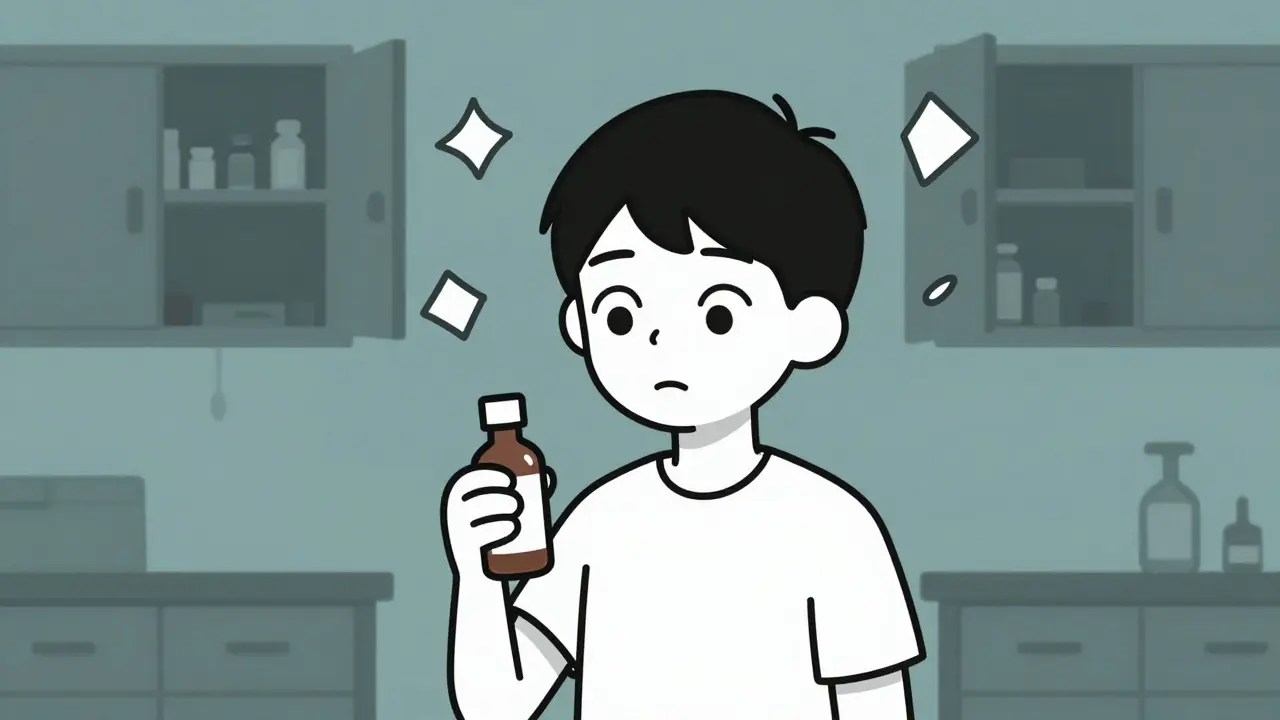
Over-the-counter drugs are meant to help-headaches, colds, allergies, stomach upset. But when you start taking more than the label says, or take them for reasons other than relief, something dangerous is happening. You’re not alone. Millions of people, including teens and young adults, are using OTC meds in ways they weren’t designed for. And the consequences aren’t just risky-they can be life-changing.
You’re Taking More Than the Label Says
The most obvious sign? You’re ignoring the dosage. The bottle says 2 tablets every 6 hours. You’re taking 4. Or 6. Or swallowing a whole bottle because you heard it’ll make you feel "high." Dextromethorphan (DXM), the active ingredient in many cough syrups, is the most common target. At normal doses, it suppresses coughs. At 200 mg or more, it starts to distort your senses. At 500 mg or higher, you might lose control of your body, feel detached from reality, or even hallucinate. The FDA warns that doses above 1,500 mg can cause seizures, coma, or death. Yet people are taking that much-sometimes daily.Your Body Is Sending Red Flags
Your body doesn’t lie. If you’re misusing OTC drugs, it’s screaming for help. Look for these physical signs:- Dilated or unusually small pupils
- Slurred speech that wasn’t there before
- Unexplained weight loss-12 pounds or more in a few months
- Heart racing at 120+ beats per minute, even when resting
- Body temperature above 103°F without illness
- Nausea, vomiting, or stomach pain that won’t go away
Your Behavior Has Changed
It’s not just about what’s happening in your body. It’s what’s happening in your life.- You’re hiding meds-stashing them in vitamin bottles, snack packs, or behind books.
- You’re visiting 3 or more pharmacies in a week, always asking for "the same thing" but never the same brand.
- You’ve stopped hanging out with friends. Social interactions dropped from 5 times a day to once-or none.
- You’re spending money you can’t explain. $100 a month on cough syrup? That’s not a coincidence.
- You’re lying more. About where you’ve been. About why you’re tired. About why your grades dropped.
You’re Feeling Things You Shouldn’t
Mood swings aren’t normal if they happen after every dose. If you feel euphoric after taking a few spoonfuls of syrup, then crash into depression hours later, that’s a red flag. Paranoia, hallucinations, and emotional numbness that lasts for hours after the high wears off are signs your brain is being chemically altered. Dr. Nora Volkow from the National Institute on Drug Abuse found that chronic DXM users lose up to 8.3% of hippocampal volume-the part of the brain responsible for memory and learning. That’s not temporary. That’s lasting damage. And 31% of long-term users develop persistent psychosis, meaning they need antipsychotic medication just to function.You’re Not Alone-But You’re at Risk of Worse
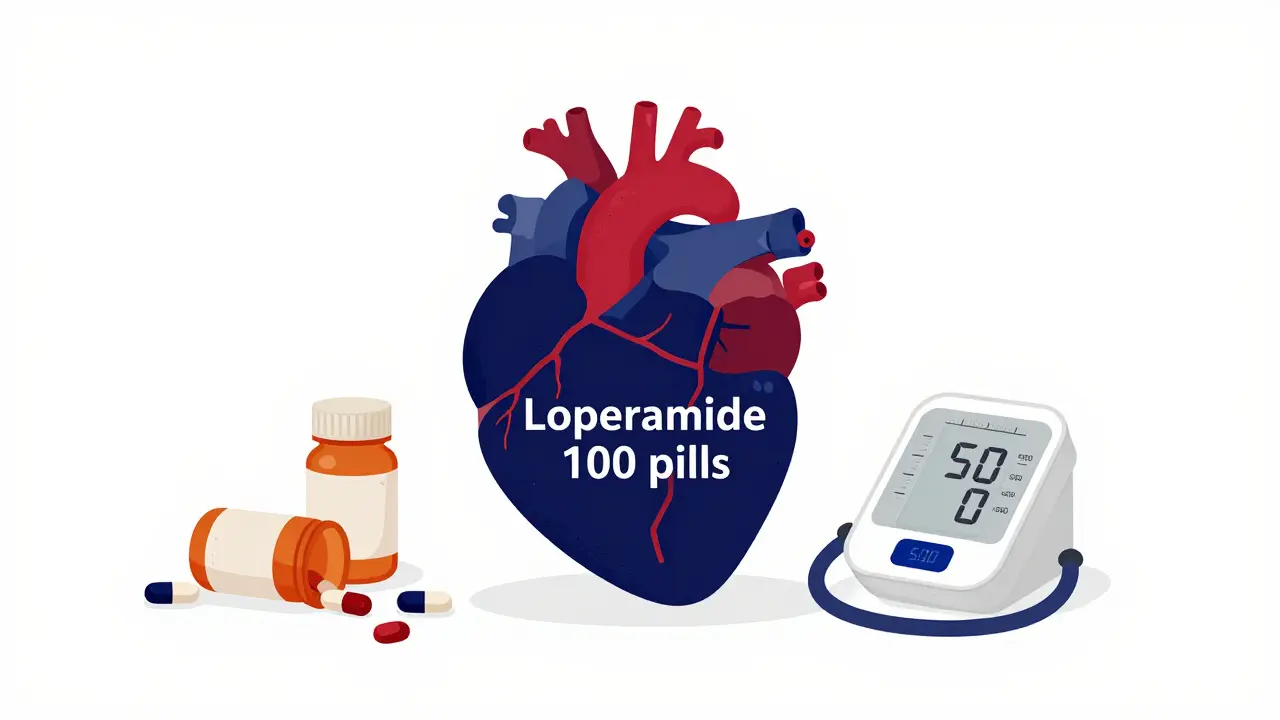
Many people think OTC drugs are "safe" because you can buy them without a prescription. That’s the trap. The truth? 67% of people who start with OTC drug abuse end up moving to prescription pills or even heroin within 18 months. Why? Because tolerance builds fast. What once gave you a buzz now requires triple the dose. And when you can’t get enough OTC meds-or they stop working-you look for something stronger. Loperamide (Imodium) is another dangerous one. People take up to 100 pills a day to get high, even though the max safe dose is 16 mg. That much loperamide can stretch your heart’s electrical rhythm past 500 milliseconds. Normal is 350-440. When it hits 500+, your heart can stop without warning. Since 2011, misuse of loperamide has jumped 278%.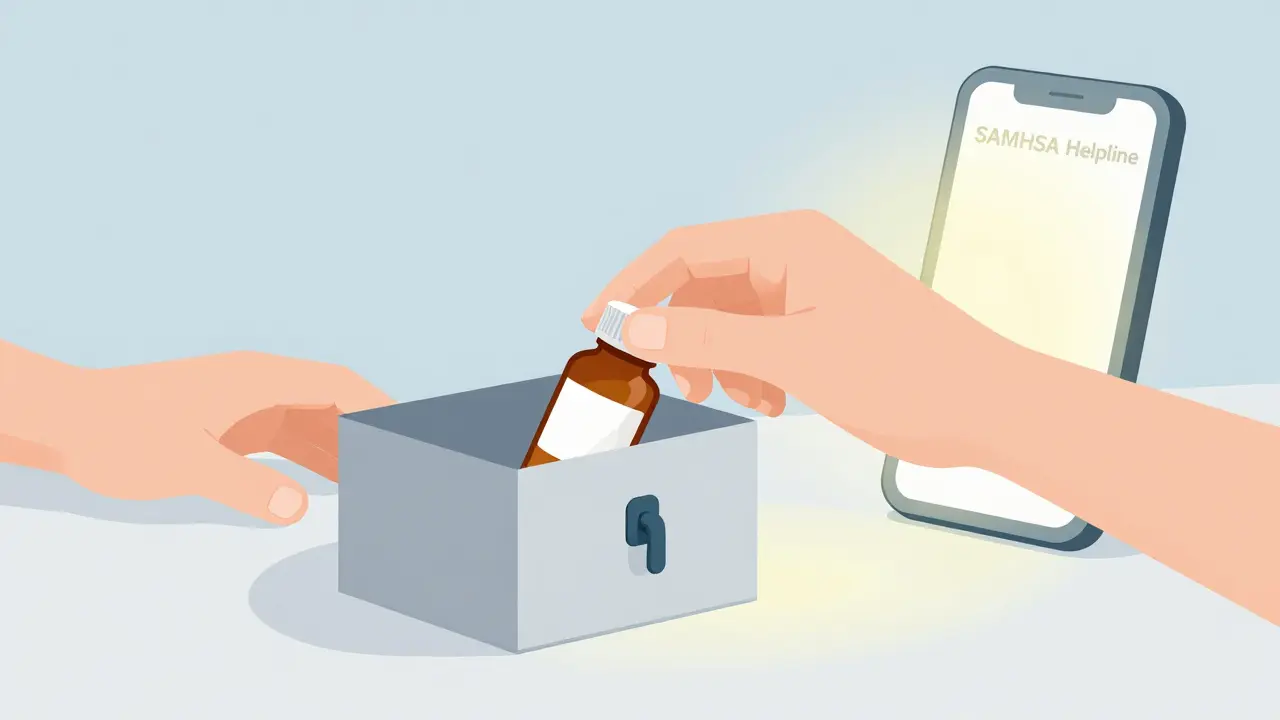
What to Do Now
If you recognize any of this in yourself or someone you care about, don’t wait. Action now saves lives.- Stop immediately. Continuing-even one more time-makes it harder to quit.
- Secure your meds. Lock up all OTC drugs. If you live with someone who’s misusing them, remove access. Homes with unlocked cabinets have 3.2 times higher misuse rates.
- Call for help. SAMHSA’s National Helpline (1-800-662-HELP) gets over 14,000 calls a year about OTC drug abuse. They connect you to local treatment. No judgment. No cost.
- Seek professional support. Motivational interviewing within 72 hours of recognizing the problem increases treatment success by 63%. Therapy works-especially when it includes family.
- Don’t try to detox alone. Withdrawal from DXM can cause severe anxiety, depression, and sleep loss. Medical supervision is often needed. Some patients require antidepressants for weeks after stopping.
Prevention Works
The good news? We know how to stop this before it starts. Since 2021, 32 states have launched "Know the Dose" education programs in schools. In 8th grade classrooms, first-time DXM misuse dropped by 29%. That’s real progress. Parents, teachers, and doctors are speaking up. Labels on bottles now say in bold: "Taking more than directed may cause serious injury." That’s not a warning-it’s a lifeline.You Can Recover
This isn’t a moral failure. It’s a medical issue. People recover. Teens go back to school. Adults get their jobs back. Relationships heal. One young man on Reddit, who took 1,200 mg of DXM and spent 8 hours paralyzed, wrote: "I thought I was in control. I wasn’t. I’m two years sober now. I wish I’d known sooner." The path out starts with one step: admitting something’s wrong. Then asking for help. You don’t have to do this alone.Can you get addicted to over-the-counter cough syrup?
Yes. While OTC cough syrups aren’t addictive in the same way as opioids, your body can build tolerance quickly. Within 4-6 weeks, you may need 3 to 5 times the normal dose to feel the same effect. That’s a sign your brain is adapting to the drug. Stopping can cause withdrawal symptoms like anxiety, insomnia, and depression. This isn’t just psychological-it’s physical dependence.
Is it safe to mix OTC drugs with alcohol?
No. Mixing alcohol with OTC meds like DXM, acetaminophen, or antihistamines is extremely dangerous. Alcohol increases liver damage from acetaminophen, raises the risk of respiratory depression with DXM, and can cause sudden blackouts or heart rhythm problems. The combination can be fatal-even if you’ve taken each one separately before without issue.
How do I know if my teen is misusing OTC meds?
Watch for sudden changes: hiding pills, visiting multiple pharmacies, unexplained money spent, declining grades, social withdrawal, or unusual drowsiness or energy spikes. Check your medicine cabinet-missing bottles or empty boxes are red flags. Also, look for empty syrup bottles in trash or hidden in backpacks. Many teens store them in vitamin containers to avoid detection.
Are all OTC drugs equally dangerous to misuse?
No. Some carry higher risks than others. Dextromethorphan (DXM) and loperamide (Imodium) are the most commonly abused and most dangerous. Antihistamines like diphenhydramine (Benadryl) can cause hallucinations and heart problems at high doses. Pain relievers with acetaminophen can cause liver failure. Even decongestants like pseudoephedrine can cause seizures if taken in excess. All OTC drugs have a safety threshold-cross it, and you’re in danger.
Can OTC drug misuse cause permanent brain damage?
Yes. Studies show chronic DXM abuse reduces hippocampal volume by up to 8.3%-the area tied to memory and learning. Some users develop lasting psychosis, requiring ongoing antipsychotic treatment. Others suffer memory loss, trouble concentrating, or emotional flatness that doesn’t go away after quitting. The brain doesn’t always heal completely, especially if abuse started during adolescence when it’s still developing.
What’s the safest way to dispose of unused OTC meds?
Don’t flush them or throw them in the trash. Use a drug take-back program-many pharmacies and police stations offer them. If none are nearby, mix pills with coffee grounds or cat litter in a sealed container before tossing. This makes them unappealing and unusable. For liquids, pour them into a sealable bag with kitty litter. Proper disposal reduces access and prevents accidental or intentional misuse.


12 Comments
lol so now we’re policing cough syrup like it’s heroin? next they’ll ban ibuprofen because someone took 50 pills and cried about their breakup
I used to work in pharmacy and saw this way too often. Teens would come in asking for "the blue stuff"-DXM syrup-and act like it was no big deal. One kid bought 12 bottles in a week. His mom didn’t even know. The worst part? They didn’t realize the acetaminophen was killing their liver. I started keeping a log of who bought what and quietly called parents. It saved two kids from the ER. Don’t underestimate how quiet this crisis is.
my cousin did this for 8 months. stopped cold turkey. took 11 months to sleep through the night again. no one talks about how long the brain takes to reset after DXM. it’s not just "stop and you’re fine."
Public health policy must prioritize harm reduction over moral panic. Education, not stigma, reduces misuse. Pharmacies should limit quantity sold per transaction. Labels must be standardized and mandatory. The FDA’s current approach is reactive, not preventative. We need legislation.
There’s a phenomenological rupture occurring when one ingests supratherapeutic doses of dextromethorphan-it’s not merely intoxication, it’s a dissociative epistemological collapse. The self becomes an object of observation, not a subject of experience. This is why users report "out-of-body" states: the prefrontal cortex’s executive function is temporarily decoupled from sensory integration. The hippocampus atrophy? That’s neuroplasticity gone rogue. The brain is trying to adapt to a chemical mimicry of NMDA receptor antagonism-essentially, it’s being forced to simulate a psychedelic state without the ceremonial scaffolding. No wonder people spiral.
lol imagine being scared of cough syrup 😂 the real problem is parents who don’t monitor their kids’ meds 🤡
It is not merely a pharmacological aberration, but a societal failure of moral education and emotional literacy. The youth, deprived of meaning and anchored in transient stimuli, seek transcendence through chemical means. The body, in its wisdom, rebels-yet the culture remains deaf. We have replaced wisdom with convenience, and now we are reaping the neurochemical harvest of our spiritual neglect.
Bro, I’ve seen friends go through this. One guy took 300mg DXM every weekend for 6 months. He lost his job. Lost his girlfriend. But he’s clean now-went to therapy, joined a support group. It’s not a death sentence. You can come back. I’m proud of him. You can too. 💪
Wait-so you’re saying the government is secretly using cough syrup to depopulate teenagers? Because I’ve noticed every kid who takes too much ends up in a hospital, and then their parents get a bill they can’t pay. Coincidence? I don’t think so. Also, why are all the studies funded by Big Pharma? Who’s really profiting here? And why does the FDA only warn about liver damage but never mention the surveillance software they install in smart bottles? 🤔
why do people care so much about cough syrup? just dont take it if u dont need it lol
This is a distraction. The real issue is the CIA’s chemical manipulation program. DXM was never meant for coughs-it was designed as a neural dampener during Cold War interrogations. The fact that it’s sold openly proves the government wants you addicted. They need you docile. Read the patent filings. The dates match. This is not medicine. This is control.
my sister did this. she died. no one listened. now i lock all meds. if you think this is a joke you’re next