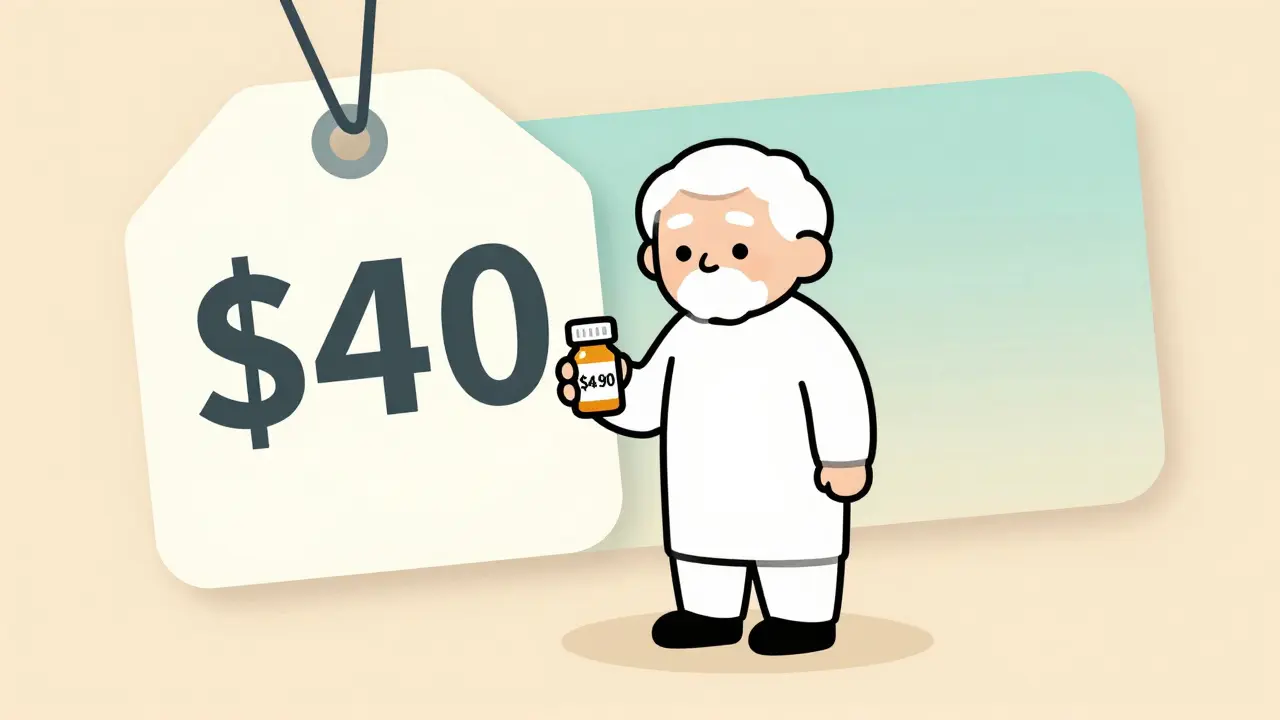
Many seniors on Medicare pay more than $700 a year just for their generic pills - even if those pills cost the pharmacy less than $5. That’s not a typo. Without help, a $20 generic blood pressure med can turn into a $40 monthly bill after your Part D deductible and coinsurance kick in. But if you qualify for Medicare Extra Help, you pay $4.90 - every time. No deductible. No monthly premium. Just a flat, predictable cost for every generic drug you need.
What Medicare Extra Help Actually Covers
Medicare Extra Help, also called the Part D Low-Income Subsidy (LIS), is a federal program that cuts your prescription drug costs to the bone. It doesn’t just lower your copay - it removes the biggest financial barriers entirely. In 2025, if you’re approved, you pay:- $0 for your Part D plan premium
- $0 for your deductible
- Up to $4.90 for each generic prescription
- Up to $12.15 for each brand-name drug
You don’t pay anything else. No coinsurance. No coverage gap. No surprise bills. Even if your drug list includes 10 different generics, your total out-of-pocket for the year could be under $600 - compared to over $1,200 without help.
And if you’re on both Medicare and Medicaid, or your income is below 100% of the Federal Poverty Level, you pay even less: just $1.60 per generic. That’s less than the cost of a cup of coffee.
Who Qualifies? Income and Resource Limits in 2025
This isn’t a program for everyone. The rules are strict, but they’re also clear. For 2025, your annual income and total resources must be below these limits:| Category | Single Person | Married Couple (Living Together) |
|---|---|---|
| Annual Income | $23,475 | $31,725 |
| Resources | $17,600 | $35,130 |
Resources include things like bank accounts, stocks, bonds, mutual funds, and IRAs. But your home, car, and personal belongings don’t count. You also get a $1,500 allowance for burial expenses - that’s separate from your total resources.
Income includes Social Security, pensions, wages, and veterans’ benefits. But it doesn’t include housing assistance, food stamps, or Medicaid payments. If you’re unsure, don’t guess. Fill out the application. The Social Security Administration will calculate it for you.
How to Apply - and What Happens If You Miss the Deadline
You can apply online at SSA.gov, by calling 1-800-772-1213, or in person at your local Social Security office. You can also get free help from your State Health Insurance Assistance Program (SHIP). These are state-run counselors who specialize in Medicare. They’ve helped over 70% of applicants get through the paperwork.It takes 3 to 6 weeks to get approved. But if you’re already getting SSI, Medicaid, or a Medicare Savings Program, you’re automatically enrolled. No application needed.
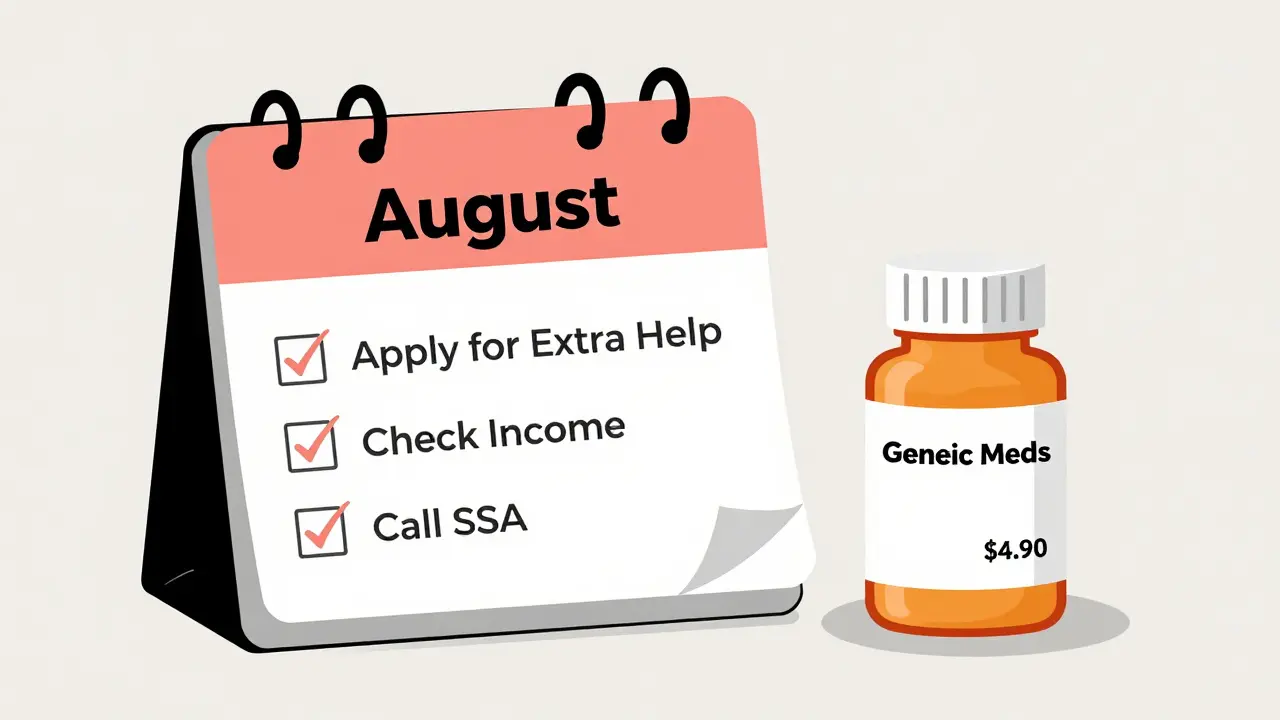
Here’s the catch: you have to reapply every year. Every August, you’ll get a form in the mail. You have 30 days to return it. If you don’t, your Extra Help ends on January 1. No warning. No grace period. One day you’re paying $4.90 for your insulin. The next, you’re paying $50.
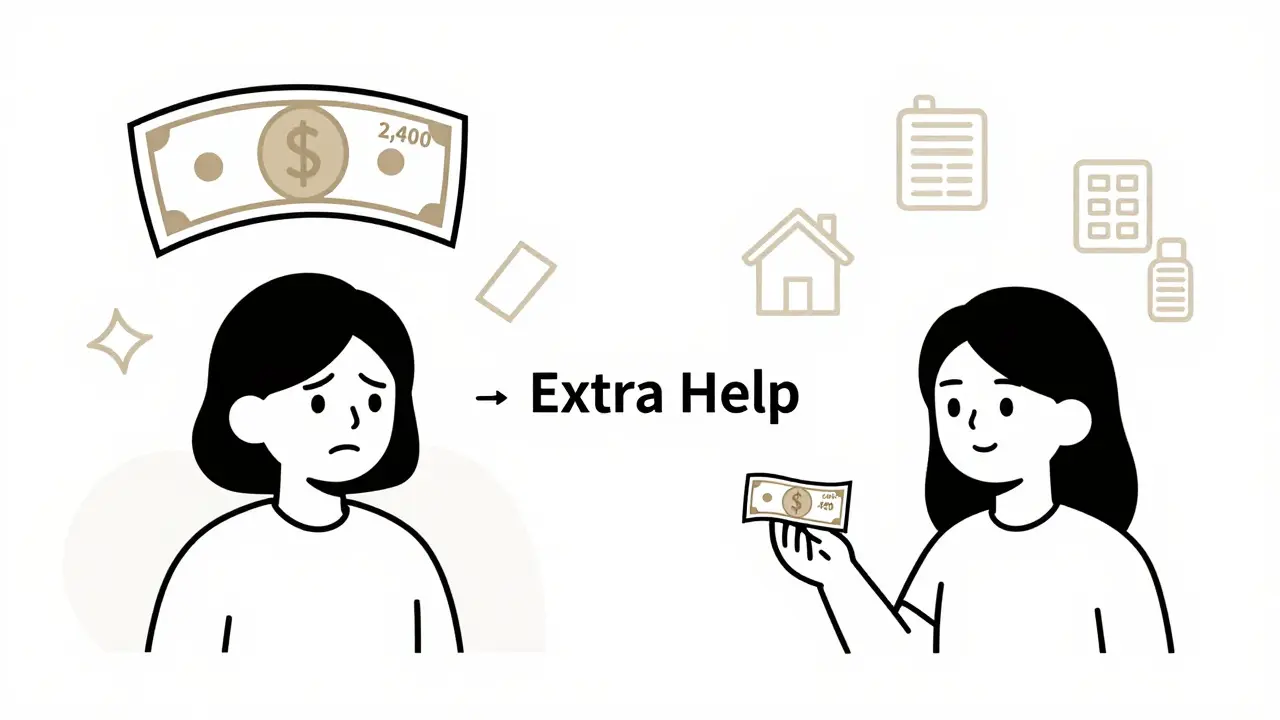
One user on Reddit, ‘StressedSeniorCA,’ shared that their Social Security check went up by $500 a year - just enough to push them over the income limit. They lost Extra Help overnight. Their monthly generic meds went from $40 to $200. Their annual cost jumped from $480 to $2,400. They didn’t know about the annual review until it was too late.
Why People Miss Out - Even When They Qualify
About 37% of people who qualify for Extra Help don’t enroll. Why? Three big reasons:- They don’t know it exists. Many think Medicare Part D is all they need.
- They think they make too much. People see the $23,475 limit and assume they’re over it - even if they’re not.
- The application feels too complicated. It’s not. But it’s long. And confusing.
Don’t let that be you. If you’re paying more than $50 a month for your generic drugs, you’re probably eligible. Even if you’re just $1,000 over the income limit, it’s worth applying. Sometimes, SSA makes exceptions for medical expenses, caregiving costs, or unexpected bills.
What to Do Once You’re Approved
Once you get approved, you don’t need to do anything else - except make sure you’re using a pharmacy that accepts your Part D plan. Extra Help doesn’t change your plan, but it changes how much you pay. Your copay is automatically adjusted at the register.You also get a special enrollment period. That means you can switch your Part D plan once a month. If your current plan doesn’t cover your favorite generic, or the pharmacy is too far, you can change. No waiting. No penalty.
And if your drug isn’t on your plan’s formulary? You can request a formulary exception. Extra Help beneficiaries get priority. You’re more likely to get it approved.
The Real Impact: Adherence and Health Outcomes
This isn’t just about saving money. It’s about staying healthy.People who get Extra Help take their meds 23% more often than those who don’t. That’s not a small number. It means fewer hospital stays, fewer ER visits, fewer complications from high blood pressure, diabetes, or cholesterol.
One pharmacist on Reddit, ‘ElderlyPharmacist42,’ said they’ve seen patients skip their meds for months because they couldn’t afford them. Then they got Extra Help. Suddenly, they were refilling every prescription on time. Their blood pressure dropped. Their A1C improved. Their quality of life changed.
That’s the real value of this program. It doesn’t just pay for pills. It pays for health.
What’s Changing in 2025 and Beyond
In 2025, the Inflation Reduction Act capped insulin at $35 a month - for everyone on Medicare, with or without Extra Help. That’s a win. But it doesn’t help with other drugs.The Biden administration is pushing to expand Extra Help to people earning up to 175% of the Federal Poverty Level. That would raise the income limit to about $28,500 for a single person. If that happens, over a million more seniors could qualify.
Right now, the program is a lifeline for the poorest. But it’s also a gap for the near-poor - people who work part-time, have a small pension, or got a small Social Security increase. They’re stuck paying hundreds more each year just because they made $200 too much.
That’s why so many advocates are pushing for changes. The current system works - but only for those who fit perfectly into the boxes.
What to Do Right Now
If you’re on Medicare and take generic prescriptions:- Check your annual drug costs. If you’re paying more than $500 a year, you might qualify.
- Go to SSA.gov and start the application. It takes about 15 minutes.
- Call 1-800-772-1213 and ask for help with Extra Help.
- Find your local SHIP counselor. They’re free. They’re trained. They won’t sell you anything.
- Don’t wait for the August letter. Apply now. If you’re approved, your savings start immediately.
You don’t need to be broke to qualify. You just need to be struggling. And if you’re paying $4.90 instead of $40 for your pills - you’re already winning.
Can I get Extra Help if I’m not on Medicaid?
Yes. Extra Help is separate from Medicaid. You can qualify even if you don’t get Medicaid, as long as your income and resources are below the 2025 limits. Many people get Extra Help without any other assistance.
Do I have to reapply every year?
Yes. Every August, you’ll get a form in the mail to update your income and resources. You must return it within 30 days. If you don’t, your Extra Help ends on January 1. It’s not automatic. Don’t ignore the letter.
What if my income goes up slightly and I lose Extra Help?
Losing Extra Help because of a small income increase is called the "cliff effect." It’s a real problem. If you’re just over the limit, you can still call Social Security to ask about exceptions. Sometimes, medical bills, caregiving costs, or other expenses can be counted as deductions. It’s worth asking.
Can I use Extra Help with any Part D plan?
Yes. Extra Help works with any Medicare Part D plan. But your copay depends on the plan’s formulary. Some plans have lower copays for certain generics. Use the Medicare Plan Finder tool to compare plans - and always check if your drugs are covered before you enroll.
Are brand-name drugs covered under Extra Help?
Yes. Extra Help covers both generic and brand-name drugs. For brand-name drugs, you pay up to $12.15 per prescription in 2025. That’s still much less than the $30-$50 most people pay without help. But generics are always cheaper - so ask your doctor if a generic version is available.

13 Comments
So let me get this straight - you’re telling me I could’ve been paying $4.90 for my blood pressure meds instead of $40 for the last five years… and nobody told me? My bank account is crying in the corner, and I’m just now learning this is a thing? 🤦♂️
Oh my goodness, this is such a needed post - I’ve been telling my mum for months that she’s probably eligible for this, and she kept saying, ‘But I make too much!’ She’s on a fixed income, works part-time at the library, and still thinks $24k is ‘rich.’ I printed out the SSA form, filled it out with her, and we cried when we saw the approval email. She’s now paying $1.60 for her metformin. That’s less than the price of a biscuit in London. I swear, if I could gift this to every senior I know, I would. The system is broken, but this? This is a tiny, beautiful patch.
Also, shoutout to SHIP counselors. My local one, Brenda, is basically a Medicare ninja. She found a way to count my mum’s caregiver expenses as deductions. She didn’t even know that was a thing. So please, if you’re on the fence - call them. No sales pitch. Just pure, quiet magic.
Apply now. Even if you think you’re over the limit. It takes 15 minutes. You’ve got nothing to lose.
While the intent of this program is commendable, the structural inefficiencies remain unaddressed. The income cliff effect is a fiscal policy failure, not a bureaucratic oversight. Moreover, the administrative burden placed on beneficiaries to reapply annually contradicts the very notion of ‘help.’ This is not a safety net - it is a minefield disguised as compassion.
I’ve worked in pharmacy for 22 years. I’ve seen people skip doses because they couldn’t afford $15 for a statin. Then they end up in the ER with a stroke. Extra Help doesn’t just save money - it saves lives. I wish more people knew this existed. The fact that 37% of eligible people don’t enroll? That’s a tragedy.
Let me be real with you - if you’re still paying full price for your generics, you’re being scammed by the system, and you’re letting them win. I’m a nurse. I’ve seen elderly people choose between insulin and groceries. I’ve held their hands while they cried because they couldn’t refill their heart meds. This isn’t charity. This is survival. And if you’re even close to the income limit - APPLY. Don’t wait for a letter. Don’t wait until January 1st when your insulin jumps from $4.90 to $50. That’s not a mistake. That’s a betrayal. And you? You have the power to stop it. Do it today. Not tomorrow. Today.
And if you think you make too much? Prove it. Fill out the damn form. The SSA doesn’t just say no - they look at your expenses. Medical bills? Caregiving? Rent? They can subtract those. You’re not just applying for a discount - you’re fighting for your health. And you deserve it.
I applied last year after my mom lost her job. We thought we were over the limit - turns out, her small pension and my dad’s VA benefits didn’t count the way we thought. We got approved. Now her $80/month meds are $1.60. I cried in the pharmacy parking lot. No one should have to choose between breathing and eating. This program? It’s not perfect. But it’s real. And it works.
My aunt got Extra Help after her Social Security went up $100/month - she thought she was over the limit, so she didn’t apply. She was paying $300/month for her diabetes meds. Then she found out she was $80 under. She got approved. Now she pays $4.90. She bought herself a new pair of shoes with the money she saved. She said, ‘I didn’t know I was allowed to treat myself.’ That hit me hard.
Don’t assume you’re ineligible. Don’t assume you’re too proud to ask. Just apply. It’s not about being poor. It’s about being human.
Per CMS guidelines, the LIS program operates under 42 CFR § 423.780 et seq. The resource limits are adjusted annually based on the CPI-U, and the 2025 thresholds reflect a 2.8% YoY increase. Notably, the exclusion of primary residence and one vehicle from resource calculations aligns with the Social Security Act § 1902(a)(17). However, the annual re-certification requirement creates administrative friction, particularly among cognitively impaired beneficiaries, potentially violating the intent of the program under the Older Americans Act.
Bro, I’m from India and my cousin in Texas told me about this. I was like, ‘Wait, you guys have a program that makes pills cheaper than chai?’ I showed it to my friend’s dad who’s on Medicare. He applied the same day. Now he’s paying less for his meds than he pays for his Netflix. That’s wild. America’s broken, but this? This is beautiful.
This is a very important message. In Nigeria, many elderly people cannot afford even basic medications. I have seen mothers skip meals to buy pills for their husbands. I am grateful that such a program exists in the United States. I hope one day our own government will find a way to provide similar support. Thank you for sharing this knowledge - it is a gift.
Another entitlement program disguised as benevolence. The government continues to incentivize dependency by subsidizing pharmaceutical costs while ignoring the root causes of rising drug prices - namely, the collusion between PBMs and Big Pharma. This is not empowerment. It is a Band-Aid on a hemorrhage. And the fact that citizens are expected to jump through bureaucratic hoops just to survive is emblematic of a failing state.
I’ve been applying this advice to my book club - we’re all seniors, mostly women, mostly on fixed incomes. Last month, we had a ‘Medicare Extra Help Night.’ We printed out the forms, brought snacks, and helped each other fill them out. One woman didn’t even know she could get help because she owns a 1998 Honda. She thought cars counted as resources. We laughed. Then we cried. Then we mailed the forms. Now she pays $4.90 for her thyroid med. She says it’s the first time in 12 years she hasn’t worried about her pills running out. We’re doing it again next month. You don’t have to do this alone. Find your people. Help each other. That’s how change happens - not in Washington, but in living rooms, over coffee, with a printer running out of ink.