
Keeping unused famciclovir in your medicine cabinet isn’t just messy-it’s risky. Whether it’s leftover from a cold sore outbreak, a shingles episode, or a prescription that was changed, holding onto this antiviral drug can lead to accidental use, misuse, or environmental harm. You didn’t finish the course. The doctor switched your treatment. The pills expired. Whatever the reason, you need to get rid of them the right way. This isn’t about tossing them in the trash or flushing them down the toilet. There’s a safer, legal, and responsible method-and it’s easier than you think.
Why You Should Never Flush or Trash Famciclovir
Flushing famciclovir might seem like a quick fix, but it’s a bad idea. Pharmaceuticals don’t break down in water systems. Even tiny amounts of antiviral drugs like famciclovir can end up in rivers, lakes, and drinking water supplies. The UK’s Environment Agency has flagged pharmaceutical pollution as a growing concern, especially with antivirals and antibiotics. These substances can affect fish, amphibians, and even beneficial bacteria in ecosystems.
Throwing it in the bin is just as dangerous. Curious kids, pets, or even scavengers could find it. Famciclovir isn’t a painkiller-it’s a targeted antiviral. Taking it without a prescription or medical need can cause side effects like nausea, headache, dizziness, or worse. In rare cases, it can trigger kidney issues or allergic reactions. You wouldn’t leave a bottle of bleach on the counter. Don’t treat your meds any differently.
Where to Take Unused Famciclovir: The UK’s Safe Disposal System
The UK has a clear, free, and widely available system for returning unused medicines: your local pharmacy. Every community pharmacy in England, Scotland, Wales, and Northern Ireland accepts unwanted or expired medications through the National Health Service’s Return of Unwanted Medicines (RUM) service. You don’t need a receipt. You don’t need to explain why you’re returning it. Just bring the pills-still in their original packaging if possible.
Pharmacies collect these drugs and send them to licensed hazardous waste facilities. There, they’re incinerated under strict environmental controls. This process destroys the chemical structure completely, preventing contamination and ensuring no one else can access them. It’s the only method approved by the Medicines and Healthcare products Regulatory Agency (MHRA) for household disposal.
Don’t assume your nearest pharmacy won’t take it. Call ahead if you’re unsure, but 98% of UK pharmacies participate in RUM. If you’re in Bristol, pharmacies on Whiteladies Road, Clifton, or St. Philip’s have clear bins for medicine return. Look for the green RUM logo near the counter or ask the pharmacist directly.
What to Do Before You Take It to the Pharmacy
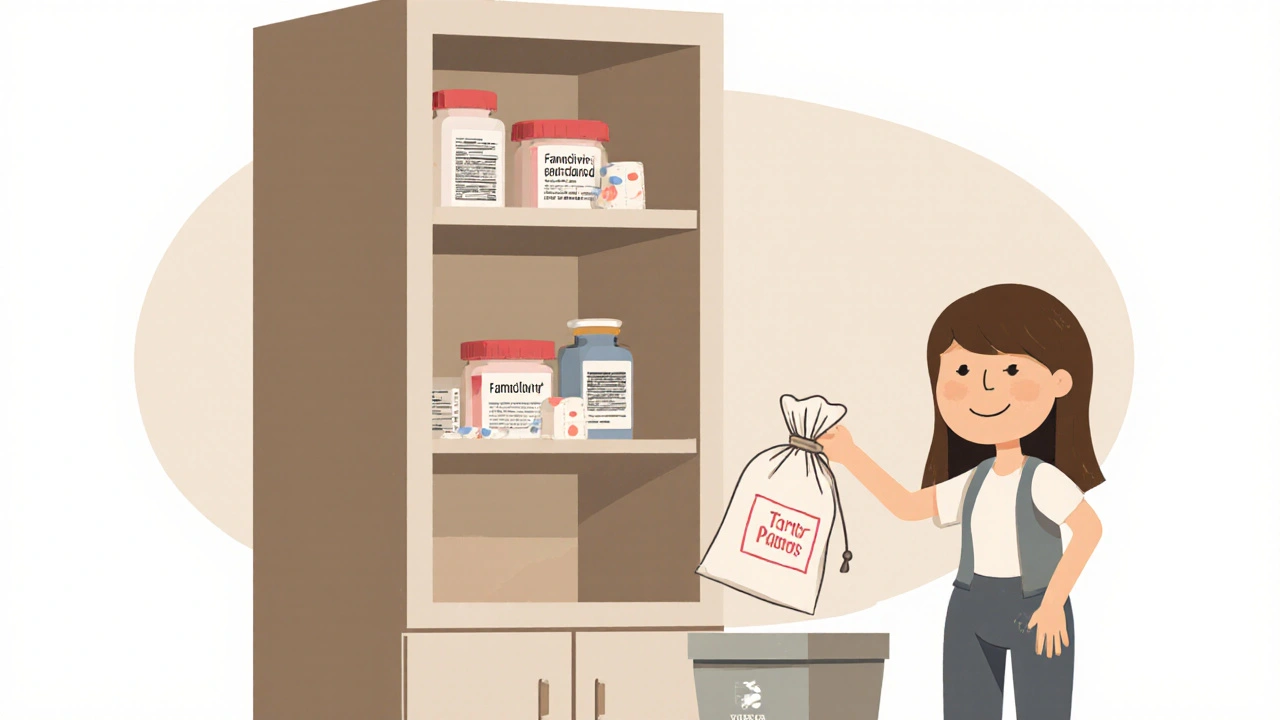
Before heading out, prepare your famciclovir for safe transport:
- Leave the pills in their original blister pack or bottle. This helps pharmacists identify the drug and dosage.
- Don’t remove the label. It shows the prescription details and expiry date.
- If the bottle is empty or the label is torn, write the name and dose clearly on a piece of paper and put it inside.
- Don’t mix famciclovir with other medications. Bring them separately so the pharmacy can sort them correctly.
- If you have liquid famciclovir, seal the bottle tightly in a plastic bag to prevent leaks.
Some people worry about privacy. You don’t have to say why you’re returning it. Pharmacists are used to this. They’ve seen it all-from elderly patients who forgot they had meds, to parents clearing out their teens’ medicine cabinets. No judgment. Just help.
What If There’s No Pharmacy Nearby?
If you live in a rural area or can’t get to a pharmacy, your next best option is a local NHS household waste recycling centre (HWRC). These sites have special containers for pharmaceutical waste, often marked with a cross or medical symbol. Check your council’s website-Bristol City Council, for example, lists HWRC locations and accepts medicines at sites like Avonmouth and Long Ashton.
Never use a household recycling bin for medicines. Even if the bin is marked for ‘general waste,’ pharmaceuticals are treated differently. Only licensed facilities can handle them safely. If you’re unsure where to go, call NHS 111. They can direct you to the nearest drop-off point.
What About Mail-Back Programs or Take-Back Events?
In the UK, mail-back programs for unused meds are rare and usually only offered by hospitals or research clinics. They’re not a standard public service. Take-back events-like those you might see in the US-are not common here. The RUM service at pharmacies is your main and best option. Don’t wait for a special event. Go when you’re ready.
How to Prevent This in the Future
One of the easiest ways to avoid having leftover famciclovir is to talk to your doctor or pharmacist before filling the prescription. Ask:
- “How many pills do I actually need for this condition?”
- “Can you prescribe a smaller quantity if I’m not sure I’ll use it all?”
- “What should I do if my symptoms improve before the course ends?”
Famciclovir is usually prescribed for 5 to 10 days. Many people finish earlier than expected. Pharmacists can often dispense smaller packs or split prescriptions to match your needs. This reduces waste and saves money.
Also, keep a simple medicine inventory. Write down what’s in your cabinet and check it every six months. If something’s expired, unused, or no longer needed, schedule a trip to the pharmacy. Make it a habit-like changing your smoke alarm batteries.
What Happens to Famciclovir After You Return It?
Once you drop off your unused famciclovir, it’s not just sitting in a bin. The pharmacy bundles it with other returned medicines and sends it to a licensed incinerator. The temperature exceeds 1,000°C, which breaks down the chemical structure completely. No toxins are released into the air. No residue remains. It’s the same process used for hazardous clinical waste.
The MHRA tracks these returns to monitor trends in medication waste. In 2024, UK pharmacies collected over 800 tonnes of unused medicines. That’s more than 20 million pills. Most were painkillers, antibiotics, and antivirals like famciclovir. Your action contributes to a system that protects public health and the environment.
Frequently Asked Questions
Can I give my leftover famciclovir to someone else with cold sores?
No. Even if their symptoms seem similar, famciclovir is prescribed based on individual health history, allergies, kidney function, and other factors. Giving someone else your medication is illegal and dangerous. It could cause an adverse reaction or mask a more serious condition.
What if the famciclovir is expired?
Expired famciclovir should still be returned to a pharmacy. It doesn’t become safer over time. In fact, it may break down into unknown compounds. The RUM service accepts expired medications without question. Just bring them in as you would with unexpired pills.
Do I need to remove the pills from the blister pack?
No. Keep them in the original packaging. The blister pack helps pharmacists identify the drug and dosage quickly. If the packaging is damaged, write the name and dose on a note and place it inside the container.
Is there a fee to return famciclovir to the pharmacy?
No. The Return of Unwanted Medicines service is completely free. Pharmacies are funded by the NHS to provide this service. You don’t need to pay, tip, or provide any personal information beyond what’s on the label.
Can I dispose of famciclovir with other household waste if I mix it with coffee grounds or cat litter?
No. While this method is sometimes suggested online, it’s not approved in the UK. Mixing drugs with trash doesn’t make them safe. It still risks exposure to children, pets, or waste workers. Only licensed incineration guarantees complete destruction. Stick to the pharmacy return system.
Next Steps
Don’t wait. If you have unused famciclovir sitting in your bathroom cabinet, grab it today. Put it in a bag, take it to your nearest pharmacy, and drop it off. It takes less than five minutes. You’re protecting your family, your community, and the environment. That’s not just responsible-it’s necessary.
Make this a habit. Every time you finish a prescription-or decide not to use it-return the rest. Your pharmacy is ready. The system works. You just have to use it.


11 Comments
i had no idea you could just take old meds to the pharmacy like this. i’ve been tossing them in the trash for years thinking it was fine. guess i’m learning something new today.
in canada we’ve got the same system called MedsReturn. same deal. drop em off at any pharmacy no questions asked. it’s wild how many people still flush them or throw them out. like dude its poison for the fish
my mom used to keep all her old pills in this shoebox under the sink. i finally got her to take it to the pharmacy last month. she cried because she felt guilty. but the pharmacist was so nice he gave her a free lollipop. 🍭
pharmacies are the only responsible option. anything else is performative environmentalism.
so proud of how the UK handles this! 🙌 also, if you’re in the US and don’t have a pharmacy nearby, check out your local police station - some have drug drop boxes too! you got this!
i used to think expired meds were harmless. turns out they’re not just useless-they’re unpredictable. now i check my cabinet every six months like you said. it’s become my weird little ritual. feels good to be responsible.
oh my gosh i just realized i have like three different bottles of famciclovir from different outbreaks over the past five years. i totally forgot about them. i’m gonna grab them right after this comment. also, i never knew you could ask for smaller prescriptions. why didn’t anyone tell me this before? i’ve been wasting so much money. also, the part about not mixing meds? i did that once. i’m so embarrassed. but now i know better. thanks for this. seriously.
you’re being overly simplistic. the real issue is pharmaceutical corporations pushing unnecessary prescriptions. if people weren’t being overmedicated in the first place, this wouldn’t be a problem. also, incineration still emits CO2. you’re not solving the problem-you’re just managing the symptoms. and yes, i’ve read the MHRA guidelines. i know what i’m talking about.
there’s something poetic about returning your unused medicine to the place that gave it to you. like a circle. the pill that was meant to heal you, now becomes part of the system that protects the earth. kinda beautiful when you think about it. also, i just dropped mine off. felt like i was giving back a piece of my past self.
Always check the label! Always keep the blister pack! Always bring it to the pharmacy! Never flush! Never mix with cat litter! Never give to friends! Always call 111 if unsure! Always write the name on paper if label is gone! Always do it today! Don’t wait!
you think this is enough? you think dropping pills at a pharmacy fixes the system? capitalism created this problem. pharmaceutical companies profit from overprescribing. they don’t want you to ask for smaller doses. they don’t want you to know this exists. you’re just a cog. but hey, at least you’re not flushing. progress?