
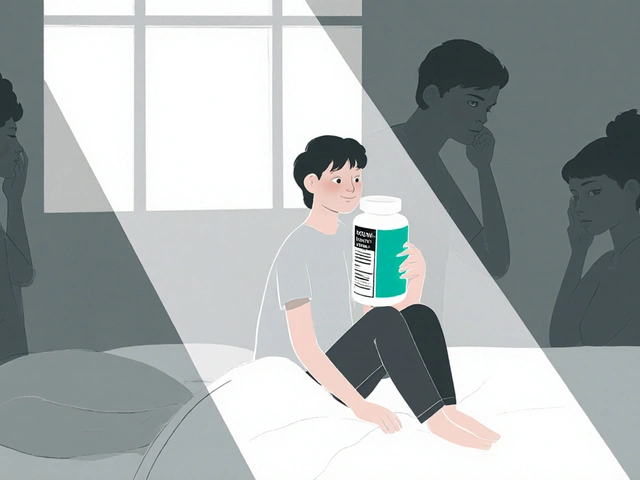
You take a new pill for your blood pressure or a chronic condition. Within a week, you feel dizzy, nauseous, or just plain exhausted. Your instinct might be to brush it off as "normal" or worry that complaining will get you kicked out of the treatment plan. But here is the hard truth: silence puts you-and others-at risk. Speaking up about medication side effects isn't just good etiquette; it is a critical part of keeping the drugs on the market safe.
Most people assume their doctor automatically reports every bad reaction they hear. They don’t. In fact, studies show that only a tiny fraction of serious side effects ever make it into official records. This gap leaves dangerous patterns hidden until it’s too late. Whether you are dealing with mild discomfort or a life-threatening reaction, knowing how and where to report matters. Let’s look at why this system exists, how it works, and exactly what you need to do when something feels wrong.
The Hidden Gap in Drug Safety
Before a medication reaches the pharmacy shelf, it goes through rigorous clinical trials. These trials involve thousands of participants-usually between 5,000 and 10,000 people. While that sounds like a lot, it is actually a drop in the ocean compared to the millions who eventually use the drug. Clinical trials also run for limited periods, often missing long-term or rare side effects that only appear after widespread use.
This is where pharmacovigilance comes in. It is the continuous monitoring of drug safety in the real world. The U.S. Food and Drug Administration (FDA) relies heavily on spontaneous reporting systems to catch these "signals." In 2022 alone, the FDA received over 2.2 million adverse event reports. That number jumped 37% from 2018, showing an increase in awareness but also highlighting how much data needs processing.
Here is the problem: experts estimate that healthcare professionals report only 1% to 10% of serious adverse events. Community pharmacists report even fewer, at just 3.2%. If you wait for someone else to flag your issue, it likely won’t happen. You are often the first line of defense in identifying risks that weren't visible during testing.
| Factor | Clinical Trials | Real-World Use |
|---|---|---|
| Participant Size | 5,000 - 10,000 | Millions |
| Duration | Limited (Months/Years) | Indefinite/Lifetime |
| Diversity | Strictly Controlled | All Ages/Conditions/Medications |
| Rare Events | Often Missed | Detected via Reporting |
Understanding the Reporting System
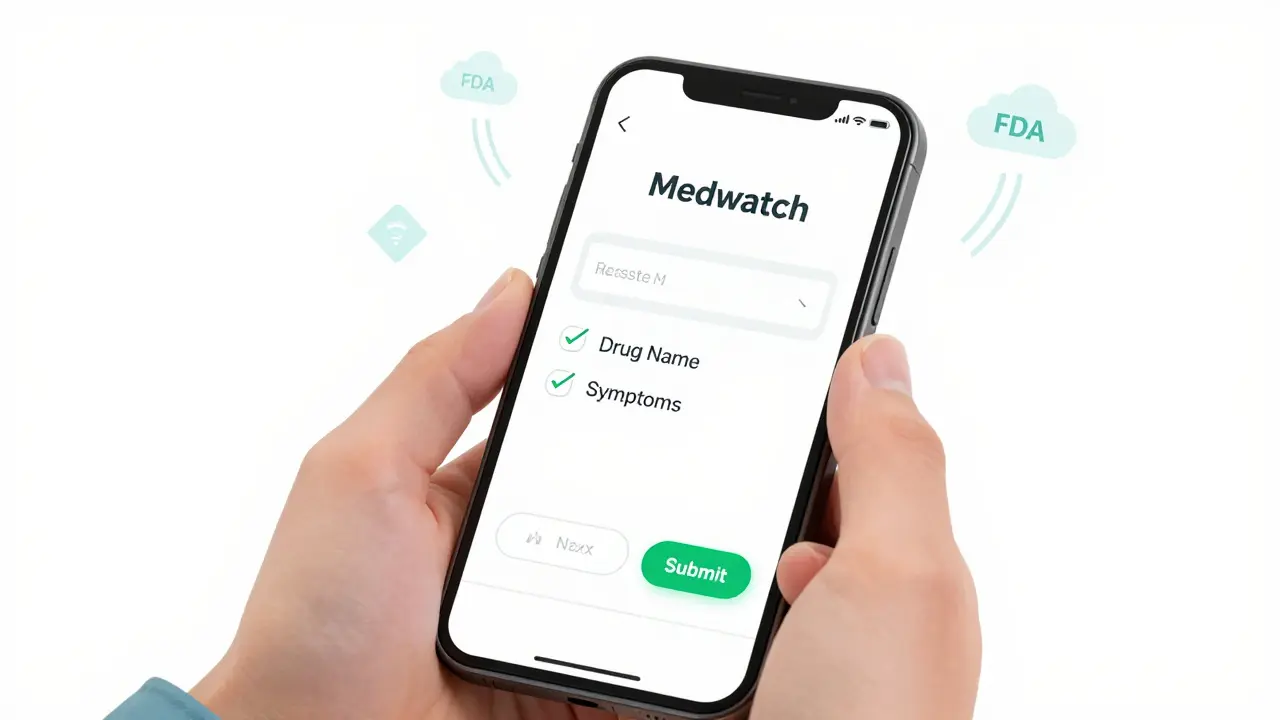
In the United States, the primary tool for reporting side effects is the FDA MedWatch, which is a voluntary safety information program and adverse event reporting system. Established in 1993, it replaced older systems that struggled with volume and accessibility. Today, it serves as the central hub for collecting data from patients, doctors, and manufacturers.
For a long time, reporting was clunky. You had to fill out paper forms or navigate confusing websites. That changed significantly in recent years. In September 2021, the FDA released a final rule requiring all prescription drug labels to include a toll-free number for reporting adverse events. By January 2022, you could find the number 1-800-FDA-1088 right on your medication box. This simple change increased direct consumer reports by 18% in preliminary 2023 data.
There are different channels depending on what you are taking:
- General Drugs: Use the MedWatch Consumer/Patient Form (Form 3500). This is available online or by phone.
- Vaccines: Use the Vaccine Adverse Event Reporting System (VAERS, which is a joint program of the CDC and FDA.). This system has stricter rules for providers under Emergency Use Authorization.
- Medical Devices: These have separate reporting timelines, usually requiring faster submission within 10 days for serious issues.
You do not need to be a medical expert to file a report. The FDA explicitly states that you should submit a report even if you are not certain the drug caused the event. Uncertainty is normal. The goal is to gather enough data so regulators can spot patterns later.
Barriers to Speaking Up
If the system exists, why don’t more people use it? The barriers are real and psychological. A 2022 survey by the National Consumers League found that 68% of patients didn’t even know they could report side effects directly to the FDA. Another 42% believed their doctor would handle it automatically.
Fear plays a huge role too. In a 2023 study by the University of Michigan, 58% of respondents said they feared being dismissed by their provider. Many patients worry that mentioning a side effect will lead to judgment or that their care will be deprioritized. There is also the "normalization" bias-65% of people assumed their symptoms were just part of living with their condition or aging.
Consider this common scenario: You tell your doctor about severe fatigue from a new blood pressure medication. They say, "That happens sometimes," and move on. You leave feeling unheard, assuming nothing more will happen. But that comment doesn't mean the symptom is harmless. It might be a sign of a metabolic interaction or a rare allergic response that needs documentation.
Breaking this cycle requires shifting your mindset. Reporting isn't about blaming your doctor or the pharmaceutical company. It is about contributing to a larger database that protects future patients. When you speak up, you are advocating for yourself and the community.
How to File a Report Effectively
Knowing *that* you should report is half the battle. Knowing *how* to do it effectively ensures your voice is heard. A vague complaint like "this pill made me feel weird" is hard to act on. The FDA wants specific details to build a clear picture.
When filling out the MedWatch Form 3500, aim to include the following key attributes:
- Drug Name: Include both the brand name and generic name if possible.
- Adverse Event Description: Be descriptive. Instead of "rash," write "red, itchy bumps on arms and chest starting two hours after dose."
- Time to Onset: How long after starting the medication did the symptom start?
- Clinical Outcome: Did you go to the ER? Were you hospitalized? Did the symptom resolve after stopping the drug?
- Contact Information: Provide a way for the FDA to follow up if they need clarification. Note: Do not include protected health information like Social Security numbers.
The process takes about 10 to 15 minutes according to FDA usability tests. You can do it online at www.fda.gov/medwatch or call the toll-free number. For healthcare providers, the bar is higher-they must classify events as "serious" or "non-serious" and meet strict deadlines (15 calendar days for serious unexpected events). As a patient, your job is simply to document what happened.
The Role of Healthcare Providers
Your doctor or pharmacist is your partner in this process, but they are not infallible. The American Medical Association’s Code of Medical Ethics states that physicians have an ethical responsibility to promptly report suspected adverse reactions. However, the reality is busy schedules and systemic friction.
Many hospitals are trying to fix this. For example, Mayo Clinic saw a 47% increase in reporting after integrating automated alerts into their electronic health records (EHRs) in 2020. Johns Hopkins Hospital implemented quarterly workshops for physicians, boosting their reporting rate from 12% to 67%. These institutional changes help, but they don't replace patient advocacy.
If your provider dismisses your concerns, ask them directly: "Can you please document this side effect in my chart?" Documentation creates a paper trail. Even better, ask: "Will you report this to the FDA, or should I do it myself?" Most providers will appreciate your diligence. If they refuse, you still have the power to report it directly.
Future Trends in Pharmacovigilance
The landscape of side effect reporting is evolving rapidly. The FDA is currently piloting AI-assisted adverse event detection in electronic health records across six major health systems. Early results showed this technology identified 27% more potential adverse events than traditional methods. Imagine a future where your EHR automatically flags unusual lab values linked to a new medication and prompts a report without you lifting a finger.
Looking ahead, the FDA plans to launch Sentinel Initiative 2.0, which will integrate real-world data from 300 million patient records. This shift moves us from reactive reporting to proactive surveillance. However, human input remains vital. AI can detect patterns, but it cannot capture the nuance of how a side effect impacts your daily life or quality of care.
Despite these advancements, challenges remain. A 2023 Government Accountability Office (GAO) report noted that the FDA lacks sufficient resources to analyze the growing volume of reports, with 34% of serious cases exceeding review targets. This bottleneck underscores why timely, accurate reporting from patients is more important than ever. We are the sensors in the network.
Key Takeaways for Patients
Speaking up about medication side effects is a fundamental right and responsibility. Here is what you need to remember:
- Don't Wait: If something feels wrong, document it immediately. Memory fades, and details matter.
- Use MedWatch: Call 1-800-FDA-1088 or visit fda.gov/medwatch. It’s free, anonymous if you wish, and easy.
- Be Specific: Vague descriptions help no one. Detail the timing, severity, and outcome.
- Advocate for Yourself: If your doctor brushes it off, insist on documentation or report it yourself.
- Know It’s Not Just About You: Your report could prevent someone else from suffering the same fate.
The next time you open a prescription bottle, look for that toll-free number. It’s there for a reason. Use it. Your health, and the safety of others, depends on it.
Is it mandatory for patients to report side effects?
No, reporting side effects is voluntary for patients and consumers. However, it is mandatory for pharmaceutical manufacturers and healthcare providers in certain settings (like vaccine administration under EUA) to report serious adverse events. While you aren't forced to report, doing so contributes to public safety.
What counts as a "serious" adverse event?
The FDA defines a serious adverse event as one that is fatal, life-threatening, causes permanent disability, requires hospitalization or prolongs existing hospitalization, causes a congenital anomaly/birth defect, or requires intervention to prevent permanent impairment. Non-serious but unexpected events should also be reported.
Do I need to be sure the drug caused the side effect?
No. You do not need to prove causality. The FDA guidance explicitly states that reports should be submitted even if the reporter is not certain the product caused the event. The regulatory agencies will analyze the data to determine if there is a causal link based on broader trends.
How long does it take to file a MedWatch report?
Filing a MedWatch Consumer/Patient Form (3500) typically takes about 10 to 15 minutes. You can complete it online or by calling the toll-free number 1-800-FDA-1088. The form asks for basic drug info, a description of the event, and your contact details.
Can I report side effects anonymously?
Yes, you can submit a report without providing your name or contact information. However, the FDA encourages including contact details so they can reach out for clarification if needed. This helps ensure the report is useful for safety analysis.
What if my doctor refuses to acknowledge my side effect?
If your doctor dismisses your concern, ask them to document it in your medical record. If they still refuse, you can report the side effect directly to the FDA via MedWatch. Your report stands on its own and does not require your doctor's permission or involvement.
Are vaccine side effects reported differently?
Yes, vaccine side effects are reported through VAERS (Vaccine Adverse Event Reporting System), a joint program of the CDC and FDA. For vaccines administered under Emergency Use Authorization, providers had legal mandates to report serious events within 24 hours, though general reporting remains voluntary for most patients.
Does reporting a side effect affect my insurance or treatment?
No. Reporting a side effect to the FDA is independent of your insurance coverage or treatment plan. It is a safety monitoring activity and does not impact your eligibility for medications or financial coverage.


9 Comments
hey everyone just wanted to drop a quick note that this info is super useful 🙌
i mean really who has time for this nonsense honestly it feels like they are trying to make us do their job for them and i am not about that life why should i care if the fda knows about my headache it is not like they are going to give me money back or anything so forget it im done with this whole reporting thing it is too much drama for zero reward and people need to stop being so sensitive about every little pill they pop into their mouths because lets face it we are all just lucky to be alive at this point so chill out already
You think you are safe? You are fooling yourself!!! The FDA is part of the globalist agenda to track your biometrics through adverse event reports!!!! They want to know exactly what drugs you take and how they affect your body so they can control your population!!! Do you really believe that spontaneous reporting is voluntary? It is a trap!!! Every time you fill out Form 3500 you are linking your identity to a database that feeds directly into the central surveillance network!!! They use the data to target specific demographics for future pharmaceutical interventions!!! Wake up sheeple!!! The side effects are real but the reporting system is a lie designed to harvest your personal health information for Big Pharma and Big Tech!!! Stop feeding the beast!!!
It is profoundly disheartening to observe the sheer level of ignorance displayed in this thread regarding the nuances of pharmacovigilance. One must question the intellectual capacity of those who dismiss the systemic importance of adverse event reporting as mere bureaucratic theater. The notion that individual agency is negated by corporate overreach is a simplistic fallacy that ignores the complex interplay between regulatory bodies and public health outcomes. Furthermore, the suggestion that patients should remain silent due to perceived inconvenience is not only morally bankrupt but also logically unsound when one considers the statistical probability of rare adverse events affecting broader populations. We must demand accountability from those who refuse to engage with established scientific protocols.
The epistemological framework underlying your dismissal of MedWatch is fundamentally flawed. You are engaging in a form of moral relativism that prioritizes personal convenience over collective safety paradigms. The data clearly indicates that underreporting leads to significant gaps in our understanding of drug toxicity profiles. By refusing to participate in this critical feedback loop, you are complicit in the continued endangerment of vulnerable populations who lack the resources to advocate for themselves. It is ethically imperative that we adhere to these reporting standards regardless of our individual biases against institutional authority.
I understand the frustration many feel towards complex systems 🤔 but I believe we can find common ground here. It is important to respect boundaries while also acknowledging the value of shared knowledge. Perhaps we can view this not as a burden but as an opportunity to connect with our community’s health needs 😊 Let us keep the conversation respectful and open to different perspectives because every voice matters in building a safer environment for everyone involved 🙏
I completely agree with the sentiment that we need to support each other in this process because it can be really overwhelming to navigate all these forms and phone numbers on your own especially when you are already feeling unwell and unsure of what is happening to your body which is why having a supportive community is so vital for ensuring that no one feels alone or dismissed by their healthcare providers who might be too busy to listen properly so let us encourage one another to speak up without fear of judgment or retribution because your experience is valid and deserves to be heard by those who can make a difference in policy changes that could help millions of others who suffer in silence due to lack of awareness or confidence in their ability to effect change through simple actions like filling out a form online or calling a toll-free number which takes very little time compared to the potential impact it could have on saving lives or preventing serious harm down the road for future patients who rely on us to be vigilant advocates for our own well-being and the well-being of our neighbors and friends who may not have the same access to information or resources that we do right now in this moment of truth where we decide whether to stay quiet or stand up for what is right and just in our society today
This is such a great reminder for all of us! I always try to stay proactive about my health and knowing exactly how to report issues gives me so much more confidence in managing my medications. It is empowering to realize that we have a direct line to the FDA and that our voices actually count in the bigger picture of drug safety. Let us keep supporting each other in taking charge of our health journeys!
As someone who works in patient advocacy, I see firsthand how cultural barriers often prevent people from speaking up about side effects. In many communities, there is a deep-seated trust in authority figures that makes questioning a doctor’s prescription feel disrespectful or dangerous. However, we must recognize that pharmacovigilance is a universal human right, not just a Western concept. When we share our stories across cultural lines, we build a stronger global defense against unsafe medications. It is fascinating how AI is starting to bridge some of these gaps by identifying patterns that human reporters might miss due to language or cultural nuances. We need to continue pushing for inclusive systems that value every patient’s perspective equally.