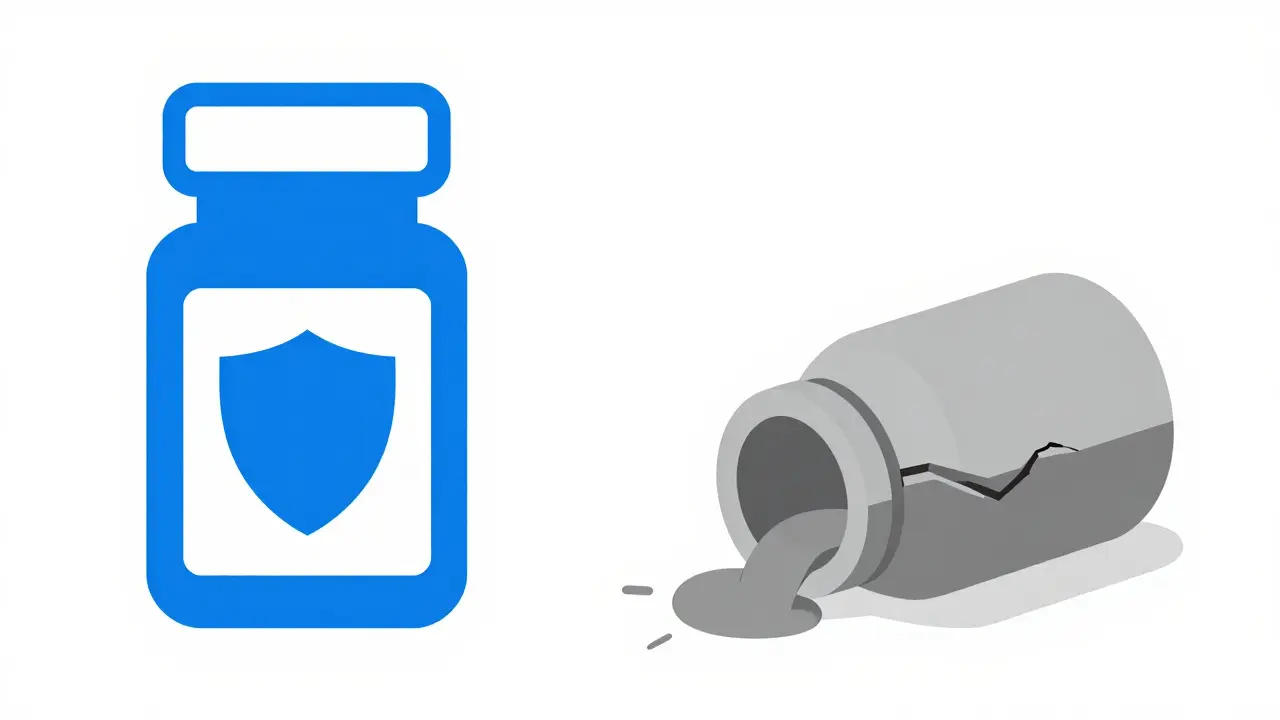
Imagine picking up your heart medication or insulin, confident it’s genuine. Now imagine that confidence being shattered because the pill bottle contains chalk dust instead of life-saving medicine. This isn’t a scene from a dystopian novel; it is a reality for millions globally. The World Health Organization estimates that one in ten medical products in low- and middle-income countries is substandard or falsified. As we move through 2026, the fight against fake drugs has shifted from simple packaging tweaks to high-tech warfare involving blockchain, artificial intelligence, and near-field communication.
The stakes have never been higher. Counterfeit medications are not just a financial loss for manufacturers; they are a global health emergency. From ineffective antibiotics fueling antibiotic resistance to toxic heavy metals in painkillers causing organ failure, the consequences are deadly. But there is good news. A new generation of anti-counterfeit technologies is rolling out, driven by strict regulations like the U.S. Drug Supply Chain Security Act (DSCSA) and the EU Falsified Medicines Directive (FMD). These innovations promise to make verifying your medication as easy as tapping your smartphone.
The Rise of Serialization and Track-and-Trace
If you look closely at prescription boxes in Europe or the United States today, you’ll notice a unique code printed on the package. This is the foundation of modern drug security: serialization. Unlike batch numbers that identify thousands of pills, serialization assigns a unique identifier to every single unit of medication. Think of it as a digital passport for each box.
Mass serialization has become the dominant technology in this space, capturing roughly 34% of the market share in 2025. Under the DSCSA, which mandates unit-level traceability for all prescription drugs by November 2025, pharmaceutical companies must track products from the manufacturer to the dispensing pharmacy. This system integrates with enterprise resource planning (ERP) and warehouse management systems (WMS), drastically reducing recall times. In fact, data shows that serialization can reduce recall execution time by nearly 60%. If a specific batch is compromised, pharmacies can instantly verify which patients received the affected units, rather than recalling an entire product line blindly.
However, serialization alone is not a silver bullet. It requires significant infrastructure investment. A warehouse manager for a major European distributor shared on Reddit’s r/PharmaTech forum that implementing serialization under EU rules took 14 months and cost approximately €2.3 million. Initially, it reduced their throughput by 37% until the systems were optimized. For small and mid-sized manufacturers, who lag behind with only 43% adoption rates, these costs remain a barrier. Yet, as regulatory pressure mounts, serialization is becoming non-negotiable.
Beyond Barcodes: The Power of NFC and Cryptography
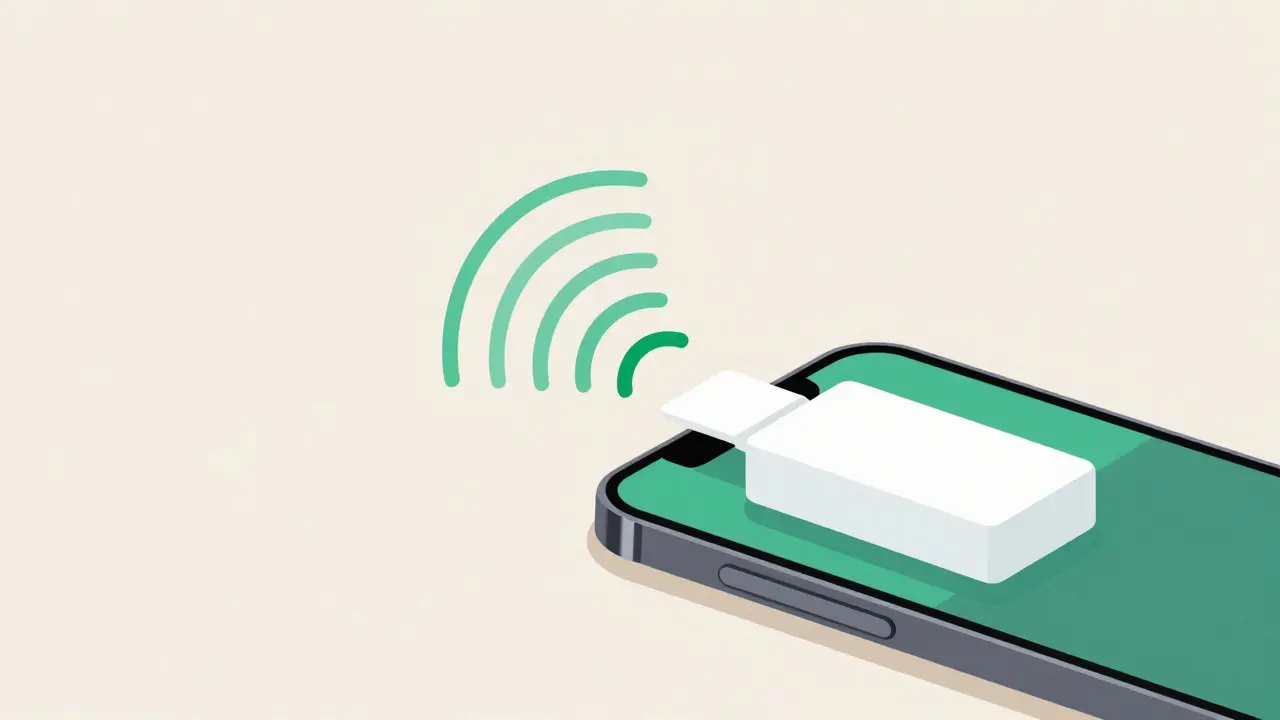
While serialization tracks the supply chain, how does the end-user-the patient-verify authenticity? Enter Near Field Communication (NFC). You likely use NFC daily to pay with your phone or unlock your car. Now, this same technology is being embedded into pharmaceutical packaging to stop counterfeits at the point of dispensing.
NFC technology offers a superior security layer compared to traditional QR codes. Here’s why: QR codes are easily copied. ForgeStop research indicates that 78% of pharmaceutical QR code implementations fail security audits because they lack cryptographic protection. Fraudsters can scan a legitimate QR code, print thousands of copies, and slap them onto fake bottles. In Q3 2025, a major U.S. pharmaceutical company suffered a $147 million product recall after fraudsters replicated unprotected QR codes on counterfeit versions of their drug.
NFC tags, however, store encrypted data that cannot be cloned without the private key. When a pharmacist or patient taps their smartphone against the package, the device performs a cryptographic handshake. According to data from ForgeStop’s 2025 CPHI Frankfurt demonstration, this process verifies authenticity in under two seconds with 99.98% accuracy. In Latin American case studies, NFC implementation led to a 98% reduction in counterfeit incidents within six months. Pharmacists verified over 1,200 products daily, adding only three to five seconds per check. With 89% of global smartphones shipped in 2025 supporting NFC, this technology meets users where they already are.
Blockchain: Creating an Immutable Record of Truth
Tracking a drug from factory to shelf is complex. Multiple handlers, distributors, and pharmacies touch the product. Traditional databases can be hacked or altered. Blockchain solves this by creating an immutable, decentralized ledger. Once a transaction is recorded on the blockchain, it cannot be changed or deleted.
Blockchain integration in pharma goes beyond simple tracking. It enables provenance records that include environmental data. Imagine a cold-chain vaccine. IoT sensors attached to the shipping container record temperature and humidity data. This data is hashed and stored on the blockchain alongside the product’s movement history. If the temperature spikes during transit, the blockchain record flags the product as compromised before it ever reaches the pharmacy. De Beers successfully used a similar platform called Tracr for diamonds, and pharmaceutical giants are now adapting this model.
Ennoventure’s 2025 analysis highlights that blockchain enables the track-and-trace compliance regulators now mandate. Each product gets a unique digital identity. As it moves, participants record its presence and condition. However, implementation is challenging. Gartner estimates that full enterprise blockchain deployment takes 18-24 months, compared to 6-12 months for traditional serialization. The learning curve is steep, requiring 14-16 weeks of specialized staff training. Despite this, the audit capabilities are unmatched, providing transparency that builds trust across fragmented supply chains.
Forensic Authentication: DNA and Smart Materials
For high-value biologics and oncology drugs, where counterfeiting risks are highest, visible tech isn’t enough. Manufacturers are turning to forensic authentication methods that require specialized equipment to verify.
DNA-based authentication involves incorporating unique biological markers into the ink or packaging material. These markers are invisible to the naked eye but can be detected using portable testing devices. While this offers the highest level of security, it remains cost-prohibitive for mass-market drugs. Implementation costs average $0.15-$0.25 per unit, compared to $0.02-$0.05 for standard serialization. Consequently, this technology is reserved for niche, high-risk medications.
Another emerging trend is AI-driven visual inspection. Companies are deploying cameras and machine learning algorithms on production lines to detect microscopic anomalies in packaging. Cognitivemarket Research documented 99.2% counterfeit detection accuracy in controlled environments. However, real-world variability in lighting and packaging conditions poses challenges. Accuracy improved from 89.7% in 2024 to 94.3% in Q2 2025, showing rapid progress. These systems act as a first line of defense, catching fakes before they leave the factory.

Regulatory Pressures and Global Disruptions
Technology doesn’t exist in a vacuum. Regulatory mandates are the primary engine driving adoption. The EU Falsified Medicines Directive and the U.S. DSCSA have forced hand-holding. North America holds 38.7% of the anti-counterfeit market share due to DSCSA requirements, while Europe accounts for 32.4% driven by FMD. Emerging markets are catching up fast. Brazil implemented mandatory serialization in January 2025, and Nigeria followed in Q3 2025.
However, geopolitical factors complicate matters. Tariffs introduced in April 2025, ranging from 10% to 46% on pharmaceutical products and active pharmaceutical ingredients (APIs) from China and India, have disrupted global trade. These tariffs increased production costs by 12-18% and caused supply chain delays of 21-45 days. For companies trying to implement expensive anti-counterfeit tech, these added costs squeeze margins further. Yet, the long-term viability of these technologies remains strong. Industry consensus predicts that 83% of pharmaceutical executives plan to implement multi-layered security approaches by 2027.
| Technology | Security Level | Cost Per Unit | Implementation Time | User Experience |
|---|---|---|---|---|
| Serialization (Barcode) | Medium | $0.02 - $0.05 | 6-12 Months | Scanner required |
| NFC Tags | High | $0.05 - $0.10 | 6-8 Weeks Training | Smartphone tap (<2 sec) |
| Blockchain Ledger | Very High | Infrastructure Cost | 18-24 Months | Backend verification |
| DNA Markers | Extreme | $0.15 - $0.25 | Variable | Specialized device needed |
Challenges and Future Outlook
Despite the promise, hurdles remain. Legacy systems in older warehouses often clash with new serialization software. SAP Integrated Business Planning, for instance, receives mixed reviews for compatibility issues with legacy infrastructure. Support quality varies wildly; while providers like ForgeStop offer 24/7 support with an 8-minute average response time, some vendors provide minimal documentation.
Counterfeiters are also adapting. They are using AI and digital fabrication to create more convincing fakes. Pioneer Phoenix noted in 2025 that counterfeiting threats are evolving alongside defensive tech. The future lies in convergence. We will see eco-friendly packaging embedded with sustainable traceable markers, combining overt features like holograms with covert digital IDs. The goal is a seamless experience where security is invisible to the user but impenetrable to fraudsters.
As we look toward 2030, with the anti-counterfeit packaging market projected to reach USD 345.93 billion, the message is clear: safety is becoming standardized. Patients should expect-and demand-verification options. Whether it’s a tap of a phone or a scan of a code, knowing your medicine is real is no longer a luxury; it’s a right.
What is the most effective way to verify if my medication is genuine?
The most effective method currently available is using Near Field Communication (NFC) enabled packaging. By tapping your smartphone against the package, you can cryptographically verify the product's authenticity in under two seconds. This is significantly more secure than scanning QR codes, which can be easily copied by counterfeiters.
Why are QR codes considered less secure than NFC for drug verification?
QR codes are static images that can be scanned and replicated by anyone with a printer. Without additional cryptographic protection, fraudsters can place identical QR codes on fake bottles. Research shows 78% of QR implementations fail security audits for this reason. NFC tags contain encrypted chips that cannot be cloned without the private key, making them much harder to forge.
How does blockchain help prevent counterfeit drugs?
Blockchain creates an immutable, decentralized record of a drug's journey from manufacturer to patient. It stores data such as location, temperature, and handling conditions. Because the data cannot be altered once recorded, it provides a tamper-proof history that ensures the product hasn't been substituted or exposed to harmful conditions during transport.
What is serialization in pharmaceuticals?
Serialization is the process of assigning a unique identifier to each individual unit of medication, rather than just to batches. This allows for precise tracking throughout the supply chain. If a specific box is found to be counterfeit or contaminated, it can be traced and recalled immediately, minimizing risk to patients.
Are anti-counterfeit technologies affordable for smaller pharmacies?
Implementation costs vary. Basic serialization requires server upgrades and training, which can be expensive. However, NFC verification is becoming more accessible as it relies on consumer smartphones rather than specialized scanners. While large enterprises adopt these systems quickly, small and mid-sized manufacturers still face cost barriers, with adoption rates lagging behind larger competitors.


9 Comments
you think tech saves lives but it just saves profits for big pharma while poor people die without meds anyway
This is huge progress for patient safety. The NFC implementation stats are incredibly promising.
omg i cant even believe they are putting chips in pills now?? this is so invasive and scary for my privacy like what if they track where i buy my meds?? its a total nightmare scenario waiting to happen and i am so worried about the data breach potential here honestly its just too much technology for something that should be simple
why does everyone ignore the fact that tariffs on india and china are hurting the global supply chain? you want fake drugs gone but you also want cheap generics? pick one. western regulations are just barriers to entry for developing nations who need affordable medicine more than your fancy blockchain ledgers.
the average person doesnt understand cryptography or blockchain so they will just trust the app blindly which is dangerous because tech fails and then people die thinking their insulin is real when it is chalk dust 🤷♂️📉
It is quite fascinating how serialization has evolved from a simple batch tracking method to a unit-level digital passport system. The reduction in recall execution time by nearly sixty percent is a significant metric that underscores the efficiency gains of these modern systems. However, we must acknowledge the substantial infrastructure investment required, particularly for small and mid-sized manufacturers who face adoption rates of only forty-three percent. The cost barrier remains a critical issue that could exacerbate inequalities in pharmaceutical access if not addressed through regulatory support or subsidies. Furthermore, the integration with ERP and WMS systems highlights the complexity of achieving true interoperability across fragmented supply chains. While the technology promises transparency, the human element of training and adaptation cannot be overlooked in this transition. We must ensure that the pursuit of security does not inadvertently stifle innovation or increase costs to unsustainable levels for consumers.
i feel like we are forgetting the human side of this equation because while tech is cool the real issue is trust and education for patients who might not have smart phones or know how to use nfc tags properly so we need to make sure these solutions are inclusive and accessible to everyone not just the wealthy urban populations who can afford the latest devices and data plans otherwise we are just creating another divide in healthcare access which is sad
The article accurately reflects current regulatory mandates. Serialization is indeed the standard.
I really appreciate the detailed breakdown of the different technologies here! It’s reassuring to see that multiple layers of security are being implemented rather than relying on a single solution. The combination of NFC for end-user verification and blockchain for supply chain integrity seems like a robust approach. I hope these measures become universal soon so that every patient can have peace of mind when taking their medication. Let’s keep pushing for better standards!