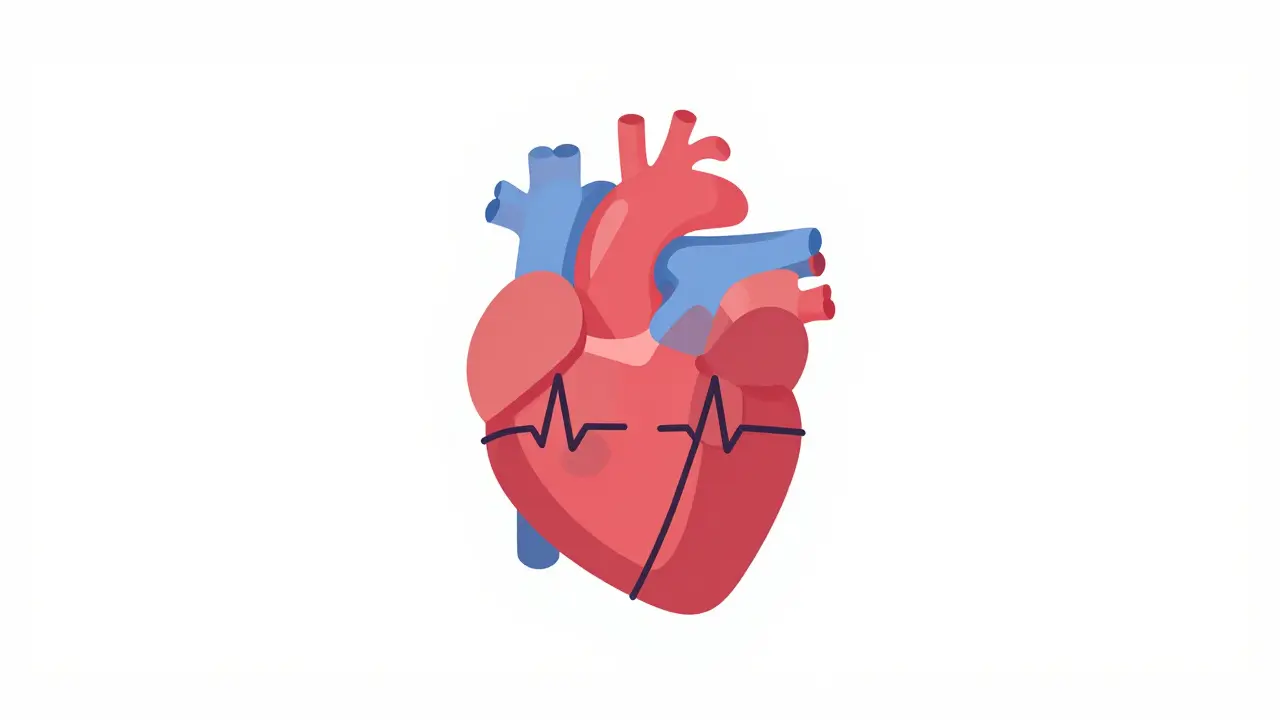
Imagine your heart is a complex electrical engine. Sometimes, it runs perfectly fine while idling in the driveway but sputters when you step on the gas. That’s exactly why doctors use two different tools to check your heart: an ECG (Electrocardiogram) and a stress test. One checks the rhythm at rest; the other sees how your heart handles pressure. Understanding the difference can save you time, anxiety, and potentially your life.
If you’ve been told you need one of these tests, you’re probably wondering what will happen. Will it hurt? How long does it take? What are they looking for? Let’s break down these common cardiovascular diagnostic tests into plain English, so you know exactly what to expect.
What Is an ECG and Why Do You Need It?
An ECG, also known as an EKG, is like a snapshot of your heart’s electrical activity. Developed by Willem Einthoven over a century ago, this simple test remains the gold standard for initial heart screening. It records the tiny electrical signals that tell your heart muscle when to beat.
The procedure is quick-usually taking just 3 to 5 minutes. A technician places sticky electrodes on your chest, arms, and legs. These sensors pick up the electrical impulses and translate them into wavy lines on a screen or paper. There are no needles, no pain, and no radiation involved.
Doctors order an ECG to detect several critical issues:
- Arrhythmias: Irregular heartbeats, such as atrial fibrillation, where the heart beats too fast or irregularly.
- Heart Attacks: Signs of a current or past myocardial infarction (heart attack).
- Blood Flow Issues: Indications that the heart isn’t getting enough oxygen.
- Structural Problems: Enlarged heart chambers or thickened walls.
Think of an ECG as checking if your car’s battery and wiring are working correctly when the engine is off. It’s essential, but it doesn’t tell you how the car performs on the highway.
When Resting Isn’t Enough: The Role of Stress Tests
Here’s the catch: many heart problems only show up when your heart is working hard. This is where the stress test, formally called an exercise electrocardiogram, comes in. According to the American College of Cardiology, over 11 million stress tests are performed annually in the US alone because they reveal hidden issues that a resting ECG misses.
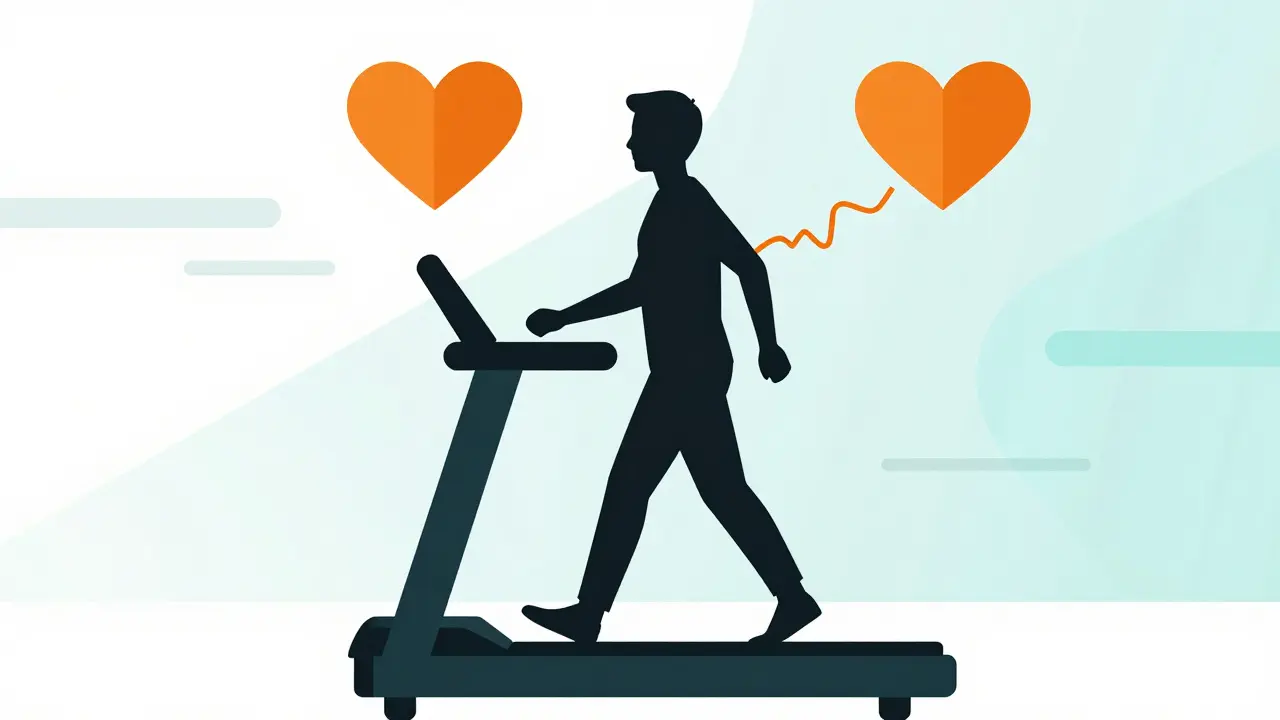
During a stress test, you walk on a treadmill or pedal a stationary bike while connected to an ECG machine. As you move, your heart rate increases, demanding more oxygen. If your coronary arteries are narrowed due to plaque buildup (coronary artery disease), your heart muscle won’t get enough blood flow under stress. The ECG will then show changes that weren’t visible before.
The most common method used is the Bruce protocol. You start walking slowly on a flat surface. Every three minutes, the speed increases, and the treadmill tilts upward to make it harder. You continue until you reach a target heart rate (usually 85% of your maximum based on age) or until you feel symptoms like chest pain or extreme shortness of breath.
Exercise vs. Chemical Stress Tests: Which One Is Right for You?
Not everyone can run on a treadmill. If you have severe arthritis, balance issues, or recent leg surgery, you might not be able to achieve the necessary heart rate through exercise. In those cases, doctors use a chemical stress test.
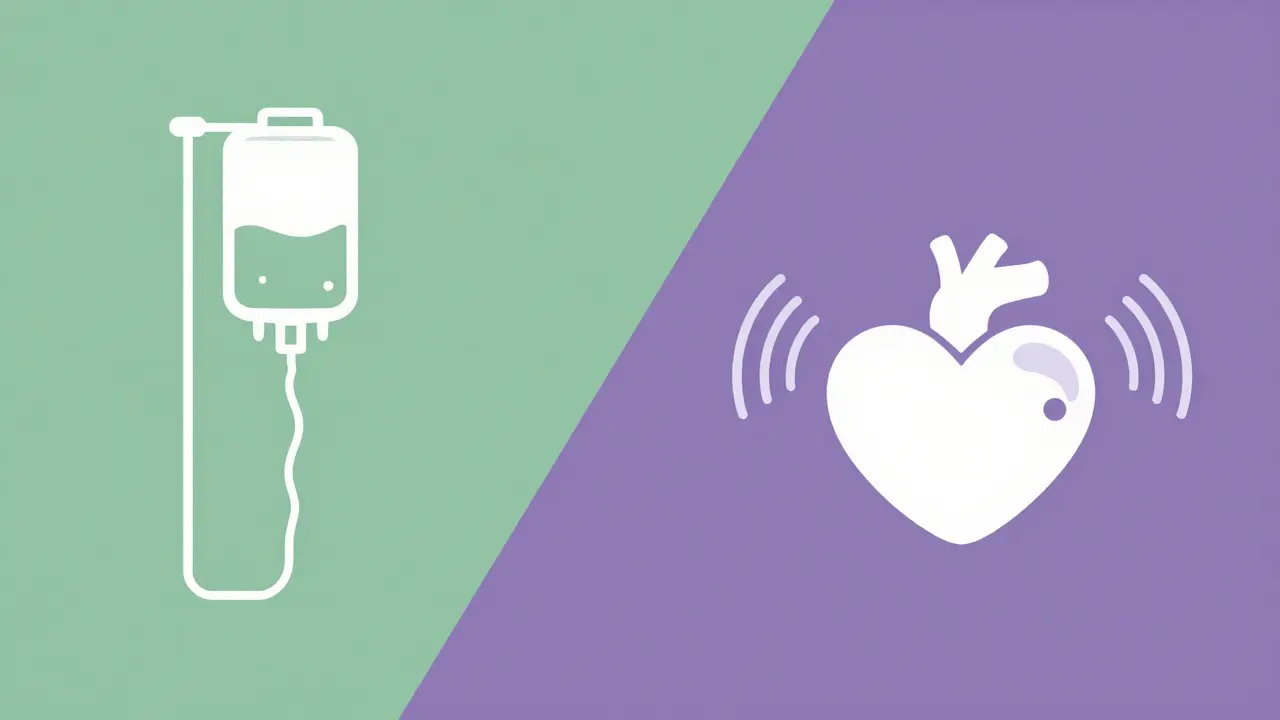
Instead of physical exertion, you receive medication through an IV that mimics the effects of exercise on your heart. Common drugs include adenosine, dipyridamole, or dobutamine. These agents either widen your blood vessels to increase flow or stimulate your heart to beat faster and harder.
| Feature | Exercise Stress Test | Chemical Stress Test |
|---|---|---|
| Method | Treadmill or bicycle | IV medication (e.g., Adenosine) |
| Duration | 10-15 minutes of active exercise | 30-60 minutes total |
| Sensation | Physical fatigue, sweating | Flushing, chest pressure, shortness of breath |
| Best For | Patient who can exercise moderately | Patient with mobility issues or arthritis |
| Preparation | No caffeine 24 hours prior | No caffeine 24 hours prior (critical) |
A note from patient experiences: chemical tests can feel intense. Many people report feeling like they are having a heart attack during the few minutes the drug is active. However, technicians monitor you closely, and the sensation passes quickly once the medication wears off. Always follow the instruction to avoid caffeine for 24 hours before a chemical test, as coffee can interfere with the drugs’ effectiveness.
Adding Images: Echocardiograms and Nuclear Scans
Sometimes, the ECG waves alone aren’t clear enough. To get a better picture, doctors combine the stress test with imaging technology. This boosts accuracy significantly.
Stress Echocardiography: This combines exercise or chemical stress with ultrasound. It allows the doctor to see if parts of your heart wall are moving poorly due to lack of blood flow. It has high specificity (88%) and involves no radiation, making it a preferred choice for many patients, especially women.
Nuclear Stress Testing: This uses a small amount of radioactive tracer (like technetium-99m) injected into your vein. A special camera takes pictures of your heart at rest and during stress. While it offers high sensitivity (around 85-89%), it exposes you to radiation equivalent to 3-4 years of natural background radiation. Because of this, doctors reserve it for cases where other tests are inconclusive.
How to Prepare and What to Expect
Preparation is key to getting accurate results. Here is a practical checklist for your appointment:
- Diet: Avoid heavy meals for 2-3 hours before the test. If you are having a chemical stress test, strictly avoid caffeine (coffee, tea, chocolate, some sodas) for 24 hours beforehand.
- Clothing: Wear comfortable clothes and shoes suitable for walking or running. Women may be asked to wear a sports bra or hospital gown for electrode placement.
- Medications: Ask your doctor if you should skip beta-blockers or other heart medications the morning of the test, as they can lower your heart rate and affect results.
- Communication: Tell the technician immediately if you feel chest pain, dizziness, or unusual shortness of breath. They will stop the test right away.
The actual monitoring tracks four main things: your heart rate (beats per minute), blood pressure (mmHg), ECG waveforms (millivolts), and sometimes oxygen levels in your blood. Most facilities provide preliminary results before you leave, though detailed reports may take a day or two.
Understanding Your Results
After the test, your cardiologist looks for specific markers. The two most important prognostic indicators are ST-segment depression on the ECG and your functional capacity (how long you could exercise). Interestingly, every additional minute you can exercise is associated with a 12% reduction in future cardiac event risk.
It’s important to know that no test is perfect. Standard ECG stress testing has about 68% sensitivity for detecting coronary artery disease. This means there is a chance of false negatives, particularly in premenopausal women due to differences in cardiac physiology. If your symptoms persist despite a normal stress test, don’t ignore them. Doctors may recommend further imaging like a CT angiogram.
Does an ECG or stress test hurt?
No, neither test is painful. An ECG involves sticking electrodes to your skin, which feels like placing stickers. A stress test requires physical effort, which causes fatigue and sweating, similar to a workout. Chemical stress tests may cause temporary discomfort like flushing or chest pressure, but this is monitored closely and resolves quickly.
Can I drive myself home after a stress test?
For an exercise stress test, yes, you can usually drive yourself home once you’ve cooled down and changed. For a chemical stress test, it depends on the medication used. Some drugs may cause dizziness. It’s best to ask your technician, but having a ride arranged is often a safe precaution.
Why would my doctor order both an ECG and a stress test?
An ECG checks your heart’s baseline rhythm and structure. A stress test checks how your heart functions under load. Many blockages in coronary arteries only restrict blood flow when the heart is beating fast. Therefore, a normal ECG does not rule out heart disease, which is why the stress test is added for a complete picture.
How accurate are stress tests?
Standard ECG stress tests have moderate accuracy (68% sensitivity). Adding imaging, like stress echocardiography or nuclear scans, improves accuracy significantly. However, false negatives can occur, especially in women. If you have strong symptoms, your doctor may use additional tests regardless of the stress test result.
Do I need to stop taking my heart medications?
This varies. Beta-blockers and calcium channel blockers can prevent your heart rate from rising enough during an exercise test, leading to inaccurate results. Your doctor will give you specific instructions on whether to hold these doses the morning of the test. Never stop prescribed medication without consulting your physician first.


14 Comments
thats actually super helpful info i always get confused about the difference between the two tests. my mom had to do both last year and she was so stressed out thinking it would hurt like a real workout. knowing that the ekg is just stickers makes me feel way better about my upcoming appointment. thanks for breaking it down simply
Oh, please. Do you really think a layperson's blog post replaces actual medical training? The Bruce protocol is hardly 'simple' when one considers the hemodynamic complexities involved. I had my nuclear stress test done at a private clinic in Manhattan where they used state-of-the-art SPECT imaging, not this rudimentary treadmill nonsense described here. It’s amusing how people accept such diluted information without questioning the lack of nuance regarding false positives in women. Truly, the democratization of ignorance is our greatest societal hurdle. :)
Hailey, your tone is incredibly dismissive and unhelpful. Not everyone has access to high-end private clinics, and this guide is meant to reduce anxiety for regular folks. Please respect that people are trying to educate themselves on basic health matters without being condescended to. We all deserve clear, accessible information regardless of our socioeconomic status.
i mean its cool but like why does it have to be so complicated with all these fancy words. i just want to know if im gonna die or not lol. also i heard coffee ruins the test so i guess no latte today which is tragic honestly. the chemical stuff sounds terrifying like am i supposed to fake having a heart attack while lying there?
Faking a heart attack? No, Miranda. You’re going to sit there sweating profusely while a technician watches you like a hawk because apparently, your cardiovascular system is now a public spectacle. But sure, keep asking if you’re going to die; it’s the most original question on the internet today. Bravo.
Hello everyone! :) I just wanted to add that from my experience in India, we often see patients skipping the caffeine restriction because they don't realize tea counts too. It is very important to remember that even herbal teas can sometimes interfere depending on the medication used. The adenosine washout period is quite short but the interference can last longer. Please do ask your doctor specifically about what drinks are allowed. Stay healthy friends! :)
America leads the world in cardiac care. If you cant handle a treadmill you shouldnt be alive anyway. Stop whining about pain. Real men push through. This article is weak propaganda for the lazy. Get off the couch and run.
I literally screamed when they injected the dye during my nuclear scan. My hands were shaking for hours after. Why does nobody tell you it feels like someone is pouring hot lava into your veins? I felt completely violated by the whole process. The technicians were cold and robotic. I need someone to validate that this was traumatic for me because I am still thinking about it three days later and it won't leave my head.
It is morally reprehensible how healthcare systems prioritize efficiency over patient comfort. The fact that individuals are subjected to such invasive procedures without adequate psychological preparation speaks volumes about our societal decay. One must consider the ethical implications of inducing artificial stress states in vulnerable populations. It is a profound failure of empathy within the medical establishment that we normalize such distressing experiences as routine diagnostics.
There is a strange poetry in the way our hearts betray us under pressure isn't there? Like a hidden truth finally surfacing. I found the comparison to the car engine quite evocative. It reminds me that we are all just biological machines waiting to break down. Perhaps the stress test is less about diagnosis and more about confronting our own fragility. What do you think about the existential weight of these tests?
i just sat there watching the guy next to me walk on the treadmill he looked so tired. i hope he was okay. the room smelled like antiseptic and sweat. weird vibe
Haha look at all these people scared of a little exercise. In America we work hard and play hard. If your heart cant handle walking uphill you got bigger problems than a test result. Maybe stop eating so much processed garbage and start lifting weights. Typical soft modern society. 🇺🇸
You guys are missing the point. This is about empowerment. Knowing what to expect reduces fear. I coached my sister through her stress test last week and she did amazing because she knew exactly what the Bruce protocol steps were. She hit 10 minutes which is great functional capacity. Let's focus on supporting each other rather than complaining or bragging. You've got this!
the part about beta blockers is crucial. my doc told me to skip mine but i forgot and ended up with a useless test. wasted time and money. just make sure you listen to instructions carefully otherwise you are basically playing russian roulette with your diagnosis. annoying but true