What Are OTC Medications?
OTC medications are drugs you can buy without a prescription. They’re meant for short-term relief of common, minor health issues like headaches, colds, allergies, heartburn, or muscle aches. Unlike prescription drugs, these are considered safe enough for most people to use on their own-if used correctly. But that’s the big "if." Millions of people take them daily without thinking twice, but many don’t realize how easily they can go wrong.
In the U.S., over 800 active ingredients are available in more than 100,000 OTC products. That’s not just pills-it’s cough syrups, nasal sprays, antacids, even some shampoos and toothpastes. The FDA and similar agencies worldwide set strict rules for what can be sold over the counter. But just because you can buy it off a shelf doesn’t mean it’s harmless.
Pain Relievers: Acetaminophen vs. Ibuprofen
When your head or muscles hurt, you probably reach for one of two things: acetaminophen (Tylenol) or ibuprofen (Advil, Motrin). Both work, but they’re not the same.
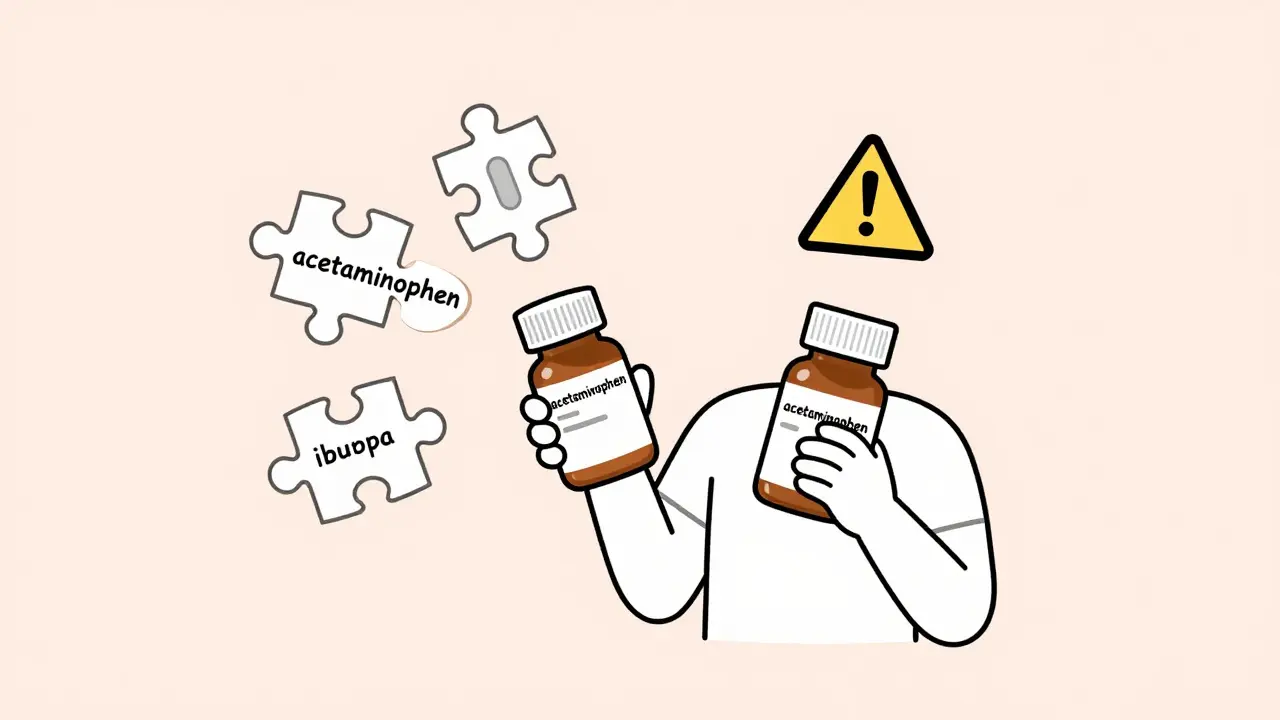
Acetaminophen is great for pain and fever. It’s often the go-to for kids, pregnant people, and those with stomach issues because it doesn’t irritate the gut like NSAIDs. But here’s the catch: it’s easy to overdose. The maximum daily dose is 4,000mg. That’s just eight 500mg tablets. Many cold and flu meds also contain acetaminophen, so if you’re stacking them, you could hit that limit without realizing it. The FDA reports 15,000 to 18,000 cases of acute liver failure each year linked to acetaminophen misuse. That’s not rare-it’s preventable.
Ibuprofen is an NSAID. It reduces inflammation, so it’s better for sprains, arthritis, or menstrual cramps. But it can cause stomach bleeding, especially if taken on an empty stomach or for more than a few days. The daily limit is 1,200mg for OTC use. People with kidney problems, high blood pressure, or a history of ulcers should avoid it. And if you’re over 65, your risk goes up.
Most people don’t know which to pick. If you’re just feeling achy and feverish, acetaminophen is safer. If you’re swollen or inflamed, ibuprofen does more. But never take both together unless a doctor says so.
Cold, Flu, and Allergy Medications
Cold season hits every year, and the drugstore shelves fill with dozens of options. But you don’t need all of them. Most colds are viral, so antibiotics won’t help-and neither will most combination products.
Pseudoephedrine (Sudafed) is a nasal decongestant. It works well, but it’s kept behind the pharmacy counter because it can be used to make illegal drugs. You need to show ID and buy limited amounts. It can raise blood pressure and make you jittery. Avoid it if you have heart issues.
Dextromethorphan (Delsym, Robitussin) suppresses coughs. It’s fine at recommended doses, but some teens abuse it for its hallucinogenic effects. Emergency rooms see thousands of cases each year from this misuse. Stick to the label.
Guaifenesin (Mucinex) loosens mucus. It won’t cure your cold, but it can make coughing less painful. Drink water with it-it helps.
For allergies, you’ve got two main choices: old-school antihistamines and newer ones.
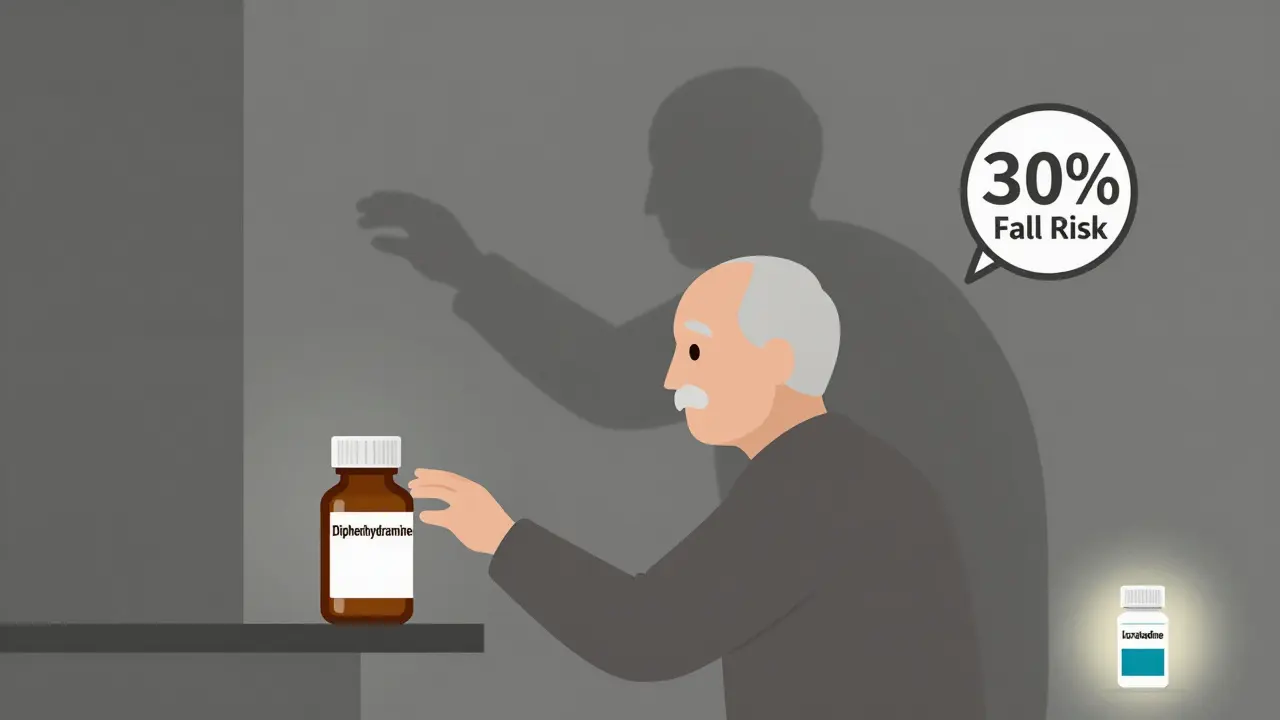
Diphenhydramine (Benadryl) works fast. But it makes you drowsy-so much so that it’s sold as a sleep aid. That’s dangerous for older adults. Studies show it increases fall risk by 30%. It’s also not good for people with glaucoma, prostate issues, or asthma.
Loratadine (Claritin) and fexofenadine (Allegra) are second-generation antihistamines. They work just as well for sneezing and runny nose but don’t knock you out. They’re safer for daily use and for driving. The only catch: if your kidneys aren’t working well, you might need a lower dose.
Heartburn and Stomach Relief
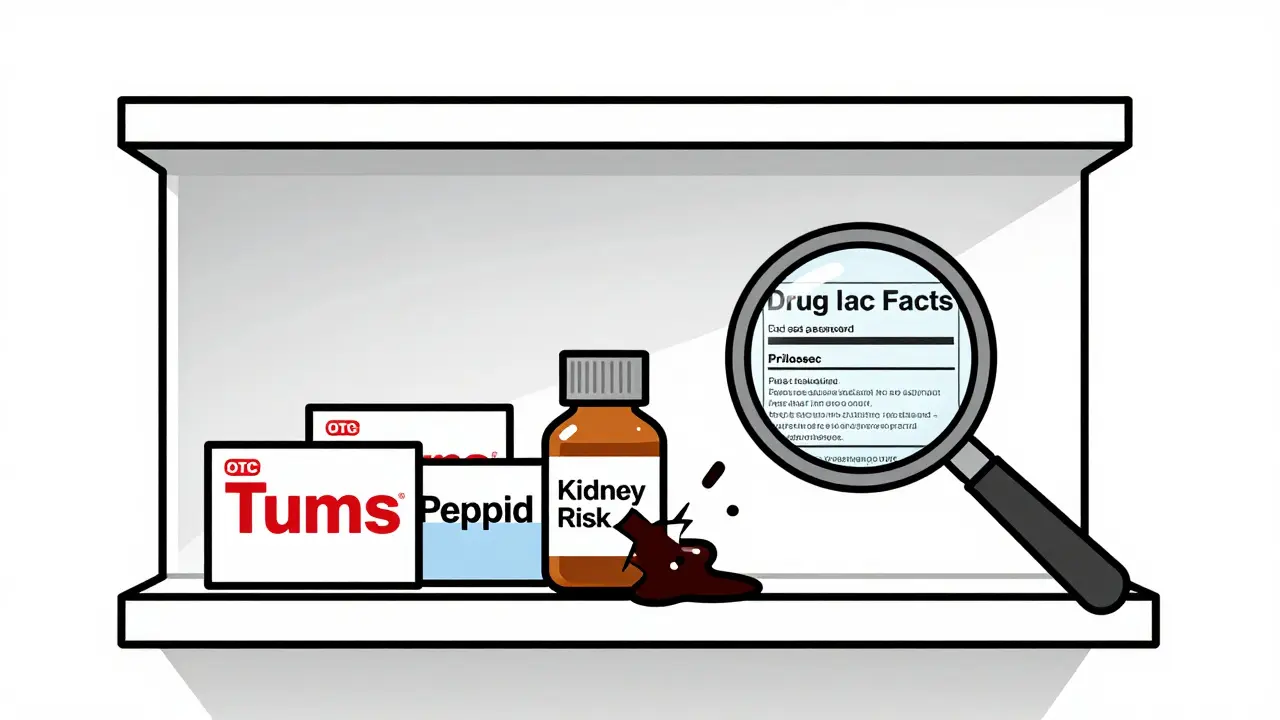
Heartburn is common. You might pop a Tums, a Pepcid, or a Prilosec and feel fine. But using these long-term is risky.
Calcium carbonate (Tums, Rolaids) gives quick relief by neutralizing acid. It’s fine for occasional use. But too much can cause constipation or kidney stones. Some people take them daily thinking it’s harmless-don’t.
Famotidine (Pepcid AC) reduces acid production. It lasts longer than antacids. Safe for most, but not for long-term use without checking in with a doctor.
Omeprazole (Prilosec OTC) is a proton pump inhibitor (PPI). It’s powerful-blocks acid for up to 24 hours. But studies in JAMA Internal Medicine show long-term use (over a year) can increase your risk of chronic kidney disease by 20-50%. It can also interfere with nutrient absorption and increase bone fracture risk. Don’t take it for more than 14 days in a row without seeing a provider.
Diarrhea and Constipation
Loperamide (Imodium) slows your gut down. It’s great for sudden diarrhea-like from food poisoning or travel. But don’t use it if you have a fever or bloody stool. That could mean an infection, and stopping your bowels could trap the bad bacteria inside. Also, avoid it if you have kidney problems. The dose is 2mg at first, then 1mg after each loose stool. Don’t go over 8mg in 24 hours.
For constipation, most OTC laxatives are safe short-term. But stimulant laxatives (like senna) can become habit-forming. Fiber supplements like psyllium (Metamucil) are safer for regular use.
Who Should Be Extra Careful?
OTC meds aren’t one-size-fits-all. Certain groups need to be extra cautious.
- Pregnant people: Only acetaminophen is generally safe for pain. Avoid NSAIDs after 20 weeks-they can harm the baby’s kidneys.
- Adults over 65: Avoid diphenhydramine for sleep. It increases confusion and fall risk. Stick to non-drowsy options.
- People with liver or kidney disease: Acetaminophen and NSAIDs can be dangerous. Always check with a pharmacist.
- Children under 4: Never give cough or cold medicines. The FDA banned them for this age group after dozens of deaths.
- Diabetics: Many syrups and chewables have sugar. Look for sugar-free versions.
How to Use OTC Medications Safely
Here’s how to avoid the most common mistakes:
- Read the Drug Facts label. Every OTC box has it. It tells you the active ingredient, dose, warnings, and when to stop. If you don’t read it, you’re guessing.
- Don’t double up. Cold meds often have acetaminophen, ibuprofen, or antihistamines built in. Taking extra pain relievers on top of that can overdose you.
- Check expiration dates. Old meds lose potency. Some, like liquid antibiotics or eye drops, can even grow bacteria.
- Store properly. Heat and moisture ruin pills. Don’t keep them in the bathroom. A cool, dry cabinet is best.
- Ask your pharmacist. They’re trained to catch dangerous interactions. If you take blood pressure meds, antidepressants, or blood thinners, they can warn you about risks.
- Stop if symptoms last. If your headache is still there after 7 days, your cough after 2 weeks, or your heartburn after 2 weeks of PPIs-see a doctor. You’re not treating the cause.
When to Skip OTC and See a Doctor
OTC meds are for quick fixes, not long-term fixes. Here’s when to call it quits:
- Pain that gets worse or doesn’t improve in a week
- Fever over 102°F that lasts more than 3 days
- Black, tarry stools or vomiting blood (signs of internal bleeding)
- Severe dizziness, chest pain, or trouble breathing after taking a med
- Using OTC meds for more than 10-14 days straight
- Needing higher doses just to feel relief
Too many people treat chronic conditions like daily heartburn, constant headaches, or ongoing allergies with OTC meds. That’s not safe. It’s masking the problem, not solving it. A doctor can find the real cause-and give you a real solution.
What’s Changing in OTC Medications?
Regulations are tightening. The FDA now requires clearer labeling on all OTC products. You’ll see exact doses, clear warnings, and standardized formats. That’s good-it helps you make smarter choices.
Pharmacists are taking on more responsibility. In some states, they can now prescribe certain OTC meds for minor conditions like allergies or UTIs. CVS and Walgreens have AI tools that scan your meds and warn you about interactions. That’s a big step forward.
But misuse is still rising. The National Institute on Drug Abuse says over 1.2 million ER visits each year are from OTC drug abuse-mostly dextromethorphan and high-dose sleep aids. Education is the key.
Can I take OTC pain relievers every day?
No. Daily use of acetaminophen or NSAIDs can damage your liver or kidneys, cause stomach bleeding, or raise blood pressure. If you need pain relief every day, you should see a doctor. There’s likely an underlying issue that needs treatment, not just masking.
Is it safe to use OTC meds while pregnant?
Acetaminophen is generally considered safe for pain and fever during pregnancy. Avoid NSAIDs like ibuprofen after 20 weeks-they can affect fetal kidney development. For allergies, loratadine and fexofenadine are preferred over diphenhydramine. Always check with your OB-GYN before taking anything.
Why are some OTC meds kept behind the counter?
Some ingredients, like pseudoephedrine, can be used to make illegal drugs. Laws require these to be stored behind the counter, with ID checks and purchase limits. It’s not about safety for the user-it’s about preventing drug manufacturing.
Can OTC meds interact with my prescription drugs?
Yes, often. For example, NSAIDs can reduce the effect of blood pressure meds and increase bleeding risk if you’re on warfarin. Antihistamines can worsen side effects of antidepressants. Always tell your pharmacist what you’re taking-prescription or not.
Are natural remedies safer than OTC meds?
Not necessarily. Herbal supplements like St. John’s Wort or echinacea aren’t regulated like drugs. They can interact with prescriptions, cause liver damage, or have unpredictable doses. Just because something is "natural" doesn’t mean it’s safe. Treat them like medicine-ask your pharmacist first.
What should I do if I think I overdosed on an OTC med?
Call poison control immediately at 1-800-222-1222 (U.S.) or your local emergency number. Don’t wait for symptoms. Acetaminophen overdose can cause liver damage before you feel sick. Bring the bottle with you if you go to the ER.
Final Thoughts
OTC medications are powerful tools. They’ve helped people manage everyday health issues for decades. But they’re not toys. Taking them without understanding how they work, what they interact with, or how long to use them can lead to serious harm. The best defense is knowledge. Read the label. Ask your pharmacist. Don’t assume "over the counter" means "safe for anything." Your body doesn’t care how much you paid for it-it only cares what’s in it.