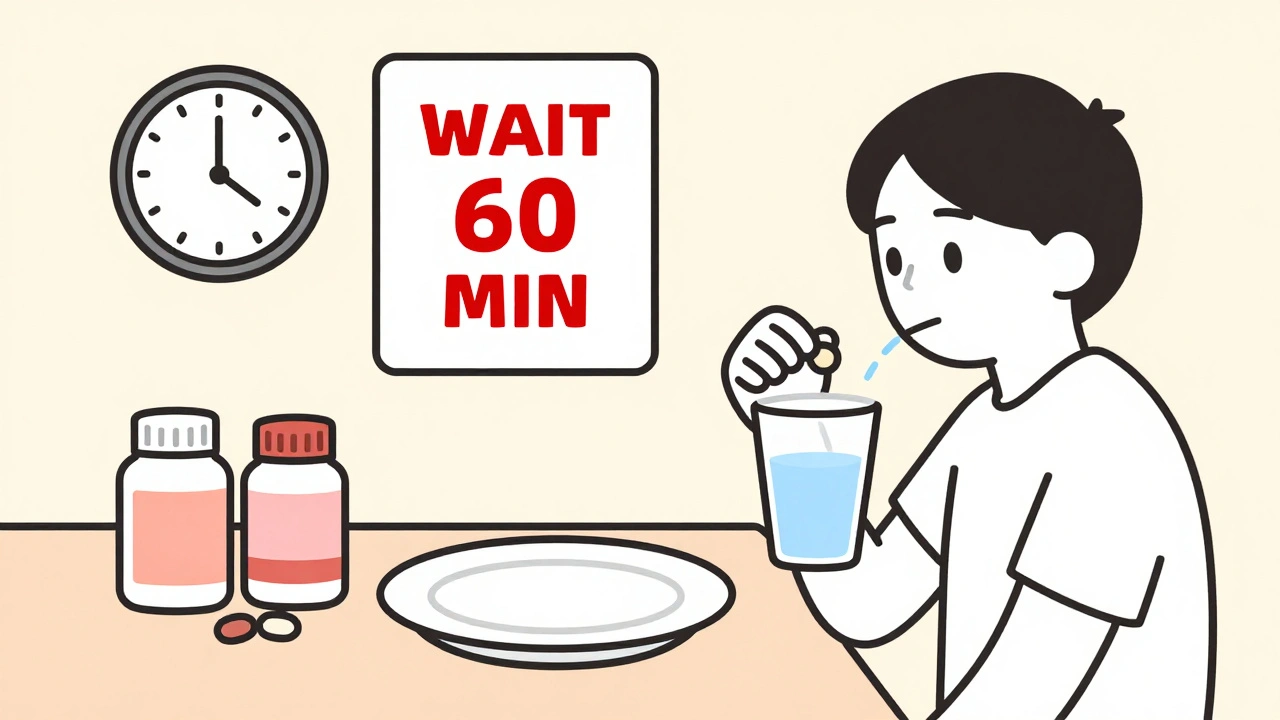
Take your thyroid medication with a glass of water on an empty stomach. Wait 30 to 60 minutes before eating or drinking anything else. That’s the basic rule. But if you’re also taking calcium or iron supplements-whether for osteoporosis, anemia, pregnancy, or just because your doctor said so-you might be accidentally undoing the work of your thyroid medicine without even knowing it.
Why Calcium and Iron Mess With Your Thyroid Meds
Levothyroxine, the most common thyroid hormone replacement (sold as Synthroid, Levoxyl, or generic versions), needs to be absorbed in your small intestine to work. But calcium and iron don’t just sit there quietly. They bind to the hormone in your gut like glue, forming a hard, insoluble lump your body can’t absorb. That means up to 36% of your dose just passes through you, useless.
This isn’t new science. Back in the 1990s, researchers at the Mayo Clinic saw patients on levothyroxine suddenly having high TSH levels-even though they were taking their pills every day. Turns out, they’d started taking calcium pills for their bones. The same thing happened with iron. A 2000 study showed that taking 1,200 mg of calcium carbonate at the same time as levothyroxine cut absorption by 22-36%. A 2008 study found iron reduced it by 21%. More recent data confirms it: if you take iron and thyroid meds together, you could lose up to 39% of your dose.
How Long Should You Wait?
Timing matters more than you think. It’s not enough to just take them at different meals. You need space.
- Calcium supplements: Wait at least four hours before or after your thyroid medication. This is the standard recommendation from the Mayo Clinic and the Synthroid prescribing guide.
- Iron supplements: Aim for two to four hours apart. Some guidelines say two hours is enough, but if you’re still having trouble with high TSH, go with four.
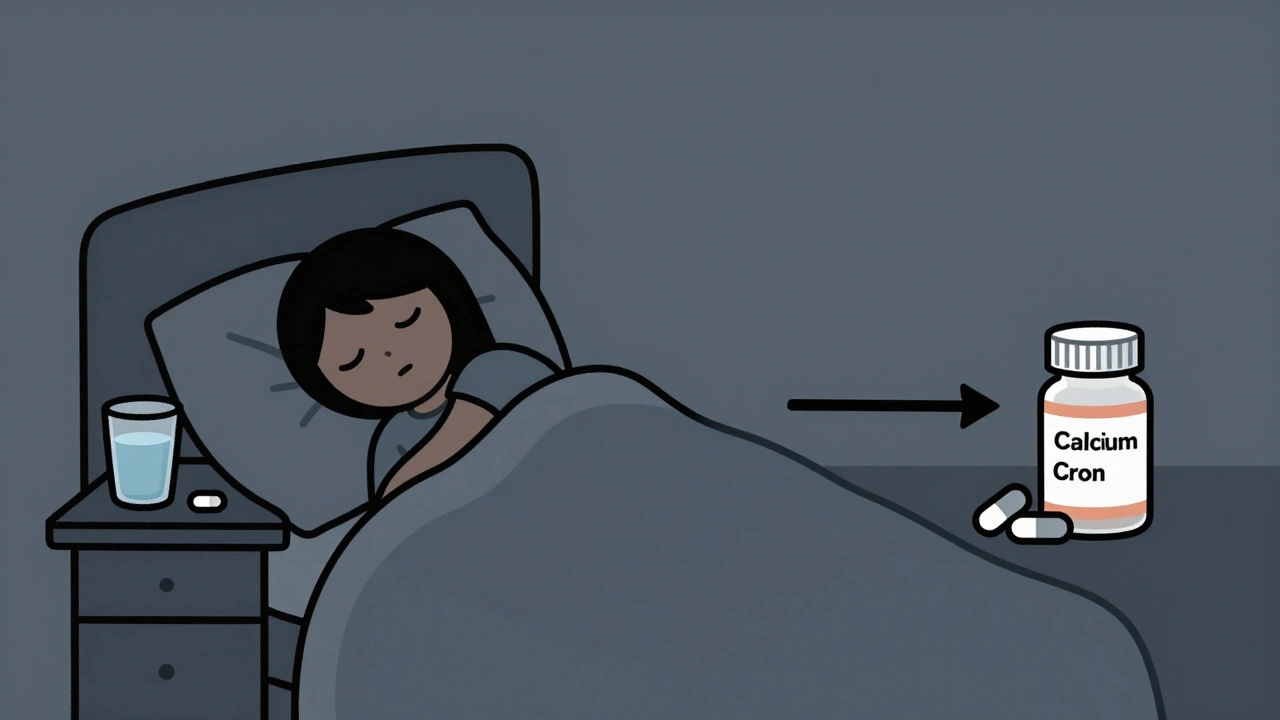
Why the difference? Calcium sticks around longer in your gut. Iron clears faster, but it’s still strong enough to block absorption if you’re too close. And here’s the catch: if you take your thyroid pill in the morning and your calcium at lunch, you’re still too close. That’s why many people switch their thyroid dose to bedtime-after dinner, after their supplements.
It’s Not Just Pills-Fortified Foods Count Too
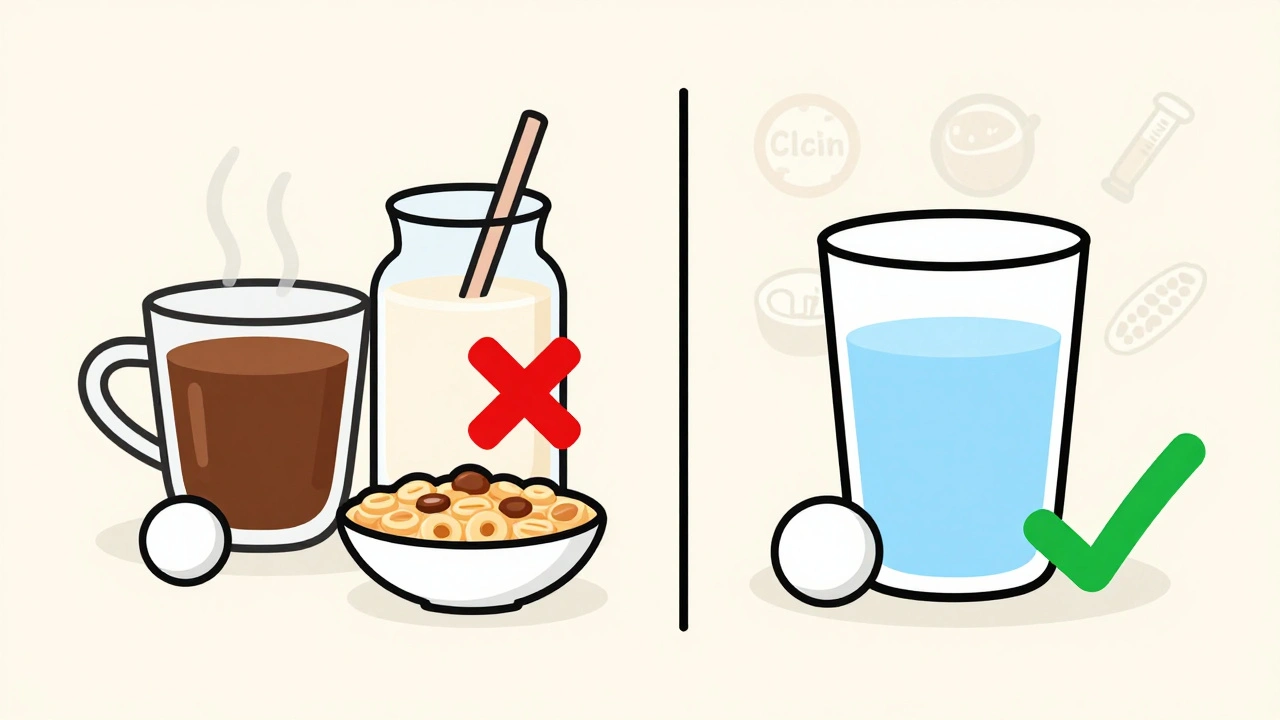
Calcium isn’t just in pills. It’s in your orange juice, almond milk, soy milk, and even some cereals. One cup of calcium-fortified orange juice has about 350 mg of calcium. That’s enough to interfere if you drink it with or right after your thyroid pill.
Same goes for iron. Breakfast cereals, breads, and baby formula are often fortified. If you’re eating iron-fortified cereal with your thyroid pill, you’re not getting the full dose. Even if you take your pill at 7 a.m. and eat cereal at 7:30, you’re still risking reduced absorption.
Who’s at Highest Risk?
Some people are more likely to run into this problem:
- Pregnant women: Iron needs jump during pregnancy. Many start supplements without realizing they’re sabotaging their thyroid meds. One case study showed a pregnant woman with TSH at 8.2 mU/L-even though she took iron 4-6 hours after her thyroid pill.
- Postmenopausal women: Often on calcium for bone health, sometimes with iron if they’re still bleeding or have anemia.
- Elderly patients: Juggling multiple meds. Calcium, iron, antacids, multivitamins-all in the same pillbox.
- People with Hashimoto’s or thyroid cancer: Even small drops in thyroid hormone levels can cause fatigue, weight gain, or worse.
A 2023 study found that 42% of patients were never told about these interactions when they first got their prescription. That’s not a small oversight-it’s a systemic failure.
What About Other Supplements and Foods?
Calcium and iron aren’t the only troublemakers.
- Soy products: Soy milk, tofu, edamame-can reduce absorption by 18-30%.
- Walnuts: One study showed a 24% drop in absorption when eaten with levothyroxine.
- High-fiber foods: More than 30 grams of fiber within an hour of your pill can raise your TSH by 15-25%.
- Coffee and tea: Tannins interfere. Wait at least an hour.
- Biotin: Not a direct blocker, but it can mess up your blood tests. If you’re taking more than 5 mg daily, your TSH and T4 numbers might look normal when they’re not.
And don’t forget antacids. If you’re taking Tums, Rolaids, or proton pump inhibitors like omeprazole, those also bind to levothyroxine. Same rules apply: separate by four hours.
Real Stories, Real Problems
Online forums are full of people who didn’t know this until they felt awful.
One Reddit user, u/ThyroidWarrior99, started taking calcium for joint pain. His TSH jumped from 1.8 to 6.4 in just a few months. He thought his hypothyroidism was getting worse. Turns out, he just needed to space out his pills.
Another, u/HypoMama, had postpartum anemia and was taking iron three times a day. Her energy was terrible, her weight kept climbing. She switched her thyroid pill to bedtime-after her last meal and iron dose-and within six weeks, her TSH dropped back to normal.
These aren’t rare cases. A 2022 survey by Thyroid UK found 68% of patients struggled with timing their meds and supplements. Most didn’t know how to do it right.
What Should You Do?
Here’s the simple, proven plan:
- Take your thyroid medication first thing in the morning, on an empty stomach, with a full glass of water.
- Wait 30-60 minutes before eating, drinking coffee, or taking any other pills.
- Take calcium and iron supplements at least four hours later-ideally at dinner or bedtime.
- If you take your thyroid pill at night, make sure you haven’t eaten anything with calcium or iron in the past four hours.
- Check your supplements. Are they labeled “with iron” or “with calcium”? If yes, note the amount. Don’t assume it’s safe.
- Ask your doctor for a TSH test 6-8 weeks after you change your routine. That’s how long it takes for levels to stabilize.
Some people try taking their thyroid pill at bedtime. That works well if you don’t eat late and don’t take iron or calcium in the evening. But if you take a multivitamin with iron at night, you’re back to square one.
What About Newer Thyroid Medications?
There’s hope on the horizon. New liquid formulations of levothyroxine and enteric-coated tablets are being tested. One liquid version reduced calcium interference to just 8%, compared to 32% with regular pills. But they cost about $350 a month-20 times more than generic tablets.
For now, the old-school method still works best: timing, patience, and awareness.
The Hidden Cost of Getting It Wrong
This isn’t just about feeling tired. When thyroid meds don’t work, people get misdiagnosed. They’re told they have “uncontrolled hypothyroidism,” so their dose gets increased. Then they get side effects-heart palpitations, anxiety, bone loss-because they’re getting too much hormone.
A 2022 analysis estimated that improper timing of supplements with thyroid meds leads to $187 million in unnecessary healthcare costs in the U.S. every year. That’s thousands of extra blood tests, doctor visits, and wrong prescriptions.
And for you? It could mean months of fatigue, brain fog, weight gain, or depression-all because you didn’t know to wait four hours.
Can I take calcium and iron together with my thyroid medication if I space them out?
No. Even if you space calcium and iron apart from each other, both can still block thyroid hormone absorption. Take them separately from your thyroid pill by at least four hours. Don’t combine them in the same meal or supplement unless your doctor specifically says it’s safe.
What if I forget and take my iron with my thyroid pill?
One mistake won’t ruin your treatment, but it will reduce your dose that day. Don’t double up next time-that can cause side effects. Just go back to your regular schedule. If it happens often, your TSH will rise over time. Get tested in 6-8 weeks to check.
Is it better to take thyroid medication in the morning or at night?
Both can work, as long as you’re consistent. Morning is traditional, but if you take calcium or iron with breakfast, bedtime may be easier. Studies show nighttime dosing works just as well-if you haven’t eaten for at least three hours and haven’t taken any interfering substances.
Can I take my thyroid pill with just a sip of water?
Yes. In fact, it’s better. Use a full glass of water to help the pill move through your system quickly. Avoid other drinks-especially coffee, tea, or juice-until at least 30-60 minutes after taking your pill.
Do I need to stop taking calcium or iron forever?
No. You don’t need to stop. You just need to time them right. Calcium and iron are important for your bones, blood, and overall health. The goal isn’t to avoid them-it’s to take them at the right time so your thyroid medicine works.
What if I’m on a different thyroid medication, like Cytomel or NP Thyroid?
The same rules apply. Cytomel (liothyronine) and NP Thyroid (natural desiccated thyroid) are also affected by calcium, iron, and other supplements. Always separate them by at least four hours unless your doctor says otherwise.
If you’re on thyroid medication and take supplements, don’t guess. Talk to your doctor or pharmacist. Write down your schedule. Set phone reminders. Your energy, mood, and long-term health depend on getting this right.


9 Comments
Bro, I didn’t know calcium could sabotage my Synthroid like that. I’ve been taking my iron at lunch and my thyroid med at 7am-guess that’s why my TSH’s been creeping up. Time to switch to bedtime dosing. 🙌
Thank you for this. Seriously. I’m a nurse and I’ve seen so many patients get misdiagnosed because no one told them about the calcium-iron-thyroid trap. This should be standard info on every prescription label. 🙏
Okay but let’s be real-how many people actually remember to wait four hours? I take my meds at 7am and breakfast at 7:30. I’m not gonna wait until noon to eat. This feels like medical gaslighting disguised as advice. I’m just gonna keep doing what I’m doing and hope for the best.
Let’s not pretend this is rocket science. Levothyroxine bioavailability is notoriously finicky-calcium and iron are divalent cations that chelate the hormone via ionic bonding in the duodenum, effectively precipitating the complex. You’re not ‘just’ reducing absorption-you’re pharmacologically neutralizing a portion of your dose. And yes, the 2008 study by *Smith et al.* in JCEM confirmed this. Also, soy is a phytoestrogen disruptor-don’t even get me started. 😎
Stop overcomplicating this. Just take your pill at night. Done. Everyone who says ‘wait 4 hours’ is just trying to sound smart. I take mine with my multivitamin at bedtime and my TSH is perfect. Your doctor didn’t tell you this because they don’t care.
So let me get this straight-you’re telling me I can’t have my fortified oatmeal with my thyroid med? Or my almond milk latte? Or my prenatal? This is insane. I’m not a robot. I’m a human with a life. This advice is impractical and elitist. Who even has time for this? 🤡
I was one of those people who thought ‘just take it with water’ was enough. My energy was trash for months. Switched my thyroid med to bedtime, spaced out my iron and calcium, and within 5 weeks I felt like myself again. No magic, just timing. You got this. 💪
THIS. IS. EVERYTHING. I’m a mom of two, on iron and calcium, and I thought I was doing everything right. I didn’t know fortified orange juice counted. I thought I was being healthy. Turns out I was sabotaging myself. I’m resetting my whole routine tonight. Thank you for writing this like someone actually cares.
What if I just take my thyroid med with a glass of wine? I mean, alcohol doesn’t bind to calcium, right? Just asking for a friend. Also, does CBD oil interfere? I’m pretty sure it does. Someone tell me I’m not crazy.