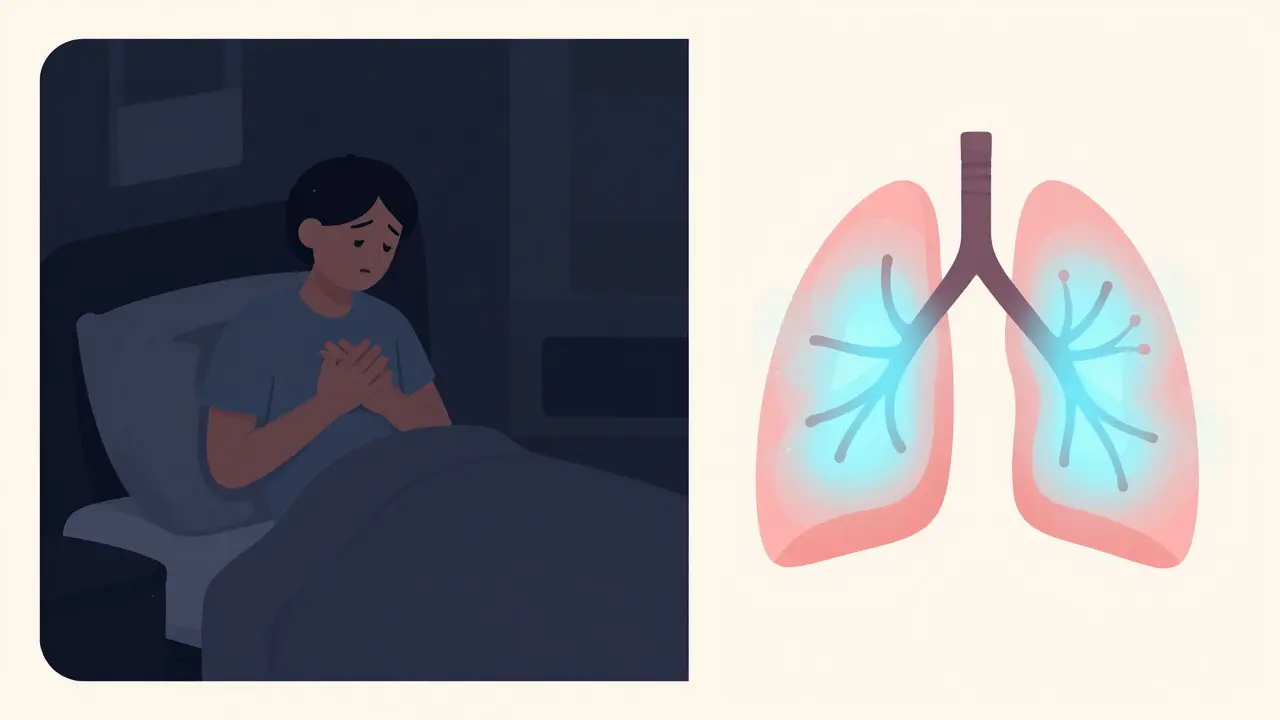
Waking up at 3 AM gasping for air or feeling your chest tighten during a walk isn't just "how asthma is." For a long time, the go-to move for millions was to carry a blue rescue inhaler and use it whenever symptoms flared up. But the medical world has shifted. We now know that relying solely on rescue medication doesn't actually treat the underlying problem-the inflammation in your airways-and can actually put you at a higher risk for severe attacks.
Getting your Asthma Control under wraps means moving beyond just surviving the next flare-up. It is about a strategic mix of the right medication, identifying what sets you off, and using your devices correctly. Whether you've had asthma since childhood or were diagnosed as an adult, the goal is the same: zero limitations on your daily life and no more emergency room visits.
| Medication Type | Primary Purpose | Typical Use Case |
|---|---|---|
| ICS (Inhaled Corticosteroids) | Reduce airway inflammation | Daily maintenance to prevent attacks |
| LABA (Long-Acting Beta-Agonists) | Keep airways open longer | Combined with ICS for better control |
| SABA (Short-Acting Beta-Agonists) | Rapid symptom relief | Acute rescue (no longer recommended as sole therapy) |
| LAMA (Long-Acting Muscarinic Antagonists) | Additional airway widening | Added for severe, uncontrolled asthma |
The New Rule: No More SABA-Only Treatment
If you're still using only a "blue inhaler" (a SABA or short-acting beta-agonist), you need to talk to your doctor. The Global Initiative for Asthma (GINA) and the latest 2025 VA/DOD guidelines have made it clear: SABA-only treatment is no longer the standard of care. Why? Because while these drugs open your airways quickly, they do nothing to stop the swelling and mucus production that cause the asthma in the first place.
The current gold standard is to ensure every patient is on some form of Inhaled Corticosteroid (ICS). These are the "preventers." By treating the inflammation daily, you reduce the risk of a life-threatening exacerbation. In some modern plans, doctors now prescribe a combination of ICS and a rapid-onset LABA (like formoterol) to act as both your daily controller and your rescue medication. This way, every time you treat a symptom, you're also treating the underlying inflammation.
Mastering Your Inhaler Technique
You could have the most expensive medication in the world, but if it only hits the back of your throat and never reaches your lungs, it's useless. Many people struggle with "poor control" not because the drug doesn't work, but because their technique is off. The way you breathe depends entirely on the device you're using.
For a standard metered-dose inhaler (the spray kind), the most common mistake is forgetting to shake the canister. Without shaking, the medication and the propellant separate, and you might get a dose that's too weak or too strong. You want a slow, steady breath in as you trigger the device.
On the other hand, Dry Powder Inhalers (DPIs) require the opposite. Since there is no propellant to push the powder into your lungs, you need a "deep, fast inhalation" to pull the medication down. If you breathe in too slowly with a powder inhaler, the medicine just sits in your mouth. If you're unsure, ask your pharmacist to watch you use your device; a 30-second check can be the difference between a controlled airway and a trip to the clinic.

Identifying and Neutralizing Your Triggers
Medication handles the biology, but environmental control handles the catalyst. An asthma trigger is anything that irritates your airways and causes them to tighten. For some, it's as simple as a dusty bookshelf; for others, it's a sudden drop in temperature or a stressful day at work.
Common triggers include:
- Indoor Allergens: Dust mites, pet dander, and mold. Using allergen-proof covers on mattresses and pillows can significantly reduce nighttime symptoms.
- Outdoor Pollutants: Smog, pollen, and smoke. Checking air quality indexes before a long run can help you decide if you need to pre-treat with your inhaler.
- Chemical Irritants: Strong perfumes, cleaning bleach, or cigarette smoke.
- Health Comorbidities: Interestingly, Gastroesophageal Reflux Disease (GERD) can make asthma worse. When stomach acid splashes back up, it can irritate the airways and trigger a cough or wheeze. Treating the reflux often improves the asthma.
Don't guess about your triggers. If your asthma is persistent, ask about skin prick tests or in vitro testing to find exactly which perennial indoor allergens are causing the trouble. Once you know the enemy, you can change your environment-like switching to a HEPA air purifier-instead of just treating the symptoms.
Long-Term Management and the "Step-Down" Process
Asthma isn't a static condition; it ebbs and flows. The goal of long-term management is to find the lowest dose of medication that keeps you symptom-free. This is where a personalized Asthma Action Plan comes in. This document tells you exactly what to do when your symptoms change, moving you from your "green zone" (doing well) to your "yellow zone" (getting worse) and finally the "red zone" (emergency).
When you've been well-controlled for three consecutive months, your doctor might suggest "stepping down." This doesn't mean stopping your medication entirely-that's a dangerous move that often leads to a relapse. Instead, it means reducing your ICS dose by 25% to 50%. This careful titration ensures you aren't taking more steroid than necessary while still maintaining a safety net of inflammation control.
For those with severe asthma who remain uncontrolled even on high-dose ICS and LABA, doctors may add a LAMA (Long-Acting Muscarinic Antagonist) at a dose of 18 mcg once daily. In very advanced cases, physicians look at biomarkers-like blood eosinophil levels over 300 cells/μL-to see if you're a candidate for biologic therapies, which target the specific immune cells causing the inflammation.

Tracking Your Progress
How do you actually know if your plan is working? You can't always rely on "feeling okay." Using a tool like the Asthma Control Test (ACT) provides a concrete score. It asks specific questions: Have you had nighttime symptoms? Has your asthma prevented you from doing normal activities? How often are you reaching for your reliever?
If you're using your rescue medication more than twice a week, your asthma is not well-controlled, even if you don't feel like you're having a full-blown attack. This is the critical signal that it's time to step up your treatment or re-evaluate your trigger management. Remember, the definition of asthma severity is based on how much medication you need to stay controlled, not just how often you wheeze.
Is it safe to stop using my preventer inhaler if I feel fine?
No, you should never stop your inhaled corticosteroid (ICS) abruptly. Asthma causes chronic inflammation that can exist even when you don't feel symptoms. Stopping your preventer can lead to a sudden, severe exacerbation. Always consult your doctor to "step down" the dose gradually if your symptoms have been stable for several months.
Why did my doctor switch me from a blue inhaler to a combination one?
Recent guidelines from GINA and VA/DOD show that using a SABA (blue inhaler) alone increases the risk of severe attacks and death. By switching you to a combination of an ICS and a rapid-onset LABA (like formoterol), you get the immediate relief you need while simultaneously treating the underlying inflammation that caused the symptom.
What is the correct way to use a dry powder inhaler?
Unlike spray inhalers, dry powder inhalers do not have propellant. To get the medication into your lungs, you must take a deep, fast, and forceful breath in. If you breathe in too slowly, the powder will stay in your throat rather than reaching the lower airways.
Can other health problems affect my asthma control?
Yes. Conditions like GERD (acid reflux), obesity, and chronic rhinosinusitis can all make asthma harder to manage. For example, treating GERD can often lead to a measurable improvement in lung function and a decrease in asthma flare-ups.
What should be in my Asthma Action Plan?
Your plan should include a list of your daily controller medications, a clear set of triggers to avoid, and specific instructions on how to adjust your medication when symptoms worsen. It should also define exactly when you need to call your doctor and when you should go to the emergency room.
Next Steps for Better Control
If you're feeling overwhelmed, start with one thing: the technique. Next time you see your provider, bring all your inhalers and demonstrate exactly how you use them. It's the fastest way to find a gap in your care.
For those moving toward a "SABA-free" lifestyle, keep a symptom diary for two weeks. Note not just when you wheeze, but what happened right before-was it cold air? Stress? A specific food? This data is gold for your doctor when deciding whether to move you from a low-dose to a medium-dose ICS regimen.


14 Comments
Huge point about the inhaler technique! I've seen so many people just spray and pray without actually coordinating their breath. Using a spacer with your MDI can be a total game changer for getting that meds actually into the lungs instead of just coating the tongue. Keep pushing for those Action Plans everyone!
Glad to see this info out there. It's really scary when you can't breathe, but knowing there's a plan makes it feel a lot more manageable.
Typical medical narrative pushing more steroids. People forget that lifestyle is the root cause and these "gold standards" just keep you dependent on Big Pharma's monthly subscription model for air.
The mention of GERD is so critical here. A lot of people spend years treating "refractory asthma" only to find out that their nighttime cough was actually caused by silent reflux irritating the bronchial tubes. It is absolutely worth investigating if your preventer isn't doing the trick.
Don't trust these new guidelines! They're just trying to get everyone on combination drugs so they can charge more and control the population with steroids that mess with your hormones. Do your own research before swapping your blue inhaler!
Omg yes!! 🌟 The HEPA filter thing is a total life saver for my allergies!! I literally can't sleep without mine running... it's like a whole different world of breathing 🌬️✨
It's really interesting how we've viewed asthma as just an episodic thing for so long, whereas the reality is that it's a chronic inflammatory state that requires a constant, gentle approach to management rather than just reacting when things go south. I've always felt that the education gap is the biggest hurdle because many of us were taught the old way in the 90s and we just never updated our mental software, so seeing a guide that emphasizes the shift from SABA-only to ICS-based care is not only helpful but honestly necessary for anyone who wants to actually live their life without the constant fear of a midnight flare-up, and I think we should all encourage our elderly relatives to go back to their doctors and ask about these updated GINA guidelines because they're often the ones still clinging to the blue inhaler as their only shield.
That's such a great point about the education gap! It's all about supporting each other to get the best care possible. Let's all try to share this with our friends who might be struggling.
The obsession with "colloquial" advice is tiresome. The biochemistry of inhaled corticosteroids is quite straightforward if one has a basic understanding of pulmonary pathology, making most of this "guide" redundant for anyone with a scientific background.
Please prioritize your Action Plan today!
health is just a series of balances and the way we chase the zero symptom goal sometimes ignores the body's own signals
It is truly a pleasure to see such a comprehensive breakdown of the current protocols. I believe we can all find a path to better wellness through this.
Seriously, who even has time to track their symptoms in a diary? This is just way too much work for a Tuesday. I'll just stick to my old ways until I actually stop breathing, thanks!
Just stay consistent with the meds and you'll be fine. Keep going!