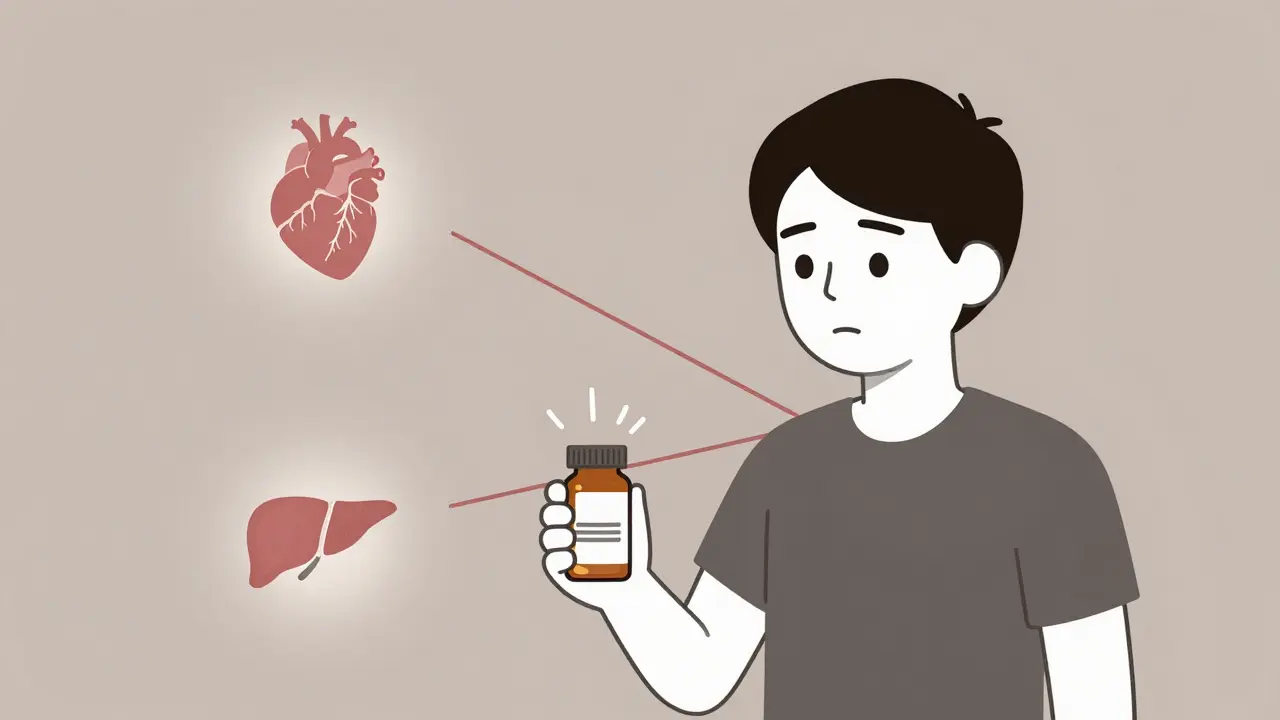
Most people think if it’s natural, it’s safe. That’s a dangerous assumption when you’re taking herbal remedies or supplements alongside prescription meds. You might be popping turmeric for joint pain, garlic pills for heart health, or St. John’s wort for low mood - and never mentioning it to your doctor. But here’s the hard truth: supplements aren’t harmless snacks. They’re active substances that can interfere with your medications, worsen conditions, or even cause hospitalization.
What You’re Not Telling Your Doctor Could Be Hurting You
A 2023 study found that only about one in three people tell their doctor they’re using herbal supplements or vitamins. That’s shocking when you consider how common they are. Nearly half of U.S. adults take at least one supplement. Among people with chronic illnesses - like high blood pressure, diabetes, or heart disease - the numbers are even higher. And yet, most doctors never ask. Why? Because patients assume their doctor doesn’t care. Or worse - they think their doctor will judge them. One patient on Reddit shared how she took garlic pills for years to lower cholesterol. She never mentioned it until she bled excessively during a minor surgery. Her surgeon found out only because he noticed her blood wasn’t clotting right. Turns out, garlic thins the blood. Same as warfarin. Combine them? Risk of internal bleeding goes way up. St. John’s wort is another silent danger. It’s marketed as a natural antidepressant. But it can make birth control fail, knock out the effect of blood thinners like rivaroxaban, and reduce how well antidepressants like SSRIs work. In one case, a woman taking both St. John’s wort and sertraline slipped into a serotonin storm - a life-threatening reaction. She didn’t tell her psychiatrist about the supplement because she thought it was "just a tea."Doctors Don’t Ask - But They Should
The problem isn’t just patients hiding stuff. It’s that doctors aren’t trained to ask. A 2021 survey found only 27% of physicians felt confident discussing supplements. Most medical schools still don’t teach this. So when you walk in for your annual checkup, your doctor might ask about your blood pressure, your sleep, your smoking habit - but rarely about your vitamin D, your fish oil, or your ginger capsules. But here’s the flip side: when doctors do ask, disclosure jumps. One primary care clinic started using a simple five-question checklist during intake: "Are you taking any vitamins, herbs, or supplements? What are they? Why are you taking them? Have you noticed any changes since starting them? Have you told anyone else about them?" Within months, disclosure rates went from 33% to 78%. That’s not magic. That’s just asking. Your doctor isn’t trying to shut you down. They’re trying to keep you safe. Herbal remedies can be powerful. Turmeric contains curcumin - a compound that affects liver enzymes that process over 60% of all prescription drugs. If you’re on statins, antidepressants, or blood pressure meds, turmeric can make them too strong or too weak. Same with green tea extract - it can spike liver enzymes. And don’t even get started on kava or licorice root.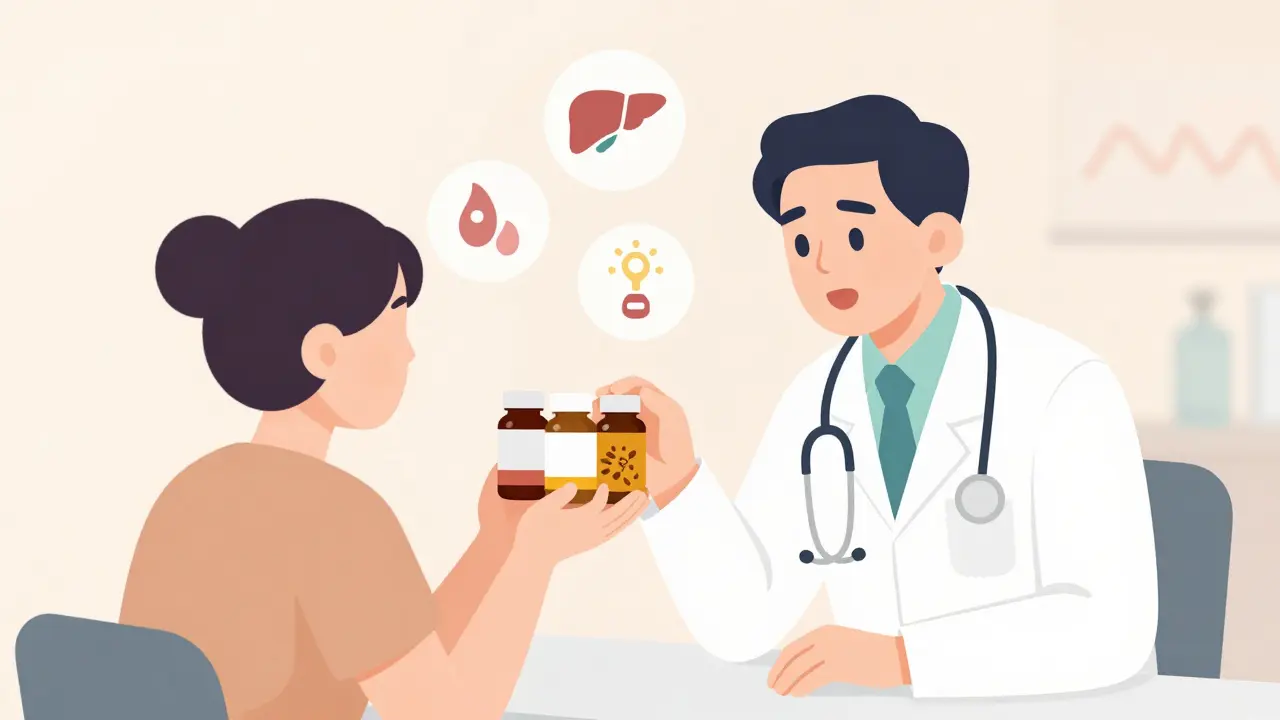
What Supplements Are Most Likely to Cause Problems?
Not all supplements are risky. But some are red flags - especially if you’re on other meds:- St. John’s wort: Reduces effectiveness of birth control, antidepressants, blood thinners, and HIV meds.
- Ginkgo biloba: Increases bleeding risk when taken with aspirin, warfarin, or NSAIDs.
- Garlic supplements: Can thin blood - dangerous before surgery or if you’re on anticoagulants.
- Green tea extract: Linked to liver damage, especially in high doses or with alcohol.
- Kava: Can cause severe liver injury. Banned in some countries.
- Calcium and iron supplements: Can block absorption of thyroid meds like levothyroxine if taken at the same time.
- Black cohosh: May interact with hormone therapies or liver-metabolized drugs.
How to Talk to Your Provider - Without Getting Judged
You don’t need to be embarrassed. Here’s how to bring it up in a way that works:- Bring the bottles. Don’t just say "I take turmeric." Show them the label. That way, they see the exact dose, other ingredients, and manufacturer.
- Use simple language. Say: "I’ve been taking this for X reason. I’m not sure if it’s safe with my other meds. Can you check?"
- Ask directly. "Do any of these interact with my prescriptions?" or "Is there a risk I don’t know about?"
- Don’t assume they know. Most don’t. That’s not your fault. It’s the system’s flaw.
- Write it down. Keep a list: supplement name, dose, why you take it, how long you’ve been taking it. Bring it to every appointment.

What Happens When You Do Disclose?
The good news? When you tell your provider, they usually help. A 2022 survey of 1,200 supplement users found that 78% of those who disclosed got useful advice. 63% said it made them trust their doctor more. That’s huge. It’s not about control. It’s about collaboration. Your doctor isn’t there to shut down your wellness routine. They’re there to make sure it doesn’t backfire. They can tell you:- Which supplements are safe with your meds
- When to take them (e.g., calcium 4 hours apart from thyroid meds)
- Which ones to stop before surgery
- Whether a product is likely to be contaminated
- Alternative, evidence-backed options
The Bottom Line: It’s Not Optional
You wouldn’t hide a new prescription from your doctor. Why treat supplements differently? They’re medicine - just not regulated like pills you get at the pharmacy. The FDA doesn’t approve them before sale. Manufacturers don’t prove they’re safe with your other drugs. That’s on you. The next time you walk into your doctor’s office, don’t wait to be asked. Say it first: "I’m also taking [name of supplement]. I want to make sure it’s safe with what I’m on." That one sentence could prevent a hospital visit, a bad reaction, or worse. Your body doesn’t care if something is "natural." It only cares about the chemistry. And your doctor? They’re there to understand that chemistry - if you give them the full picture.Do I really need to tell my doctor about vitamins and herbal supplements?
Yes. Even if you think they’re harmless, supplements can interact with prescription drugs, affect lab results, or worsen conditions like high blood pressure or liver disease. Many patients assume "natural" means safe, but that’s not true. St. John’s wort, garlic, turmeric, and ginkgo can all interfere with medications in dangerous ways.
What if my doctor doesn’t ask about supplements?
Don’t wait for them to ask. Bring up supplements yourself. Say something like: "I’ve been taking [name] for [reason]. Is this safe with my other meds?" Most doctors aren’t trained to ask - but they’ll still help if you bring it up. Bringing the actual bottle helps them identify the exact product and dosage.
Are supplements regulated like prescription drugs?
No. Under U.S. law (DSHEA), supplement makers don’t need FDA approval before selling. The FDA can only act after a product causes harm. Labels must say "Not evaluated by the FDA," but many people miss that. That means ingredients can be wrong, contaminated, or even include hidden prescription drugs. Always choose brands tested by third parties like USP or ConsumerLab.
Can herbal remedies cause serious side effects?
Yes. Kava has caused liver failure. Green tea extract has led to acute liver injury. Black cohosh may affect hormone-sensitive conditions. And St. John’s wort can make birth control fail or reduce the effect of antidepressants. These aren’t rare cases - they’re documented in medical journals. The risk isn’t from the herb alone - it’s from combining it with other meds without knowing.
Should I stop taking supplements before surgery?
Often, yes. Many herbs - like garlic, ginkgo, ginger, and turmeric - thin the blood. Others, like valerian or kava, can interfere with anesthesia. Surgeons typically ask you to stop all supplements 1-2 weeks before surgery. But if you don’t tell them you’re taking them, they won’t know to ask. Always disclose everything, even if you think it’s "just a tea."
Is it okay to take supplements with my thyroid medication?
Some can interfere. Calcium, iron, and soy supplements can block absorption of levothyroxine if taken at the same time. The best practice is to take thyroid meds on an empty stomach, at least 4 hours before or after any supplement. Always check with your doctor - even if you’ve been taking them together for years.


8 Comments
Everyone thinks 'natural' means safe, but have you ever checked the label on that 'pure' ashwagandha? I saw one with lead levels higher than a child's toy. Your body doesn't care if it's from a tree or a lab-it just reacts to the chemistry. Stop being lazy and educate yourself before you poison yourself.
Y’all need to stop acting like your doctor is gonna judge you for taking supplements. I bring my whole cabinet to every appointment-bottles, receipts, the whole shebang 😊 My PCP actually thanked me last time and switched my statin because of the turmeric I was taking. You’re not a burden-you’re a partner in your own care. 🙌
I used to skip telling my doc about my fish oil because I thought it was 'just a pill.' Then I got a nosebleed that wouldn’t stop after a cold. Turned out the oil was thinning my blood. Now I list everything on my phone notes and read it out loud at every visit. No shame. Just safety.
This is all a scam. Big Pharma doesn’t want you to know herbs work better. They’ve been suppressing research for decades. Your doctor won’t tell you the truth because they’re paid by the pill companies. That ‘FDA doesn’t regulate’ thing? That’s not a bug-it’s a cover-up.
Bro I took ginkgo for 3 years and never told my doctor… then I had a migraine that felt like my skull was splitting open. Turns out it was interacting with my blood pressure med. Now I just take melatonin and pretend I’m a normal human. 😅
Let us be clear: the notion that 'natural' equates to 'safe' is not merely incorrect-it is a dangerous fallacy rooted in postmodern pseudoscience. The pharmacokinetic interactions between curcumin and CYP3A4 substrates are well-documented in peer-reviewed literature. Your ignorance is not a virtue; it is a public health liability. Please, for the love of evidence-based medicine, consult a pharmacist before ingesting another botanical extract.
Why do people think doctors are omniscient? They’re not! They skipped the supplement module in med school because Big Pharma didn’t fund it! And now you’re dying quietly because you’re too embarrassed to say, 'I take ginger for nausea'? It’s not about trust-it’s about systemic negligence. You’re not the problem. The system is.
You’re all missing the point. The real issue isn’t supplements-it’s that the medical industrial complex has turned patients into passive consumers. You don’t need to 'tell your doctor'-you need to demand transparency. Demand third-party testing. Demand that your insurer cover herbal consultations. Stop begging for permission to be healthy. The system is rigged. Stop playing nice.
And for the love of god, if you’re taking St. John’s wort with SSRIs, you’re not 'self-medicating'-you’re playing Russian roulette with your serotonin levels. I’ve seen three people in ICU because of it. One was 19. She thought it was 'just tea.' It wasn’t.
Stop romanticizing 'natural.' Nature gave us arsenic, botulism, and poison ivy. Just because it grows in the ground doesn’t mean it’s your friend.
Bring the bottle. Write it down. Say it out loud. Don’t wait for them to ask. They won’t. They’re too busy filling out EHR checkboxes to care about your turmeric.
And if you’re still reading this and haven’t told your doctor yet? You’re not just careless-you’re complicit. The next hospitalization won’t be a 'coincidence.' It’ll be your fault.