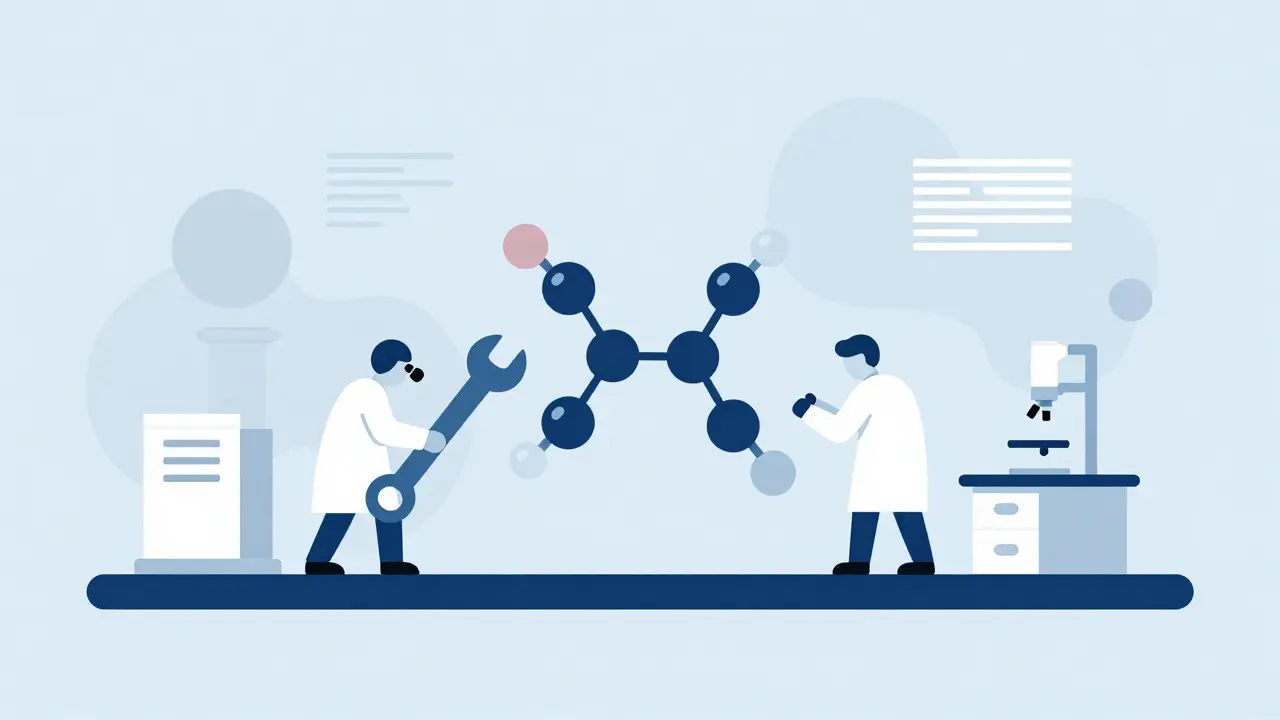
Imagine paying $4 for your cholesterol medication instead of $500. That isn't a typo; it is the reality for millions of patients who switch from brand-name drugs to lower-cost alternatives with identical active ingredients. The price gap between original medications and their copies is often shocking, typically ranging from 80% to 85% less. But why such a massive difference? It isn't because the generic version is weaker or less tested. Instead, the cost disparity stems from how we fund research, how long patents last, and how competition works in the pharmaceutical market.
When you buy a brand-new pill, you are paying for more than just the chemistry. You are covering decades of failed experiments, expensive laboratory work, and marketing campaigns that convince doctors to prescribe it. Once that exclusive period ends, other companies can step in. They don't need to reinvent the wheel. They just need to prove their version works the same way. This shift changes the economics entirely, turning a high-risk gamble into a low-risk production line.
The Hidden Cost of Innovation
To understand the savings, we first have to look at what makes brand-name drugs so expensive. Developing a new medication is one of the most difficult engineering challenges in modern science. According to data from the Tufts Center for the Study of Drug Development, the average cost to bring a single new drug to market is approximately $2.6 billion. That figure includes everything from early lab research to final regulatory approval.
This process takes 8 to 12 years. During this time, pharmaceutical companies face significant financial risk. For every drug that succeeds, many others fail in clinical trials. Companies must recover these losses during their period of market exclusivity. This exclusivity is protected by patents, which typically grant the inventor 20 years of monopoly rights from the date of filing. During these two decades, no one else can legally sell the exact same chemical formula. This allows the original maker to set higher prices to recoup their investment and generate profit.
However, not all costs are equal. A large portion of that $2.6 billion goes toward proving safety and efficacy in humans. Clinical trials involve thousands of participants, strict monitoring, and data analysis over several years. These trials constitute roughly 70% of total development costs, as estimated by the Congressional Budget Office. Once the patent expires, this specific hurdle disappears for subsequent manufacturers.
How Generic Approval Works Differently
Generic drugs are medications that contain the same active ingredient, strength, dosage form, and route of administration as the brand-name product. The key difference lies in the approval pathway. Instead of repeating the entire 10-year journey, generic manufacturers use a streamlined process called the Abbreviated New Drug Application (ANDA).
This process focuses on one critical question: Is the generic drug bioequivalent to the brand? Bioequivalence means the generic delivers the same amount of active ingredient into your bloodstream at the same speed as the original. To prove this, companies run smaller, faster studies comparing blood concentration levels. The U.S. Food and Drug Administration (FDA) requires these levels to fall within a specific range, usually between 80% and 125% of the brand's profile. If the numbers match, the drug is approved.
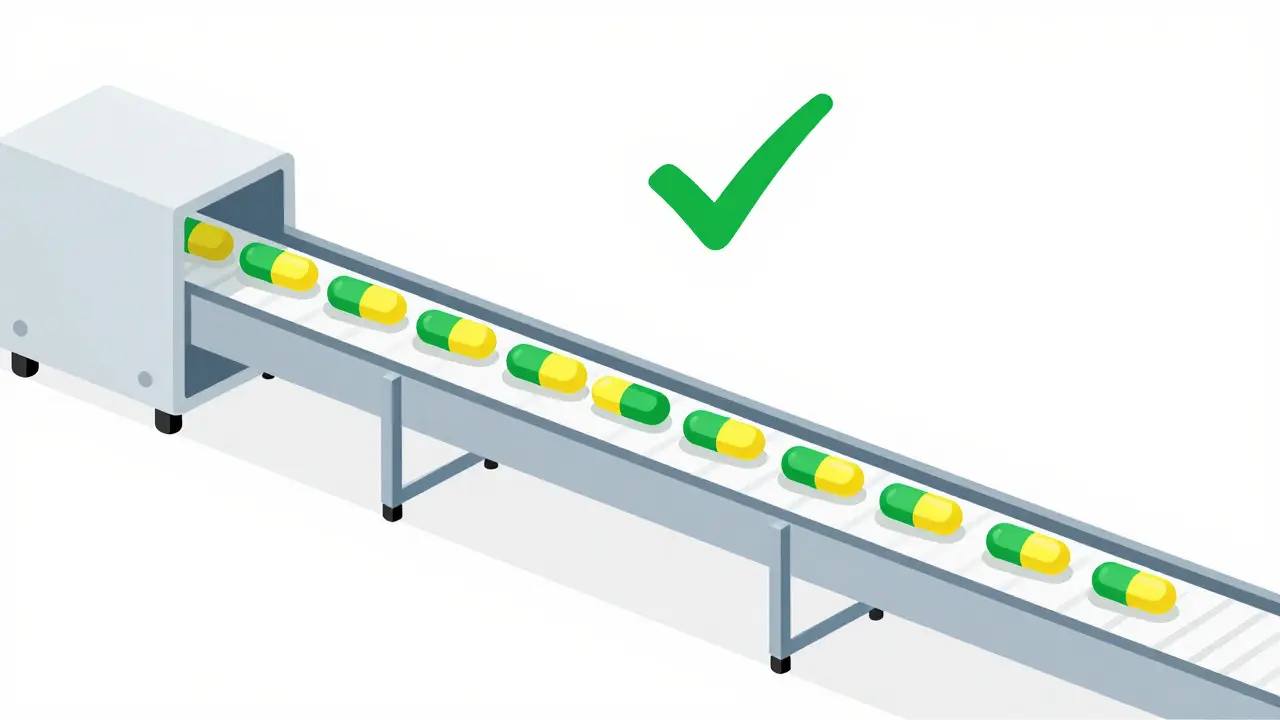
This shortcut saves time and money. While brand development takes over a decade, generic development typically takes only 3 to 4 years from patent expiration to market entry. The actual review cycle by the FDA averages about 10 months. Because they skip the costly animal and human trials, generic manufacturers invest far less per drug. Estimates suggest the cost to develop a single generic version is between $1 million and $5 million, a tiny fraction of the brand-name expense.
Competition Drives Prices Down
Low development costs are only half the story. The other half is competition. When a patent expires, it doesn't just open the door for one competitor; it opens it for many. On average, there are 14 different manufacturers producing each generic drug product. This intense competition creates a race to the bottom in terms of price.
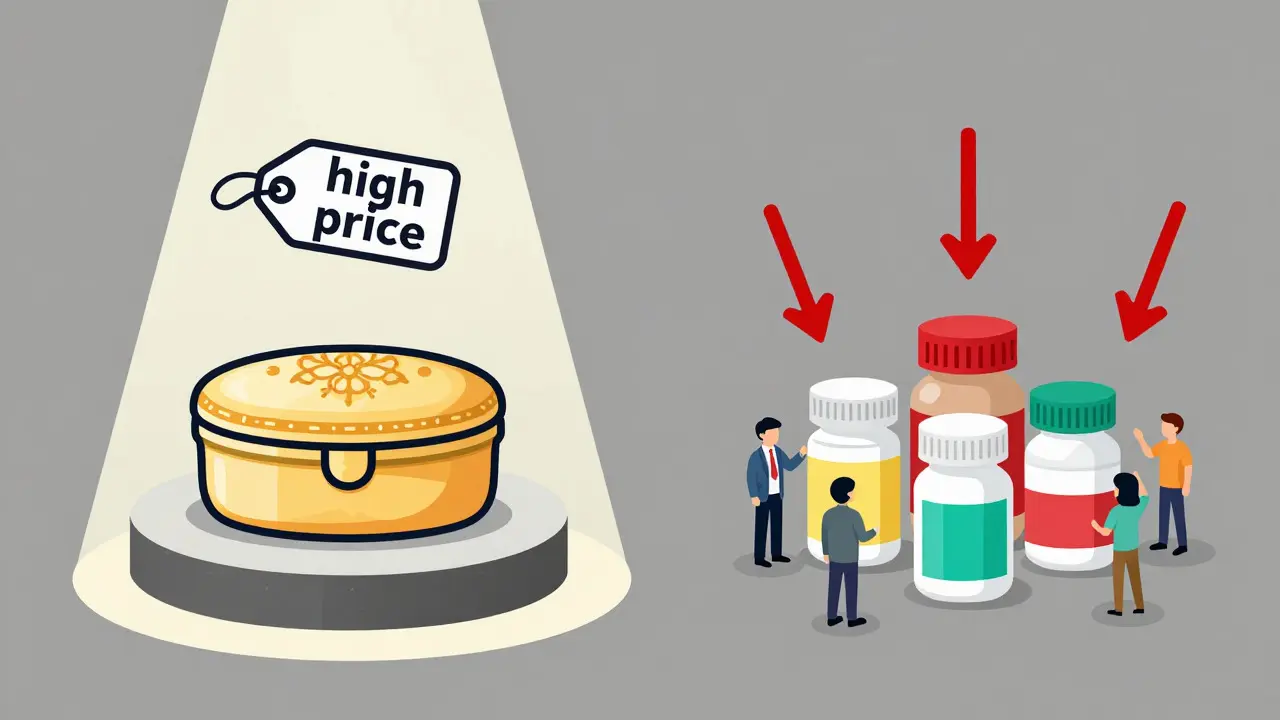
Brand-name drugs operate in a monopoly. There is only one seller, so they can keep prices high. Generics operate in an oligopoly or perfect competition market. If one company charges too much, another will undercut them. This dynamic leads to dramatic price drops immediately after launch. The Congressional Budget Office reported that generic competition typically reduces prices by 80% to 90% within the first year of market entry. As more companies enter, prices often drop even further.
| Feature | Brand-Name Drug | Generic Drug |
|---|---|---|
| Average Development Cost | $2.6 billion | $1-5 million |
| Time to Market | 8-12 years | 3-4 years |
| Clinical Trials Required | Full Phase I-III trials | Bioequivalence studies only |
| Market Competition | Monopoly (Patent Protected) | High (Avg. 14 manufacturers) |
| Typical Price Reduction | N/A | 80-90% |
Is Quality Really the Same?
If generics are so cheap, aren't they lower quality? This is the most common misconception. In reality, the standards for manufacturing are identical. Both brand and generic makers must follow Current Good Manufacturing Practices (CGMP). The FDA conducts approximately 12,000 inspections of manufacturing facilities worldwide every year to ensure compliance. Whether the pill is red or white, round or oval, it must meet the same potency and stability requirements.
The only differences allowed are in inactive ingredients, known as excipients. These include dyes, binders, and flavorings. Trademark laws prevent generics from looking exactly like the brand, so they might differ in color or shape. However, these changes do not affect how the drug works in your body. The active pharmaceutical ingredient-the part that actually treats your condition-is chemically identical.
Dr. Carolyn Tsourounis, a clinical pharmacy professor at UCSF, explains that the testing isn't less rigorous; it's just different. "It's not that the testing is less rigorous, but that it's different," she notes. Since the safety profile was already established by the brand-name developer, generics focus strictly on delivery and absorption. This targeted approach ensures efficacy without redundant spending.
Real-World Savings and Patient Impact
The theoretical savings translate into real cash in your pocket. Tebra’s 2023 survey of 1,000 Americans found that generic medications cost approximately 79% less than their brand counterparts on average. Consider atorvastatin, widely known by its brand name Lipitor. The brand version can cost around $500 per month, while the generic version is available for about $4. Similarly, omeprazole (Prilosec) drops from $300 to $6 per month when switched to the generic equivalent.
These savings add up quickly. For chronic conditions requiring daily medication, the difference can be hundreds of dollars per month. RxOutreach reported that patients switching to generics saved an average of $317 per medication monthly. On a national scale, the impact is massive. Generic drugs account for 90% of prescriptions filled in the U.S., yet they represent only 25% of total prescription costs. Without generics, the healthcare system would spend significantly more, potentially making essential treatments unaffordable for many families.
Insurance plans reflect this value. Most commercial health insurance features three-tier formularies. Generics sit in Tier 1, with copays ranging from $0 to $15. Brand-name drugs usually fall into Tier 2, with copays of $25 to $50. Specialty drugs, which are often complex biologics, land in Tier 3 with coinsurance rates of 25% to 33%. Choosing a generic when available keeps your out-of-pocket costs minimal.
Navigating the Switch: Practical Tips
While the economics favor generics, the transition can feel unsettling. Your pill might look different, taste different, or come in a different quantity. Here is how to handle the switch smoothly:
- Check with your pharmacist: Pharmacists are experts in therapeutic equivalence. If you notice a change in symptoms after a switch, tell them immediately. They can verify if the specific generic manufacturer is known for consistency in your drug class.
- Watch for Narrow Therapeutic Index (NTI) drugs: Some medications, like warfarin or levothyroxine, require precise dosing. For these, some doctors prefer staying with a single manufacturer to avoid fluctuations. Ask your provider if your medication falls into this category.
- Read the label: The active ingredient name should be the same. If the brand is 'Lipitor,' the generic label will say 'atorvastatin.' Knowing the generic name helps you identify the correct medication regardless of the packaging.
- Understand auto-substitution: In 49 U.S. states, pharmacists are permitted to automatically substitute a generic for a brand-name drug if it is on the formulary and available. You don't always need to ask; it happens by default unless you specify otherwise.
Despite the benefits, trust remains an issue. A 2023 survey showed that while 84% of people acknowledge generics are effective, 62% still trust brand-name drugs more. This skepticism often comes from limited exposure to pharmacology details. However, data from the American Medical Association confirms that generic substitution is appropriate for the vast majority of medications. The FDA maintains that all approved generics meet identical safety and efficacy standards.
As the pharmaceutical landscape evolves, the role of generics becomes even more critical. With 150 brand-name drugs losing patent protection in recent years, combined annual sales of $157 billion are shifting toward lower-cost options. The FDA continues to streamline processes through initiatives like GDUFA III, aiming to reduce backlogs and accelerate approvals. For patients, this means more choices and deeper discounts. Understanding why generics cost less empowers you to make informed decisions, ensuring you get the best care without breaking the bank.
Are generic drugs really the same as brand-name drugs?
Yes, in terms of effectiveness. They contain the same active ingredient, strength, and dosage form. The FDA requires them to be bioequivalent, meaning they deliver the medicine to your body in the same way. Differences may exist in color, shape, or inactive ingredients, but these do not affect therapeutic outcomes.
Why do generic pills look different?
Trademark laws prevent generic manufacturers from using the exact same appearance as the brand-name drug to avoid confusion. Therefore, generics often have different colors, shapes, or logos. This visual difference does not indicate a difference in quality or potency.
Do I need my doctor's permission to switch to a generic?
Usually, no. In most cases, pharmacists can automatically substitute a generic if it is listed on your insurance formulary and available. However, for certain narrow therapeutic index drugs, your doctor may specify a particular brand or manufacturer to ensure consistent dosing. Always check with your healthcare provider if you have concerns.
How much cheaper are generics on average?
Generics typically cost 80% to 85% less than their brand-name counterparts. Some surveys indicate savings of up to 79% on average, with specific examples showing reductions from hundreds of dollars to just a few dollars per month.
What is bioequivalence?
Bioequivalence is a scientific measure used to determine if a generic drug is therapeutically equivalent to a brand-name drug. It involves comparing the rate and extent to which the active ingredient enters the bloodstream. If the generic falls within the FDA-approved range (usually 80-125%), it is considered bioequivalent.