
Most women don’t realize that preconception medication counseling isn’t just for those trying to get pregnant-it’s for anyone who could get pregnant. About half of all pregnancies in the U.S. are unplanned, and by the time a woman knows she’s pregnant, the baby’s organs have already started forming. That’s why adjusting medications before conception matters more than you think.
Why Timing Matters More Than You Realize
The first 3 to 8 weeks of pregnancy are when the baby’s heart, brain, spine, and limbs form. This is called the embryogenic period. Most women don’t even know they’re pregnant during this time. If you’re taking a medication that can harm a developing fetus, the damage can happen before you ever take a pregnancy test. The FDA’s Pregnancy and Lactation Labeling Rule (PLLR), introduced in 2015, replaced vague letter categories (A, B, C, D, X) with clear summaries of risks. Now, doctors can see exactly how a drug might affect a fetus-like how valproic acid, used for epilepsy, raises the risk of neural tube defects to 10-11%, compared to the normal 0.1-0.2% baseline.Medications That Need Immediate Review
Some drugs are known to cause serious birth defects. If you’re on any of these, switching before pregnancy can prevent lifelong harm:- Valproic acid (for epilepsy or bipolar disorder): Linked to 10-11% risk of neural tube defects. Switching to lamotrigine before conception cuts that risk to under 3%.
- ACE inhibitors (for high blood pressure): Can cause kidney failure, low amniotic fluid, and even death in the fetus after the first trimester. Methyldopa or labetalol are safer alternatives.
- Warfarin (blood thinner): Causes fetal warfarin syndrome, which includes facial deformities and bone problems. Low-dose heparin is the standard replacement.
- Isotretinoin (for acne): One of the most dangerous-up to 35% of babies exposed develop major malformations. Must be stopped at least one month before trying to conceive.
- Methotrexate (for autoimmune diseases like rheumatoid arthritis): Causes miscarriage in 15-25% of cases. Requires a 3-month washout period before conception.
These aren’t rare cases. According to the Slone Epidemiology Center, 70% of pregnant women take at least one medication in the first trimester. Many of them didn’t know it could be risky.
How Preconception Counseling Lowers Birth Defects
A 2021 JAMA study of over 12,700 women found that those who got preconception counseling had 37% fewer major birth defects. The biggest drops? Neural tube defects dropped 42%, and heart defects dropped 33%. That’s not luck-it’s because doctors had time to switch medications safely. For example, a woman on valproic acid might start taking lamotrigine six months before trying to conceive. Her neurologist and OB-GYN coordinate the switch, monitor blood levels, and add high-dose folic acid (4 mg daily) to further reduce neural tube defect risk. That kind of planning doesn’t happen in a rushed prenatal visit.
Why Most Women Never Get This Talk
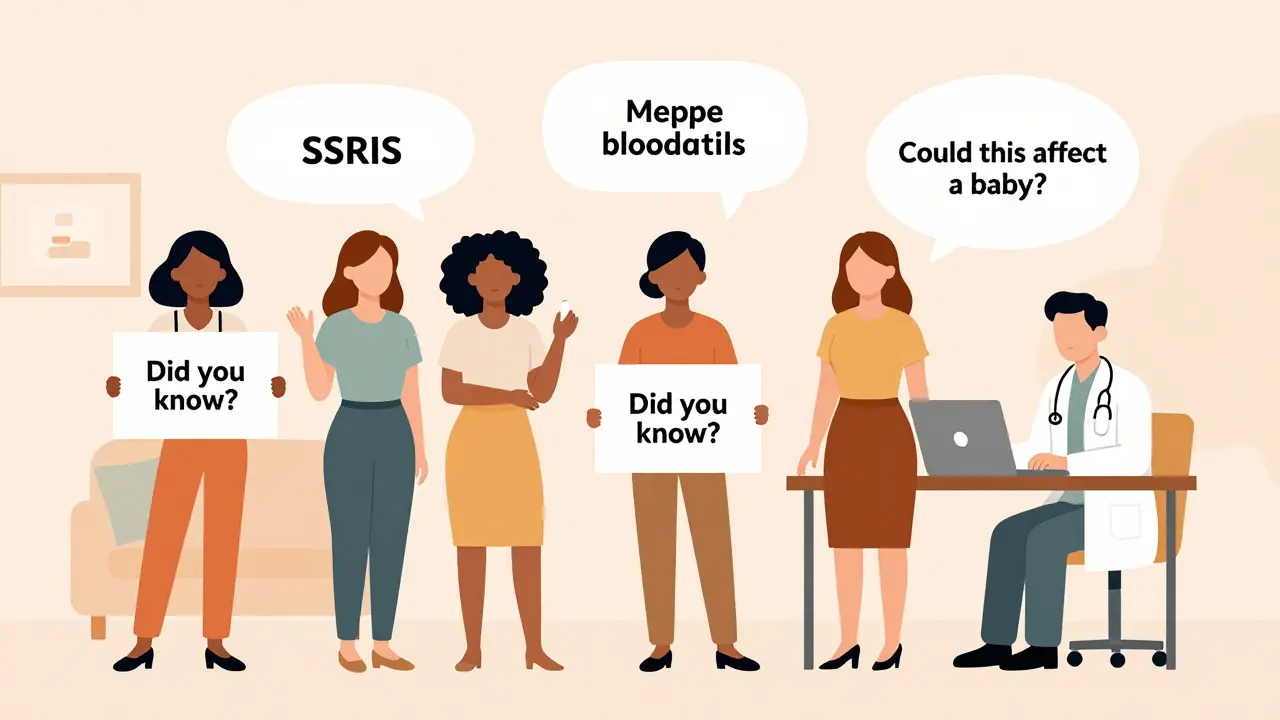
Only 23.7% of reproductive-aged women receive any kind of preconception care, according to the 2022 National Ambulatory Medical Care Survey. Why? Because it’s not built into the system. Primary care doctors often don’t ask about pregnancy plans. Neurologists, rheumatologists, and psychiatrists may not know which medications are safe in early pregnancy. A 2023 survey in the Journal of General Internal Medicine found that only 41% of primary care physicians routinely check for teratogenic risks. Patients report the same thing. On Reddit’s r/TwoXChromosomes, 68% of women said they’d never been counseled-even though they were on medications like SSRIs, blood pressure pills, or seizure drugs. One woman wrote: “My PCP said it wasn’t their job. My neurologist said I needed an OB referral first. I was stuck.”What a Real Preconception Counseling Session Looks Like
It’s not a one-time chat. It’s a process:- Start with the question: “Would you like to become pregnant in the next year?” This simple line, part of the One Key Question Initiative, opens the door without assuming pregnancy plans.
- Review every medication: Prescription, over-the-counter, supplements, herbal products-even caffeine and nicotine. The CDC recommends this for everyone, not just those trying to conceive.
- Use reliable tools: TERIS (Teratogen Information System) or MotherToBaby’s evidence-based databases give real risk scores, not vague warnings.
- Plan transitions: Some drugs need 3 months to clear (like methotrexate). Others need just one cycle (like ACE inhibitors). Timing matters.
- Document everything: Use ICD-10 code Z31.69 for preconception counseling. This isn’t just paperwork-it helps track outcomes and get insurance coverage.
One woman on BabyCenter described her experience: “My MFM specialist made a 6-month plan. Weekly neurology visits. Folic acid. Blood tests. I felt supported, not scared. My daughter was born healthy.”
Barriers Still Exist
Even with clear guidelines, access is uneven. Only 19% of Medicaid patients get preconception counseling, compared to 41% of privately insured women. In rural areas, it’s just 12%-compared to 33% in cities. Another issue? Fear. Sixty-one percent of patients worry about stopping their meds. But untreated conditions carry their own risks. Uncontrolled epilepsy increases miscarriage risk. Severe depression can lead to poor prenatal care. The goal isn’t to stop all meds-it’s to find the safest option. For example, women with HIV need antiretrovirals to stay healthy and prevent transmission. But dolutegravir, while effective, has a small risk of neural tube defects (0.9% in the Tsepamo study). So providers now discuss alternatives like dolutegravir-only regimens or switch to safer options like raltegravir-before conception.What’s Changing for the Better
Technology is helping. Electronic health records with built-in alerts-like Epic’s Care Everywhere-reduce high-risk exposures by 29%. The CDC’s 2023 Preconception Care Quality Measures now include medication review as a core metric. New tools are coming. The University of Washington’s AI-powered PreConception Medication Advisor prototype correctly identified risk levels in 92% of cases. By 2026, experts predict 75% of women on chronic meds will get structured counseling-thanks to value-based care models that pay for prevention. Congress is also stepping in. The 2024 PRECONCEPTION Act proposes requiring insurance coverage for preconception counseling. If passed, it would make this care standard, not optional.What You Can Do Now
If you’re a woman of childbearing age and take any medication regularly:- Ask your doctor: “Could this affect a baby if I got pregnant tomorrow?”
- Bring a list of everything you take-even vitamins and supplements.
- Don’t stop meds without talking to your provider-some risks are worse than the drugs.
- If you’re not planning pregnancy but aren’t using birth control, still ask. Half of pregnancies are unplanned. Being prepared saves lives.
Preconception medication counseling isn’t about scaring you. It’s about giving you control. You deserve to know what’s in your body-and how it might affect the next life you create.
Is preconception counseling only for women who want to get pregnant?
No. Since about half of all pregnancies in the U.S. are unplanned, preconception counseling is recommended for all reproductive-aged women-regardless of pregnancy plans. The goal is to be prepared in case pregnancy happens, not to assume it will.
Can I just wait until I’m pregnant to talk about my meds?
Waiting until you’re pregnant means you might already be exposing the baby to risks. Major organs form in the first 3-8 weeks of pregnancy, often before a woman knows she’s pregnant. Adjusting medications before conception gives your body time to clear harmful drugs and start safer ones.
What if my doctor says my medication is safe during pregnancy?
Some medications are safe in the second and third trimesters but not during early development. For example, ACE inhibitors are fine after week 12 but dangerous before. Always ask: “Is this safe during the first 8 weeks?” and check the FDA’s PLLR summary or MotherToBaby’s data.
Do I need to stop all my meds if I’m thinking about pregnancy?
No. The goal is to switch to safer alternatives, not stop treatment. Untreated conditions like epilepsy, depression, or high blood pressure can be just as dangerous to the baby as some medications. Work with your care team to find the safest option.
How long before pregnancy should I start making changes?
It depends on the drug. Methotrexate needs 3 months to clear. ACE inhibitors can be switched in one menstrual cycle. Lamotrigine may need 3-6 months for dose adjustments due to changing metabolism. Always follow your provider’s timeline based on half-life and safety data.



12 Comments
So many women are caught off guard by this. I didn’t know my bipolar meds could be this risky until I read this post. My doc just said 'it's fine' and moved on. Now I’m switching to lamotrigine with my neurologist next month. Folic acid 4mg is already in my daily routine. Feels good to take control.
Preconception care shouldn’t be a luxury. It’s basic health literacy.
I’m 28, on zoloft, never thought about this. Now I’m scared. Like… what if I got pregnant tomorrow? 😱
Stop pretending this is about health. This is government overreach wrapped in medical jargon. Who gave doctors the right to tell women what meds to take before they even try to get pregnant? This is slippery slope stuff. Next they’ll be testing our hormones at the DMV.
My body, my choices. If I get pregnant while on my meds, that’s my business. Not yours. Not the FDA’s. Not some ‘counseling’ drone’s.
Really appreciate this breakdown. As a guy married to someone on lamotrigine, I had no idea how much planning goes into this. We started talking about it 8 months before we tried - switched her meds, got her on high-dose folate, cut caffeine. It felt weird at first, like we were overthinking it. Turns out, we were just being responsible.
Also, the part about Medicaid access? That’s a crisis. We need policy change, not just awareness.
lol so now we gotta get a permit to be pregnant? next they'll be charging a fee for ovulation
This is life-changing info. I’ve been on blood pressure meds for 5 years. Never once did my PCP ask if I might get pregnant. I felt so alone until I found this post.
Switched to labetalol last month. Took 3 visits. Felt like a superhero. My partner said I’ve been calmer since. Not just because of the meds - because I finally felt heard.
Anyone else here feel like this should be standard at every gyno visit? Like… a checklist? Please say yes.
They’re not telling you the whole truth. The real reason they push this? Big Pharma. They want you to switch to their newer drugs - which cost 10x more. The old ones? They’ve been used for decades. Safe. Cheap. Effective.
Who benefits? The insurance companies. The hospitals. The drug reps. Not you.
They call it 'counseling' - it’s a sales pitch. Wake up. Your body isn’t a lab rat for profit-driven guidelines.
It’s funny how we treat pregnancy like a medical emergency waiting to happen. But we don’t treat other bodily functions the same way. Why is fertility suddenly a liability to be managed? Why aren’t we asking why the system doesn’t support people who *do* want kids?
Maybe the problem isn’t that women aren’t getting counseling…
Maybe it’s that the system doesn’t care if they become mothers.
As someone who’s been on methotrexate for RA for 8 years - this is the first time I’ve seen a clear timeline. 3-month washout? Yeah. I’ve been told 'just stop' but never *how*. This helped.
Also - folic acid 4mg? I’ve been taking 1mg. That’s a game-changer. Gonna call my rheum tomorrow. Thanks for the specifics.
why do we even need this? just dont get pregnant if ur on meds. duh
How quaint. In India, we don’t have this luxury. Women take whatever they’re prescribed. No counseling. No labs. No 'one key question.'
And yet - our birth defect rates are lower than yours. Coincidence? I think not.
You over-medicate. Over-counsel. Overthink. We just live. Maybe that’s the real solution.
Key point: Preconception counseling isn’t about pregnancy intent. It’s about reproductive autonomy.
It’s the difference between being caught off-guard… and being prepared.
Think of it like a seatbelt. You don’t wear it because you plan to crash. You wear it because crashes happen. Period.
Medication safety? Same logic.