
For many people with asthma, taking a common pain reliever like ibuprofen or aspirin isn't just risky-it can be dangerous. This isn't a rare edge case. About 7% of adults with asthma have a condition called NSAID-Exacerbated Respiratory Disease (NERD), also known as Aspirin-Exacerbated Respiratory Disease (AERD). If you have asthma and have ever had a sudden worsening of breathing, nasal congestion, or wheezing after taking an over-the-counter painkiller, you might be one of them.
What Happens When NSAIDs Trigger Asthma
NSAIDs like aspirin, ibuprofen, and naproxen work by blocking enzymes called COX-1 and COX-2. In most people, that’s fine. But for those with NERD, blocking COX-1 sets off a chain reaction inside the body. Normally, COX-1 helps produce prostaglandins-chemicals that keep airways open and reduce inflammation. When NSAIDs shut this down, the body shifts to another pathway, flooding the lungs with leukotrienes. These are powerful inflammatory chemicals that tighten airways, cause mucus buildup, and trigger swelling in the nose and sinuses.This isn’t a slow process. Symptoms usually hit within 30 minutes to 3 hours after taking the drug. People report sudden nasal blockage, runny nose, chest tightness, wheezing, and sometimes full-blown asthma attacks that need emergency care. Some patients describe it as feeling like they’re suffocating, even if their asthma was well-controlled before.
Who’s Most at Risk?
NERD doesn’t show up randomly. It follows a clear pattern. Most people who develop it are:- Between 30 and 40 years old
- Female
- Have chronic sinus problems with nasal polyps
- Have poorly controlled asthma
Up to 50% of people with nasal polyps and chronic sinusitis also have NERD. That’s not a coincidence-it’s a signal. If you’ve had nasal polyps for years and recently started having worse asthma, especially after taking painkillers, this could be why.
Children rarely develop NERD. In fact, it’s almost unheard of before age 20. But in adults, the risk grows with age. Studies show that people with long-term asthma, especially those who smoke or have a family history of allergies, are more likely to develop this sensitivity.
It’s Not Just Pain Relievers
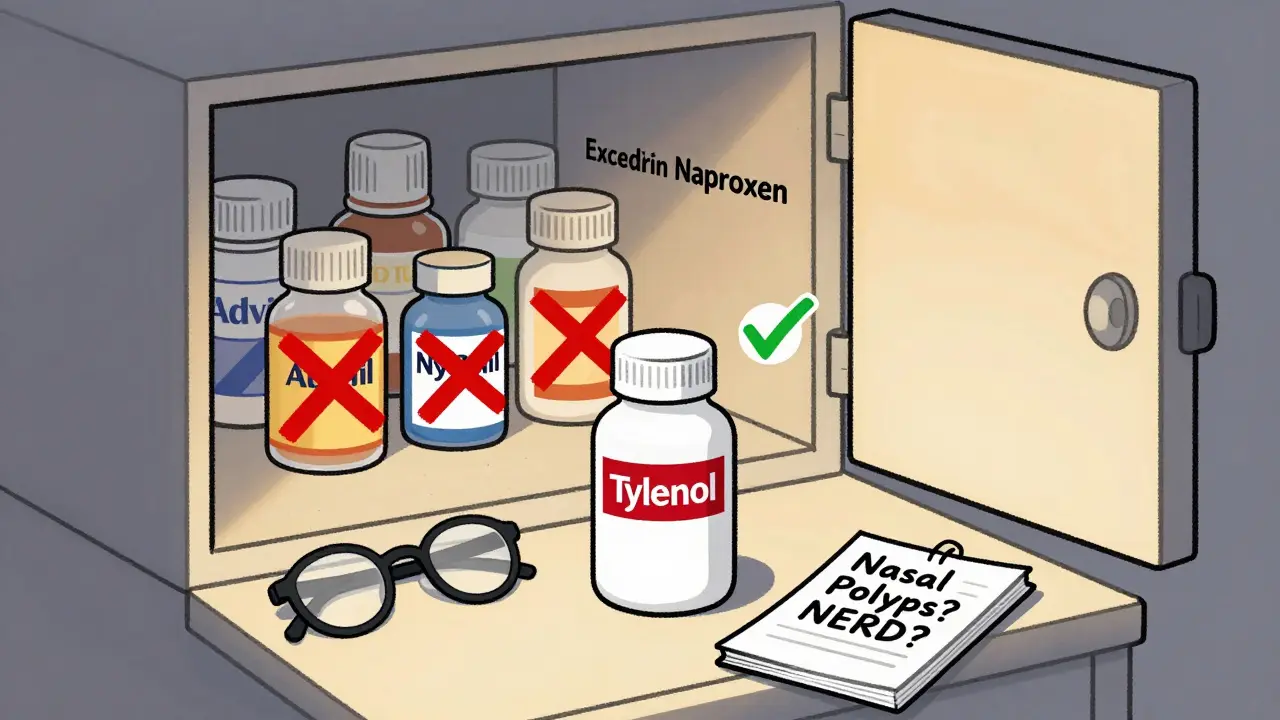
Many patients don’t realize how many products contain NSAIDs. You might think you’re safe if you only take aspirin for headaches. But NSAIDs hide in cold medicines, flu remedies, menstrual pain pills, and even some topical creams. A single tablet of Excedrin contains aspirin. NyQuil? Contains acetaminophen and sometimes an NSAID. Even some arthritis gels have ibuprofen.One patient told her doctor she never took NSAIDs-until she looked at the labels on her medicine cabinet. She’d been taking three different OTC products daily for headaches and sinus pressure. All of them had ibuprofen or naproxen. Her asthma attacks stopped only after she cleared out every NSAID from her home.
What Medications Are Safe?
The good news? Not all pain relievers are off-limits. Acetaminophen (Tylenol) is generally safe for most NERD patients at doses under 1,000 mg. About 90-95% of people with this condition tolerate it well. But even acetaminophen can cause problems in high doses-so stick to the recommended amount.COX-2 inhibitors like celecoxib (Celebrex) are another option. Unlike traditional NSAIDs, they don’t strongly block COX-1, so they’re less likely to trigger reactions. Studies show they’re safe for most NERD patients, though they still require caution and doctor approval.
Some patients ask about natural remedies like turmeric or ginger. While these have anti-inflammatory properties, they haven’t been studied enough in NERD. Don’t assume they’re safe just because they’re “natural.”
Aspirin Desensitization: A Possible Solution
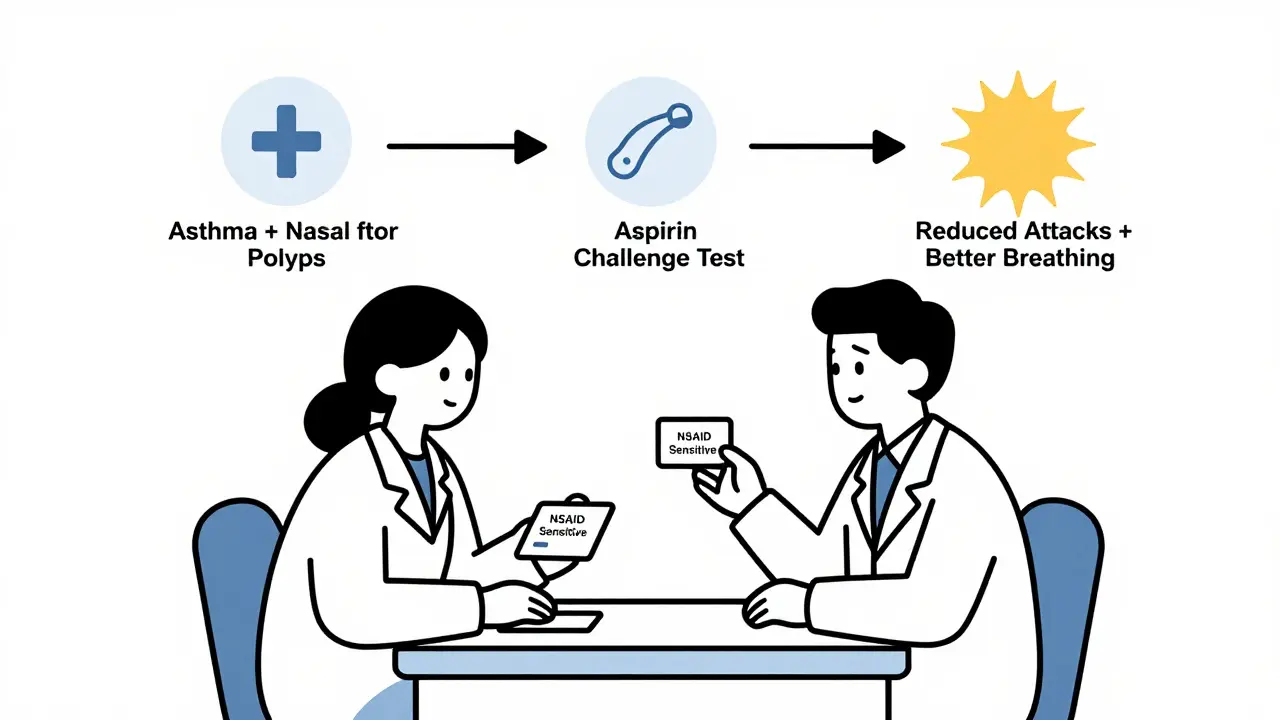
For some patients, there’s a path forward. Aspirin desensitization is a medical procedure done under strict supervision in a clinic or hospital. You’re given tiny, increasing doses of aspirin over several hours while doctors monitor your breathing. If you don’t react, you continue daily low-dose aspirin therapy.This isn’t for everyone. But for those who complete it, the results can be life-changing. Many report fewer asthma attacks, less need for nasal surgery, and improved breathing overall. Studies show it reduces nasal polyp recurrence by up to 70% and cuts emergency room visits in half.
It’s not a cure. You still have to take aspirin every day to keep the benefit. But for patients with severe, recurring symptoms, it’s one of the few treatments that actually targets the root cause.
What You Need to Do Right Now
If you have asthma and have ever had a reaction to painkillers, here’s what to do:- Stop taking all NSAIDs immediately-don’t wait for another reaction.
- Check every medication in your home. Look for these names on labels: aspirin, ibuprofen, naproxen, diclofenac, ketoprofen, indomethacin.
- Switch to acetaminophen (Tylenol) for pain and fever, but don’t exceed 1,000 mg per dose.
- Ask your doctor about whether you have nasal polyps or chronic sinusitis. If yes, ask specifically about NERD.
- Get tested. A supervised aspirin challenge test can confirm the diagnosis.
- Carry a medical alert card or app listing your NSAID sensitivity.
Many patients don’t realize their symptoms are linked to medication. They think they’re just getting worse asthma-or they blame allergies. But once they connect the dots, everything changes. One woman, 38, had been hospitalized five times in two years for asthma attacks. She blamed stress. Then she remembered she took Advil every time she had a headache. After stopping it, her attacks dropped to zero.
Why This Matters More Than You Think
Most doctors don’t routinely ask about NSAID use in asthma patients. But the evidence is clear: if you have asthma and nasal polyps, you’re at high risk. Screening isn’t optional-it’s essential. The World Allergy Organization recommends that all asthma patients with chronic sinusitis be evaluated for NERD.Ignoring this isn’t just risky-it’s preventable. With the right information and simple changes, you can avoid emergency rooms, hospital stays, and life-threatening reactions. You don’t need to live in fear of a headache. You just need to know what to avoid-and what to replace it with.
Can I take Tylenol if I have NSAID-sensitive asthma?
Yes, acetaminophen (Tylenol) is generally safe for most people with NSAID-sensitive asthma at doses up to 1,000 mg per use. About 90-95% of patients tolerate it without issue. However, some may still react at higher doses, so stick to the lowest effective amount and avoid long-term daily use unless approved by your doctor.
Is it safe to use ibuprofen if I only take it once in a while?
No. Even a single dose of ibuprofen, naproxen, or aspirin can trigger a severe reaction in people with NERD. Sensitivity isn’t about frequency-it’s about your body’s biological response. There’s no safe threshold for most patients. Avoid all NSAIDs completely unless you’ve been medically cleared.
Do I need to avoid all painkillers if I have asthma?
No. Only NSAIDs like aspirin, ibuprofen, and naproxen are dangerous for people with NERD. Acetaminophen and COX-2 inhibitors like celecoxib are safe alternatives for most patients. Always check labels and consult your doctor before switching medications.
Can children develop NSAID-sensitive asthma?
It’s extremely rare. NERD almost never develops before age 20. While some studies show a slight increase in asthma exacerbations in children using NSAIDs, this is not the same as true NERD. True aspirin/NSAID-triggered asthma with nasal polyps is an adult-onset condition.
How do I know if I have NERD?
If you have asthma and have had sudden breathing problems after taking NSAIDs, especially if you also have chronic nasal congestion or polyps, you likely have NERD. The only way to confirm it is through a supervised aspirin challenge test in a specialized allergy or respiratory clinic. Don’t rely on self-diagnosis-see a specialist.
Is aspirin desensitization worth trying?
For people with severe, persistent symptoms despite avoiding NSAIDs, yes. Aspirin desensitization can reduce asthma attacks, improve nasal breathing, and cut down on the need for surgery. It requires daily aspirin after the procedure and close medical monitoring, but many patients report dramatic improvements in quality of life.
Can I use topical NSAIDs like gels or creams?
Possibly, but with caution. Some patients tolerate topical NSAIDs without reaction, but others still experience systemic absorption that triggers symptoms. There’s no reliable way to predict who will react. Most specialists recommend avoiding all forms of NSAIDs, including creams, unless approved by a specialist after testing.



13 Comments
Been there. Took ibuprofen for a headache, woke up sounding like a foghorn. Never again. 🚫💊
Let me get this straight-you’re telling me my ‘just one Advil’ habit was basically playing Russian roulette with my lungs? 🤯 I’m 38, female, have polyps, and thought I was just ‘allergic to bad air.’ Turns out, I was allergic to my own medicine cabinet. Thanks for the gut-punch wake-up call.
Thank you for sharing this. It’s so important that we talk about this in plain terms. Many people suffer in silence because they don’t realize their symptoms are linked. Knowledge is power.
One thing I wish more doctors emphasized: it’s not just about painkillers. I didn’t know my sinus rinse solution had ibuprofen in it. Took me three ER trips to figure out. Always check the full ingredient list-even ‘natural’ stuff.
Bro, I took naproxen last week and thought I was having a panic attack 😳 turned out it was my lungs screaming. Now I carry a card in my wallet. If you have asthma + nasal stuff? Don’t risk it. Just say no. 🚫💊
You got this. Switching to Tylenol was the best decision I ever made. No more midnight asthma scares. You’re not broken-you just needed the right info. Keep going.
Interesting how COX-1 inhibition shifts the leukotriene balance. That’s the real key here. Most patients think it’s an allergy, but it’s a biochemical cascade. Also-topical NSAIDs? Still risky. Skin absorbs more than you think. I’ve seen cases where a gel caused full bronchospasm. Don’t assume safety just because it’s not oral.
...and yet, capitalism thrives on ignorance. You think Big Pharma doesn’t know this? They do. They profit from your ER visits. You think OTC labels are clear? They bury it in tiny print. You think doctors are trained in this? Most aren’t. You’re not sick-you’re exploited. The system wants you suffering. Wake up.
It’s funny how we treat pain like a moral failing. ‘Just take something.’ But what if the something is the problem? Maybe we need to rethink how we medicate pain-not just what we take. There’s dignity in discomfort if it means avoiding a biological trap.
So let me get this straight-you’re telling me my ‘natural’ turmeric capsules are somehow safer than Tylenol? Honey, if you’re taking turmeric for asthma and not seeing results… you’re not healing. You’re just wasting money. 🙃
Stop taking NSAIDs. Period. No exceptions. If you’re still reading this, you’re probably the one who’ll say ‘I’m fine with one pill.’ You’re not. You’re just lucky so far.
So you’re saying I need to avoid every single thing with ibuprofen? Even the lip balm? What’s next, a full-body scan before I sneeze? This is getting ridiculous. I’m not a lab rat.
As a respiratory specialist, I confirm: NERD is underdiagnosed by >80%. The diagnostic criteria are clear-asthma + nasal polyps + NSAID-triggered symptoms = high probability. Aspirin desensitization is underutilized due to resource constraints. Patients must advocate for referral to an immunology clinic. Delay = increased morbidity.