Medication Reformulation Impact Checker
How to Use This Tool
This tool helps you understand if a medication reformulation might be affecting your treatment. Based on your input, it provides personalized guidance on what to do next.
Your Results
Important Safety Note
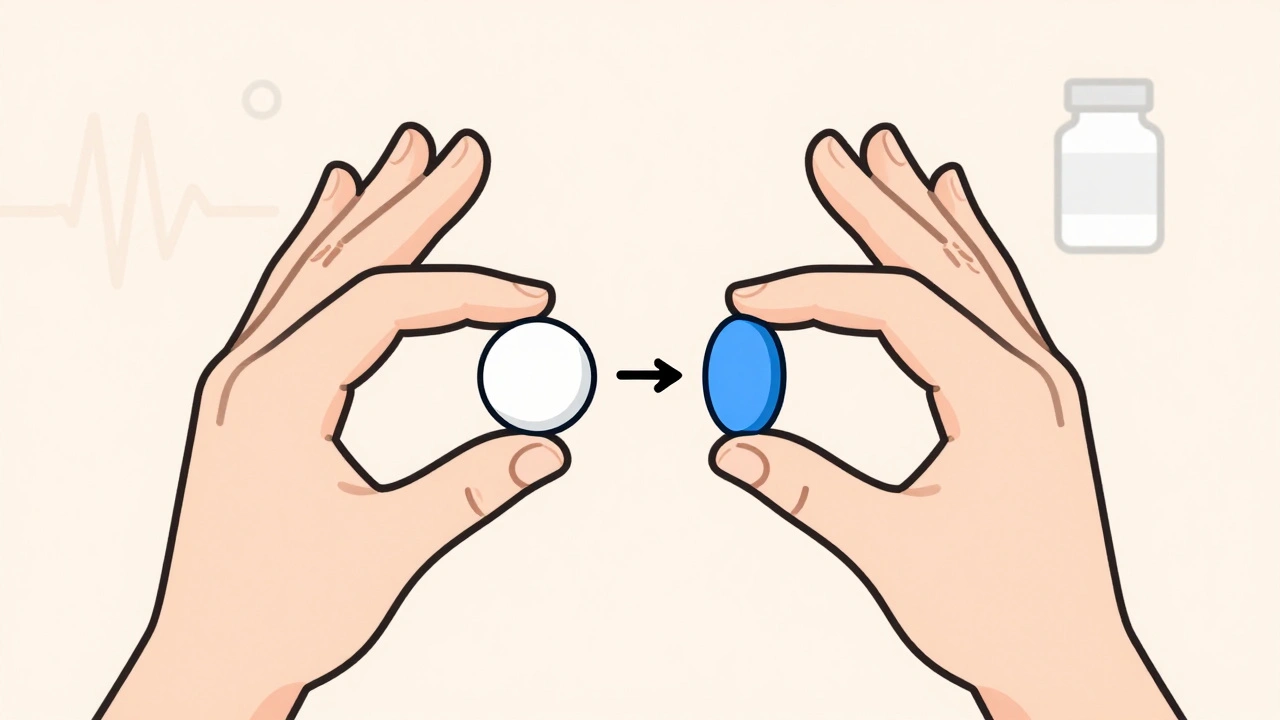
Have you ever picked up your prescription and noticed the pill looks different? Maybe it’s a different color, shape, or even comes as a liquid instead of a tablet. You might wonder: Is this the same medicine? The answer is usually yes - but the formula has been changed. This isn’t a mistake. It’s called medication reformulation, and it’s happening more than you think.
What Exactly Is a Medication Reformulation?
Medication reformulation means changing how a drug is made - without changing the active ingredient. The same medicine that treats your high blood pressure, depression, or diabetes might now come in a new form: a slow-release tablet, a dissolving strip, a patch, or even an inhaler. The active drug stays the same, but everything else around it - the fillers, the coating, how it dissolves in your body - can be redesigned. This isn’t just about making pills prettier. It’s about making them work better. For example, a drug that used to need three doses a day might now be reformulated to work for 24 hours with just one pill. That’s not just convenient - it means people are more likely to take it correctly. And when patients take their meds as prescribed, outcomes improve. Studies show that up to 50% of patients don’t stick to their original dosing schedules. Reformulation helps fix that.Why Do Companies Do This?
There are two big reasons: patient needs and business survival. First, companies listen to real-world use. After a drug has been on the market for years, doctors and patients notice problems. Maybe it causes stomach upset. Maybe it’s hard to swallow. Maybe it needs to be taken with food, and people keep forgetting. Reformulation lets manufacturers fix those issues without starting from scratch. Second, patents expire. When a drug’s patent runs out, generic versions flood the market. Prices drop. Profits vanish. Reformulation gives companies a legal way to extend their monopoly. By changing the delivery system - say, from a regular tablet to a controlled-release capsule - they can get a new patent on the new version. This isn’t always shady. Sometimes, the change is meaningful: a once-daily version of a drug that used to need three doses is a real improvement. Other times, it’s a tiny tweak - like changing the color of the pill - and it’s done purely to delay generics. Critics call this “evergreening.” Regulators are watching closely.How Is a Reformulated Drug Approved?
You might think changing a drug means starting over with years of clinical trials. It doesn’t. The FDA created a special path for this: the 505(b)(2) pathway. It lets companies use existing safety and effectiveness data from the original drug. They only need to prove their new version behaves the same way in the body - a test called bioequivalence. Bioequivalence means the reformulated drug releases the same amount of active ingredient into your bloodstream at the same rate as the original. If it’s a pill that dissolves too fast or too slow, it won’t work right. That’s why regulators require strict testing. For most reformulations, this means running small studies with healthy volunteers, not massive trials with thousands of patients. But if the change is big - say, switching from a pill to an injection - then full clinical trials might be needed. That’s rare. Most reformulations are minor tweaks: changing the coating, adding a flavor, or switching from a tablet to a chewable form.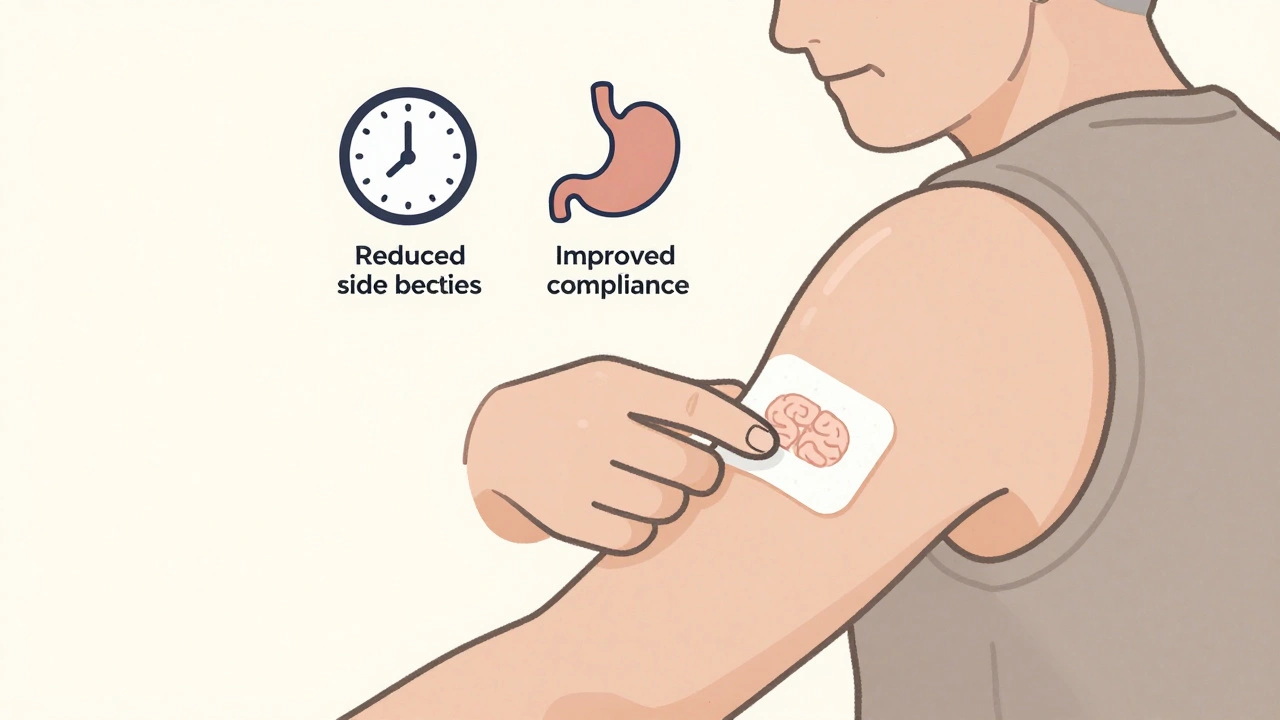
Real Examples You Might Recognize
You’ve probably taken a reformulated drug without knowing it. - Extended-release oxycodone: Originally a quick-release painkiller taken every 4-6 hours. Reformulated as OxyContin to last 12 hours - reducing dosing frequency and improving compliance. - Fluoxetine (Prozac): Originally a daily tablet. Later reformulated as a weekly capsule, helping patients with depression stick to treatment. - Testosterone: Once only available as injections. Now available as gels, patches, and nasal sprays - giving men more options and fewer side effects. In ophthalmology, eye drops for glaucoma have been reformulated to last longer, reducing the number of daily drops from four to one. That’s huge for elderly patients who struggle with hand-eye coordination.Benefits: Better for Patients, Better for Health Systems
The best reformulations don’t just make money - they make lives easier. - Improved compliance: One pill a day instead of three? People take it. Studies show adherence improves by 20-40% with simplified regimens. - Reduced side effects: Some formulations release the drug slowly, avoiding spikes that cause nausea or dizziness. - More delivery options: A child who can’t swallow pills might get the same medicine as a liquid. An elderly patient with arthritis might prefer a patch over an injection. - Lower hospital visits: When people take their meds correctly, fewer end up in the ER. The CDC estimates poor medication adherence costs the U.S. healthcare system $300 billion a year. Reformulation helps cut that.When Reformulation Goes Wrong
Not every change is an upgrade. Sometimes, switching to a reformulated version causes unexpected problems. A patient might notice their medication doesn’t seem to work as well. Or they develop new side effects. Why? Because even small changes in excipients (inactive ingredients) can affect how the drug is absorbed. A person with a sensitive stomach might react to a new filler. Someone with a gluten allergy might unknowingly ingest a new binding agent. There have been cases where reformulated versions were found to have different bioavailability - meaning the body absorbed less or more of the drug than expected. In 2019, a reformulated version of a generic epilepsy drug was linked to breakthrough seizures in some patients. It was later pulled and reformulated again. That’s why pharmacists are trained to alert you when your prescription changes. Always ask: Is this the same drug, just different? And if you feel different after the switch, tell your doctor.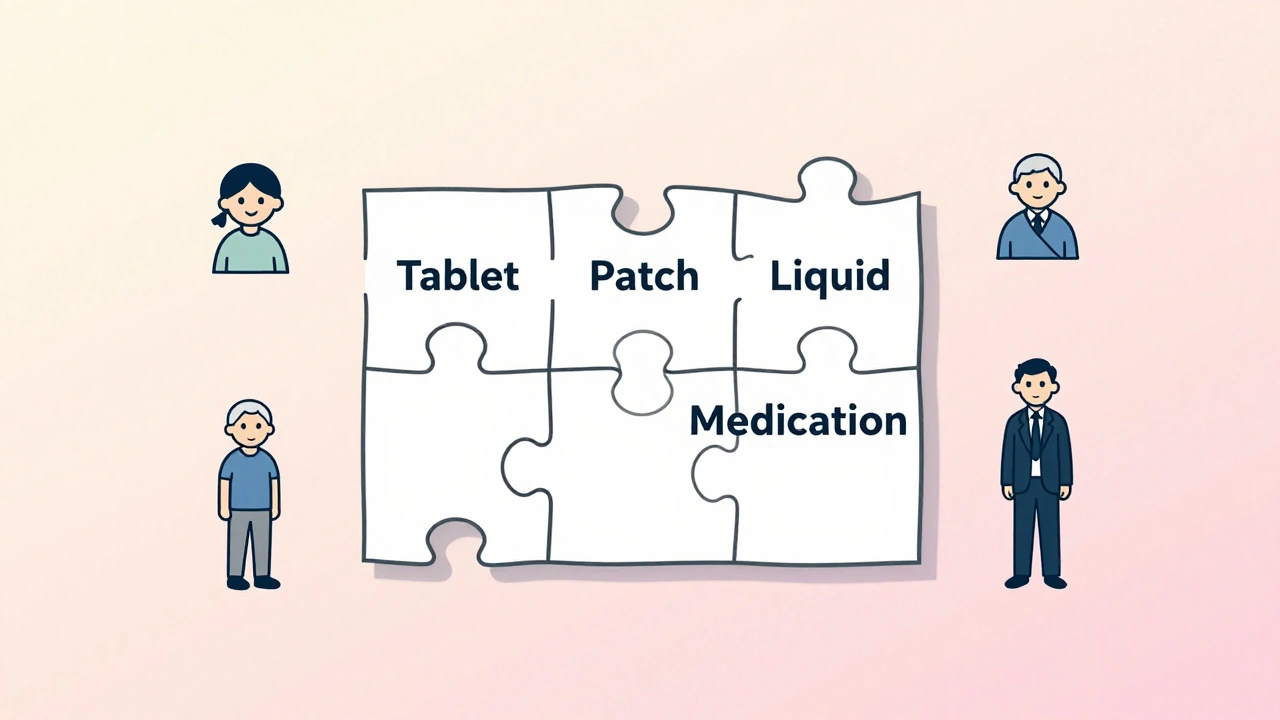
How Reformulation Compares to New Drug Development
Developing a brand-new drug costs about $2.6 billion and takes 10-15 years. Success rate? Around 10%. Reformulation? Costs $50-100 million. Takes 3-5 years. Success rate? About 30%. That’s why pharmaceutical companies invest heavily in reformulation. It’s smarter, faster, and safer. Especially for rare diseases - where there are few treatment options - reformulating an existing drug can be the only way to get help to patients quickly. In fact, reformulated drugs now make up about 27% of all new applications to the FDA. That’s nearly one in every four new drug approvals.What’s Next for Reformulation?
The future is getting more precise. New technologies are letting companies design drugs that release medicine only in certain parts of the gut - reducing side effects. Others are creating smart patches that adjust dosage based on body signals. Some are even developing digital pills with tiny sensors that tell your doctor when you took your medicine. Regulators are keeping up. In 2022, the FDA released new guidance to make approval faster for reformulations that improve patient experience - especially for children, the elderly, and people with chronic conditions. And the trend is clear: the days of one-size-fits-all pills are fading. The future is personalized - not in the genetic sense, but in the delivery sense. A drug that works for your neighbor might not work for you - and reformulation lets doctors choose the version that fits your life.What Should You Do?
If your medication changes - whether it’s a new brand, a different shape, or a new delivery method - don’t panic. But don’t ignore it either. - Ask your pharmacist: What changed? Is it bioequivalent? - Monitor how you feel: Do you have new side effects? Is it working as well? - Don’t assume it’s the same: Even small changes can matter. If you’re on a narrow-therapeutic-index drug (like warfarin, lithium, or thyroid meds), even a 10% difference in absorption can be dangerous. - Report changes: If something feels off, tell your doctor. Your feedback helps improve future reformulations. Medication reformulation isn’t about tricking patients. It’s about making treatments work better for real people - with real lives, real routines, and real challenges. When done right, it’s one of the most practical advances in modern medicine.Are reformulated drugs the same as generics?
No. Generics copy the original drug exactly - same active ingredient, same inactive ingredients, same form. Reformulated drugs change something - like how the drug is released, the shape, or the delivery method - while keeping the same active ingredient. They’re often branded and may have new patents.
Can reformulation make a drug less effective?
Rarely, but it can happen. If the new version doesn’t dissolve properly or uses different fillers that interfere with absorption, the drug might not work as well. This is why bioequivalence testing is required. If you notice your condition worsening after a switch, talk to your doctor immediately.
Why does my pill look different now?
It’s likely a reformulation - or a switch to a different generic manufacturer. Brand-name drugs change appearance when reformulated. Generic versions change because different companies make them. Always check with your pharmacist if you’re unsure.
Is reformulation just a money grab by drug companies?
Sometimes, yes - especially when the change is minor and meant only to delay generics. But many reformulations solve real problems: making pills easier to swallow, reducing side effects, or allowing once-daily dosing. The FDA approves only those that meet safety and effectiveness standards. The key is to focus on whether the change helps you - not just the company’s profits.
Should I avoid reformulated drugs?
No. Most reformulations are safe and improve your treatment. Avoid them only if you’ve had a bad reaction to a specific version, or if your doctor advises against it. For chronic conditions, reformulated versions often lead to better long-term outcomes because you’re more likely to take them.

14 Comments
lol so now my pill is blue instead of green and they call it a breakthrough? 🤡
i used to take my meds at 7am and 7pm but now it's just one pill at night and i haven't missed a day in 8 months. this stuff actually works if you let it. 🙌
It's important to distinguish between legitimate reformulations that improve adherence and those that are purely patent extensions. The 505(b)(2) pathway is a tool - it can be used ethically or exploited. The FDA’s bioequivalence standards are robust, but post-market surveillance is where real-world outcomes get measured. If you notice a change in how you feel after a switch, document it and bring it to your provider. Your experience matters.
another american pharma scam. we pay 10x more for the same medicine just because they changed the coating. why don't they just make it cheaper instead of playing games?
kinda reminds me of how we keep redesigning chairs but forget we're still sitting on them. the medicine’s the same, but now it’s ‘convenient’? maybe we just need to sit still longer and take the damn pill like adults. no magic here, just human habits.
you people are so naive. they changed the pill color and now you think it's a 'personalized delivery system'? wake up. this is corporate manipulation disguised as innovation.
my grandma took her new patch and had a rash. they told her it was 'bioequivalent'. guess what? her skin didn't get the memo. this isn't science. it's a gamble with people's lives.
another 'improvement' that makes me feel worse. i've been on the same med for 12 years. now it's 'once daily' but i'm dizzy all afternoon. thanks for the upgrade, pharma.
For patients on narrow therapeutic index drugs like warfarin or lithium, even small bioavailability shifts can be dangerous. That’s why pharmacists are trained to flag reformulations - and why you should always check the NDC number when you pick up your prescription. Don’t assume it’s the same just because the active ingredient matches. Your health isn’t a spreadsheet.
in india we get generic versions but sometimes the packaging changes and old folks get confused. one guy took his blood pressure med as if it was candy because it looked like a mint. reformulation helps but we need better education too. not everyone reads the label.
so basically they just made the pill look fancy so they can charge more? cool. next theyll make it glow in the dark and call it quantum medicine
i used to hate taking pills but now i’ve got this patch that i stick on like a tattoo and forget about it. i’m not saying it’s perfect but it’s the first time in 5 years i haven’t missed a dose. sometimes the little changes are the big wins.
my aunt in florida switched to the new liquid form of her thyroid med and now she’s not crashing after lunch anymore. she said it feels like her body finally got the memo. sometimes it’s not about the drug - it’s about how it gets to you
i’m just glad someone’s trying to make this stuff easier. my mom used to forget half her pills because she couldn’t swallow them. now she uses the dissolving strip and says it’s like a breath mint. small change, huge difference.