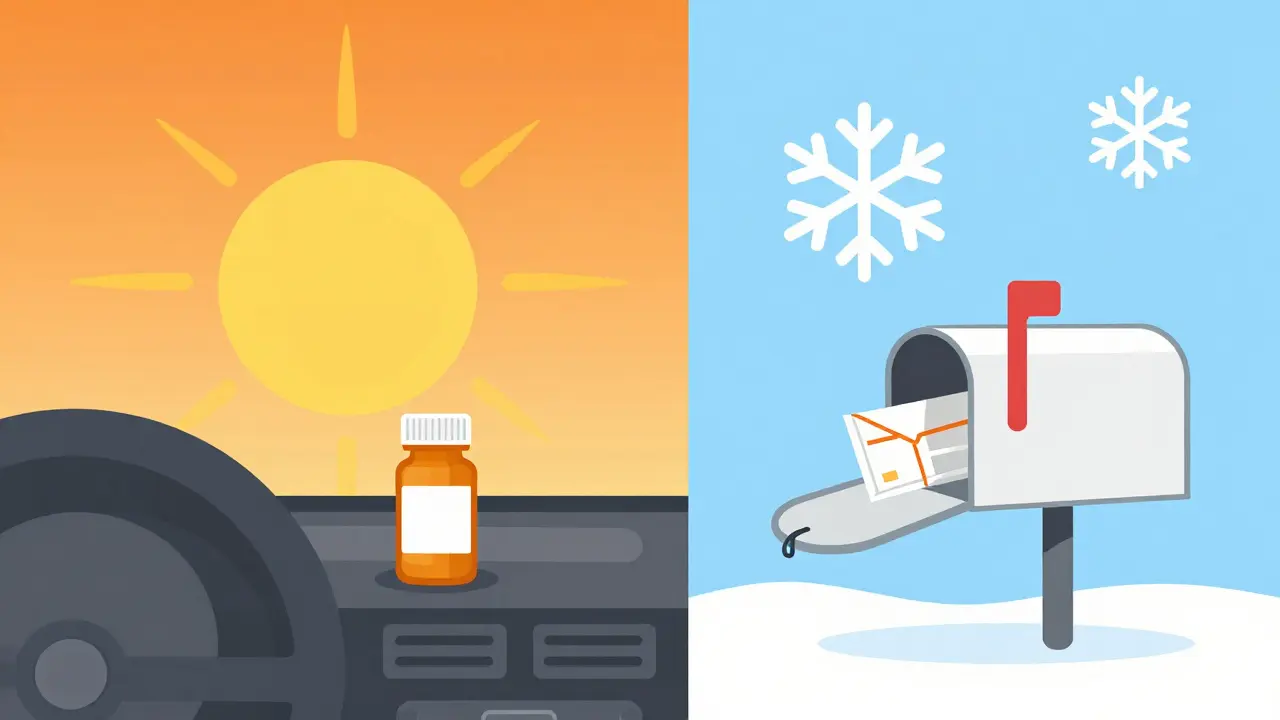
Imagine you’ve just picked up a new prescription for insulin or a biologic drug. You step out of the pharmacy into a scorching summer day or a freezing winter morning. You toss the bag into your car trunk, head home, and don’t think twice about it. But what if that short trip turned your life-saving medicine into useless chemicals? It’s not paranoia; it’s chemistry. Many modern medications are fragile. They rely on strict temperature ranges to work. If they get too hot or too cold, they degrade. Sometimes you can see it-like insulin turning cloudy. Other times, the damage is invisible, but the drug simply won’t protect you when you need it.
Transporting these temperature-sensitive pharmaceutical products isn't just about keeping them comfortable. It's about maintaining their molecular structure. Whether you are a patient traveling with daily meds or a logistics manager moving bulk shipments, understanding how heat and cold affect drugs is critical. This guide breaks down exactly how to keep your medications safe, no matter the weather outside.
Understanding Temperature Zones for Drugs
Not all medications have the same needs. Grouping them incorrectly is the first mistake people make. The industry generally splits drugs into three main categories based on their stability requirements.
| Category | Temperature Range | Examples | Risk of Excursion |
|---|---|---|---|
| Ambient | 15°C - 25°C (59°F - 77°F) | Most tablets, capsules, liquid antibiotics | Low, unless exposed to extreme heat (>30°C) for long periods |
| Refrigerated | 2°C - 8°C (36°F - 46°F) | Insulin, certain vaccines, biologic injections | High. Degrades rapidly above 25°C or below 0°C |
| Cryogenic/Frozen | Below -15°C (5°F) or ultra-cold (-70°C) | mRNA vaccines, blood products, specialized tissues | Critical. Thawing destroys efficacy immediately |
For most patients, the battle is between ambient and refrigerated. If your label says "store at room temperature," it usually means a cool, dry place away from direct sunlight. However, "room temperature" in a parked car during July is not the same as "room temperature" in a climate-controlled office. A car interior can reach 60°C (140°F) in minutes. That is enough to melt coatings on pills or denature proteins in injectables.
Surviving the Heat: Summer Transport Strategies
Heat is the silent killer of medication potency. According to data from pharmaceutical monitoring firms, insulin degrades at a rate of roughly 1.2% per hour when kept above 25°C (77°F). Some antibiotics become completely ineffective after just 30 minutes above 40°C (104°F). Here is how to fight back.
- Never leave meds in a car. Even for five minutes. The dashboard acts like a magnifying glass, focusing heat directly onto your bag. Keep temperature-sensitive drugs in the passenger cabin, ideally under the seat or in a shaded area, but never in the trunk where temperatures spike highest.
- Use passive cooling wisely. For short trips (under 8 hours), an insulated lunch bag with frozen gel packs works surprisingly well. Just ensure the gel pack doesn't touch the medication directly. Wrap the ice pack in a towel to prevent accidental freezing, which can also ruin some drugs.
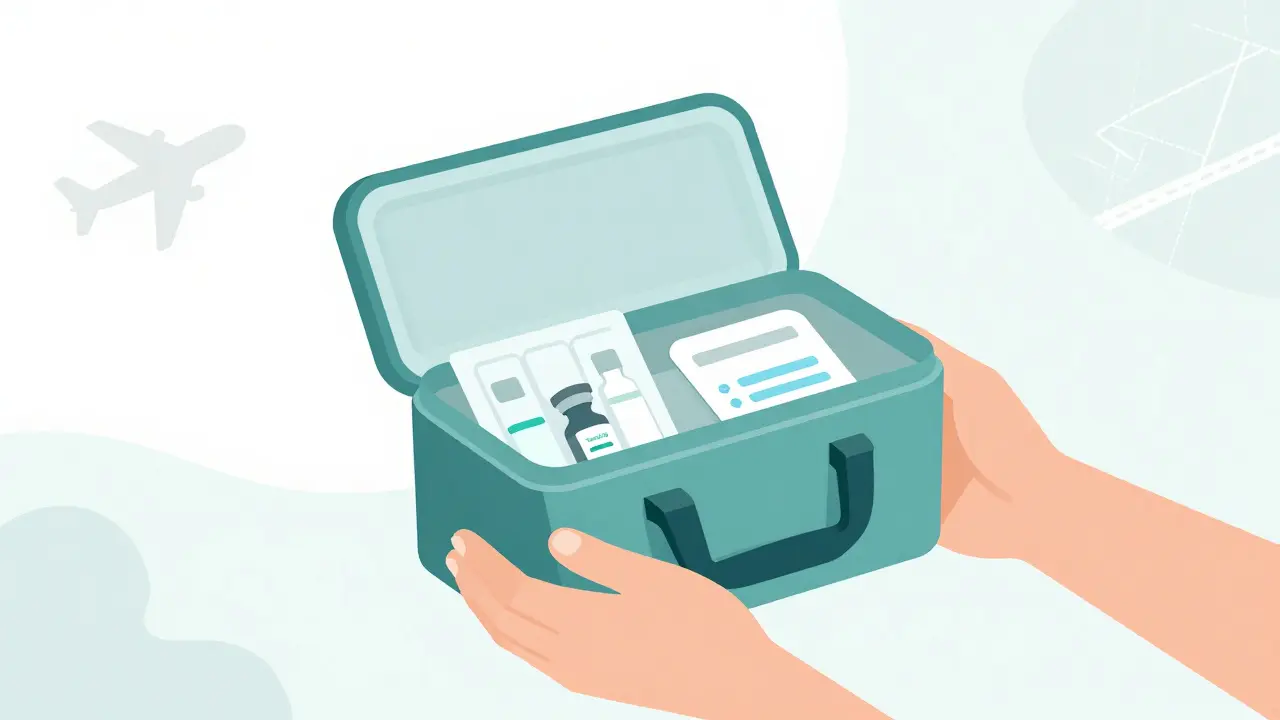
- Travel cases are worth the investment. Products like the TempAid 2.0 maintain 2°C-8°C for up to 48 hours. They are heavier than a plastic bag, but for a week-long vacation, they provide peace of mind. Look for cases rated for air travel if you are flying.
- Avoid direct sunlight. UV rays combined with heat accelerate chemical breakdown. Keep your medication bag inside another bag or jacket when walking outdoors.
If you are shipping medications commercially, the stakes are higher. The World Health Organization (WHO) mandates that transport containers undergo thermal mapping. This means testing the box in worst-case scenarios-like a border delay of 72 hours in 50°C heat-to ensure it holds temperature. For individuals, the rule is simpler: if you can hold the container comfortably without gloves, it might be getting too warm for your insulin.
Handling the Freeze: Winter Transport Protocols
We often worry more about heat, but cold is equally dangerous. Freezing causes water inside liquid medications to expand, breaking vials or altering the protein structure of biologics. Once a liquid drug freezes and thaws, it is often compromised, even if it looks clear.
In winter, the risk comes from unheated vehicles, outdoor mailboxes, and delays in transit. Here is how to protect your supply:
- Insulate against the chill. Use the same insulated bags mentioned for summer. In cold weather, the insulation keeps the cold *out* rather than keeping the heat *in*. Your body heat or a warm room will keep the center of the bag stable.
- Pre-warm your vehicle. If you are driving in sub-zero temperatures, run the heater for a few minutes before loading your medications. Thermal shock-moving a drug from -20°C outside to a warm interior instantly-can cause condensation and physical stress on packaging.
- Keep it close. Don't put meds in the glove compartment if the car isn't heated. Keep them in your pocket or under your coat. Body temperature (37°C) is safe for most refrigerated drugs for short periods (up to 24-48 hours depending on the specific drug).
- Check for ice crystals. Upon arrival, inspect liquid medications. If you see frost inside the vial or cloudiness that didn't exist before, do not use it. Contact your pharmacist for a replacement.
Logistics experts note that winter excursions are rising due to unexpected cold snaps. In 2023, major distributors reported a 17% increase in cold-related failures because transport vehicles were not designed for extreme low-temperature retention. For patients, this means being extra vigilant during winter storms.
The "Last Mile" Problem: Delivery and Travel
The most vulnerable time for any medication is the "last mile"-the final leg of the journey from the delivery truck to your hand. This is where 43% of temperature excursions occur, according to industry analysis. Why? Because packages sit on porches, in lockers, or in the back of delivery vans that aren't climate-controlled.
If you order medications online:
- Require signature. Never allow "leave at door" instructions for temperature-sensitive drugs. If you live in an apartment, consider having it delivered to your workplace or a pharmacy pickup point.
- Track in real-time. Use tracking links to know exactly when the driver is nearby. Be ready to grab the package immediately.
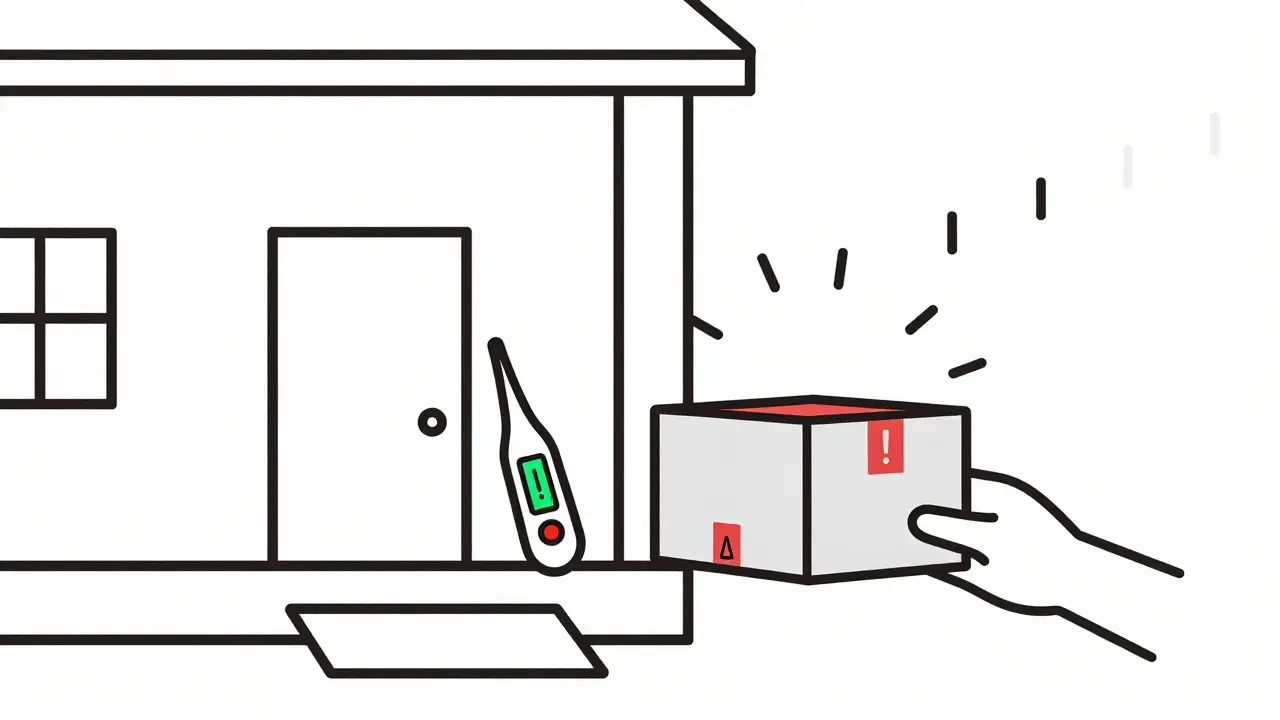
- Inspect upon arrival. Check for signs of tampering or temperature abuse. Is the ice pack melted? Is the box crushed? If so, take photos and contact the sender before signing off as satisfied.
For travelers, airports present unique challenges. Security checks can expose bags to varying temperatures. Always carry medications in your carry-on luggage, never in checked bags. Checked cargo holds can freeze at high altitudes or bake in the tarmac heat. Inform TSA agents that you have medical necessities; they are trained to handle liquid medications and coolers separately from standard liquids rules.
Documentation and Monitoring: Know What You Have
You cannot manage what you do not measure. While commercial shippers use IoT devices that log temperature every 15 minutes, patients can use simple tools.
Consider buying a digital thermometer with a min/max feature. Place it in your medication bag. When you get home, check the high and low readings. Did it go above 25°C? Did it drop below 2°C? This data helps you adjust your packing method for next time.
Also, keep a log. Note the date, time, and conditions of transport. If you suspect a dose was compromised, having a record helps your doctor decide whether to prescribe a replacement or switch therapies. Remember, pharmaceutical quality is determined by maximum exposure, not average temperature. One hour in a hot car ruins the whole batch, even if the rest of the trip was perfect.
When in Doubt, Throw It Out
This is the hardest advice to follow because medications are expensive and hard to replace. But using degraded medication is risky. It may not work, leaving you unprotected against infection or pain. Worse, some degraded compounds can be toxic.
If your insulin is discolored, clumpy, or has particles in it, discard it. If your liquid antibiotic tastes different or smells off, stop taking it. If your vaccine vial was left out overnight in summer heat, assume it is dead.
Contact your pharmacist. They can often verify stability data for specific brands. Some drugs are more robust than others. But never guess. Your health is not worth the risk of saving a $50 prescription.
Can I freeze my insulin if it gets too hot?
No. Never freeze insulin. Freezing destroys the protein structure permanently. If your insulin gets too hot, move it to a cooler environment immediately, but do not try to "reset" it with ice. If it was above 25°C (77°F) for more than a few hours, it is likely degraded and should be replaced.
How long can I keep refrigerated meds at room temperature while traveling?
It depends on the specific medication. Most insulins can stay at room temperature (below 25°C) for up to 28 days once opened. Unopened pens may last longer. However, other biologics may only tolerate 24-48 hours. Always check the manufacturer's leaflet or ask your pharmacist for the specific "excursion limit" of your drug.
Is it safe to ship medications via standard postal services?
Standard postal services are risky for temperature-sensitive drugs because they lack climate control. If you must use them, choose expedited shipping (1-2 days) to minimize time in transit. Use a well-insulated box with sufficient coolant packs. Avoid sending these medications during extreme weather seasons if possible.
What should I do if my medication arrives damaged or warm?
Do not use the medication. Take photos of the packaging, the state of the coolant (melted/frozen), and the product itself. Contact the sender or pharmacy immediately to report the issue. Most reputable providers will replace temperature-compromised goods at no cost.
Do I need special approval to carry coolers through airport security?
No. The TSA and international equivalents allow medically necessary liquids and coolers. Inform the officer that you have medical supplies. They may screen the contents separately. Frozen gel packs are allowed as long as they are frozen solid when going through screening. If they are partially melted, they may be subject to additional inspection.