Every time you walk into a pharmacy to pick up your monthly blood pressure or cholesterol medication, you pay the same flat copay. But what if you could get three months of that medicine for that exact same price? That is the core promise of 90-day prescription fills, a strategy that turns a standard monthly expense into a significant annual saving while reducing the hassle of frequent pharmacy visits.
If you manage a chronic condition like diabetes, hypertension, or high cholesterol, you are likely paying for maintenance medications every single month. The system is designed around 30-day supplies, but many insurance plans and Pharmacy Benefit Managers (PBMs) now offer a loophole: a 90-day supply for the cost of one 30-day fill. This isn't just about convenience; it is a financial lever that can save hundreds of dollars a year per medication. Let’s break down exactly how this works, who qualifies, and how to set it up without running into common pitfalls.
Why 90-Day Fills Save You Money
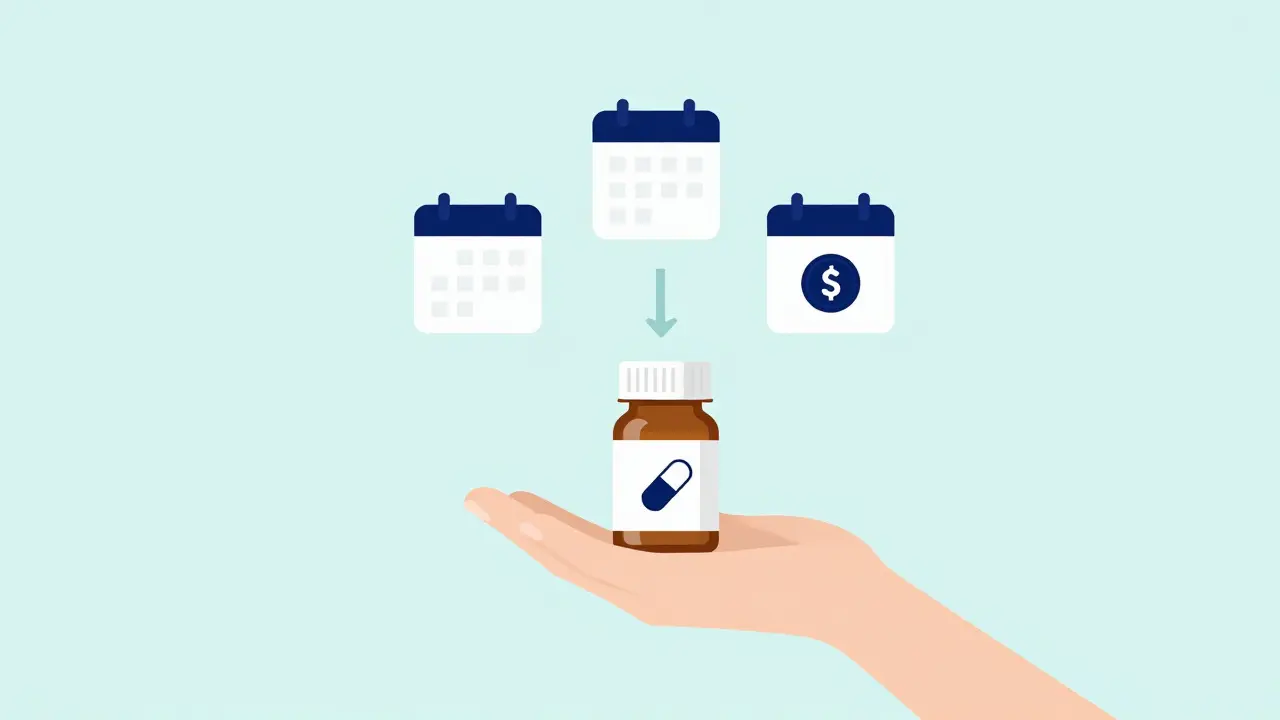
The math behind 90-day fills is straightforward but powerful. Most health insurance plans use a "copay" structure for generic drugs. If your plan charges a $4.90 copay for a 30-day supply, you pay $4.90 each month. Over a year, that adds up to $58.80 for just one medication. However, under a 90-day benefit design, you still pay only that single $4.90 copay-but you receive enough pills to last three months.
By switching from three separate 30-day fills to one 90-day fill, you effectively skip two payments. In the example above, you save $9.80 immediately. Multiply that by four cycles a year, and you save $39.20 annually on that single drug. If you take three or four maintenance medications, those savings stack up quickly. Industry data from UnitedHealth Group in 2025 highlights that current adoption rates already generate approximately $600 million in annual savings for consumers and employers combined. If more people utilized home delivery options, those projected savings could reach billions over the next decade.
It is not just about the direct drug cost either. Consider the hidden expenses: gas money, parking fees, or the time off work taken to stand in line at the pharmacy. By consolidating your refills, you eliminate eight trips to the pharmacy per year per medication. For someone managing multiple conditions, that is a massive reduction in logistical friction.
Who Qualifies for 90-Day Supplies?
Not every prescription is eligible for a 90-day fill. Insurance companies reserve this benefit for "maintenance medications"-drugs used to treat chronic, long-term conditions where dosage remains stable. Common qualifying categories include:
- Cardiovascular health: Blood pressure meds (ACE inhibitors, beta-blockers), statins for cholesterol, and heart failure medications.
- Metabolic disorders: Diabetes medications (like Metformin or insulin analogs) and thyroid hormone replacements.
- Mental health: Antidepressants, mood stabilizers, and anti-anxiety medications that require consistent daily dosing.
- Allergies and asthma: Daily inhalers or antihistamines used for ongoing management rather than acute attacks.
To qualify, you generally need to have been taking the specific medication for a period of time-often at least 30 to 90 days-to prove stability. Your doctor must also confirm that your dosage has not changed recently. Acute medications, such as antibiotics for an infection or painkillers for a recent injury, do not qualify because they are short-term treatments.
Your insurance plan plays the biggest role here. Medicare Part D plans, Medicaid managed care organizations, and most major commercial insurers (like Aetna, Cigna, and UnitedHealthcare) widely support 90-day fills. Dual-eligible Special Needs Plans (D-SNPs), such as CareAdvantage, often make 90-day fills a standard, heavily promoted benefit. Check your Summary of Benefits document or call the number on the back of your insurance card to ask specifically about their "90-day maintenance medication policy."

Mail-Order vs. Retail Pharmacy: Choosing Your Channel
Once you know you are eligible, you have two main ways to get your 90-day supply: mail-order services or retail pharmacies. Each has distinct pros and cons depending on your lifestyle and needs.
| Feature | Mail-Order Pharmacy | Retail Pharmacy (In-Store) |
|---|---|---|
| Cost | Often lowest copay; sometimes free shipping | Same copay as mail-order in many plans |
| Convenience | Delivered to door; auto-refill available | Requires physical visit; immediate pickup |
| Availability | Best for stable, non-urgent meds | Good for mixing acute and chronic needs |
| Consultation | Limited interaction with pharmacist | Easy access to pharmacist for questions |
| Speed | 3-7 business days for delivery | Immediate (if in stock) |
Mail-order pharmacies are the traditional route for 90-day fills. Companies like CVS Caremark Mail Service or Optum Rx specialize in these shipments. They typically ship directly to your home, often at no extra cost. Many plans automatically enroll you in mail-order if you stay with the same provider for a few months. The biggest advantage is automation: once set up, the pharmacy ships your next supply before you run out, so you rarely think about it.
Retail pharmacies have adapted significantly. In the past, getting a 90-day supply at a local store was difficult because pharmacists preferred smaller, more frequent transactions due to dispensing fee structures. Today, however, chains like CVS, Walgreens, and Rite Aid routinely dispense 90-day supplies in-store. This is ideal if you prefer talking to your pharmacist face-to-face, need to combine your chronic meds with a new antibiotic, or live in an area with unreliable mail delivery. Dr. Walid F. Gellad, a researcher in healthcare policy, notes that patient satisfaction and adherence improve when patients have the choice to pick up 90-day supplies at retail locations, removing the barrier of waiting for mail.
Step-by-Step: How to Switch to 90-Day Fills
Switching isn't automatic for everyone. You usually have to initiate the process. Here is how to do it correctly:
- Verify Eligibility: Call your insurance provider or check their online portal. Ask: "Does my plan cover 90-day supplies for maintenance medications, and is there a difference in copay between mail-order and retail?"
- Talk to Your Doctor: Your physician needs to write the prescription for a 90-day supply. Sometimes, even if your current script says "30 days," the pharmacy can extend it if refills allow. However, it is smoother if your doctor updates the electronic prescription to specify "90-day supply" with appropriate refills (e.g., 3 refills).
- Choose Your Pharmacy: Decide if you want mail-order or retail. If choosing mail-order, ensure your address is updated. If choosing retail, call ahead to ensure they have the stock and are willing to dispense the full 90 days at once.
- Transfer or New Fill: If transferring from another pharmacy, provide the old pharmacy's details. Note that some systems handle transfers slowly; be prepared for a gap of a few days.
- Confirm the Copay: Before leaving the counter or finalizing the order online, verify the total out-of-pocket cost. It should match your standard 30-day copay. If it looks higher, ask the pharmacist to double-check the insurance adjudication.

Pitfalls to Avoid and Pro Tips
While the benefits are clear, there are traps that can derail your savings or continuity of care.
The "Running Out" Gap: When you switch from 30-day to 90-day fills, timing matters. Do not wait until your last pill is gone to request the change. Initiate the switch while you still have 1-2 weeks of medication left. Mail-order takes time to process and ship. If you miscalculate, you might face a dangerous gap in treatment, especially for critical meds like insulin or heart drugs.
Insurance Plan Changes: During open enrollment periods (usually November for coverage starting January), review your new plan's formulary. Some plans may drop mail-order partnerships or change which drugs qualify for 90-day fills. Always re-verify your benefits at the start of each year.
Storage Issues: Receiving three months of medication means storing a larger volume. Ensure your home has a safe, dry place to keep them. Some medications, like certain liquid antibiotics or insulins, require refrigeration. Check the label carefully. If you live in a hot climate without reliable air conditioning, mail-order shipping delays could compromise heat-sensitive drugs.
Doctor Visits: Some doctors require a refill authorization every 30 days for monitoring purposes. If your doctor wants to see you monthly to check blood pressure or blood sugar, a 90-day fill might force you to see them less frequently, which could be good or bad depending on your health status. Discuss this with your provider. If they need monthly checks, you might stick with 30-day fills to ensure regular contact, or ask if they are comfortable extending the interval to 90 days.
Maximizing Savings Beyond the Copay
Even with 90-day fills, you can layer additional savings strategies. Coupon programs like GoodRx or SingleCare often have specific deals for 90-day supplies. While insurance copays are usually fixed, if you are uninsured or under-insured, these coupons can drastically reduce the cash price for bulk purchases.
Also, consider manufacturer assistance programs. For brand-name drugs that are expensive, companies like Eli Lilly or Pfizer often have patient assistance programs that cover 90-day supplies at reduced rates or free of charge for qualifying individuals. Programs like the LINZESS Savings Program explicitly encourage 90-day prescriptions to maximize user savings. Always ask your pharmacist if a manufacturer coupon applies to your specific medication.
Finally, leverage technology. Many pharmacy apps allow you to set up automatic refills for your 90-day supplies. This ensures you never miss a shipment and avoids the stress of manual tracking. Set calendar reminders for when the package arrives to inspect the contents and check expiration dates.
Can I get a 90-day fill for any medication?
No. 90-day fills are generally reserved for "maintenance medications" used to treat chronic conditions like high blood pressure, diabetes, or high cholesterol. Acute medications, such as antibiotics for infections or short-term pain relievers, are typically limited to 30-day or fewer supplies because your condition may change or resolve quickly.
Is the copay really the same for 90 days as it is for 30 days?
In most cases, yes. Many insurance plans, particularly Medicare Part D and dual-eligible plans, charge the same flat copay for a 90-day supply as they do for a 30-day supply. However, some commercial plans may have slightly different tiered pricing. Always verify with your specific insurer before assuming the cost is identical.
Do I need a new prescription from my doctor for a 90-day fill?
Ideally, yes. While some pharmacies can extend a 30-day prescription to 90 days if sufficient refills remain, it is cleaner and faster if your doctor writes the prescription specifically for a 90-day supply with appropriate refills (e.g., "Dispense #90, Refills: 3"). This prevents administrative delays or denials from the insurance company.
Which is better: mail-order or retail pharmacy for 90-day fills?
It depends on your preference. Mail-order is best for convenience and automation, delivering meds to your door with minimal effort. Retail pharmacies are better if you prefer face-to-face pharmacist consultations, need to combine chronic meds with acute prescriptions, or want immediate access without waiting for shipping. Both often offer the same copay savings.
What happens if I lose my 90-day supply?
Losing a 90-day supply is riskier than losing a 30-day one because you have no backup. Contact your pharmacy immediately. They may be able to issue an emergency partial refill or expedite a replacement. To prevent this, consider splitting your 90-day supply into two containers-one for daily use and one stored safely elsewhere-or using a weekly pill organizer to track usage closely.
Are there any downsides to 90-day fills?
The main downsides are storage requirements and potential delays in adjusting treatment. If your doctor needs to change your dosage due to side effects or health changes, having a large stockpile of the old dose can be wasteful or problematic. Additionally, if you move frequently, mail-order addresses can become complicated. Finally, some retail pharmacies may be less enthusiastic about dispensing 90-day fills due to lower dispensing fees, though this is becoming less common.