
When someone is diagnosed with schizophrenia, the first question most people ask isn’t about therapy or support-it’s about medication. And for good reason. Antipsychotic drugs are the backbone of treatment, often the difference between being able to live independently or needing constant care. But not all antipsychotics are the same. Some work better for certain people, some cause more weight gain, others trigger restlessness or sedation. Choosing the right one isn’t just about science-it’s about matching the drug to the person.
First-Generation vs. Second-Generation Antipsychotics
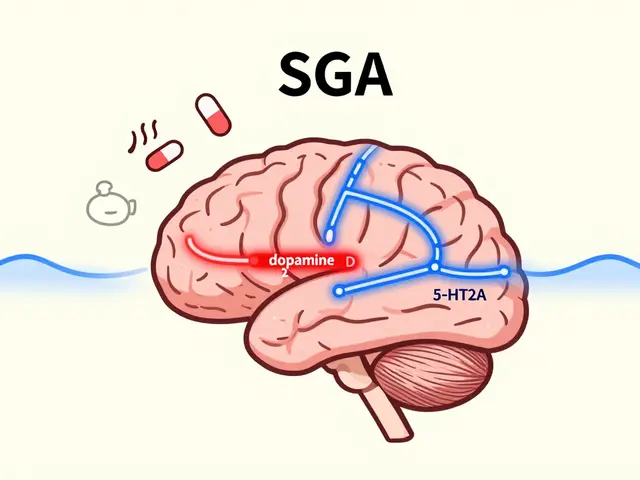
The two main types of antipsychotics are first-generation (FGAs) and second-generation (SGAs), also called atypical antipsychotics. FGAs like haloperidol and chlorpromazine were developed in the 1950s. They work mainly by blocking dopamine D2 receptors in the brain, which helps reduce hallucinations and delusions. But they come with a heavy cost: movement problems. Up to half of people taking these drugs develop stiffness, tremors, or involuntary movements-side effects so severe that many stop taking them. SGAs came along in the 1980s and changed everything. Drugs like risperidone, olanzapine, quetiapine, and aripiprazole don’t just block dopamine. They also affect serotonin receptors, especially 5-HT2A. This dual action means they’re just as effective at controlling positive symptoms like hallucinations, but they’re far less likely to cause movement disorders. That’s why today, most doctors start with an SGA instead of an FGA.Which Atypical Antipsychotic Is Best?
There’s a myth that all atypical antipsychotics work the same. They don’t. A 10-year study of over 17,000 people with schizophrenia found that clozapine kept patients on treatment the longest-over 16 months on average. Aripiprazole came in second, with people staying on it for about 10 months. Haloperidol? Only 4.5 months. That’s not a small difference. It’s the difference between staying stable and relapsing. Relapse rates tell a similar story. One study of nearly 28,500 patients showed that after 12 months, only 18% of those on aripiprazole had a relapse. For those on haloperidol? Nearly 30%. That’s a 40% lower risk of relapse just by switching drugs. But effectiveness isn’t everything. Side effects matter just as much. Clozapine is the most effective drug for treatment-resistant schizophrenia, but it carries a risk of agranulocytosis-a dangerous drop in white blood cells. That’s why anyone on clozapine must get weekly blood tests for the first six months. It’s a hassle, but for many, it’s worth it. One patient on Reddit said, “After five failed meds, clozapine gave me my life back despite the blood tests.” On the other end of the spectrum, aripiprazole and ziprasidone cause the least weight gain-about 1.3 pounds on average over six months. Olanzapine and clozapine? More than 9 pounds. That’s not just about appearance. Weight gain increases the risk of diabetes and heart disease, which are already higher in people with schizophrenia.Side Effects You Can’t Ignore
The side effect profile of each drug is unique. Olanzapine is great for calming agitation and reducing psychosis, but it’s also one of the most sedating. Many people feel like they’re in a fog. Quetiapine does the same thing-it’s often used off-label as a sleep aid. But if you’re trying to hold a job or go to school, that kind of drowsiness is a dealbreaker. Aripiprazole is different. It doesn’t make you sleepy. But it can cause akathisia-a feeling of inner restlessness that makes you want to pace or fidget constantly. About 40% of new users report this. It’s not dangerous, but it’s unbearable for some. That’s why doctors usually start low-2 to 5 mg-and go slow. Movement disorders still happen with SGAs, but less often. Risperidone has the highest risk among SGAs-nearly 18% of users develop stiffness or tremors. Clozapine? Only 1.8%. That’s why it’s often the go-to for people who can’t tolerate other drugs.
Long-Acting Injections: A Game Changer
Taking a pill every day sounds simple-until you forget. Or feel paranoid about being watched while swallowing it. Or just don’t believe you need it. That’s why long-acting injectables (LAIs) are becoming more common. Paliperidone palmitate, for example, is given once a month. Studies show it cuts relapse rates by 22% compared to daily oral pills. In Europe, about 30% of new antipsychotic prescriptions are LAIs. In the U.S., it’s 25%. That number is rising. For people who’ve been hospitalized multiple times, an injection every four weeks can mean the difference between living at home and ending up back in the hospital.Clozapine: The Last Resort That Works
Clozapine isn’t used first because of the blood monitoring. But when two or three other drugs have failed, it’s the only option that reliably helps. About 30 to 50% of people with treatment-resistant schizophrenia respond to clozapine. That’s huge. In the OPTiMiSE trial, only 40% of clozapine users responded fully-but that’s still better than anything else. The side effects can be tough: excessive saliva (sialorrhea), constipation, weight gain, heart rhythm changes. But many patients say the trade-off is worth it. One person wrote, “I used to hear voices all day. Now I hear birds outside my window. That’s enough.”What About New Drugs?
The pipeline for new antipsychotics is active. KarXT, a drug that works on muscarinic receptors instead of dopamine, showed a 9.6-point drop in symptom scores in a recent trial-better than most existing drugs. SEP-363856, a TAAR1 agonist, improved symptoms without causing weight gain. And ALKS 3831 combines olanzapine with samidorphan to block the weight gain that usually comes with it. These aren’t magic bullets. But they’re signs that the field is moving beyond just tweaking dopamine blockers. The future may be drugs that target different brain pathways altogether.
Real-World Challenges
Even the best drug won’t work if you don’t take it. A NAMI survey found that 63% of people quit their first antipsychotic within six months. The top reasons? Sedation, weight gain, and movement problems. That’s why doctors now talk about “tolerability” as much as “efficacy.” Starting a new antipsychotic isn’t a one-time decision. It’s a process. First, you start low-maybe 5 mg of olanzapine or 2 mg of aripiprazole. Then you wait. Titration takes 4 to 8 weeks. You monitor for side effects. You check blood sugar, cholesterol, and weight. You ask: Is this helping? Is it making life harder? And you don’t give up after one try. Many people need to try two or three drugs before finding one that fits.Personalization Is the Future
We’re moving away from trial-and-error. Pharmacogenetic testing-checking your genes to see how you metabolize drugs-is becoming more common. People with certain CYP2D6 or CYP1A2 variants break down antipsychotics faster or slower. Testing can cut side effects by 37%. It’s not perfect, but it’s a step toward precision medicine. Digital tools are helping too. Apps that remind you to take pills, track mood, or connect you with peers have been shown to reduce symptoms by 25% when used with medication.What Does This Mean for You?
If you or someone you know is starting antipsychotic treatment, here’s what to remember:- Start with an atypical antipsychotic unless there’s a clear reason not to.
- Aripiprazole, paliperidone, and olanzapine are top choices for preventing relapse.
- If weight gain is a concern, avoid olanzapine and clozapine. Try aripiprazole or ziprasidone.
- If sedation is a problem, avoid quetiapine and olanzapine.
- If movement problems happen, switch away from risperidone.
- If nothing else works, clozapine is the most effective-but it requires strict monitoring.
- Long-acting injections can help if you struggle with daily pills.
What is the most effective antipsychotic for schizophrenia?
Clozapine is the most effective antipsychotic for treatment-resistant schizophrenia, reducing symptoms in 30-50% of people who don’t respond to other drugs. However, it requires strict blood monitoring due to a risk of agranulocytosis. For people without treatment resistance, aripiprazole, paliperidone, and olanzapine show the strongest evidence for preventing relapse in the first year of treatment.
Which antipsychotic causes the least weight gain?
Aripiprazole and ziprasidone cause the least weight gain-on average, less than 1.3 pounds over six months. In contrast, clozapine and olanzapine can lead to 9-10 pounds of weight gain in the same period. For people concerned about metabolic health, these two drugs are often preferred as first-line options.
Why is clozapine not used as a first-line treatment?
Clozapine is not used first because it carries a risk of agranulocytosis-a dangerous drop in white blood cells that can lead to life-threatening infections. Because of this, patients must get weekly blood tests for the first six months and biweekly tests after that. The monitoring is burdensome, and many clinics lack the infrastructure to manage it. It’s reserved for cases where at least two other antipsychotics have failed.
Can antipsychotics be taken as injections?
Yes. Long-acting injectable (LAI) forms of antipsychotics like paliperidone, risperidone, and aripiprazole are available and given every 1 to 4 weeks. These are especially helpful for people who struggle with daily pills due to forgetfulness, denial of illness, or side effects. Studies show LAIs reduce relapse rates by 20-25% compared to oral versions.
Do antipsychotics cure schizophrenia?
No. Antipsychotics manage symptoms like hallucinations, delusions, and disorganized thinking-they don’t cure the underlying condition. Many people need to take them long-term, sometimes for life. But when combined with therapy, social support, and lifestyle changes, they can allow people to live full, independent lives. The goal isn’t to eliminate the illness, but to reduce its impact.
How long does it take for antipsychotics to work?
Some improvement in agitation or hallucinations may be seen within days, but full effects usually take 4 to 8 weeks. It’s common for doctors to wait at least 6 weeks before deciding if a drug is working. Dosing often starts low and increases slowly to reduce side effects. Patience is key-rushing to switch medications too soon can lead to unnecessary changes and worse outcomes.
What should I do if I have side effects?
Don’t stop taking the medication on your own. Talk to your doctor. Many side effects can be managed-like using benztropine for tremors, metformin for weight gain, or lowering the dose. If one drug causes intolerable side effects, switching to another is often possible. Many people find the right fit after trying two or three options. Your doctor can help you weigh the benefits against the side effects.


10 Comments
Okay but have you ever wondered if Big Pharma is secretly using antipsychotics to keep us docile? 🤔 I mean, why else would they push these drugs so hard? I read somewhere that the FDA gets funding from pharma giants-coincedence? I think not. My cousin took olanzapine and suddenly stopped questioning the government. Coincidence? I think not. 😈
Thank you for this comprehensive overview. It’s rare to see such a balanced, evidence-based discussion on a topic often clouded by stigma. I especially appreciate the emphasis on tolerability over efficacy alone. For many, the goal isn’t just symptom suppression-it’s reclaiming agency. A reminder: medication is a tool, not a cure, and dignity must remain central to care.
OMG I just started aripiprazole last week and my brain feels like it’s been unplugged from a glitchy laptop 😅 but I’m not sleeping like a rock anymore!! Also, no weight gain yet!! 🙌 My dr said go slow and I’m like ‘ok but I need to work tomorrow’ lol. Keep going!!
Lmao you people actually believe this corporate propaganda? SGAs? Please. They’re just repackaged FGAs with fancy names. The real solution? Get off the grid. Stop taking the pills. The voices? They’re not psychosis-they’re your soul screaming for freedom from the matrix. I stopped meds, went off-grid for 2 years, now I hear the wind whispering secrets. You’re all being programmed. 🤖
Big fan of the LAI data here 💯. For folks with adherence issues, injectables are a game-changer. The 22% relapse reduction isn’t just stats-it’s real lives. I’ve seen patients go from ER visits every 3 months to stable for 2+ years. Also, aripiprazole + metformin combo for weight? Solid. Just remember: titrate slow, monitor labs, and don’t rush the process. You’re not failing if it takes 3 tries. 💪
I’ve been on clozapine for 8 years. The blood draws? Annoying. The sialorrhea? Like living in a constant wet dream. But the silence? The ability to sit in my garden and not hear the yelling? Worth every drop of sweat. I used to think I was broken. Now I just think I’m medicated. And that’s okay.
So… you’re telling me the ‘best’ drug is the one that requires weekly blood tests, causes drooling, and makes you gain 10 lbs… but it’s ‘worth it’? 🙄 Wow. What a win. Next you’ll tell me chemotherapy is ‘worth it’ because it kills the cancer. Sure. But what about the person left behind?
It’s fascinating how we reduce complex neurobiology to a drug-selection spreadsheet. But what if the real issue isn’t dopamine or serotonin-it’s isolation? Trauma? Lack of safe space? Medication stabilizes, yes-but healing requires more than a pill. I’ve met people on clozapine who still feel invisible. We need systems that hold space, not just prescriptions.
Wait… so they’re testing new drugs that DON’T target dopamine? 😱 That’s not possible. They’re hiding the truth. The real cause? 5G. Or maybe the vaccines. Or both. I’ve been researching this for 3 years. The pills are just a distraction. They don’t want you to know the truth. 🕵️♀️📡
Thank you for the thoughtful breakdown. I’m a clinician and I’ve seen too many patients quit because they were told ‘this one’s best’ without listening to their lived experience. The real ‘best’ drug? The one they’ll take. And the real ‘best’ doctor? The one who doesn’t just hand out scripts, but sits down and asks: ‘What kind of life do you want to live?’