You might think you have eczema or a stubborn rash that just won’t quit. You’ve tried hydrocortisone, changed your laundry detergent, and maybe even cut out gluten. But what if the culprit isn’t an allergy at all? It’s likely a fungus. Fungal skin infections are among the most common dermatological issues worldwide, affecting roughly 20-25% of the global population at any given time. The two biggest offenders? Ringworm (tinea) and Candida. They look similar to the untrained eye but require different strategies to clear up. If you’re stuck in the cycle of recurring rashes, understanding the difference between these invaders-and how to fight them-is your first step toward relief.
The Usual Suspects: Ringworm vs. Candida
Let’s clear up the biggest misconception right away: Ringworm has nothing to do with worms. The name comes from the ring-shaped redness it causes on the skin. Scientifically known as dermatophytosis, this infection is caused by fungi called dermatophytes. These microbes feed on keratin, the tough protein found in your skin, hair, and nails. Because they love keratin, they rarely invade deep tissues; they stay on the surface where the damage is visible but treatable.
Candida, on the other hand, is a yeast. Specifically, *Candida albicans* is the usual suspect. Unlike dermatophytes, Candida thrives in warm, moist, dark environments. Think armpits, groin folds, under breast tissue, or between toes. While everyone carries some Candida on their body naturally, it only becomes a problem when it overgrows. This often happens after antibiotic use disrupts your natural bacterial balance, or if you have conditions like diabetes that raise sugar levels in sweat and urine, effectively feeding the yeast.
| Feature | Ringworm (Tinea) | Candida (Yeast) |
|---|---|---|
| Cause | Dermatophyte molds (Trichophyton, Microsporum) | Yeast (mostly Candida albicans) |
| Preferred Location | Keratin-rich areas: scalp, nails, feet, body | Warm, moist folds: groin, armpits, mouth |
| Appearance | Ringed, scaly patches with central clearing | Beefy red, raw-looking skin with satellite spots |
| Sensation | Itchy, sometimes burning | Intense itching, burning, soreness |
| Transmission | Person-to-person, animals, surfaces | Overgrowth of existing flora, person-to-person |
Spotting the Signs: What Does It Look Like?
Diagnosing fungal infections can be tricky because many people misidentify them. A study published in the *Journal of the American Board of Family Medicine* noted that primary care doctors correctly identify tinea corporis (body ringworm) only about 50-60% of the time. So, don’t beat yourself up if you guessed wrong initially.
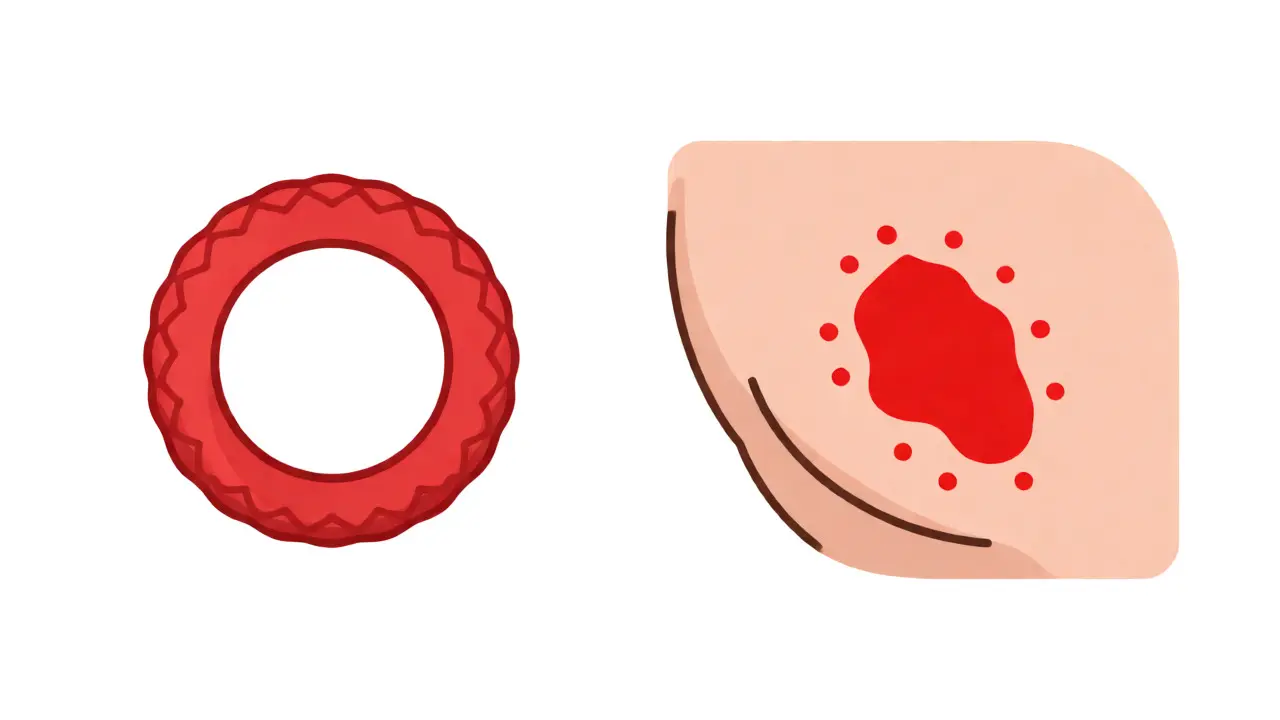
Ringworm (Tinea Corporis) typically presents as an annular (ring-shaped) lesion. Imagine a red circle with a raised, scaly border and clearer skin in the middle. It expands outward as the fungus consumes the keratin at the edge. If you scratch it, you might spread the spores to other parts of your body, creating new rings nearby. Tinea pedis (athlete’s foot) looks different-often causing peeling between the toes or scaling on the soles. Nail infections (onychomycosis) turn nails yellow, thick, and brittle.
Candida Intertrigo looks quite distinct. Instead of a dry, scaly ring, you’ll see bright red, shiny, moist patches. The key identifier here is "satellite lesions." These are small red dots or pustules that appear just outside the main patch of infection. If you have a rash in a skin fold that feels wet or macerated (waterlogged), it’s highly likely to be Candida rather than ringworm.
Why Do You Keep Getting Them?
If you’re battling recurrent infections, your environment or health status might be working against you. Fungi love three things: warmth, moisture, and darkness. Here are the common triggers:
- Tight Clothing: Synthetic fabrics trap sweat against the skin. Cotton breathes better, allowing moisture to evaporate.
- Humid Climates: Living in a tropical or humid area increases risk. Sweating doesn’t evaporate quickly, leaving skin damp for hours.
- Antibiotic Use: Broad-spectrum antibiotics kill good bacteria that keep Candida in check. This is why yeast infections often pop up after a course of amoxicillin or similar drugs.
- Compromised Immunity: People with diabetes, HIV, or those on immunosuppressants face a 3-5 times higher risk of severe fungal issues. High blood sugar feeds both dermatophytes and yeasts.
- Shared Spaces: Gym locker rooms, communal showers, and shared towels are hotspots for transmission. Zoophilic transmission (from pets like cats and dogs) accounts for 20-30% of ringworm cases in children.

Fighting Back: Antifungal Treatments Explained
The good news? Most fungal skin infections respond well to treatment. However, using the wrong type of antifungal can waste weeks of effort. There are two main classes of topical antifungals, and knowing which to pick matters.
Azoles (like clotrimazole and miconazole) are broad-spectrum. They work by disrupting the cell membrane of the fungus. They are effective against both dermatophytes and Candida. Because they are gentler, they are often recommended for sensitive areas or mixed infections. You usually need to apply them twice daily for 2-4 weeks. Consistency is key-stopping early because the itch stopped means the fungus is still alive and ready to rebound.
Allylamines (like terbinafine, sold as Lamisil) are fungicidal, meaning they actually kill the fungus rather than just stopping its growth. They are particularly potent against dermatophytes (ringworm). For simple body ringworm, terbinafine cream often clears up faster than azoles, sometimes within 1-2 weeks. However, allylamines are less effective against Candida. If you suspect a yeast infection, stick to azoles or nystatin.
For stubborn nail infections or widespread scalp ringworm, creams won’t penetrate deeply enough. You’ll likely need oral medication. Oral Terbinafine is the gold standard for nail fungus, typically taken for 6-12 weeks. Doctors will monitor your liver enzymes during this period, as rare side effects include transient liver stress. For severe Candida, oral fluconazole is the go-to prescription.
The Resistance Problem
We aren’t invincible. Just like bacteria, fungi are evolving resistance to our best weapons. Dr. Boni Elewski, a leading dermatologist, highlighted in recent interviews that resistance to terbinafine is emerging. About 5-7% of *Trichophyton rubrum* isolates in North America now show reduced susceptibility. This means the cream that worked last year might not work next year.
Another threat is Candida auris. This multidrug-resistant yeast was identified recently and is spreading in healthcare settings. It’s hard to identify with standard lab tests and resistant to multiple drug classes. While it mostly affects hospitalized patients, its rise signals that we need to be smarter about how we use antifungals. Don’t grab a tube of leftover cream for every itch. Get a proper diagnosis first.

Prevention: Keeping the Fungus Away
Treatment clears the current infection, but prevention stops the next one. Small habits make a huge difference.
- Dry Off Completely: After showering, dry thoroughly between your toes and in skin folds. Use a separate towel for infected areas to avoid re-infecting yourself.
- Rotate Shoes: Let your shoes air out for 24 hours before wearing them again. Fungi survive in dark, damp shoe interiors.
- Wear Flip-Flops: Never walk barefoot in public pools, gyms, or locker rooms.
- Change Clothes Promptly: Don’t sit in sweaty workout gear. Shower and change into dry clothes immediately after exercise.
- Probiotics: Some evidence suggests that maintaining a healthy gut microbiome with Lactobacillus probiotics may help prevent recurrent Candida overgrowth, especially after antibiotic courses.
When to See a Doctor
Not every rash needs a specialist visit. Over-the-counter treatments resolve most cases of tinea corporis and mild intertrigo. However, seek professional help if:
- The rash spreads rapidly despite 2 weeks of OTC treatment.
- You see signs of secondary bacterial infection (pus, extreme heat, fever).
- The infection involves your scalp or nails.
- You have diabetes or a weakened immune system.
- You experience pain or blistering.
Doctors can perform a KOH prep test-a quick scrape of the skin examined under a microscope-to confirm the presence of fungal hyphae. This takes minutes and avoids guessing games. Remember, treating a fungal infection with steroids (like hydrocortisone) alone can make it worse by suppressing local immunity while letting the fungus grow unchecked. This condition, known as "tinea incognito," makes the rash harder to diagnose later.
Does ringworm contain actual worms?
No. The name "ringworm" is a historical misnomer derived from the ring-like appearance of the rash. It is caused by dermatophyte fungi, not parasites or worms.
How long does it take for antifungal cream to work?
Symptoms like itching often improve within a few days, but the infection itself takes longer to clear. Topical allylamines (terbinafine) may clear ringworm in 1-2 weeks, while azoles (clotrimazole) typically require 2-4 weeks of consistent application. Always complete the full course recommended on the package or by your doctor to prevent recurrence.
Can I catch ringworm from my pet?
Yes. Cats and dogs are common carriers of zoophilic dermatophytes. If your pet has bald patches or scaly skin, have them checked by a vet. Human-to-pet and pet-to-human transmission is frequent, so treat both simultaneously to stop the cycle.
Why did my antifungal cream stop working?
This could be due to fungal resistance, incorrect diagnosis (it might not be fungal), or incomplete treatment. Emerging resistance to terbinafine is documented in some regions. Additionally, using steroid creams alongside antifungals without medical advice can mask symptoms while allowing the fungus to thrive.
Is Candida contagious?
Candida is part of the normal human microbiome, so it's not "contagious" in the same way ringworm is. However, it can be passed between partners during sexual contact or from mother to infant during birth. Overgrowth is usually triggered by internal factors like antibiotics, high sugar intake, or immune suppression rather than external exposure alone.