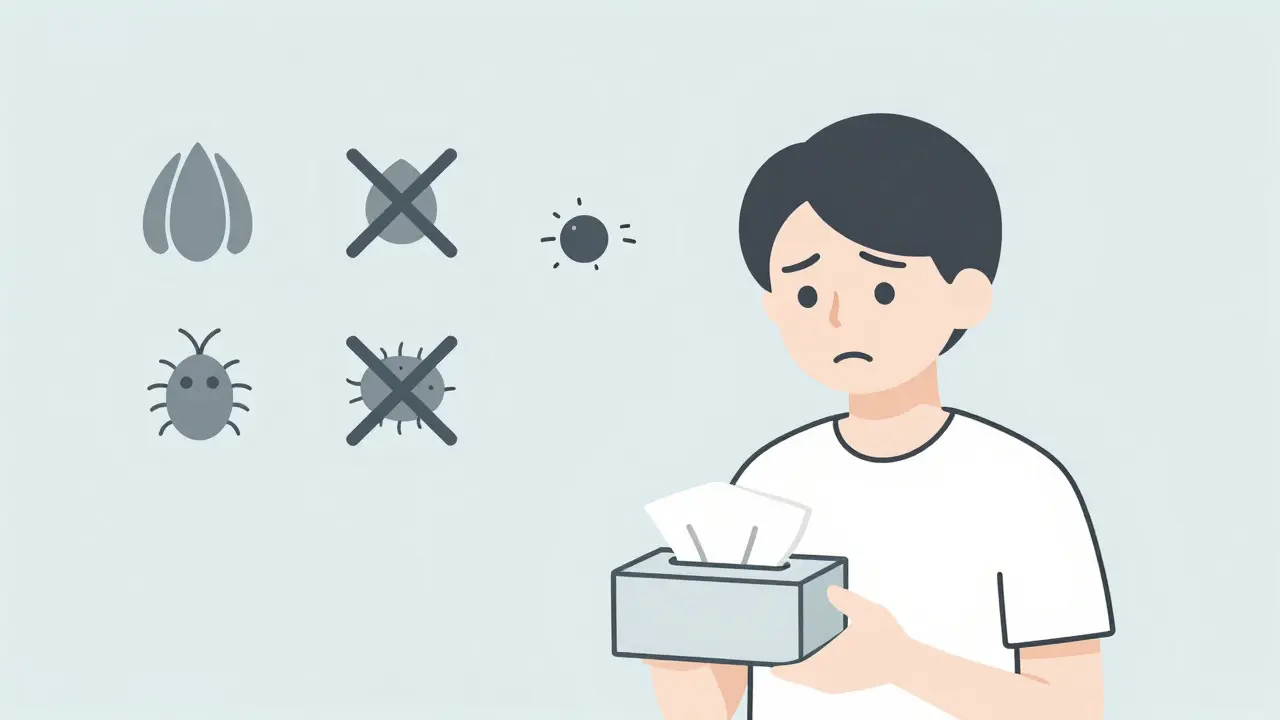
You blow your nose. You check for pollen counts. You take an antihistamine. Nothing works. If this sounds familiar, you might not have allergies at all. You might have nonallergic rhinitis, a condition that mimics allergic symptoms but ignores the usual allergy treatments. It is frustrating, often misunderstood, and affects millions of people who are told to "just avoid allergens" when the real culprits are things like cold air, spicy food, or strong perfumes.
This isn't just a minor annoyance. For many, it means chronic congestion, constant runny nose, and sleepless nights. The good news? Once you understand what actually triggers your specific type of nonallergic rhinitis, you can manage it effectively. Let's break down why your nose reacts to irritants instead of allergens and how to finally get relief.
What Exactly Is Nonallergic Rhinitis?
First, let's clear up the confusion. Allergic rhinitis happens when your immune system overreacts to harmless substances like dust mites or pet dander. Your body produces IgE antibodies, leading to inflammation. Nonallergic rhinitis, on the other hand, involves no immune response. No antibodies. No histamine surge in the traditional sense.
Instead, it is a problem with the nerves and blood vessels inside your nose. Think of it as a misfiring alarm system. Your nasal mucosa becomes hypersensitive to physical or chemical changes in your environment. According to data from the European Academy of Allergy and Clinical Immunology, this condition accounts for about 80% of all chronic rhinitis cases. That is huge. Yet, it is frequently misdiagnosed because patients look exactly like they have hay fever.
The key difference lies in the diagnosis. If you have negative skin prick tests and negative serum-specific IgE blood tests, but still suffer from sneezing, congestion, and runny nose, you likely fall into this category. It is a diagnosis of exclusion, meaning doctors rule out everything else first. This process can take time, often leading to years of ineffective treatment before the correct label is applied.
The Main Types and Their Specific Triggers
Nonallergic rhinitis is not one single thing. It is an umbrella term for several distinct subtypes. Knowing which one you have is crucial because the trigger-and therefore the solution-varies wildly.
| Subtype | Primary Trigger | Prevalence / Notes |
|---|---|---|
| Vasomotor Rhinitis | Temperature changes, humidity shifts, stress | Most common (60-70% of cases); nerve dysregulation |
| Gustatory Rhinitis | Eating, especially spicy foods | Affects 55-60% of people over age 65 |
| Drug-Induced Rhinitis | ACE inhibitors, beta-blockers, NSAIDs | Caused by ~4% of cases; medication side effect |
| Hormonal Rhinitis | Pregnancy, thyroid issues, puberty | Affects 20-30% of pregnant women |
| Occupational Rhinitis | Workplace chemicals, dusts, fumes | Symptoms worsen during workweek |
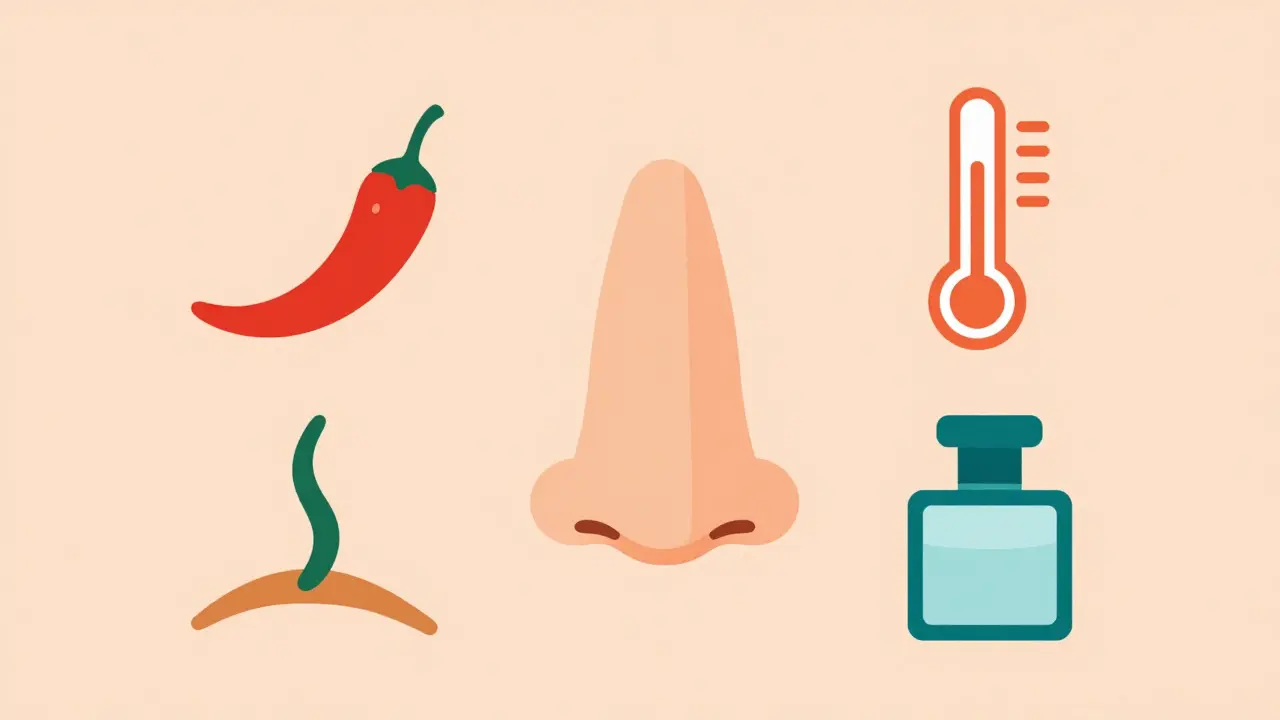
Vasomotor rhinitis is the big one. It involves the autonomic nervous system losing its balance in the nose. Specifically, parasympathetic activity increases while sympathetic tone decreases. This leads to swollen blood vessels and excess mucus production. Research shows that TRPV1 channels, which detect heat and irritation, are overexpressed in these patients. This explains why walking into a cold room from a warm house, or stepping into humid weather, instantly makes your nose run.
Gustatory rhinitis is another interesting variant. Have you ever eaten a bowl of hot soup or something with chili peppers and started running like a faucet? That is gustatory rhinitis. It is triggered by the act of eating itself, particularly spicy foods containing capsaicin. It is surprisingly common in older adults, affecting more than half of those over 65.
Then there are medication-induced cases. Many people don't realize their blood pressure meds could be clogging their nose. ACE inhibitors cause symptoms in about 20% of users, and beta-blockers affect 15%. If your nasal symptoms started shortly after beginning a new prescription, talk to your doctor. Switching medications might solve the problem entirely.
Identifying Your Personal Irritant Thresholds
Unlike allergies, where you might react to cat hair anywhere, nonallergic rhinitis triggers are often dose-dependent or threshold-based. This means you need to identify your personal breaking point.
- Environmental Irritants: Tobacco smoke can trigger symptoms at concentrations exceeding 0.05 mg/m³. Perfumes and strong cleaning products are potent triggers, reacting to concentrations as low as 0.1 parts per million. Wildfire smoke is also a major culprit, with PM2.5 levels above 15 µg/m³ causing significant flare-ups.
- Weather Changes: Your nose may react to temperature swings greater than 5°C within an hour. Humidity shifts of more than 20% relative humidity can also set off the alarm. Barometric pressure changes of 5 mmHg are enough to bother sensitive individuals.
- Chemical Exposures: In occupational settings, flour dust (above 2 mg/m³) and latex particles (above 2 µg/m³) are known triggers. Volatile organic compounds from paint or new furniture can also provoke reactions.
To find your triggers, keep a detailed symptom diary for four to six weeks. Track the temperature, humidity, what you ate, and any exposures. You will start to see patterns. Maybe it is only when you walk outside on windy days. Maybe it is only when you eat Thai food. Identifying these patterns is the first step toward control.
Effective Management Strategies That Actually Work
Since antihistamines often fail for nonallergic rhinitis, you need a different toolkit. The goal is to calm the nerves and reduce inflammation without relying on drugs that target histamine.
Nasal Saline Irrigation
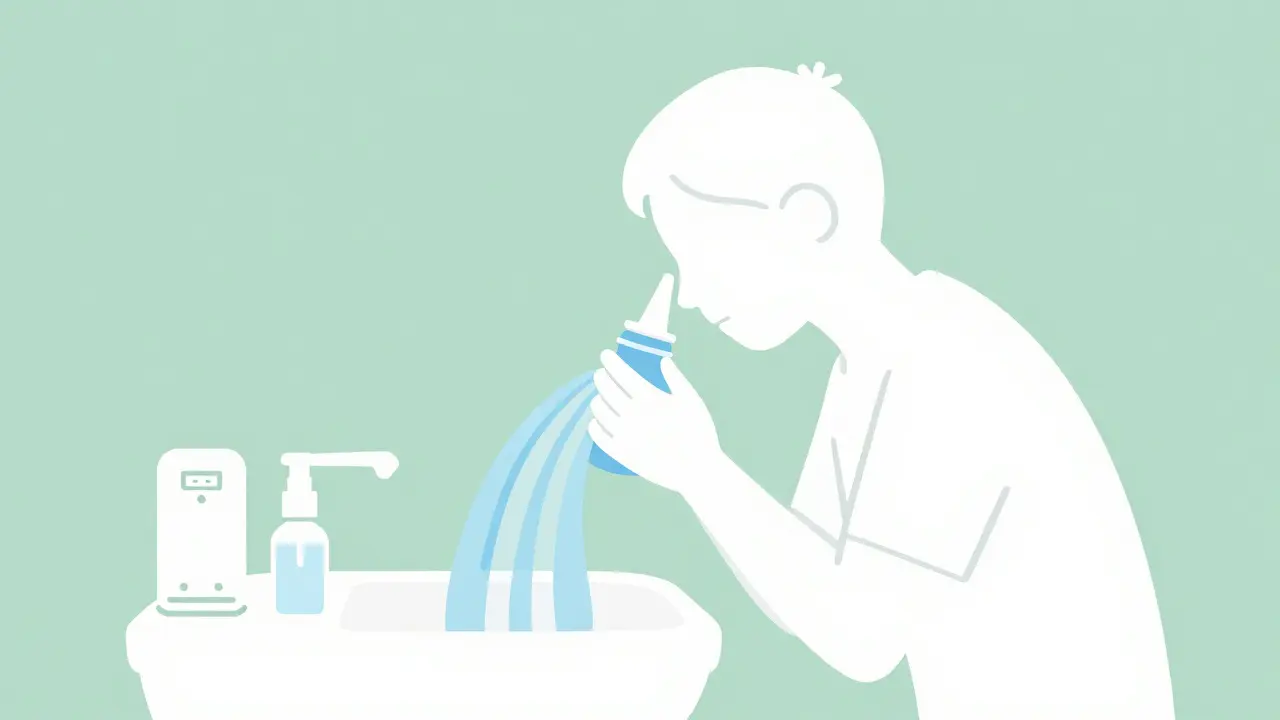
This is the gold standard for daily maintenance. Using isotonic (0.9%) or hypertonic (3%) saline solutions helps flush out irritants and thin mucus. Studies show that twice-daily irrigation is 45% more effective than once-daily use. It provides relief for 60-70% of patients and has virtually no side effects if done correctly. Make sure to use distilled or boiled water to avoid infections.
Intranasal Corticosteroids
Medications like fluticasone propionate are highly effective for reducing nasal congestion and inflammation. They do not work instantly, though. You need consistent use for 2-4 weeks to see peak benefits. They reduce symptoms by 50-60% in moderate to severe cases. The downside? Some users experience nosebleeds (epistaxis) in 15-20% of cases. Aim the spray away from the septum to minimize this risk.
Ipratropium Bromide Nasal Spray
If your main complaint is a constantly runny nose (rhinorrhea), this is your best friend. Ipratropium bromide specifically targets the glands that produce watery discharge. It reduces nasal discharge by 70-80% within 48 hours. It does not help much with congestion, but for that dripping sensation, it is unmatched. A new 0.03% formulation was approved recently, offering similar efficacy with fewer side effects.
Azelastine Nasal Spray
While primarily an antihistamine, azelastine also has anti-inflammatory properties that can help nonallergic rhinitis patients. It provides 30-40% symptom reduction and works within 1-2 hours. The bitter taste is a common complaint, affecting 30-40% of users, but many find the benefit worth the trade-off.
Avoiding Common Pitfalls
One of the biggest mistakes people make is overusing decongestant sprays like oxymetazoline. These provide instant relief but lead to rhinitis medicamentosa, a rebound congestion that is worse than the original problem. If you have been using these sprays for more than three days, you are likely trapped in a cycle. Breaking free requires stopping them cold turkey, often supported by intranasal steroids during the 7-10 day withdrawal period. It is tough, but it works in 85-90% of cases.
Another pitfall is ignoring structural issues. Sometimes, what feels like nonallergic rhinitis is actually a deviated septum or nasal polyps. A nasal endoscopy can rule these out. If you have had symptoms for months and OTC treatments aren't working, see an ENT specialist. They can check for underlying anatomy problems that require surgical correction rather than medication.
Living Well With Nonallergic Rhinitis
Managing this condition is about adaptation. Use HEPA filters to clean indoor air, which can reduce symptoms by 35-40%. Avoid strong scents in your home and car. When weather changes drastically, wear a scarf over your nose to buffer the temperature shift. For gustatory rhinitis, try chewing gum before meals or avoiding the spiciest dishes if they cause significant distress.
Remember, you are not alone. This condition is real, it is common, and it is treatable. By identifying your specific triggers and using the right combination of saline irrigation, targeted sprays, and lifestyle adjustments, you can regain control of your breathing and your life.
How long does it take to diagnose nonallergic rhinitis?
Diagnosis typically takes 2-3 specialist visits over 4-6 weeks. It involves ruling out allergies through skin prick tests and blood work, followed by a nasal endoscopy to check for structural issues. Many patients report a diagnostic delay of over 3 years due to initial misdiagnosis as allergic rhinitis.
Can nonallergic rhinitis go away on its own?
It depends on the subtype. Hormonal rhinitis during pregnancy usually resolves within two weeks postpartum. Drug-induced rhinitis stops when the offending medication is changed. However, vasomotor and idiopathic forms are chronic conditions that require ongoing management rather than a cure.
Why don't antihistamines work for me?
Antihistamines block histamine, which is released during an allergic reaction. Since nonallergic rhinitis is not driven by histamine or IgE antibodies, these medications often provide little to no relief. Treatments targeting nerve signals (like ipratropium) or inflammation (like steroids) are more effective.
Is nasal saline irrigation safe for daily use?
Yes, it is very safe and recommended for daily use. Just ensure you use distilled, sterile, or previously boiled water to prevent rare but serious infections. Proper technique, such as leaning forward and breathing through your mouth, helps maximize effectiveness and comfort.
What should I do if I'm addicted to decongestant sprays?
You need to stop using them immediately, even though congestion will worsen temporarily. This is called rebound congestion. To ease the transition, use intranasal corticosteroids simultaneously. Most people recover fully within 7-10 days, though some may take up to three weeks.