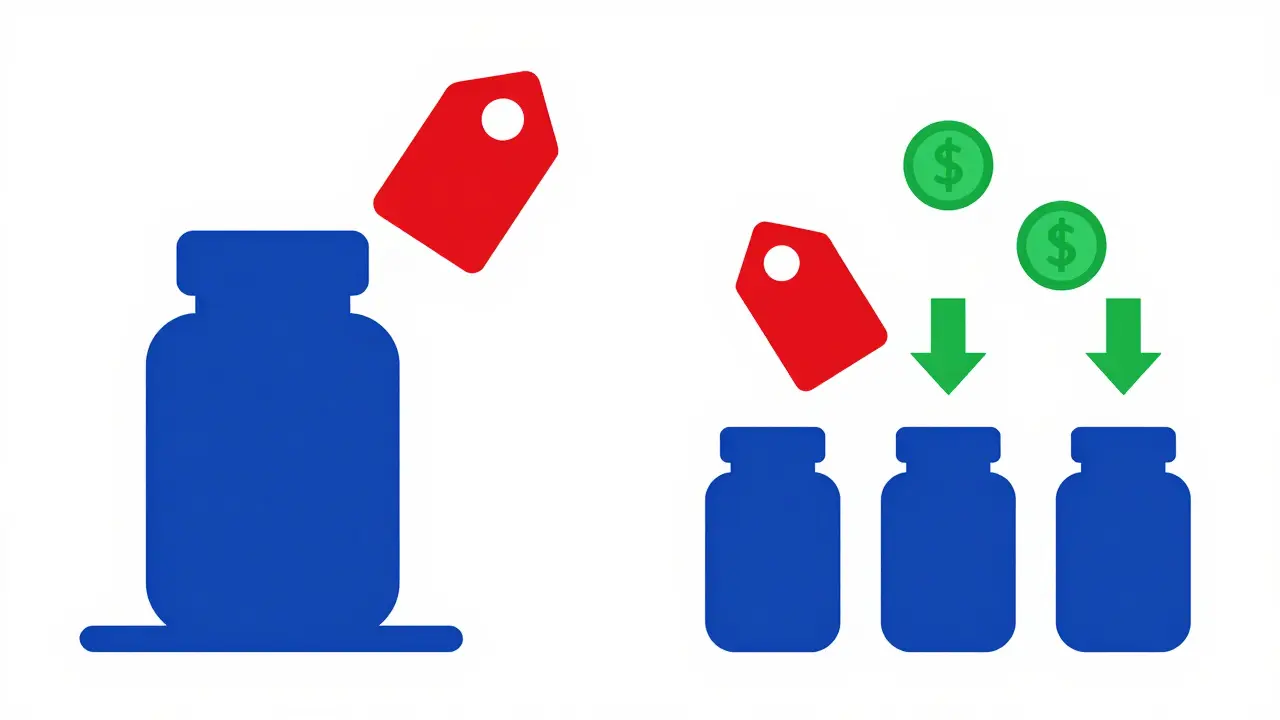
Imagine you’ve been paying a premium for a specific brand of medication or software for years. Suddenly, a competitor steps in with an identical alternative, and the price plummets by up to 90%. This isn’t magic; it’s what economists call first generic entry, which is the market event when a competitor introduces an alternative version of a previously proprietary product, typically after patent expiration, causing immediate and significant price reductions. Whether you are buying heart medication or enterprise database software, this phenomenon reshapes the entire market landscape overnight.
You might wonder why prices don't just slowly decrease over time. The answer lies in the sudden shift from monopoly power to competitive pressure. When a single company controls the market, they set the price based on what they can get away with. But the moment a second player enters with a comparable product, that leverage vanishes. Buyers stop waiting. They switch. And to keep them, even the original brand often has to slash its own prices.
The Mechanics Behind the Price Crash
So, what exactly triggers this massive drop? It starts with the removal of legal barriers. In industries like pharmaceuticals, patents protect a drug’s formula for a set period, usually 20 years. During this time, the innovator recoups research costs through high margins. Once that patent expires, other manufacturers can produce the same active ingredient. They don’t need to spend billions on clinical trials because safety and efficacy are already proven. Their only major costs are manufacturing and distribution. This allows them to sell the product at a fraction of the original price.
This dynamic isn’t limited to pills. In the tech world, we see similar patterns with open-source alternatives. When PostgreSQL emerged as a robust alternative to Oracle Database, it disrupted the pricing model for enterprise data management. Companies realized they could achieve comparable performance without the hefty licensing fees associated with proprietary solutions. The result? A forced reevaluation of value across the board.
The speed of this transition is critical. Data from the Congressional Budget Office shows that within six months of first generic entry for single-source drugs, prices drop by an average of 76%. In electronics, initial price drops following competitive entry average 30-50% within the first year. These aren't gradual declines; they are cliff-like falls that signal a fundamental change in market power.
Pharmaceuticals vs. Software: Parallel Worlds
While the sectors differ, the economic principles remain strikingly similar. Let’s look at how these two industries handle first generic entry.
| Industry | Typical Price Drop | Timeframe for Impact | Key Driver |
|---|---|---|---|
| Pharmaceuticals | 50-80% | Within 3-6 months | Patent Expiration |
| Enterprise Software | 30-45% | Within 12-18 months | Open Source/SaaS Alternatives |
| Consumer Electronics | 30-50% | Within 12 months | Competitive Model Entry |
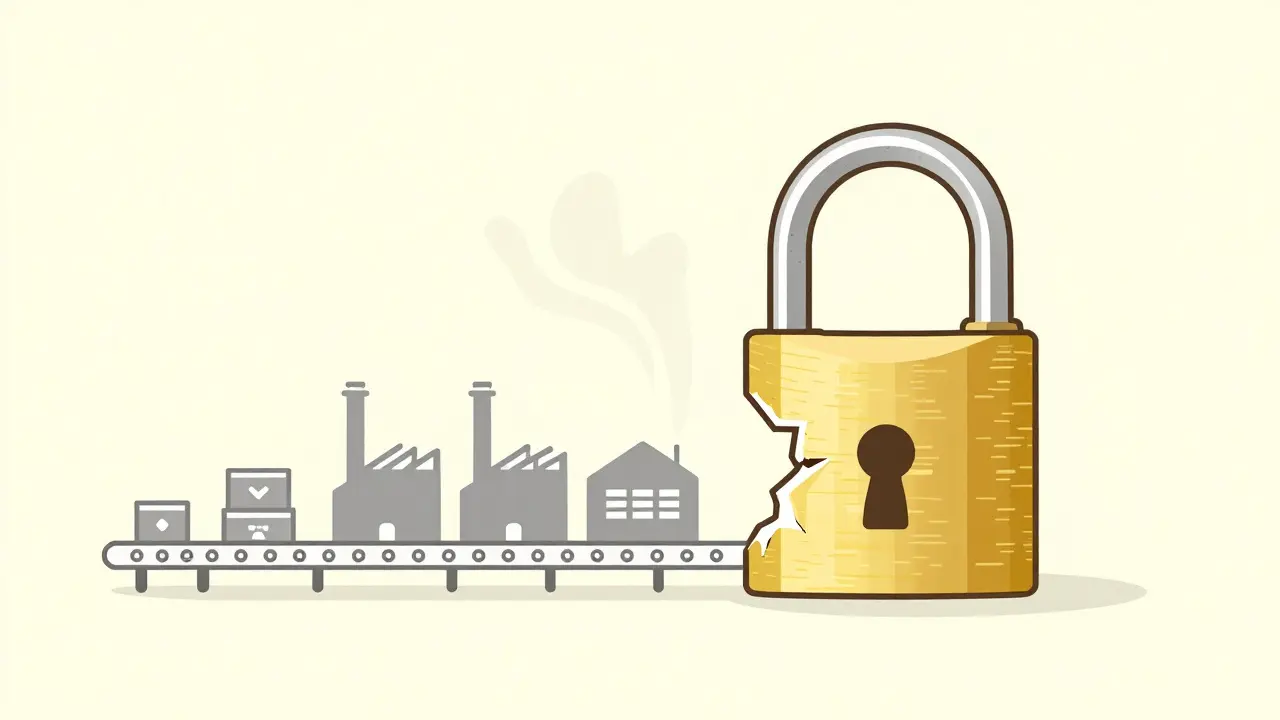
In pharma, the barrier is legal. You cannot make the drug until the patent runs out. In software, the barrier is often technical or cultural. For years, companies stuck with legacy systems because switching was too hard. But as cloud-native architectures matured, switching costs dropped. Tools like Docker and containerization platforms made it easier to move applications between environments, reducing the lock-in effect that once protected incumbents.
Consider the case of digital music players. When Apple launched the iPod in 2001, it sold for $399. It was the only game in town. Within a few years, competitors introduced cheaper alternatives. Today, you can buy capable music players for less than $50. The technology commoditized, and the price followed. The same thing happened with 4K TVs. Sony’s Bravia XBR55X900C launched at $1,799 in 2015. Within 12 months of competing models entering the market, the price fell to $899. Competition erodes premium pricing faster than inflation.
Why Incumbents Can’t Just Ignore the Threat
You might think established brands can just ignore new entrants and keep their loyal customers. History says otherwise. John Singhal of IHS Markit notes that in competitive industries, customers may not be willing to wait. If a cheaper option exists that does 80-90% of what the premium product does, many buyers will switch immediately. This is especially true when budgets are tight. Gartner’s 2022 CIO Survey found that 68% of IT leaders reported budget limitations. When money is tight, every dollar saved counts.
Incumbents face a tough choice: hold the line on price and lose market share, or lower prices and protect volume but sacrifice margin. Most choose the latter. Forrester Research predicts steeper price declines for software vendors as competitive alternatives proliferate. We saw this with Microsoft Azure SQL Database, which shifted to consumption-based pricing within six months of facing competitive pressure, effectively reducing costs by 35% for mid-sized enterprises.
It’s not just about direct competitors. The rise of commercial open source models has changed the game. Companies like MongoDB offer free tiers with premium support, capturing market share from traditional giants like Oracle. By 2023, MongoDB’s Atlas platform had captured 15% of the market previously held by Oracle. This “land-and-expand” strategy-getting your foot in the door with low-cost access and then upselling services-is a hallmark of successful first generic entrants.
The Hidden Costs of Switching
Is switching to a generic alternative always smooth sailing? Not necessarily. While the sticker price is lower, there are hidden costs to consider. One of the biggest hurdles is integration complexity. According to TrustRadius data, 28% of early adopters report integration challenges when moving to generic alternatives. Migrating data from one system to another requires specialized skills. In fact, 62% of organizations outsource this work initially because their internal teams lack the expertise.
Support quality also varies. Established vendors often have decades of documentation and 24/7 global support networks. First generic entrants might offer 24/5 support instead, or rely more on community-driven knowledge bases. Spiceworks’ 2023 benchmark study shows that while response times have narrowed to within 15% parity, documentation completeness remains 25-30% higher for established vendors. This means you might save on license fees but spend more on training and troubleshooting.
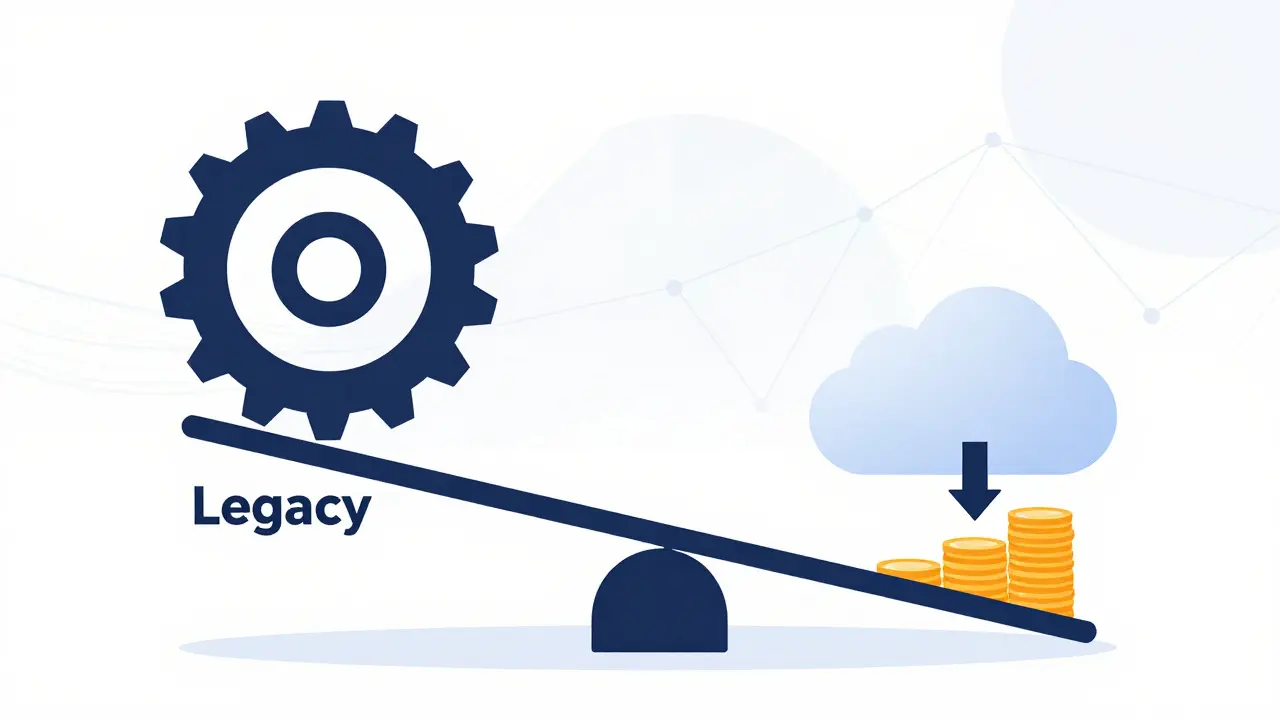
However, the long-term ROI often favors the switch. IDC documents that enterprises adopting first-generation competitive alternatives achieve 35-50% lower total cost of ownership within the first contract cycle. Capterra reviews note that while generic software might require 20-30% more configuration time, users see ROI within 6-9 months through licensing savings alone. Eighty-one percent of enterprises continue with the alternative solution after initial implementation, suggesting that the short-term pain is worth the long-term gain.
Strategic Timing: The Cost of Delay
For both buyers and sellers, timing is everything. SDCexec research quantifies that in competitive markets, any delay directly reduces your time in market, effectively narrowing the window where a product sells at peak price. For a new entrant, being first matters immensely. Bain & Company analysis shows the average time between patent expiration and first generic entry has decreased from 18 months in 2010 to just 6 months in 2023. Speed is now a competitive advantage.
For incumbents, delaying a response can be costly. The PTC blog analysis states that a late product introduction (9-12 months beyond target) can cost 50% of a product’s anticipated revenues. To combat this, organizations use frameworks like Weighted Shortest Job First (WSJF) from the Scaled Agile Framework to prioritize responses. Companies using these approaches reduce competitive vulnerability by 35%. They recognize that sitting on their hands while competitors gain traction is a losing strategy.
Regulatory changes are also accelerating this timeline. The European Union’s 2022 Digital Markets Act requires interoperability standards, which reduce switching costs by 40-50%. This makes it easier for businesses to try new vendors without fear of being trapped. As barriers fall, the pressure on incumbent pricing intensifies.
What Does the Future Hold?
The trend toward lower prices and increased competition shows no signs of slowing. ARK Invest forecasts that open-source alternatives will capture 35% of traditional enterprise software revenue by 2027. Cloud-native architectures reduce first generic entry barriers by 60-70% compared to old on-premise solutions. This means more entrants, more options, and more pressure on prices.
We are also seeing a shift in how vendors charge. Instead of flat licenses, 78% of software vendors are experimenting with usage-based pricing, according to the 2024 PwC Software Pricing Survey. This aligns cost with value, making it harder for incumbents to justify high fixed fees when flexible, pay-as-you-go alternatives exist.
McKinsey predicts the competitive software market will grow at an 11% CAGR through 2027, outpacing traditional licensing models by 4x. The winners will be those who adapt quickly, offering value-added services rather than relying on scarcity. The losers will be those who cling to outdated pricing models in a world where transparency and choice reign supreme.
Whether you are a patient looking for affordable medication or a CTO evaluating database solutions, understanding first generic entry helps you make smarter decisions. Don’t assume the brand name guarantees better value. Look at the total cost of ownership, assess the switching risks, and remember: competition is the best driver of price innovation.
How much do prices typically drop after first generic entry?
In the pharmaceutical industry, prices typically drop by 50-80%, with an average reduction of 76% within six months of entry. In software and electronics, price drops range from 30-50% within the first year, depending on the level of competition and feature parity.
Why do incumbents lower their prices instead of keeping them high?
Incumbents lower prices to retain market share. Customers are increasingly prioritizing total cost of ownership over brand loyalty. If a competitor offers 80-90% of the functionality at a significantly lower price, many buyers will switch, forcing the original vendor to adjust their pricing to remain competitive.
Are there risks involved in switching to a generic alternative?
Yes, primarily related to integration complexity and support quality. About 28% of early adopters report integration challenges, and documentation may be less comprehensive than established vendors. However, most organizations find that the long-term cost savings outweigh these initial hurdles, with 81% continuing with the alternative after implementation.
How does patent expiration affect drug prices?
Patent expiration removes legal barriers for other manufacturers to produce the same drug. Since generics don’t need to repeat expensive clinical trials, their production costs are much lower. This allows them to enter the market at a fraction of the original price, driving down the overall market rate.
What is the role of open source in software price reductions?
Open source solutions act as generic entrants in the software market. They provide comparable functionality without licensing fees, forcing proprietary vendors to lower prices or shift to service-based models. Platforms like PostgreSQL and Docker have significantly reduced switching costs and increased competition, leading to broader price declines.


11 Comments
Oh look, another article explaining why big pharma and Oracle hate us all. 🙄 The 'first generic entry' is basically the economic equivalent of a party crasher who brings their own cheap beer and ruins the vibe for the host. But hey, at least we get cheaper meds now. Or do we? Because let's be real, the moment one generic hits, two more show up with slightly different excipients that give you hives, so you're right back to paying premium prices for the 'safe' brand. It's not magic, it's just capitalism doing its usual dance of deception. 💃📉
The illusion of choice is the most potent drug of all. We think we are saving money by switching to the generic, but we are merely trading our autonomy for pennies on the dollar. The monopoly didn't vanish; it just fractured into smaller, equally predatory shards. You are not a consumer; you are a resource to be mined until dry. The price drop is not a gift; it is a signal that the market has been saturated and the extraction phase has begun. Wake up. 🌑
I really like how this breaks down the idea that competition helps everyone. It is simple stuff. When only one person sells something, they charge what they want. When someone else comes along, they have to lower the price to get customers. This happens in software too. Open source tools like PostgreSQL make it easier for companies to save money. It is good to know these things so we can make better choices. Everyone should try to understand this because it affects our wallets every day. Simple economics works best when we pay attention.
As an IT professional, I can confirm that the shift from proprietary databases to open-source alternatives like PostgreSQL has been monumental. However, the article understates the hidden costs significantly. While licensing fees drop, the engineering hours required for migration, testing, and ongoing maintenance often offset those savings in the first year. Companies must evaluate their internal capacity before making such a drastic switch. It is not merely about the sticker price but the total cost of ownership including human capital. Many organizations fail to account for the learning curve associated with new technologies. This leads to project delays and increased operational risk. Therefore, a thorough assessment is crucial before implementing any major infrastructure change. We must proceed with caution and diligence. 🛠️
There is a certain beauty in the way markets correct themselves, isn't there? It reminds me of nature finding balance after a disturbance. The patent system is essentially a temporary pause button on innovation, allowing creators to recoup their investment. Once that pause ends, the floodgates open, and prices plummet. This is not just economics; it is a philosophical statement on value and scarcity. When scarcity is removed, value becomes fluid. We must embrace this fluidity rather than fear it. It pushes us to adapt and evolve. The future belongs to those who can navigate these shifts with grace and understanding. Let us welcome the competition as a catalyst for growth. ✨
I am absolutely thrilled to see this discussion happening because it highlights such an important aspect of our modern economy! 🎉 When we talk about first generic entry, we are really talking about empowerment for consumers everywhere. Whether it is medication or software, having options allows us to make informed decisions that align with our personal values and financial goals. I believe that transparency is key here, and articles like this help demystify complex economic concepts for everyday people. By understanding the mechanics behind price drops, we can advocate for policies that support fair competition and innovation. Let us continue to share knowledge and support each other in navigating these changes together! 💪
i mean yeah prices drop but isnt it weird how the quality sometimes feels diffrent? i switched my db to postgres a while ago and it was fine but the support wasnt as good as oracle used to be. u have to rely on forums and stuff which can be hit or miss. also moving data is a pain in the neck lol. but yeah if ur budget is tight u gotta do what u gotta do. its just annoying when they say its identical but then something small breaks and u spend days fixing it. maybe im just unlucky tho. anyway good point about the patents though. 👍
boring
It is imperative that we consider the broader implications of these market dynamics on global health equity. While price reductions are beneficial, they must not come at the expense of rigorous safety standards. Regulatory bodies must remain vigilant to ensure that generic entrants meet the same high-quality benchmarks as their branded counterparts. Furthermore, we must address the systemic issues that allow monopolies to persist for extended periods. Policy reforms should focus on accelerating the approval process for generics without compromising patient safety. This balanced approach will foster a competitive environment that benefits both consumers and innovators. We must strive for a system that prioritizes accessibility and affordability for all citizens. 🌍
This is a very insightful analysis of the current market trends. In India, we see similar patterns in the pharmaceutical sector where generic manufacturing plays a crucial role in making medicines affordable for the masses. The transition from proprietary to generic solutions requires careful planning and execution. Companies need to invest in robust supply chains and quality control measures to maintain trust. Additionally, educating consumers about the efficacy and safety of generics is essential to overcome brand loyalty biases. Collaboration between regulators, manufacturers, and healthcare providers can facilitate smoother transitions. We should encourage innovation while ensuring equitable access to essential products. Thank you for sharing this valuable information. 🙏
OMG this is so true!!! 😱 I remember when we switched our company database and everyone was scared it would crash everything. But guess what? It worked out great and we saved SO much money! 💰 Like, seriously, why did we wait so long? The old system was a nightmare anyway. Now we have time to actually work instead of fighting with legacy code. Everyone should just take the leap already! Trust me, the relief is worth the initial stress. Go forth and save those dollars! 🚀💸