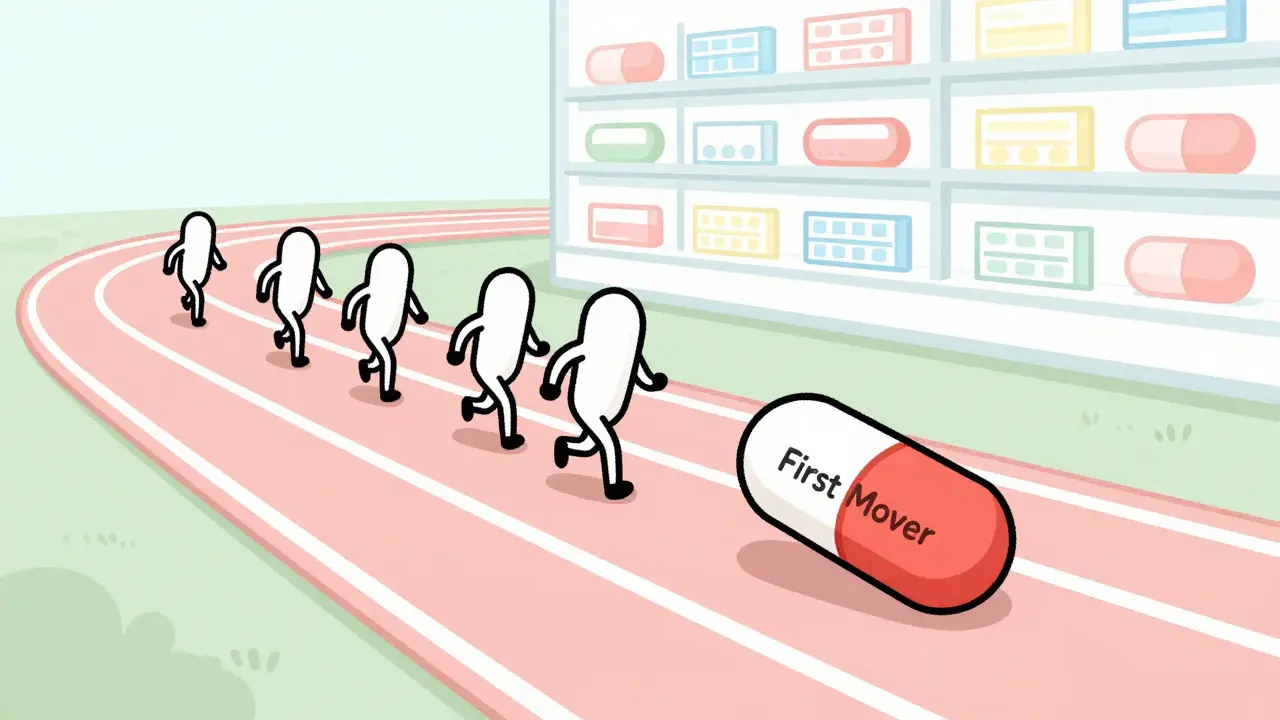
When a brand-name drug loses its patent, dozens of companies rush to make the cheaper generic version. But only one gets to be first. And that one company doesn’t just get a head start - it often walks away with 80% of the market, even years later. This isn’t luck. It’s the first-mover advantage - a powerful, long-lasting edge built into the system that rewards the first generic manufacturer to enter the market.
Why Being First Matters More Than You Think
The rules were set in 1984 by the Hatch-Waxman Act. It gave the first generic company that successfully challenges a brand drug’s patent 180 days of exclusive rights to sell their version. That sounds short, but the real power isn’t in the 180 days - it’s in what happens after. Once a generic hits the market, doctors start prescribing it. Pharmacies stock it. Patients get used to it. Switching to another version - even if it’s chemically identical - feels like a risk. No one wants to change a medication that’s working, especially for chronic conditions like high blood pressure or diabetes. So even after the exclusivity period ends, the first mover keeps most of the business. Data from DrugPatentWatch shows that first movers often capture 70-80% of the generic market during their 180-day window. After other generics arrive, they still hold onto 30-40% of sales. Second entrants? They fight for 10-15%. Later ones? Barely 5%.The Hidden Rules That Keep First Movers on Top
It’s not just about being first. It’s about how the system works behind the scenes. Pharmacies don’t stock every generic version of a drug. They pick one - usually the first one that came in - because it’s cheaper to manage inventory. If you’re the second or third company, you’re competing not just on price, but against the inertia of pharmacy shelves. Even if your pill is identical, it’s not on the shelf. And if it’s not on the shelf, the pharmacist won’t hand it out. Doctors follow suit. They write prescriptions for the version they know works, the one their patients are already taking. Changing prescriptions means extra steps, extra calls, extra risk. Most won’t bother unless there’s a clear reason - like a shortage or a price spike. And here’s the kicker: the first generic often gets to charge a premium. Not the brand price, but still higher than what later entrants can afford to charge. That’s because there’s no competition yet. By the time others arrive, prices have already dropped - but the first mover already locked in their revenue.Not All First Movers Win - Here’s What Makes the Difference
Being first doesn’t guarantee success. Many companies fail to capitalize on their lead. Large generic manufacturers with deep pockets and experience in the therapeutic area win more often. McKinsey found that when a big pharma company is first, they gain over 10 percentage points more market share than smaller players. Why? They have the resources to scale production fast, handle regulatory hurdles, and build relationships with distributors. Companies that lack experience in the drug’s therapeutic area - say, trying to launch a generic for an injectable diabetes drug when they’ve only made pills for allergies - see half the advantage. The complexity matters. Injectable drugs, inhalers, and other complex generics have fewer challengers. That means the first mover gets an even bigger edge - up to 15-20 percentage points above fair share. Timing is everything. If the second generic arrives within a year, the first mover’s advantage collapses. But if it takes two or three years? The first mover owns the market. One study found that a three-year gap meant the first company kept over 60% of sales even after the second entrant arrived.
The Biggest Threat: Authorized Generics
The biggest surprise for many first movers? The brand company itself might launch a generic version - called an Authorized Generic - during the 180-day exclusivity window. This is legal. And it’s devastating. Instead of facing just one competitor, the first mover now faces two: the original brand and its own generic copy. The brand sells its version at a discount, undercutting the first mover’s price. The FTC found this cuts first-filer revenue by 4-8% at retail and 7-14% at wholesale. Top generic manufacturers prepare for this. They lock in long-term deals with active pharmaceutical ingredient (API) suppliers, often getting 12-15% lower costs than newcomers. They build backup plans. They know the brand might turn on them - and they plan for it.How the Market Has Changed - And What’s Next
The generic market has exploded. In 1984, generics made up just 19% of prescriptions. Today, it’s over 90%. But the value? Only 23% of total drug spending. That’s the power of generics - they save the system hundreds of billions a year. But the game is shifting. The FDA’s new rules (GDUFA III) are speeding up approvals, which sounds good - but it also means more companies can enter faster. That could shrink the first-mover advantage in simple pills. Meanwhile, complex generics - like inhalers, eye drops, and injectables - are growing fast. These are harder to copy. Fewer companies can make them. That means the first mover gets a bigger, longer-lasting edge. In these areas, the advantage is still strong - and likely to stay that way. Also, the FTC is cracking down on “pay-for-delay” deals. That’s when brand companies pay the first generic to delay entering the market. These deals used to push launches back by years. Now, with legal pressure, first generics are hitting the market 6-9 months sooner on average.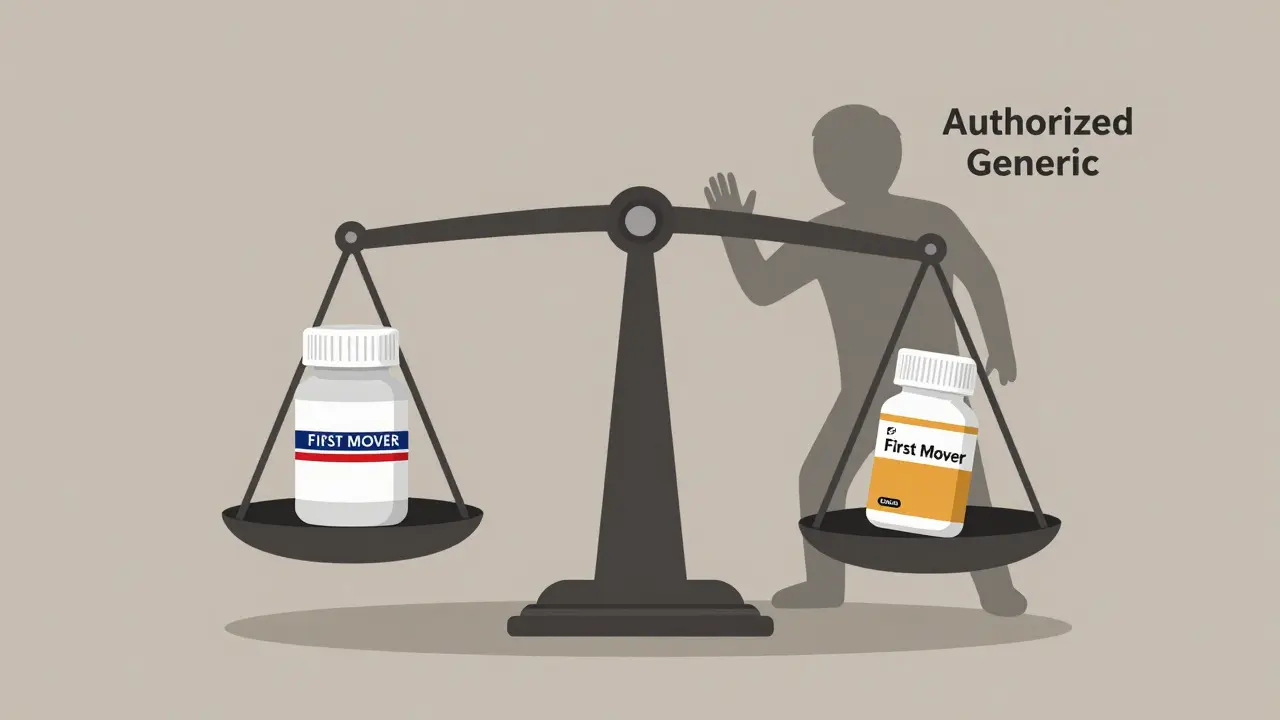
What This Means for Patients and the System
You might think more generics = lower prices. And you’re right. But the first-mover advantage means prices don’t drop as fast as they could. The first company doesn’t have to slash prices right away. They can keep them higher for longer. That means patients and insurers pay more - even if it’s still cheaper than the brand. But here’s the flip side: without this advantage, no company would risk spending millions to challenge a patent. They’d wait for someone else to do the hard work. The first-mover advantage is the incentive that keeps the system moving. It’s what makes generics possible in the first place.Final Takeaway: First Is Everything
In the generic drug world, being first isn’t just an advantage - it’s the entire game. The 180-day exclusivity is just the opening move. The real win comes from the habits, systems, and relationships that lock in market share for years. It’s not about who makes the cheapest pill. It’s about who gets on the shelf first, who gets prescribed first, and who becomes the default choice. That’s the real power of being first.What is the first-mover advantage in generic drugs?
The first-mover advantage is the market dominance a generic drug manufacturer gains by being the first to launch a generic version of a brand-name drug after its patent expires. This advantage comes from 180 days of legal exclusivity under the Hatch-Waxman Act, but its real power lies in long-term customer loyalty, pharmacy stocking habits, and prescriber preferences that keep the first entrant ahead for years.
How long does the first-mover advantage last?
While the legal exclusivity lasts 180 days, the market advantage often lasts years. First movers typically hold 30-40% of the market even after multiple competitors enter. The longer the gap between the first and second generic launch, the stronger and longer the advantage. A three-year lead can mean keeping over 60% of sales.
Why do pharmacies stock only one generic version?
Pharmacies limit inventory to reduce costs and complexity. Once a generic is stocked and working well, switching to another - even if it’s identical - requires retraining staff, updating systems, and dealing with patient confusion. The first generic gets locked in by default.
What is an Authorized Generic?
An Authorized Generic is a version of the brand-name drug sold under a generic label by the original manufacturer. It’s identical to the brand but priced like a generic. When launched during the first mover’s exclusivity period, it cuts into their sales by 4-14% in price and reduces their market share significantly.
Do small generic companies stand a chance?
It’s harder. Small companies without experience in the drug’s therapeutic area or without strong supply chain relationships often capture only half the market share of larger, experienced first movers. They lack the resources to scale quickly or defend against Authorized Generics.
Is the first-mover advantage disappearing?
Not yet. For simple pills, faster FDA approvals may reduce the edge. But for complex generics - like injectables and inhalers - the advantage is growing. Fewer companies can make them, and prescriber habits remain strong. The core drivers - patient loyalty, pharmacy stocking, and doctor preference - are deeply rooted and won’t change soon.

12 Comments
First mover gets 80% market share? Classic capitalism. No surprise. The system is rigged to reward speed over fairness.
This reminds me of how Japan handled generic insulin. First entrant dominated for over a decade. Patients didn't care if it was identical. They trusted the name they knew.
This is such an important topic! Being first isn't just about timing-it's about trust. Patients and doctors don't want to switch meds unless they have to. And pharmacies? They pick the easiest option. That's why the first one wins. Simple as that.
Wait-so the first generic can charge MORE than the second one?? And people just accept it?? That’s wild. Like, if it’s chemically identical, why am I paying more just because it’s on the shelf first?? This feels so backwards!
The structural incentives embedded within the Hatch-Waxman Act, as delineated in 21 U.S.C. § 355(j), create a de facto monopoly that persists beyond statutory exclusivity due to entrenched prescribing and dispensing behaviors. This phenomenon is not anomalous; it is systemic.
Hey, this is actually really cool when you think about it! The first mover isn’t just lucky-they’re building something real: trust. And trust doesn’t disappear just because another pill hits the shelf. It’s like being the first coffee shop in town-people keep coming back, even when the new one is cheaper.
Small players don't stand a chance. They lack API contracts, regulatory bandwidth, and distribution muscle. The system is designed for conglomerates. If you're not backed by a pharma giant or a private equity fund, you're just noise.
I’ve seen this in my pharmacy rotations. The first generic gets stocked. Everyone else gets ignored. It’s not about price. It’s about habit. The system rewards inertia. That’s not always bad though. Patients need stability.
The first-mover advantage is just capitalism’s way of pretending merit matters. The real winner isn’t the best or the fastest. It’s the one who got lucky enough to file the paperwork before the others woke up.
I’ve worked with complex generics-injectables, specifically. The barrier to entry is immense: sterile manufacturing, stability testing, clinical equivalence studies. The first mover doesn’t just get an advantage-they get a fortress. And honestly? That’s why these drugs stay affordable longer.
So if the FDA speeds up approvals, does that mean more companies can jump in faster? Would that break the first-mover lock? Or would pharmacies still stick with the original?
It’s not about the pill. It’s about the ritual. The pharmacist hands you the same blue capsule every month. You don’t question it. You don’t want to. That’s the real power. Not patents. Not price. Not even FDA rules. It’s human habit. We cling to the familiar-even when it costs more.