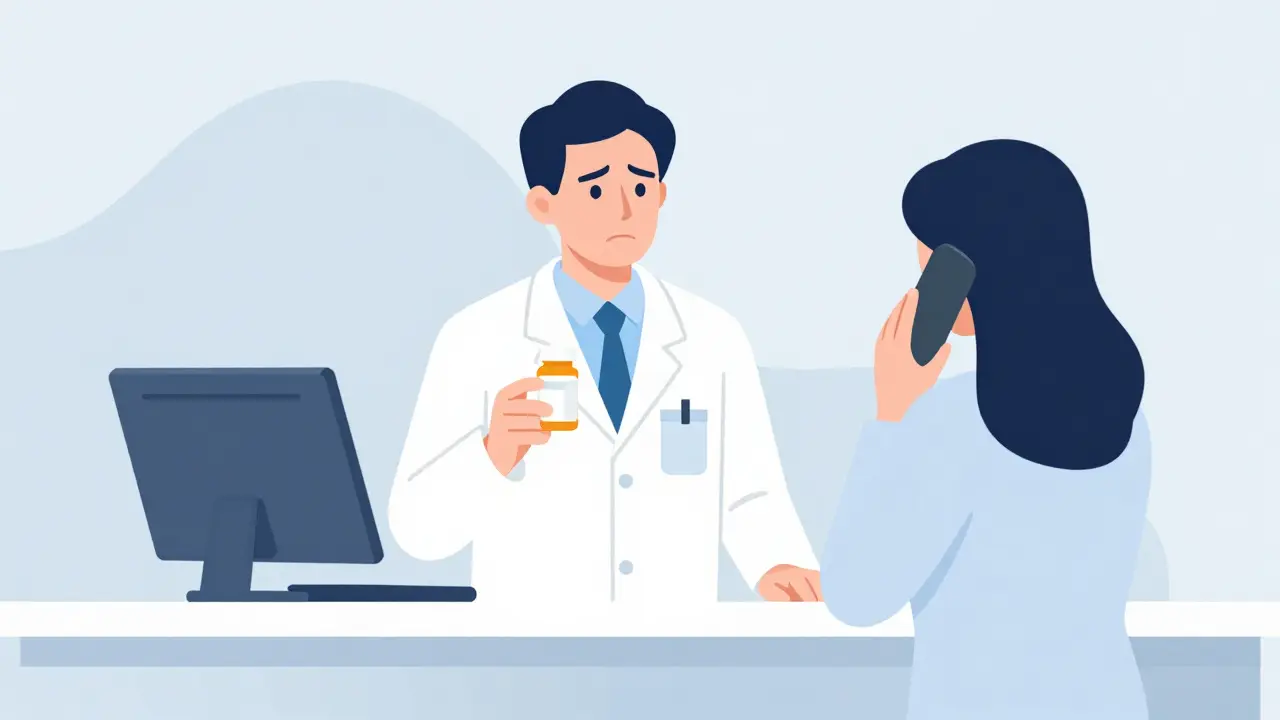
Imagine you pick up a new bottle of blood pressure medication. It’s the same drug you’ve taken for years, but this time it’s a generic version from a different manufacturer. A week later, you develop a rash and feel dizzy. You call your local pharmacy. The pharmacist listens, checks your history, and realizes this might not be a coincidence. This is where adverse event reporting is the systematic process of collecting, assessing, and monitoring reports of adverse events to ensure patient safety and product quality. becomes more than just paperwork-it becomes a lifeline.
Many people assume that because a generic drug is chemically equivalent to its brand-name counterpart, it behaves exactly the same way in every body. But biology is messy. Small differences in inactive ingredients (excipients) or manufacturing processes can trigger unexpected reactions in sensitive individuals. Pharmacists are often the first line of defense in spotting these issues. Yet, despite their critical role, under-reporting remains a massive blind spot in global healthcare. If we don’t report what goes wrong, we can’t fix it.
The Critical Role of Pharmacists in Pharmacovigilance
Pharmacovigilance is the science and activities relating to the detection, assessment, understanding, and prevention of adverse effects or any other medicine-related problems. At the heart of this system stands the pharmacist. Unlike doctors who see patients intermittently, pharmacists interact with patients regularly during dispensing, counseling, and follow-up visits. They have a unique vantage point to notice patterns that others might miss.
Consider the definition of an adverse drug reaction (ADR). According to the Ontario College of Pharmacists, an ADR is "a harmful and unintended effect from use of a health product." This isn’t just about side effects listed on the label; it’s about unexpected harm. When a patient experiences a serious reaction-such as hospitalization, persistent disability, or even death-the pharmacist’s duty to act intensifies. In British Columbia, for instance, Section 12(7) of the Health Professions Act Bylaws explicitly mandates that pharmacists notify the patient’s practitioner, update the PharmaNet record, and report the reaction to Health Canada. This legal framework underscores that reporting is not optional; it’s a professional obligation.
Why does this matter for generics? Dr. Michael Cohen, President of the Institute for Safe Medication Practices, points out that generic medications pose specific challenges. Because they are assumed to be therapeutically equivalent, prescribers may overlook subtle bioequivalence issues or excipient-related problems. When a patient switches manufacturers and develops a new symptom, the pharmacist is often the only one connecting the dots. Without that connection, the signal gets lost in the noise.
Regulatory Landscapes: Who Must Report and Why?
The rules around adverse event reporting vary significantly depending on where you practice. Understanding these differences is crucial for pharmacists navigating their responsibilities.
| Jurisdiction | Legal Requirement | Reporting Body | Key Focus |
|---|---|---|---|
| British Columbia, Canada | Mandatory under Health Professions Act | Health Canada | All identified ADRs |
| New Jersey, USA | Mandatory for consultant pharmacists | FDA / ASHSP-USP-FDA systems | Drug defects & ADRs in residents |
| United States (Federal) | Voluntary (Strongly Encouraged) | FDA via MedWatch/FAERS | Serious & unexpected events |
| European Union | Mandatory for all healthcare professionals | European Medicines Agency (EMA) | All suspected ADRs |
In the United States, federal law does not strictly mandate healthcare professionals to submit adverse drug event reports. However, the FDA strongly encourages reporting, particularly for serious adverse events. These include fatalities, life-threatening conditions, permanent disabilities, or cases requiring hospitalization. Interestingly, 98% of reports entering the FAERS is FDA Adverse Event Reporting System, the primary US database for collecting adverse event reports, medication errors, and product quality complaints. come from pharmaceutical manufacturers, who receive data from providers like pharmacists. This creates a bottleneck: if the pharmacist doesn’t report to the manufacturer or directly to the FDA, the data never enters the system.
Contrast this with Europe, where mandatory reporting has been in place since 2012. The European Medicines Agency (EMA) reported a 220% increase in reporting rates after implementing these mandates. This surge provided regulators with richer data to identify safety signals early. North America is slowly catching up. Industry analysts predict that by 2025, 75% of U.S. states will adopt formal requirements similar to British Columbia’s model. The shift is driven by evidence that pharmacist-led reporting enhances early detection, especially for generics where formulation differences can cause unexpected reactions.

Barriers to Reporting: Time, Awareness, and Systems
If reporting is so important, why is it still underdone? The answer lies in practical barriers. A 2021 survey by the National Community Pharmacists Association revealed that 78% of community pharmacists spend 15-30 minutes per adverse event report. For a busy pharmacy processing hundreds of scripts daily, finding that time is difficult. Consequently, 62% cited insufficient work hours as the primary barrier to reporting.
Awareness is another hurdle. Many pharmacists struggle to distinguish between expected side effects and true adverse reactions. Is nausea from chemotherapy an ADR? No, it’s expected. Is a sudden liver enzyme spike from a common painkiller an ADR? Yes, especially if it wasn’t previously documented. The British Columbia Pharmacists Association notes that a lack of awareness about adverse reaction monitoring exacerbates under-reporting. Training programs must focus on clinical judgment, helping pharmacists recognize when a reaction is "unexpected" or "serious."
Documentation protocols also vary widely. Hospital pharmacists often benefit from electronic health records (EHRs) with built-in reporting modules. Community pharmacists, however, frequently rely on paper forms or online portals like MedWatch is FDA's safety information and adverse event reporting program allowing direct electronic submission of reports. While MedWatch has improved accessibility-with 43% of healthcare professional reports submitted electronically in 2022, up from 29% in 2020-the process can still feel cumbersome compared to integrated workflow tools.
Technological Innovations Streamlining the Process
Technology is beginning to bridge the gap between intent and action. The National Association of Boards of Pharmacy (NABP) has partnered with 32 state boards to integrate adverse event reporting functionality into existing pharmacy practice management systems. Pilot programs in California and Texas showed a 40% reduction in reporting time. Imagine clicking a button within your dispensing software to flag a potential ADR, rather than opening a separate browser window and filling out a long form. This integration reduces friction and makes reporting a natural part of the workflow.
The FDA’s Sentinel Initiative is another game-changer. By expanding to include community pharmacy data sources, the FDA moves from passive surveillance (waiting for reports) to active pharmacovigilance (proactively analyzing real-world data). This allows for faster identification of safety trends, particularly for generic drugs where small changes in supply chains can introduce variability.
For pharmacists, adopting these tools means staying current with software updates and training staff on new features. It’s not just about compliance; it’s about efficiency. When reporting takes seconds instead of minutes, participation rates rise. And higher participation rates mean better data for everyone.

Impact on Generic Medication Safety
Generic medications account for over 90% of prescriptions dispensed in the U.S. and many other countries. Their affordability makes them essential, but their sheer volume means that even rare adverse events can affect thousands of people. Health Canada estimates that only 5-10% of all adverse drug reactions are reported through official channels. For generics, this rate may be even lower due to the assumption of equivalent safety profiles.
This under-reporting creates a dangerous illusion of safety. If a specific generic manufacturer uses a different binding agent that causes allergies in lactose-intolerant patients, no one will know unless those reactions are reported. A 2022 study in the Journal of the American Pharmacists Association found that pharmacist-led reporting initiatives increased adverse event documentation by 37% in community settings. However, only 28% of pharmacists consistently reported non-serious but unexpected reactions. This gap highlights the need for cultural change: every report matters, even if it seems minor at the time.
When pharmacists actively monitor generic safety, they protect individual patients and contribute to broader public health. Early detection of a trend can lead to recalls, label updates, or manufacturing changes. Without that data, patients continue to suffer in silence.
Best Practices for Effective Reporting
To maximize the impact of your reporting efforts, consider these actionable steps:
- Capture Complete Data: Include the patient’s name, medical history, medication history, and a detailed description of the suspected reaction. Vague reports are harder to analyze.
- Distinguish Expected vs. Unexpected: Not every side effect is an ADR. Focus on reactions that are new, severe, or unexplained by the drug’s known profile.
- Report Timely: Serious and unexpected adverse events should be reported to manufacturers within 15 days. Don’t let busy schedules delay critical information.
- Use Integrated Tools: Leverage EHR modules or pharmacy management systems that support one-click reporting. Reduce administrative burden wherever possible.
- Educate Patients: Encourage patients to report symptoms promptly. They are your eyes and ears outside the pharmacy walls.
Remember, you are not just dispensing pills; you are safeguarding health. Every report adds a piece to the puzzle of medication safety.
Is adverse event reporting mandatory for pharmacists in the United States?
At the federal level, adverse event reporting is voluntary but strongly encouraged by the FDA. However, some states like New Jersey have mandatory requirements for specific roles, such as consultant pharmacists. Trends indicate that more states are moving toward mandatory reporting models similar to those in Canada and Europe.
What defines a 'serious' adverse event?
A serious adverse event results in death, is life-threatening, requires hospitalization or prolongs existing hospitalization, results in persistent or significant disability/incapacity, causes a congenital anomaly/birth defect, or requires intervention to prevent permanent impairment.
Why is reporting generic medication adverse events particularly important?
Generics are assumed to be therapeutically equivalent to brand names, leading to under-scrutiny. However, differences in excipients or manufacturing processes can cause unexpected reactions in sensitive individuals. Reporting helps identify these subtle safety signals that might otherwise go unnoticed.
How much time does it typically take to file an adverse event report?
Surveys suggest that community pharmacists spend 15-30 minutes per report using traditional methods. However, integrated electronic systems can reduce this time by approximately 40%, making the process more feasible within busy workloads.
What is the difference between FAERS and MedWatch?
MedWatch is the FDA's safety information and adverse event reporting program, which includes the portal where users submit reports. FAERS (FDA Adverse Event Reporting System) is the underlying database that stores and analyzes the data collected through MedWatch and other channels.



8 Comments
Actually you are completely wrong about everything here because the FDA tests these things thoroughly and your conspiracy theories are stupid and unhelpful to anyone trying to get real information about pharmacy laws in different states which is what this post is actually about not some wild imagination of yours
hey everyone i am really interested in how this works in australia because we have PBS and it seems like the reporting lines are totally different there maybe someone can explain if the pharmacists there have similar obligations or if it is more relaxed down under would love to hear some perspectives
oh my goodness gareth that is such a wonderful question and it really highlights the beautiful diversity of healthcare systems around the world i think it is so important for us to learn from each other because when we share knowledge we create a stronger global community of health advocates who are empowered to take charge of their own wellbeing through informed decision making and collaborative learning opportunities that transcend geographical boundaries
the data presented here is fundamentally flawed due to selection bias in the survey methodology used by the national community pharmacists association which fails to account for confounding variables such as patient demographics and comorbidity indices therefore any conclusions drawn regarding reporting barriers are statistically insignificant and should be disregarded by serious practitioners
i totally agree with johnnnie but also i think we need to look at the cultural aspect of reporting because in my experience working with international teams the way we communicate side effects varies greatly depending on where you come from and i feel like we should embrace those differences rather than trying to force one system on everyone because unity in diversity is the key to progress
Indeed, the epistemological crisis within modern pharmacovigilance necessitates a rigorous re-evaluation of our ontological commitments to safety protocols 🧐 One must consider the phenomenological experience of the patient when analyzing adverse events rather than relying solely on quantitative metrics which fail to capture the essence of suffering 😔 It is imperative that we elevate the discourse beyond mere compliance to a higher plane of ethical responsibility ✨
elizabeth you are talking way over peoples heads here and honestly it is kind of annoying when you use big words to sound smart but say nothing useful we need practical advice not philosophy lessons so please keep it simple and helpful for the rest of us who just want to do our jobs without feeling dumb
this entire discussion is pathetic because none of you understand the real issue which is that western medicine is failing and we in india have better traditional methods that do not require all this bureaucratic nonsense of reporting every tiny symptom to some government database that does nothing but waste time and resources so stop complaining and start thinking about holistic health instead of these superficial regulatory frameworks